The Reading List
Official reading lists from service chiefs and the Chairman of the Joint Chiefs, plus books the service forgot to put on any list. Descriptions written to tell you whether it is actually worth your time.
Buy links go to Bookshop.org (which supports independent bookstores) and Amazon. Some are affiliate links — if you buy, we earn a small commission at no extra cost to you. As an Amazon Associate we earn from qualifying purchases. It never affects which books are on this list or how we describe them. How this works.
David Brooks on the gap between the resume virtues you chase and the eulogy virtues you actually get remembered for. It can get preachy, but the core question — are you building the inner person or just the career? — catches up with every leader eventually. Read it when you're quiet enough to sit with it.
Hans Rosling's case that the world is in better shape than your gut and your feed insist, and that we get basic facts wrong in predictable ways. The payoff isn't the optimism — it's the habit of checking the number before you react. Worth it for anyone who briefs decisions off "everybody knows."
Wess Roberts' sequel to his Attila leadership gimmick — maxims dressed up in Hunnic drag. It's breezy, quotable, and about as deep as a challenge coin, but a few of the lines stick. Read it on a flight, not as your whole leadership philosophy.

Private notes written by the Roman Emperor and general to himself, never intended for publication. Marcus Aurelius commanded the Danube frontier campaigns against Germanic tribes while writing these Stoic reflections. What makes them militarily relevant: the consistent focus on the things within your control versus the things that are not, the duty to act correctly regardless of outcome, and the discipline of attention in the face of fear, loss, and institutional pressure. Two thousand years of military leaders have returned to these notes for the same reasons. The empire that produced them is gone. The notes are not.
Mattis served as CENTCOM commander, SACEUR, and Secretary of Defense and spent forty years in the Marine Corps before any of that. This book is his account of how he learned to lead — from platoon commander through combatant commander — and the reading and thinking that shaped how he understood military operations and strategy. The book is organized around the problems of leadership at each level, using his own experience as the case study. The section on CENTCOM command and the frustrations of operating in the interagency environment is the most honest available account of what joint senior leadership actually looks like. On the CMC reading list because Mattis is the Marine every subsequent Marine general cites when asked who taught them to think.
A series of real letters from Greitens — Rhodes Scholar, humanitarian worker, Navy SEAL — to a former teammate who came home to lost purpose, heavy drinking, and a collapsing life. The letters walk through the classical tradition on suffering, purpose, and practice with more depth than the stoic-poster industry usually manages, and the frame keeps it honest: this is one veteran trying to talk another one back from the edge. Full disclosure the book itself can't offer: Greitens' political career later ended in scandal and resignation. Judge the letters on their content. On content, they hold up.
Ernest Shackleton's 1914–1916 Imperial Trans-Antarctic Expedition — the ship crushed by pack ice, twenty-eight men stranded on the ice, and the eight-hundred-mile open-boat voyage to South Georgia Island that saved them all. Lansing reconstructed the ordeal from diaries and interviews with survivors. The leadership case study is as clean as it gets: a crew in conditions that should have killed them all, kept alive and functional by a commander who maintained morale, managed individual personalities, and made decisions under conditions of total uncertainty with no margin for error. Nobody died. That is the outcome that requires explanation.
An edited anthology of leadership thinking aimed straight at the profession of arms — theory, ethics, and the hard parts of command in one volume. It reads like a graduate seminar, not a beach book, so pace yourself. Solid if you want the academic backbone under all the "lead from the front" bumper stickers.
Blaber commanded Delta Force during the early years of the Afghanistan campaign and wrote the leadership philosophy that emerged from those operations. The framework is deceptively simple: understand the mission; understand the men executing it; understand the environment they are operating in; and in that order. What is unusual is the rigor with which Blaber applies this framework to specific operations, including the catastrophic planning failure at Takur Ghar that killed seven Americans. He does not protect the institution at the expense of the analysis. The lessons are transferable well beyond the special operations context.
McChrystal commanded JSOC in Iraq and discovered that his organization — optimized for industrial-era warfare — was losing to a network. Al-Qaeda in Iraq was distributed, adaptable, and self-organizing. JSOC was a hierarchical machine built for efficiency. McChrystal had to break his own organization and rebuild it as a network: shared consciousness, distributed authority, persistent information flow. The result is both a memoir of that transformation and a theory of leadership in complex environments. The most practically useful leadership book written by a senior military commander since Slim's Defeat into Victory. The framework transfers.
Written in 1904 by a British officer as a teaching device: a young lieutenant dreams his way through six increasingly competent defenses of the same river crossing. The first dream ends in disaster. The sixth succeeds. It reads like a field manual disguised as a short story. On the Commandant's list continuously for over a century because it teaches small-unit defensive tactics through vivid failure. Each dream adds one lesson the lieutenant failed to apply in the last. You can read it in two hours. You will think about it longer than that.
The book they should hand you at OCS or BOLC and sometimes do not. Unglamorous, practical, and right. How to lead soldiers when you are scared, tired, wrong, and responsible for everything simultaneously — which is always. Malone spent a career studying what actually works in small unit command versus what looks good in doctrine. The gap is significant. This book is about closing it.
A German general officer wrote this account of small-unit leadership in WWI for the Infantry School at Fort Benning in 1933. The Marine Corps has assigned it ever since. The core argument: leadership under fire is not about giving orders, it is about being the kind of person men will follow when following means dying. Von Schell fought the war he is analyzing, which makes his case studies something other than theory. Seventy pages that have not been surpassed in the literature of small-unit combat leadership.
Marquet commanded the USS Santa Fe — the worst-performing submarine in the Pacific Fleet — and turned it into the best-performing in a single deployment by inverting the traditional command model. Instead of the standard leader-follower structure (officers direct, enlisted execute), he distributed intent and decision authority down to the lowest competent level, trained the crew to act on understanding rather than orders, and created conditions for the crew to think rather than comply. The most specific available account of how leader-follower versus leader-leader command structures produce different results in military units. On both the CMC and SOCOM reading lists because the Santa Fe model is the operational opposite of the zero-defect command culture.

Kerr spent years studying the All Blacks — New Zealand's national rugby team, the most successful sports team in the history of organized competition by winning percentage — and extracted fifteen leadership principles that the organization has maintained across generations of players and coaches. The book is about institutional culture: how an organization with extraordinary expectations maintains excellence as individuals rotate through it, and what practices and rituals sustain institutional identity across time. On both the SMA and CMC reading lists because the problem of maintaining unit culture and excellence across leadership transitions is exactly the problem that NCO corps and staff NCO development is designed to solve. Far more practically useful than most books on this topic.
Keegan examines four commanders — Alexander, Wellington, Grant, and Hitler — to ask what heroic leadership actually requires and how the model has changed as armies have changed. His central argument: that the Homeric model of the leader who leads from the front, shares danger with his men, and makes himself visible in the decisive moment became impossible in industrial-age war, and that Grant's model — the commander who accepts invisibility, manages information, and leads through institutional will rather than personal display — is the model that works in modern war. Keegan's final chapter on the anti-hero, the democratic commander who cannot rely on divine right or personal charisma, is the best analysis available of what military leadership looks like in a society that does not celebrate martial values.
Written 2,500 years before your current chain of command was born. Every general cites it. Most politicians misquote it. Read it so you can tell the difference — and so you understand why the enemy who reads it too is not automatically beaten. Five chapters take longer to internalize than they do to read. That is the point.
Twenty-eight essays by the field's leading scholars on the development of Western strategic thought from Machiavelli through the nuclear age. Paret edited the standard reference for the study of how military thought evolved alongside the political and technological circumstances that shaped it: Jomini, Clausewitz, Mahan, Douhet, Liddell Hart, and the theorists of guerrilla warfare, nuclear deterrence, and limited war. Not light reading. The indispensable graduate-level introduction to why military strategy looks the way it looks and why every generation has to rediscover the same arguments about the relationship between force and policy.

Jacobsen interviewed the people who built and ran the actual system — STRATCOM commanders, missileers, weapons engineers, continuity-of-government planners — then wrote a minute-by-minute account of a single launch spiraling into the end of everything. The clock is the point: from first detection, the President has minutes to make a decision no human being should have to make on that timeline, with that information. Some specialists quibble with her scenario choices. Fine. The procedures, the timelines, and the machinery are real, and if you work anywhere near this enterprise, this is the book your family will ask you about.
The book everyone in uniform claims to have read and almost no one finishes. War is the continuation of policy by other means — the sentence that launched a thousand PowerPoint slides and at least as many wars entered without an exit strategy. Get past chapter three and you are ahead of 80% of O-6s. Get through Book Eight and you understand why it keeps going wrong.
Before he ran JSOC and commanded the bin Laden raid, McRaven wrote a graduate thesis asking a simple question: why do small forces sometimes beat much larger ones? His answer — relative superiority, won through six principles and lost the moment surprise and speed run out — is worked through eight real raids, from Eben Emael to Entebbe. This is the closest thing to a public theory of special operations, written by the man who later got to test it at the highest possible stakes. Dry in places, because it's a thesis. Read it anyway. It's the skeleton key to every other book on this shelf.
Kaplan got into the declassified record of how every administration from Truman forward actually planned to fight a nuclear war — not the deterrence theory in the journals, but the SIOP briefings that made new presidents go pale. The recurring pattern is the book's real subject: each president discovers the war plan is an all-or-nothing monstrosity, demands flexible options, and the machinery absorbs the demand and grinds on. Read it after The Wizards of Armageddon and you get Kaplan's full forty-year arc: first the theorists, then what the government actually did with their theories. Dry in stretches, and worth every page.
The most comprehensive single-volume account of strategic thought ever published — from the Greek city-states through the wars in Afghanistan and Iraq. Freedman covers military strategy, political strategy, business strategy, and the theory of change across three thousand years with the rigor of an academic and the clarity of a practitioner. The central argument: that strategy is about managing an irreducible gap between aspiration and the means available to achieve it, and that this gap has always been the central problem of anyone who has ever tried to accomplish anything against resistance.
Gaddis runs the Grand Strategy program at Yale and wrote this book from the same curriculum he teaches to both undergraduates and the professional military officers who attend as fellows. His argument, built from Thucydides through the Cold War: that grand strategy is the alignment of unlimited aspirations with limited capabilities, and that the great strategists throughout history are distinguished not by intelligence or resources but by the capacity to maintain that alignment under the pressure of events that constantly demand its abandonment. The most readable available introduction to the theory of strategy, and the one assigned most widely at senior military and civilian education programs. Required reading before you pick up anything else on this list.
Published in 1890 and read simultaneously by Theodore Roosevelt, Kaiser Wilhelm II, and the Japanese Naval Staff — then used to justify naval buildups across four continents. Mahan's argument is that national greatness follows from sea power, sea power follows from merchant marine and forward bases, and both require naval protection. He was right enough that every great power restructured its fleet around his ideas, contributing to the naval arms race before World War I. Required reading to understand why the Navy exists and what it is supposed to accomplish at the strategic level.
Pillsbury spent four decades as a China analyst for the U.S. government — advising multiple administrations, running covert programs to strengthen Chinese military capability, and helping construct the strategic framework that brought China into international institutions. Then he concluded that he and everyone else had been wrong. His argument: that China has been executing a century-long strategy to replace the United States as the world's dominant power by 2049, and that American analysts failed to see it because they assumed China would westernize as it modernized. The intelligence failures he documents are not bureaucratic errors — they are systematic misreadings of Chinese strategic intent that shaped U.S. policy for fifty years. On the Secretary of the Air Force's China competition reading list because it is the argument that changed how the U.S. government thinks about the pacing threat.
Four case studies in how democratic leaders have controlled — or failed to control — their military commanders in wartime: Lincoln, Clemenceau, Churchill, Ben-Gurion. Cohen's argument is that the successful ones did not stay in their lane. They interfered, questioned, argued with their generals, and demanded answers when the answers were not forthcoming. The unequal dialogue between civilian authority and military expertise is not a dysfunction of civil-military relations — it is its healthiest form. Every officer who has thought "the politicians should just let us fight" needs to read this before saying it again.

Doshi served on the NSC and as China Director at the White House when he published this analysis of Chinese grand strategy. His argument, built from Chinese-language party documents rather than American interpretations of Chinese behavior: that Beijing has been pursuing a consistent strategy of blunting U.S. primacy since the late 1980s, and that the shift from passive blunting to active construction of Chinese-led alternatives began around 2008. The evidence is granular and the sourcing is primary — Chinese Communist Party documents, Politburo speeches, internal planning records. The most rigorous available analysis of how Beijing thinks about strategic competition with the United States. Essential for anyone advising on China policy or preparing for great power competition.
General Sir Rupert Smith commanded British forces in the Gulf War, in Bosnia, and in Northern Ireland, and wrote this analysis of how war has changed since 1945. His central argument: that interstate industrial war — the form of conflict that dominated military thinking from 1914 to 1991 — has given way to "war amongst the people," and that the military institutions built for industrial war are consistently unsuited to the wars they are actually asked to fight. The book is the most systematic analysis of why military success does not translate into political success in modern conflicts. On the CJCS reading list because the argument applies to every operation since the Cold War.
Allison identified the Thucydides Trap — the historical pattern in which a rising power threatens a ruling power and the resulting structural stress makes war more likely — and applied it to the U.S.-China relationship. Twelve of the sixteen cases he examined ended in war. The book is not a prediction but a warning: that the forces driving the United States and China toward conflict are structural, not the result of bad decisions by either side, and that avoiding the trap requires deliberate strategy rather than optimism. Allison directs Harvard's Belfer Center and has advised multiple Secretaries of Defense. On both the INDOPACOM Commander's reading list and the Secretary of the Air Force's China list because understanding the trap is the first step to not walking into it.
Mearsheimer's offensive realism — the argument that great powers inevitably compete for regional hegemony because the anarchic international system provides no guarantees of security, and that states therefore maximize power rather than optimize it — is the most systematic challenge to the liberal internationalism that shaped American foreign policy after the Cold War. His predictions, dismissed when published in 2001, have been borne out by Chinese behavior and Russian revanchism in ways that make the book more relevant with each year. On the Army War College and CJCS reading lists as the theoretical counterweight to the liberal institutionalist assumptions that most senior officers absorbed in their undergraduate education.

Brands edited the 2023 Princeton successor to Peter Paret's foundational 1986 anthology — a comprehensive survey of strategic thought from Machiavelli through the AI era, written by leading current scholars. Where the Paret volume covered strategic thinking through the Cold War, Brands's volume adds chapters on irregular warfare, nuclear proliferation, terrorism, cyber, space, and AI. Organized to be read in sections and designed for exactly the purpose military schools use it: as the authoritative reference for what the field of strategy actually says about the problems currently facing military and civilian planners. On both the CMC and CGSC core reading lists as the updated standard.
In 1946 The New Yorker cleared an entire issue for one article: Hersey following six survivors through the morning of August 6, 1945, and the year after. No editorializing, no strategy talk, no debate about whether the bomb was justified. Just what happened to a clerk, a doctor, a pastor, a widow, a surgeon, and a priest when the sky ignited. Everything else on this shelf is about the machine — the physics, the planning, the policy. This is the eighty-page reminder of what the machine is for. Read it first. It takes an evening and it recalibrates everything that comes after.
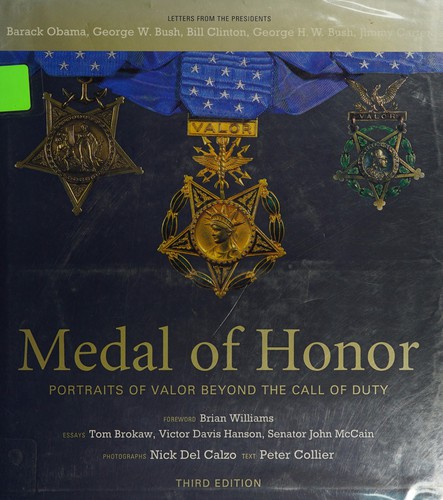
Produced in collaboration with the Congressional Medal of Honor Foundation: Del Calzo's formal portraits of living recipients, paired with Collier's profiles of what each of them did and what the years after looked like. The photographs carry as much weight as the text — ordinary faces, most of them older men you would walk past in a grocery store, each one attached to a citation you can barely read without stopping. What the collection quietly documents is the distance between the day that earned the medal and the decades of carrying it. This is the reference volume for the shelf; start here, then read the individual accounts.
Guadalcanal's naval campaign, 1942-43. The Navy losing ships faster than it could replace them, fighting night surface battles against Japanese forces that were, for a sustained period, tactically superior. Hornfischer wrote six of the best naval history books ever produced and this is arguably the best. You will learn what it means to fight a ship, what it costs to command one, and why the men who did it at Guadalcanal deserve more recognition than they have received.
February 1952. A nor'easter split two tankers simultaneously off Cape Cod, Massachusetts. Four Coast Guardsmen in a thirty-six-foot motor lifeboat went out in conditions that the manual said should not be survived. They were right about the conditions. They rescued thirty-two men anyway. The Coast Guard's most celebrated rescue operation and the single clearest answer to the question of what the service exists to do.
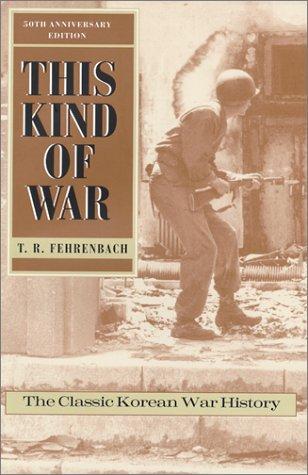
Korea. The forgotten war, unforgotten lessons. When light infantry trained for WWII conventional combat ran headlong into Chinese regulars who had been fighting since 1937, the results were instructive. Fehrenbach's analysis of why the Army was unprepared and what it cost them is still more relevant than most current doctrine. Still on the CGSC reading list. Still largely ignored until the next time it is relevant.
A thousand years of Rome in one volume, written by a Cambridge classicist who refuses to be boring about it. Beard covers the whole arc — village on a hill, republic, empire — and keeps asking the question the legends skip: how do we actually know any of this? She is more interested in how Rome worked than in reenacting its battles, which is exactly why she belongs on this shelf next to the campaign histories. Rome is where Western armies got their organizational DNA — the legion, the road network, the citizen-soldier bargain — and SPQR explains the machine those armies were built to serve. Read this before Rubicon and Caesar and both get sharper.
A day-by-day almanac of American history — a story for every date on the calendar, plus documents and trivia. It's unapologetically patriotic and light on nuance, so treat it as a starting point, not the last word. Good for a two-minute morning history habit.
The founding editor of MHQ asked the heavyweights of military history — Keegan, McPherson, Ambrose, and company — to take counterfactuals seriously for once, and the result is the anthology that made 'what if' respectable in the seminar room. The essays walk battles and campaigns from Salamis to the twentieth century, asking where history actually hinged and where it only looks like it did. That second question is the book's real value: half these essays conclude the hinge was smaller, weirder, or earlier than you'd guess. The essential nonfiction companion to everything else on this shelf — the discipline behind the fiction.
Leyte Gulf, October 1944. A formation of destroyers and destroyer escorts—antisubmarine ships—charged a Japanese fleet of battleships, heavy cruisers, and destroyers to protect the escort carriers of Taffy 3. The math was impossible. They knew the math was impossible. They did it anyway. The highest award for valor given to a ship in U.S. Navy history went to USS Johnston's commander that day. Every surface warfare officer should read this book twice.
Halberstam spent years investigating why the most credentialed, capable men in the Kennedy and Johnson administrations made the series of decisions that produced Vietnam. The answer is not stupidity. It is the particular kind of institutional failure that occurs when smart people optimize for appearing confident rather than being honest, when the costs of dissent exceed the costs of error, and when the system selects for people who tell leadership what leadership wants to hear. The book that every person who has ever written an optimistic assessment of an operation that was going badly should be required to read.
The one-volume history of the trade, from Napoleonic riflemen through the World Wars to the modern era, written by a firearms historian who knows the hardware cold and — rarer — knows what the hardware did to doctrine. Pegler is especially good on the pattern every army repeats: build a sniping capability in wartime, dismantle it in peacetime out of institutional distaste for the whole business, then scramble to rebuild it when the next war starts. That cycle, and the quiet contempt armies have always held for their best marksmen, explains more about this profession than any memoir. Read this first; it gives every other book on the shelf its coordinates.
The book that took 'rum, sodomy, and the lash' out behind the woodshed. Rodger dismantles the floating-prison myth of the eighteenth-century Royal Navy with actual evidence: muster books, courts-martial records, pay documents. What emerges is a working society — rough, dangerous, and often fairer than life ashore, where able seamen were skilled labor who knew their value and officers who couldn't manage men didn't keep crews. Every novel on this shelf sits on top of this social reality, and most get it half wrong. If you read one work of history to understand what the wooden world actually was, make it this one.
How the First World War started, written by the historian who understood mobilization plans better than the generals who executed them. Tuchman won the Pulitzer Prize. President Kennedy read it during the Cuban Missile Crisis and handed it to his brother. The lesson is not about 1914. The lesson is about what happens when military planning becomes so committed to the schedule that no political event can stop it — and what it costs when that lesson goes unlearned. Required at every level of professional military education for sixty years. The pattern it documents has not been corrected.

The history of the RAND intellectuals who invented nuclear strategy — counterforce, second strike, escalation ladders — mostly with slide rules, game theory, and a striking shortage of anyone who had seen a war up close. Kaplan takes them seriously as thinkers while showing precisely where the thinking detached from reality: elegant models of controlled nuclear exchange built by men who had never commanded anything and would never be under the fallout pattern. Forty years on, it remains the standard account of how war-gaming a theoretical apocalypse became a respectable career. If you want to understand where the vocabulary of deterrence comes from, it comes from here.
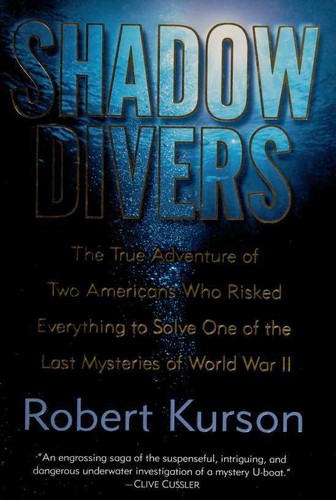
In 1991 a charter boat found a U-boat wreck sitting off the New Jersey coast where no U-boat was supposed to be. No records matched. Kurson follows the two wreck divers — John Chatterton and Richie Kohler — who spent six years and watched three men die trying to put a name on it. This is a book about identification discipline: chasing hull numbers, spare-parts tags, and German archives until the evidence actually closes, which is more rigor than some official histories ever applied. It reads like a thriller because it is one, but the engine underneath is the obligation to give fifty-six dead submariners back their names.
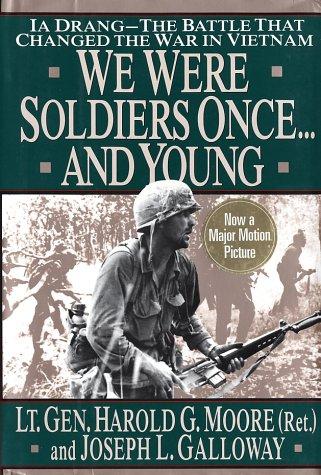
Ia Drang Valley, November 1965. The first major battle between U.S. Army and North Vietnamese Army forces. Moore commanded the battalion. Galloway was the reporter embedded with them. Both were there for the full three days. Both tell the truth, which is rare when officer and journalist collaborate. The helicopters that made the battle possible also made it impossible to disengage. That tension never resolved.

Peleliu and Okinawa, 1944-45. Sledge was a gentle, educated young man from Mobile, Alabama who became an 81mm mortar man in the 1st Marine Division and wrote the most honestly devastating memoir of the Pacific ground war. No heroics. No retrospective meaning-making. Just what it looked like from the coral and mud of two of the worst island battles the Marine Corps ever fought. Ken Burns called it one of the most profound accounts of war ever written by an American. He was right.
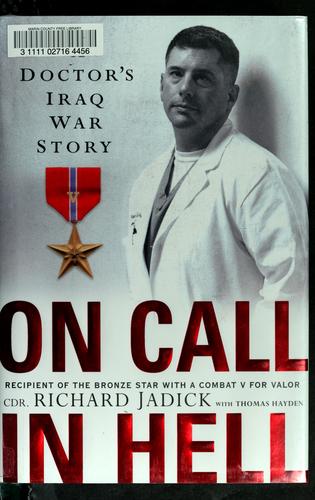
Jadick, a Navy physician, went into Fallujah with 1st Battalion, 8th Marines in November 2004 and made the decision the textbooks argued against: push the aid station into the city itself, so wounded Marines reached a doctor in minutes instead of a golden hour they didn't have. He was awarded the Bronze Star with V. Co-written with Thomas Hayden, the book is straightforward, unliterary, and completely convincing about what forward medicine costs the man providing it. The best account of battlefield medicine to come out of the Iraq War's hardest urban fight, and an argument — made in blood — about where the doc belongs.

October 3, 2009: roughly fifty American soldiers at Combat Outpost Keating, a position everyone from platoon level up knew was indefensible, against an assault force several times their size. Romesha led the counterattack that retook the outpost and received the Medal of Honor for it. His account is precise about terrain, timelines, and who did what — and just as precise that eight men died defending ground the Army had already decided to abandon. Read it with Tapper's The Outpost, which documents how Keating came to exist at all. Together they are the fullest record we have of one battle: the failure and the valor, both true at once.
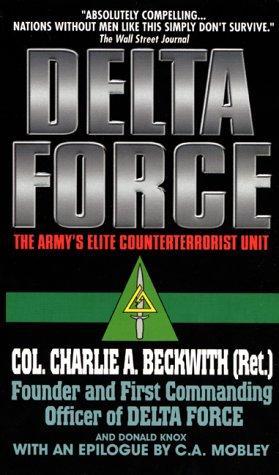
The founding document. Beckwith spent a year on exchange with the British SAS, came home convinced the Army needed its own version, and then spent the better part of two decades fighting the institution to build it — the bureaucratic knife-fighting takes up as many pages as anything tactical, and it's the best part. The book ends at Desert One, the burning wreckage of the Iran hostage rescue, which Beckwith commanded and never stopped owning. He was by most accounts a difficult, abrasive man, and the memoir doesn't hide it. Every Delta book that came after is standing on this one.
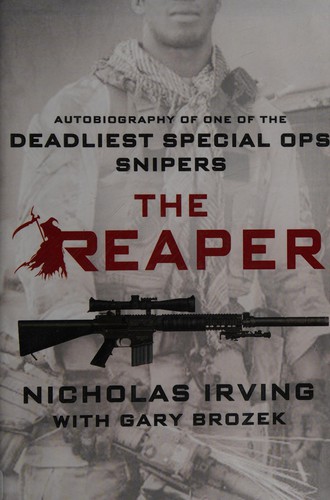
Irving was a 3rd Ranger Battalion sniper whose 2009 Helmand deployment — the book credits him with 33 kills in barely a hundred days — earned him the nickname the title wears. What separates this from the genre's chest-thumpers is the pacing: Irving writes the waiting, the math, and the exhaustion, not just the trigger pulls, and he's plain about the parts of the count that came down to luck and a good spotter. He's also candid that he initially failed his way toward the job before mastering it, which is more useful to a young shooter than any highlight reel. One deployment, told honestly, at the tempo the war actually ran.
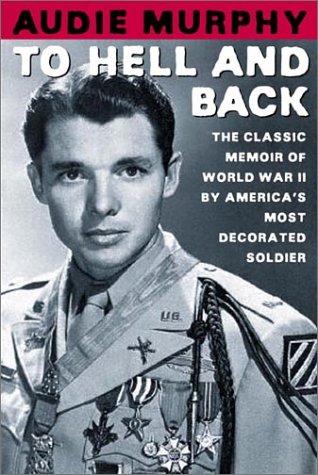
Murphy came out of the Second World War as the most decorated American soldier of the conflict, Medal of Honor included — a Texas sharecropper's son who was still a teenager for much of what this book describes. What strikes a modern reader is how little the memoir performs. He writes about the men around him more than himself, about exhaustion and loss more than glory, and his own most famous actions are rendered almost flatly. Hollywood later made the movie and cast Murphy as himself; the book is darker than the film was allowed to be. It remains the foundational American account of what extraordinary valor costs the person who displays it.
Before the Pentagon Papers, Ellsberg was a RAND analyst working on nuclear war plans, and this is his confession. What he saw in the early 1960s: launch authority quietly delegated far below the President, war plans with no option smaller than civilization-ending, and an official casualty estimate for the full plan in the hundreds of millions — briefed without anyone in the room flinching. He held these papers for decades intending to leak them alongside the Vietnam documents. The bureaucratic machinery he describes has been reformed since; how much, and how confidently we know that, is exactly the question the book leaves you holding.
The line-medic memoir. Evans carried the aid bag for an infantry platoon in Vietnam, and with co-writer Charles W. Sasser he put down what the job actually was: patrols, ambushes, and the seconds after someone screams for the medic — when everyone else gets to take cover and you don't. No strategic frame, no politics; the war at the range of a pressure dressing. It reads fast, sometimes pulp-fast, which is Sasser's style, but the core of it is unfakeable. If you want to understand why infantrymen call one man Doc for the rest of their lives, start here.
The most decorated American soldier of the Vietnam era wrote his memoirs and proceeded to indict the entire Army leadership structure, by name, with evidence. They took his Army career. He took theirs in the court of history. Whether Hackworth was right about everything is debatable. Whether the Army in Vietnam had serious institutional rot at senior levels is not. The most honest senior officer memoir ever published by an active American soldier. They got him for it.
Ganjgal, Afghanistan, September 2009: an ambush, repeated radio calls for artillery support denied, and Meyer driving into the kill zone again and again to bring out the living and the dead. He received the Medal of Honor. This book, written with combat veteran and author Bing West, refuses to be a clean hero narrative — Meyer is blunt that he considers the day a failure because the men he went in for were already gone, and blunt about the support decisions that left them there. It is a valor story and an accountability document in the same binding, which is exactly what this shelf exists for.

Glasser was an Army doctor at the evacuation hospital in Japan where Vietnam's worst casualties arrived, and in 1971 he published these accounts — part reportage, part reconstructed stories of the wounded men themselves — because the soldiers kept asking that somebody remember. It is one of the great books of the Vietnam War, full stop: spare, furious, and clinical in the way that makes the fury land harder. Fifty years on, nothing written about the medevac chain and what it carried has aged better. If this shelf puts one Vietnam-era book in your hands, it should be this one.
Mills led a sniper platoon of the Princess of Wales's Royal Regiment at Al Amarah, Iraq, in 2004 — which turned into a months-long siege of a compound called Cimic House, with his platoon on the rooftops for most of it. This is the best British soldier's memoir of the Iraq war and one of the best sniper books, period: profane, funny in the way squaddies are actually funny, and unflinching about what weeks of static fighting do to a platoon. Mills writes riflemen as people, not gun accessories. The sustained defensive fight it describes — thousands of rounds, day after day — is a chapter of that war most Americans never heard about.
Giunta was the first living recipient of the Medal of Honor for actions since Vietnam — Korengal Valley, 2007, breaking up an ambush and stopping the enemy from carrying off a wounded American. The defining feature of this memoir is his flat refusal of the pedestal. He calls himself a mediocre soldier who did what anyone in the platoon would have done, and he means it, and the book is honest about how strange and heavy the medal made ordinary life afterward. As a document of what the award actually does to the person wearing it, there is nothing else quite like it.
Hnida was a suburban family physician who talked his way into an Army commission after 9/11 — at an age when most doctors are planning retirement — and ended up doing a surge tour at a combat support hospital in Iraq, catching casualties fresh off the medevac. The tone will surprise you: it is funny, deliberately, in the way trauma teams are funny at 3 a.m., and then it stops being funny exactly when it should. What it captures better than any other Iraq medicine book is the CSH itself — career military and civilian doctors in uniform, black humor, unbearable days. If M*A*S*H rang true, this is its nonfiction descendant, two wars later.
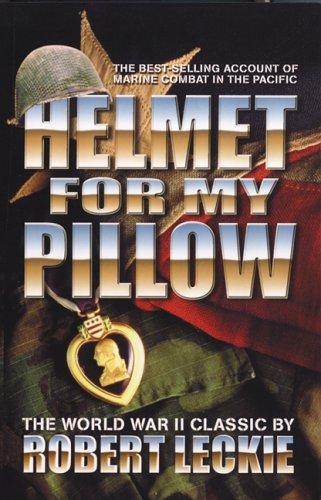
Guadalcanal through the island campaign, written with a journalist's eye and a Marine's unfiltered anger. Leckie is the counterpart to Sledge: sharper, more political, less restrained. Together, their two books constitute the Pacific ground war's ground truth in a way no official history has matched. Leckie writes about the Corps with love and without sentimentality, which is the only honest way to write about the Corps.

Bradley was a Special Forces captain leading an ODA into Operation Medusa in 2006, when NATO threw everything it had at the Taliban massing outside Kandahar City. What makes this one earn its slot is that it's actually about the job: working by, with, and through Afghan soldiers Bradley clearly respected, in a battle the coalition nearly lost. No superhero framing, no score-settling — just a company-grade officer's view of a genuinely desperate fight and the Afghans who stood in it with him. If you want to understand what Special Forces is for, as opposed to what the movies think it's for, start here.
Adam Brown's file should not exist. A drug addiction that put him in jail, a shattered dominant hand, a destroyed eye — any one of those ends a SEAL career, and he stacked all three on the way to SEAL Team SIX, teaching himself to shoot left-handed along the way. Blehm wrote this with Brown's family and teammates after he was killed in Afghanistan in 2010, and it shows: this is the rare operator book that spends more pages on the wife, the kids, and the wreckage of recovery than on the door-kicking. The genre sells supermen. This one is about a badly broken man who refused to stay that way, which is harder and worth more.
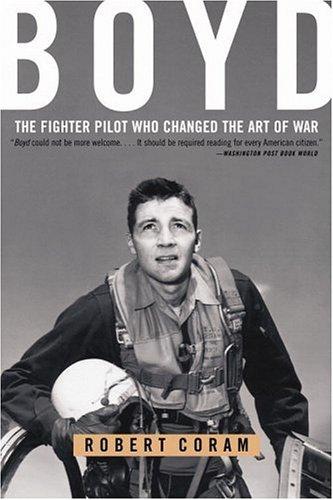
John Boyd was the most important military thinker of the twentieth century and an Air Force colonel nobody above his rank liked and everyone below it feared and followed. He invented energy-maneuverability theory, which changed how fighter aircraft are designed. He developed the OODA loop, which is now misunderstood by virtually everyone who cites it but still shapes military and business thinking globally. He wrote the maneuver warfare doctrine the Marine Corps uses. He did all of it while chain-smoking, borrowing Air Force computer time without authorization, and refusing every promotion that would have taken him off the flight line. The system never broke him because he never needed the system.
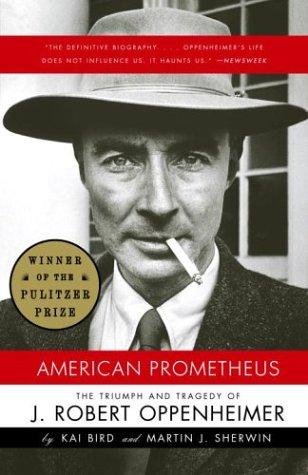
Twenty-five years of research, a Pulitzer Prize, and the source material for the Oppenheimer film — but the book is bigger than the movie had room to be. Bird and Sherwin give you the full arc: the brilliant, fragile physicist who ran Los Alamos, delivered the weapon, watched it used, and then spent the rest of his life arguing the government should be honest about what it had built — right up until that government pulled his clearance in a rigged hearing. It is a biography of one man and also of the moment American science got married to American security, for better and mostly for worse.
May 2, 1968: a Special Forces reconnaissance team is surrounded across the Cambodian border, and Roy Benavidez — hearing the radio traffic — jumps aboard a returning helicopter carrying a knife and a medic bag. Six hours later he had been wounded dozens of times and was responsible for the survival of the men who came out. Blehm reconstructs the mission from records and interviews, including the decades it took for the award to be upgraded to the Medal of Honor — the paperwork fight is part of the story, and it should embarrass the institution that required it. A rigorous account of one of the most extraordinary documented actions in American military history.
Henderson had more Carlos Hathcock material than one book could hold, and this is the rest of it — deeper into the Vietnam missions, the instructor years, and the man behind the white feather. Read Marine Sniper first; this is the second sitting with the same subject. The caution both books deserve: Hathcock's story passed through decades of Marine Corps oral tradition before it reached print, and some engagements read more polished than war ever is. What's beyond dispute is the man's discipline, his burns from pulling seven Marines off a burning AMTRAC, and his fingerprints on every scout sniper program since. The founding legend, second volume.
Louie Zamperini was an Olympic runner who became a B-24 bombardier, survived a plane crash over the Pacific, spent forty-seven days on a life raft, was captured by the Japanese, and endured Omori and Naoetsu POW camps under a guard who seemed to have selected him personally for destruction. He survived all of it. Hillenbrand researched and wrote his story with the same obsessive precision she brought to Seabiscuit. You do not need to care about WWII aviation to be destroyed by this book.
Desmond Doss refused to touch a weapon, was harassed and nearly court-martialed for it, and then, on the Maeda Escarpment at Okinawa, lowered wounded man after wounded man down the cliff face under fire — the first conscientious objector to receive the Medal of Honor. Herndon's account was built from interviews with Doss himself and the men who served with him, including some who had made his life miserable in training. The prose is plain and dated in places; the documentation is why it's here. Before the film, this was the record — and the record is more remarkable than the movie.
The definitive biography of Fleet Admiral Chester Nimitz — the man who rebuilt the Pacific Fleet after Pearl Harbor and commanded it to victory. Potter had access to Nimitz's papers and to Nimitz himself. The result is the best study available of how quiet, methodical competence under sustained pressure operates at the highest level of naval command. Nimitz never dramatized anything. Neither does Potter.
John Basilone held a section of the Guadalcanal line through a night of continuous assault in October 1942 and received the Medal of Honor for it. Sent home to sell war bonds — famous, safe, set for life — he requested a return to the Pacific, landed at Iwo Jima, and was killed on the first day. Proser tells it in an unusual first-person voice, writing as Basilone, which readers either accept or don't; the underlying record is solid either way. The title is the answer Basilone reportedly gave when asked why he'd go back, and it is the entire ethos of this shelf in four words.
Chernow's biography of Washington — the full life, from surveyor through the French and Indian War through Valley Forge through the Presidency. The military chapters cover what Washington was actually like as a commander: his strategic patience, his management of the Continental Congress, the near-mutiny at Newburgh, and what it looked like to hold together an army that had no legal right to exist and was losing for most of the war. The model of civil-military relations in a nation that had not yet decided what civilian authority over the military should look like. Pulitzer Prize winner.

Symonds, the Navy's premier WWII historian, wrote this account of Chester Nimitz's command of the Pacific Fleet from Pearl Harbor through the Japanese surrender — focused specifically on Nimitz as a commander rather than on the battles he directed. His argument: that Nimitz's greatest contribution was not tactical brilliance but the command climate he created — the willingness to give subordinates authority, to accept risk, and to protect capable officers from institutional politics while relieving commanders who couldn't deliver. The contrast with MacArthur runs through every chapter. On the CMC and CNO reading lists as the model of what theater-level command leadership looks like.
The one-volume condensation of Ambrose's two-volume biography of Eisenhower — the Supreme Allied Commander who managed the most complex coalition in history and then became the President who managed the most dangerous peace. Ambrose had access to Eisenhower's papers and to Eisenhower himself. What emerges is the portrait of a man of extraordinary administrative and diplomatic ability who could integrate the competing demands of Churchill, Montgomery, de Gaulle, Patton, and Marshall while maintaining strategic clarity. The WWII chapters on coalition command are the best case study available of what joint operations actually require.

Simo Häyhä was a Finnish farmer who, in the hundred-odd days of the Winter War, ran up the highest credited sniper tally ever recorded — over five hundred — using iron sights, in temperatures that froze rifle actions, against the invading Soviet army. Saarelainen, a Finnish Army officer and marksmanship specialist, interviewed Häyhä repeatedly before his death, and the portrait that emerges is the genre's great counterargument: no swagger, no torment, just a quiet man who considered it his duty, did it with terrifying competence, took an explosive round through the jaw, and went back to farming. The numbers carry legend's usual error bars. The man, by every account, did not exaggerate.
Four Fleet Admirals — Leahy, King, Nimitz, and Halsey — the only men ever to hold the five-star rank in the U.S. Navy, and the four very different approaches to command they represent. Leahy was the political advisor who managed the relationship between the military and the White House. King was the brilliant, difficult, feared architect of the global naval strategy. Nimitz was the methodical, steady commander who rebuilt a destroyed fleet. Halsey was the aggressive, charismatic leader whose errors at Leyte Gulf were as spectacular as his earlier victories. Borneman shows how a complex coalition command works when four powerful, competing personalities have to function as a system.
The definitive biography of Douglas MacArthur — the most brilliant, the most vain, the most maddening general the United States Army has ever produced. Manchester had full access to the primary sources and the literary skill to render a man who defies simple characterization: a genuine military genius who won campaigns that could not have been won, a political general who undermined civilian authority with a consistency that verged on insubordination, a commander who inspired worship and generated contempt in equal measure. The chapters on the Pacific campaign and on the Inchon landing are the best accounts of MacArthur's operational art available anywhere.
The most thorough biography ever written of Ulysses S. Grant — the most underrated commander in American military history and the most misunderstood president. Chernow spent a decade on the source materials. What emerges is the portrait of a man with an extraordinary military mind: methodical, aggressive at the right moments, comfortable with operational ambiguity, capable of sustaining will through catastrophic losses. The Civil War chapters are essential reading for any officer studying large-scale operational command under sustained political pressure and incomplete information.
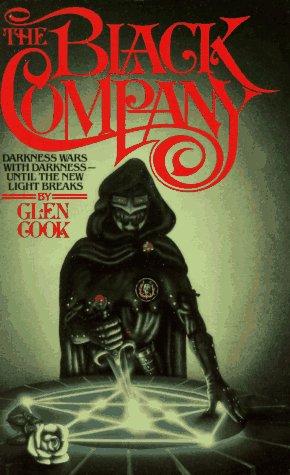
The book that invented military fantasy as we know it. Croaker is the physician and annalist of a mercenary company four centuries old, currently under contract to an empire run by something the songs call evil — and the Company takes the work, because that's what the Company does. Cook, a Navy veteran who wrote his early books on breaks at a GM assembly line, strips fantasy of its castles-and-destiny furniture and replaces it with troop movements, bad rations, and soldiers who gripe, gamble, and grieve like actual soldiers. Every grimdark author working today is standing in this book's footprint. Most of them know it.
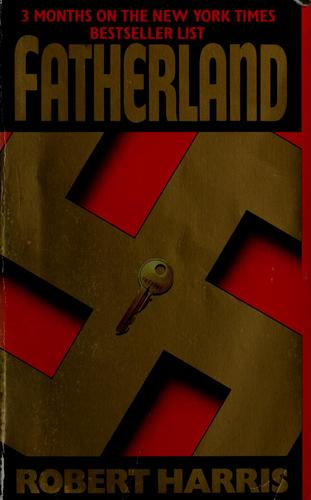
Berlin, 1964. Germany won, Hitler's seventy-fifth birthday is coming, and a homicide detective named Xavier March pulls a body out of a lake that leads him toward the one secret the Reich built its peace on. Harris, a British journalist before he was a novelist, does the thing that separates great alternate history from cosplay: he works out how a victorious Reich would launder its own memory, and then makes the discovery of the truth feel like a physical blow. The best-selling alternate history novel ever written, and it earned it. A detective story where the murderer is the state.
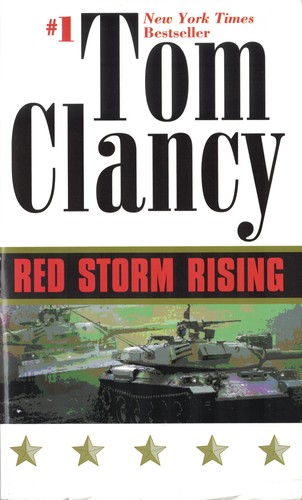
The big one. Clancy and Larry Bond gamed out a conventional NATO-Warsaw Pact war using Bond's Harpoon wargame, then wrote it down — convoy battles in the Atlantic, tank fights in Germany, a shooting war for Iceland, and no Jack Ryan to hold your hand. Forty years on, it's still the book officers hand each other when they want to explain what a peer war actually costs per day in ships, jets, and people. The characters are cardboard and the Soviets lose a little too politely, but nobody has written large-scale conventional war this legibly since. The genre's load-bearing wall.
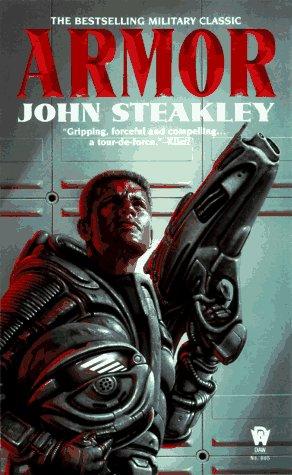
Felix wears the best powered armor humanity can build, and it does absolutely nothing for the part of him that keeps getting dropped onto a planet full of things that want him dead. Steakley's one great war novel is about the trick every grunt learns eventually: the person who fights isn't quite you. Felix calls his 'the Engine.' The middle section wanders off with a different protagonist and you'll wonder why — stay with it. The drop sequences are still the standard everyone else's powered-armor scenes get graded against. Heinlein built the suit; Steakley told you what it costs to live in one.
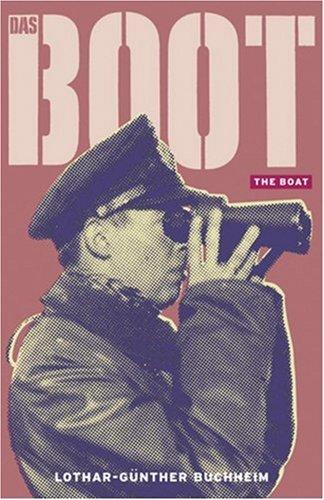
Buchheim rode U-96 as a war correspondent in 1941, and thirty years later turned what he saw into the definitive novel of submarine warfare from the losing side. Forget the movie's greatest hits — the book is longer, wetter, and meaner: weeks of boredom and diesel stink punctuated by depth-charge sequences that read like being sealed in a steel drum while someone beats it with God's own hammer. Nobody in the boat believes the communiqués anymore; they just want to surface one more time. Required reading for understanding why 75 percent of the U-boat force never came home — and why the sea doesn't care whose side you're on.
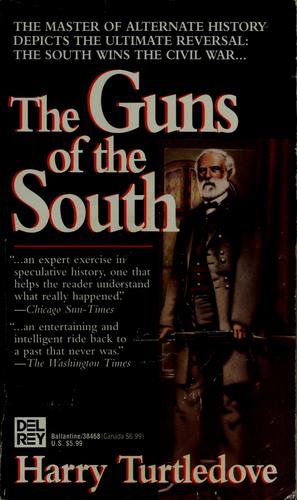
Time-traveling Afrikaner supremacists hand Robert E. Lee's army AK-47s, which sounds like a joke premise until you watch what Turtledove — a man with a PhD in history — does with it. The rifles win the war in a hundred pages; the remaining three hundred are about what the Confederacy actually was, as Lee himself is forced to confront the thing his benefactors want preserved. It's the rare counterfactual that uses its gimmick to argue about history rather than escape from it, and the Civil War detail is impeccable throughout. The genre's most famous novel, still one of its most serious.
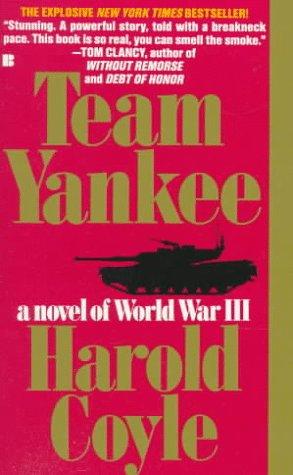
Coyle was a serving Army armor officer when he wrote this: World War III from the turret of one tank company inside Hackett's Third World War framework. No White House scenes, no submarine chases — just a company commander named Bannon fighting his fourteen tanks through the Fulda-corridor war every Cold War tanker trained for and never fought. Generations of armor lieutenants got handed this book by their platoon sergeants for a reason: it teaches battle drills, casualty math, and what command actually feels like at the only echelon where you can smell the diesel. Still the best company-level war novel in the genre.

An astronaut is accidentally left behind on Mars and has to engineer his own survival until a rescue mission can reach him. The fiction that the Space Force training culture should study — not for the space, but for the problem-solving architecture. Watney's approach to an impossible situation is methodical, documented, creative within constraints, and unfailingly honest about what he does not know. He also grows potatoes in his own feces on an alien planet. Peak can-do spirit.
The Axis won, America is partitioned between Japan and the Reich, and the most subversive object in the occupied world is a novel imagining the Allies had won — though not the way it actually happened. Dick's 1962 Hugo winner is less interested in wehrmacht-on-the-Potomac spectacle than in what occupation does to the inside of people's heads: the small collaborations, the antique-Americana trade, the I Ching consulted like a staff officer. It's a strange, interior, sometimes maddening book that ends by questioning its own reality. Every alternate history written since is downstream of it, and most of them are shallower.
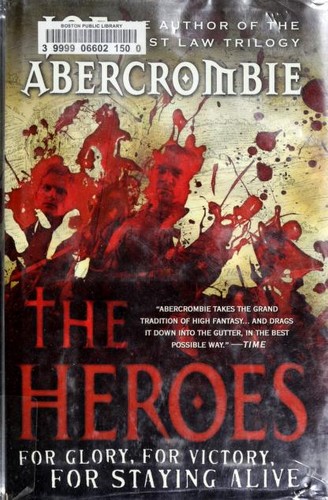
Three days, one battle, one worthless hill with some standing stones on it. Abercrombie's best novel is the whole machinery of war compressed into a single engagement: generals fighting for reputation, colonels fighting for promotion, and infantry fighting because the man next to them is fighting. There's a sequence that follows a single skirmish by jumping from soldier to soldier as each one kills the last — a chain of perspectives, each alive for a page — that belongs in any anthology of war writing, genre or otherwise. Bleak, funny, and dead accurate about the distance between the dispatches and the ditch. The title is doing a lot of work, and all of it is sarcastic.
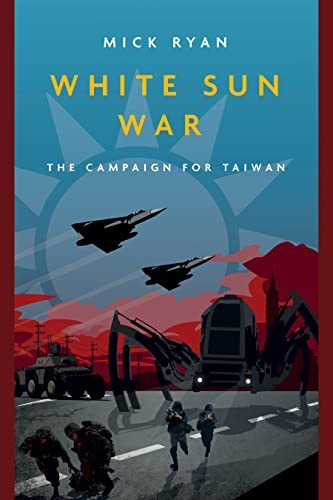
A retired Australian Army major general writes the Taiwan war as future history — drones, loitering munitions, contested satellites, and the ugly math of amphibious assault against a prepared defender. Ryan spent a career thinking about how militaries adapt, and it shows: this is less a thriller than a campaign study wearing a novel's clothes, which is exactly why war colleges assign it. If 2034 is the warning shot, White Sun War is the staff ride. Read it for the operational detail; forgive it the prose, which is workmanlike and knows it.

Orhan is a colonel of engineers — a bridge-builder, a scrounger, an expert in creative supply-chain paperwork — and through a cascade of disasters he ends up the senior officer defending the empire's capital against a siege it cannot survive. No chosen one, no magic sword: just field engineering, requisition fraud in a good cause, and improvised logistics against impossible odds, narrated by a man whose first language is sarcasm. Parker (a pen name of novelist Tom Holt) has spent a career writing about how things actually get built and broken, and this is the funniest, sharpest thing on this shelf. Every engineer and S4 will feel personally seen.
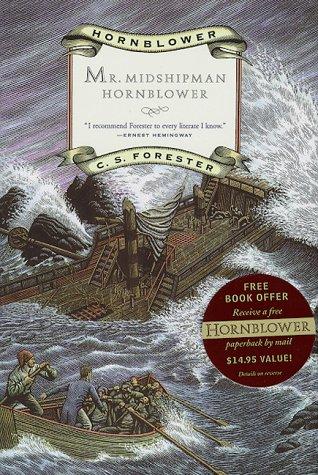
The start of the other great naval saga — chronologically, anyway — and the best entry point Forester ever wrote. Seventeen-year-old Hornblower reports aboard seasick, awkward, and mathematically gifted, and the book is a series of small-boat actions and impossible assignments that forge him into an officer one humiliation at a time. Forester basically invented the modern naval-fiction template here: the junior leader learning that command is a performance you give until it becomes true. Generations of actual officers have treated these books as leadership case studies with cannon smoke, and they're not wrong. If O'Brian is the literature, Hornblower is the field manual.

Drake rode with the 11th Armored Cavalry in Vietnam and Cambodia, came home, and wrote about a future tank regiment the way a man writes about things he actually saw. The Slammers stories are not adventures. They're about what armored warfare does to the people inside the vehicles and the civilians outside them, told with zero editorializing — Drake trusts you to notice the horror without a narrator pointing at it. Some readers mistake that restraint for endorsement. It isn't. This is the coldest, most honest mercenary fiction in the genre, and every author writing 'gritty' military SF since owes him royalties.

Charles Lindbergh — aviator, celebrity, isolationist — beats Roosevelt in 1940, and America's slide into accommodation with Hitler is narrated by a Jewish kid in Newark watching his parents lose the country one radio broadcast at a time. Roth's genius move is scale: no war rooms, no resistance cells, just one family's kitchen as the national mood curdles around them. It's the most literary book on this shelf and the most frightening, because nothing in it requires villains — only ordinary people deciding the trouble doesn't apply to them. A masterclass in how democracies fail politely.

The World War III novel with no American characters. Peters, a career Army intelligence officer who spent his service studying the Soviets, tells the invasion of West Germany entirely from the Russian side — privates, staff officers, and generals who believe in what they're doing and are often better at it than NATO wants to admit. It's the anti-Red Storm Rising: no technology porn, all people, and the unsettling discovery that the enemy has NCOs with problems just like yours. The best argument in fiction for taking your adversary seriously as human beings who intend to win.
The foundational maneuver warfare doctrine document produced in 1989 under General Alfred Gray. Not a checklist. Not a manual. A philosophy of war — what war is, how friction and uncertainty dominate it, and what it demands of the people who fight it. The thinking draws from Clausewitz, Boyd's OODA loop, and the Wehrmacht's Auftragstaktik. Available as a free PDF from the Marine Corps website. That does not make it light reading. Read it slowly. Read it twice. Then watch how rarely the people who claim to have read it actually apply what it says.
Corbett published this analysis of maritime strategy in 1911 — the theoretical complement to Mahan's sea-power history and, arguably, the more practically useful of the two. Where Mahan argued for concentrated battle fleets seeking decisive engagement, Corbett argued that control of maritime communications — sea lanes — is the actual objective of naval strategy, and that this control can be achieved through operations short of decisive fleet engagement. His analysis of the relationship between limited war, maritime blockade, and land power is more applicable to the current strategic environment than Mahan's fleet-concentration doctrine. On the CNO reading list as the second foundational text of naval theory.
Galula served as a French Army officer during the Algerian War and wrote this analysis in 1964. His framework — insurgency is a competition for the support of the population, which is won or lost at the local level through security, governance, and development, in that order — became the theoretical backbone of FM 3-24 and the doctrine that governed American strategy in Iraq and Afghanistan. Galula is the Clausewitz of counterinsurgency: the theorist who derived principles from experience rather than imposing principles on it. Still the essential text for anyone involved in irregular warfare.
Huntington's 1957 study of civil-military relations — the theoretical framework that American civil-military relations has operated within (and argued against) for seventy years. His argument: that the military is a profession with its own ethic, that this professional ethic is fundamentally conservative, and that the proper relationship between the military and its civilian masters requires both sides to understand and respect this. The book is the reference point for every subsequent debate about military professionalism, civilian control, and the role of military advice in democratic governance. Required context for the Dereliction of Duty and Supreme Command arguments.
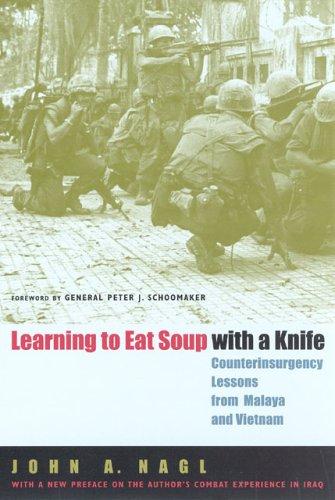
Nagl's doctoral dissertation compared the British Army's adaptation to insurgency in Malaya with the U.S. Army's failure to adapt in Vietnam, and published it in 2002 — one year before the Iraq War. His central argument: that military organizations are or are not institutional learning organizations, and that the difference determines whether they can adapt to insurgencies that their doctrine was not designed to fight. The Malaya counterinsurgency and Vietnam counterinsurgency are studied in parallel throughout. The book shaped the doctrine and the authors of FM 3-24 which the Army published four years later.
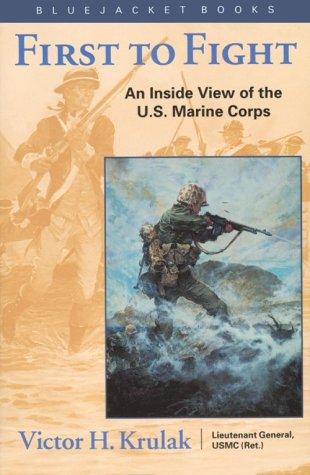
Lieutenant General Victor Krulak served in WWII and Korea, commanded Marine forces in the Pacific, and wrote this account of how the Marine Corps maintains its institutional identity — what the Corps is, why it is the way it is, and how it has survived repeated Congressional attempts to eliminate it since 1947. The book is the essential text for understanding Marine Corps institutional culture from the inside: the amphibious mission that defines the Corps's reason for existence, the training culture that distinguishes Marine recruit training from other services, and the leadership philosophy the Corps has maintained across a century of organizational pressure. On the CMC heritage reading list as the internal account of what the institution is for.
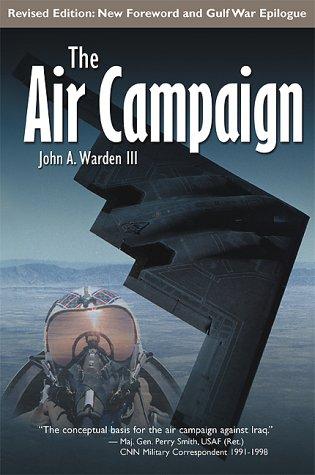
Warden wrote this analysis of air campaign planning in 1988 — the theoretical framework behind the AirLand Battle concept and the planning model that shaped the air campaign in Desert Storm. His five-rings model (leadership, system essentials, infrastructure, population, fielded forces) provides a framework for thinking about what an air campaign is actually trying to accomplish: not destroying the enemy's fielded forces but collapsing the system that sustains them. Controversial within the Air Force when published, vindicated by the Gulf War, and still the most systematic available framework for thinking about what air power can accomplish when properly planned. On the CSAF reading list as the doctrine that shaped modern airpower.
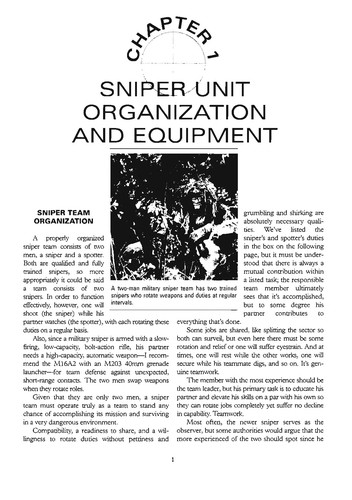
Not a memoir — a manual, and the most influential unofficial one the profession has. Plaster ran recon with MACV-SOG in Vietnam, then spent the following decades codifying the sniper's trade: marksmanship, ballistics, camouflage, stalking, judging wind, building hides, and the field-craft that separates a shooter from a sniper. Military and police programs have leaned on it for a generation, which is the only endorsement that matters for a training text. It's on this shelf because you can't honestly weigh the memoirs without understanding the discipline they describe — and because Plaster's dry, exacting completeness is itself a portrait of the mindset. The textbook behind every story here.

Not a book you read; a book that gets read at 2 a.m. under red light. Emergency War Surgery is the Defense Department's actual manual for combat casualty care — the distilled, revised-by-every-war doctrine for penetrating trauma, burns, blast injury, and triage when the casualties outnumber the tables. It is on this shelf for one reason: everything the memoirs describe as instinct is written down here as procedure. Civilian readers will find it clinical to the point of cold. That is the point. This is the institutional memory of every doc who ever worked a mass-casualty event, in tabbed form.
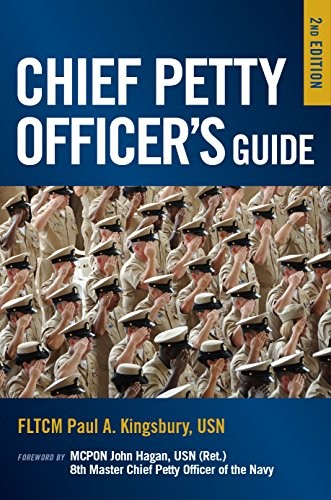
The mess's own manual — what the anchors actually mean and what the Navy expects of a Chief. If you're making Chief, read it. If you work for one, it explains a great deal.
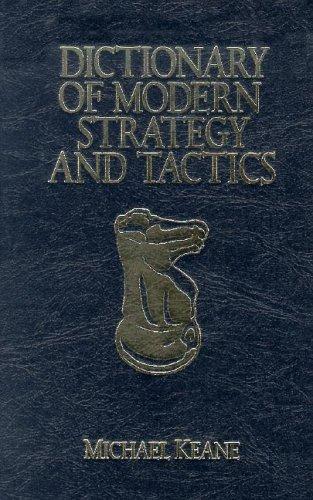
A reference, not a beach read — but a fast way to make sure you and the person you're arguing with actually mean the same thing by 'operational.' Keep it near the desk.
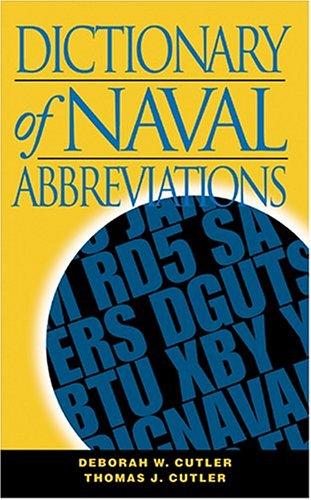
Because the Navy has never met a phrase it wouldn't rather turn into four capital letters. The decoder ring for every message that assumes you already know.
The classic first-tour survival manual for the brand-new division officer who's suddenly responsible for a division and has no idea what he's doing yet. Old but load-bearing — leadership at the deckplate hasn't changed that much.
The book every war college makes you read and most people quote without opening. Walzer builds just-war theory out of real cases, not abstractions — when a war is worth fighting, and what you're still not allowed to do once you're in it. Read it before you have an opinion about ROE.
The actual textbook on LOAC, written by a Marine turned law professor who's seen both sides of the courtroom. Distinction, proportionality, command responsibility — the rules that decide whether a shot is lawful or a war crime. Dense, but this is ground truth on ROE.

Mao wrote the manual every insurgency since has cribbed from: the guerrilla swims in the population like a fish in water. Read it not because you admire the man, but because the people trying to kill your buddies have it memorized.
Herman is the Harvard psychiatrist who mapped the territory before most of the country would say the word trauma out loud. This 1992 book connected combat veterans, assault survivors, and political prisoners into a single clinical picture — and introduced the concept of complex PTSD the VA still argues about. It is not a veterans' book specifically, which is exactly why it belongs here: it shows that the machinery of what happened to you is the same machinery documented in every survivor population on earth. Dense in places, and worth every page. Read it alongside The Body Keeps the Score.
The science book this genre needed. Hutchinson — a physicist turned sports journalist and a former elite runner — spent a decade chasing the question every motivation guru waves at: when your body says it's done, is it actually done? The evidence-backed answer is mostly no; the limit is a negotiation your brain conducts on your behalf, and it low-balls you. Heat, pain, oxygen, fuel, belief — each gets a chapter, each is rigorous, none of it is a poster. If you want the mechanism underneath Goggins' 40% rule instead of the slogan, this is the book. The rare shelf entry with citations.
Easter's argument: modern life has engineered away nearly all discomfort, and it's quietly wrecking us — so he frames the book around a brutal month-long caribou hunt in the Alaskan backcountry and reports back on hunger, boredom, cold, and carrying heavy things over bad terrain. It's journalism, not bro-science; he interviews actual researchers and the evidence mostly holds up. For military readers the thesis lands differently, because the military is one of the last institutions that deliberately keeps discomfort in the curriculum. This book explains why that's a feature. One of the best-written entries in a genre not known for prose.
Morris was a Marine infantry officer before he was a war correspondent, and he survived an IED strike in Baghdad before he was diagnosed with PTSD. The Evil Hours is his biography of the diagnosis itself — where it came from, how the VA treats it, which therapies have evidence behind them and which are mostly waiting rooms. What makes it essential is the doubled perspective: a patient's memoir and a reporter's investigation running through the same book. If you want one modern volume that explains what PTSD actually is without flinching or preaching, this is it.
Jacobs earned the Medal of Honor in Vietnam, which buys him the standing to say what this book says: boot camp is theater with a purpose, and once you see the script, the yelling stops working on you the way it's designed to. He and Fisher walk through what initial training across the branches is actually built to accomplish — stripping you down, rebuilding you as part of a unit — with stories from people who went through it in every era. Not a cheat sheet of packing lists and PT standards. Better: an explanation of the machine, so you arrive knowing it's a machine.

Wood won the Pulitzer Prize for his reporting on severely wounded veterans, and this book is his full accounting of moral injury — the wound he argues defines the post-9/11 generation the way shell shock defined 1918. Built on years of interviews with infantrymen, medics, drone crews, and chaplains, it separates moral injury from PTSD cleanly enough that the distinction finally sticks, and it is unsparing about how little the DoD and VA had built to address it. If Shay's books are the classical foundation, this is the field report from our wars. Start here if the word that fits is guilt, not fear.

Willink's non-leadership book: no client stories, no business framing, just short declarative bursts about getting up, doing the work, and not negotiating with yourself — formatted like scripture and designed to be opened at random when your discipline flags. The poster-to-substance ratio is real here; there are pages that are essentially typography. But the central mechanism is sound and Willink lived it for twenty years in the SEAL Teams before he sold it: discipline isn't punishment, it's the thing that buys you options. Keep it in reach for the mornings when the longer books feel like homework. That's the use case it was built for.

The Mercury astronauts and the test pilots they came from. Wolfe spent years with these men trying to identify what "the right stuff" actually is — the quality that cannot be taught, cannot be named, can only be demonstrated, and evaporates the moment you try to explain it. Edwards Air Force Base in the 1950s was the crucible. The culture it produced, with all its glory and pathology, was the foundation of American aerospace. This book is how you understand what that culture was.
Marlantes wrote Matterhorn. This is the nonfiction companion: his own account of what he did in Vietnam, what he was trained to do, and what nobody prepared him for — the moral and psychological weight of killing. He draws on Jungian psychology, mythology, and his own experience to argue that the military trains warriors to kill and then fails to prepare them for what killing does to a human soul, and that this failure produces the veteran crisis. More uncomfortable than most books on the subject. More honestly argued. The gap between what Marlantes describes and what the military currently does about it is still very large.
The loyal opposition, shelved deliberately next to the books it's arguing with. Magness — an elite running coach who's seen the wreckage of fake toughness up close — makes the case that the bulldoze-through-everything model gets resilience backwards: real toughness is accurate self-assessment under stress, not performative callousness, and the yell-louder school mostly produces people who hide injuries and break quietly. Anyone who's watched a unit run on bravado until something snapped will recognize every chapter. Read Goggins for the fire, then read this for the engineering. The two books disagree, and the disagreement is where the actual education is.
Junger embedded with a platoon of the 173rd Airborne Brigade in the Korengal Valley — the most dangerous valley in Afghanistan — for months at a time over two years, and wrote the account of what sustained combat does to the men who fight it. Not what it does to their politics or their opinions about the mission. What it does to their bodies, their friendships, their relationship to fear, and — the observation that drives everything — why so many of them miss it when it is over. The companion to Tribe and the best nonfiction account of what infantry combat in Afghanistan actually looked like at the platoon level.
A novel published in 1958 that shredded American foreign policy in Southeast Asia before Vietnam made the critique self-evident. The contrast between the ugly American who lives in the embassy compound and the quiet engineer who actually understands the culture he is working in is the heart of the book. It went onto the CJCS list because the critique remains accurate across every generation that has tried to export American values through institutions that do not understand the societies they are operating in. Short. Devastating. Perpetually relevant.

The ISS commander who became briefly famous for a David Bowie cover in zero gravity wrote the most practically useful account of how to maintain performance under extreme conditions. Hadfield spent thirty years training for missions that were repeatedly canceled, delayed, or altered beyond recognition, and developed a philosophy of preparation and equanimity that is the operational opposite of anxiety. His framework for thinking about unexpected scenarios — prepare for the worst, be genuinely okay with the worst, and then go ahead and do your best — is more useful for military leadership than most books actually written about military leadership.
Ricks embedded with a Marine boot camp platoon at Parris Island in 1995 and wrote the definitive account of what recruit training actually does — and why it does it. The book argues that the Marine Corps is creating a separate warrior culture at a time when American civilian society is drifting away from any concept of shared sacrifice. The cultural argument is more provocative now than it was then. The first hundred pages on what actually happens at Parris Island are essential for any Marine officer who wants to understand what their enlisted Marines went through.
Coyle's follow-up to The Talent Code shifts from individual development to group performance: what makes some teams — Navy SEAL platoons, the San Antonio Spurs, Pixar — dramatically outperform others with comparable talent? His three findings: high-performing groups build safety (members can take risks without losing belonging), share vulnerability (leaders signal fallibility to create trust), and establish purpose (a clear story of why the group exists). The research base is diverse and the examples are concrete. The application to military unit cohesion, particularly in the NCO corps, is direct: the same dynamics that make a startup or a championship team outperform apply to the small-unit leadership that determines whether a rifle company fights as a team or as a collection of individuals.
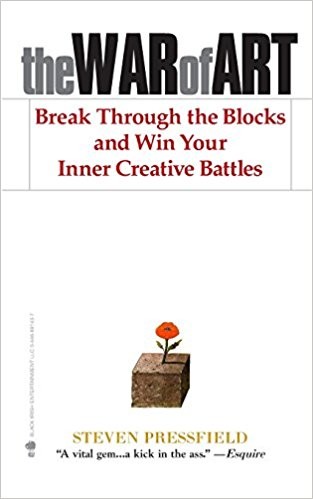
Pressfield — a former Marine best known for Gates of Fire — wrote this short book about why people don't do the work they know they should, and gave the enemy a name: Resistance, the internal force that manufactures every excuse, distraction, and convenient emergency between you and the hard thing. It was written for blocked writers, but the mechanism is universal; anyone who's watched themselves reorganize a wall locker instead of studying for a board has met Resistance personally. His answer is the most military idea in the genre: turn pro. Show up on schedule, do the work like it's a duty day, and stop waiting to feel like it.