Strategic Reading Program
The Army War College Strategic Reading Program is designed for senior leaders studying at the graduate level of professional military education. The list goes beyond tactical and operational reading into grand strategy, civil-military relations, geopolitics, and the long-range history of why military campaigns succeed or fail at the political level. It is the reading program for officers who will advise civilian leaders, command at the joint level, and be responsible for the consequences of strategic decisions that outlast their careers.
Buy links go to Bookshop.org (which supports independent bookstores) and Amazon. Some are affiliate links — if you buy, we earn a small commission at no extra cost to you. As an Amazon Associate we earn from qualifying purchases. It never affects which books are on this list or how we describe them. How this works.
Written 2,500 years before your current chain of command was born. Every general cites it. Most politicians misquote it. Read it so you can tell the difference — and so you understand why the enemy who reads it too is not automatically beaten. Five chapters take longer to internalize than they do to read. That is the point.
Twenty-eight essays by the field's leading scholars on the development of Western strategic thought from Machiavelli through the nuclear age. Paret edited the standard reference for the study of how military thought evolved alongside the political and technological circumstances that shaped it: Jomini, Clausewitz, Mahan, Douhet, Liddell Hart, and the theorists of guerrilla warfare, nuclear deterrence, and limited war. Not light reading. The indispensable graduate-level introduction to why military strategy looks the way it looks and why every generation has to rediscover the same arguments about the relationship between force and policy.
The book everyone in uniform claims to have read and almost no one finishes. War is the continuation of policy by other means — the sentence that launched a thousand PowerPoint slides and at least as many wars entered without an exit strategy. Get past chapter three and you are ahead of 80% of O-6s. Get through Book Eight and you understand why it keeps going wrong.
The most comprehensive single-volume account of strategic thought ever published — from the Greek city-states through the wars in Afghanistan and Iraq. Freedman covers military strategy, political strategy, business strategy, and the theory of change across three thousand years with the rigor of an academic and the clarity of a practitioner. The central argument: that strategy is about managing an irreducible gap between aspiration and the means available to achieve it, and that this gap has always been the central problem of anyone who has ever tried to accomplish anything against resistance.
Gaddis runs the Grand Strategy program at Yale and wrote this book from the same curriculum he teaches to both undergraduates and the professional military officers who attend as fellows. His argument, built from Thucydides through the Cold War: that grand strategy is the alignment of unlimited aspirations with limited capabilities, and that the great strategists throughout history are distinguished not by intelligence or resources but by the capacity to maintain that alignment under the pressure of events that constantly demand its abandonment. The most readable available introduction to the theory of strategy, and the one assigned most widely at senior military and civilian education programs. Required reading before you pick up anything else on this list.
Four case studies in how democratic leaders have controlled — or failed to control — their military commanders in wartime: Lincoln, Clemenceau, Churchill, Ben-Gurion. Cohen's argument is that the successful ones did not stay in their lane. They interfered, questioned, argued with their generals, and demanded answers when the answers were not forthcoming. The unequal dialogue between civilian authority and military expertise is not a dysfunction of civil-military relations — it is its healthiest form. Every officer who has thought "the politicians should just let us fight" needs to read this before saying it again.
Mearsheimer's offensive realism — the argument that great powers inevitably compete for regional hegemony because the anarchic international system provides no guarantees of security, and that states therefore maximize power rather than optimize it — is the most systematic challenge to the liberal internationalism that shaped American foreign policy after the Cold War. His predictions, dismissed when published in 2001, have been borne out by Chinese behavior and Russian revanchism in ways that make the book more relevant with each year. On the Army War College and CJCS reading lists as the theoretical counterweight to the liberal institutionalist assumptions that most senior officers absorbed in their undergraduate education.
Brands edited the 2023 Princeton successor to Peter Paret's foundational 1986 anthology — a comprehensive survey of strategic thought from Machiavelli through the AI era, written by leading current scholars. Where the Paret volume covered strategic thinking through the Cold War, Brands's volume adds chapters on irregular warfare, nuclear proliferation, terrorism, cyber, space, and AI. Organized to be read in sections and designed for exactly the purpose military schools use it: as the authoritative reference for what the field of strategy actually says about the problems currently facing military and civilian planners. On both the CMC and CGSC core reading lists as the updated standard.
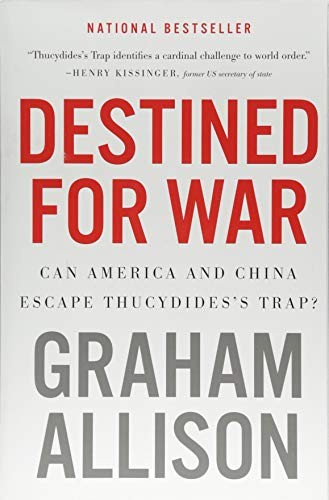
Allison identified the Thucydides Trap — the historical pattern in which a rising power threatens a ruling power and the resulting structural stress makes war more likely — and applied it to the U.S.-China relationship. Twelve of the sixteen cases he examined ended in war. The book is not a prediction but a warning: that the forces driving the United States and China toward conflict are structural, not the result of bad decisions by either side, and that avoiding the trap requires deliberate strategy rather than optimism. Allison directs Harvard's Belfer Center and has advised multiple Secretaries of Defense. On both the INDOPACOM Commander's reading list and the Secretary of the Air Force's China list because understanding the trap is the first step to not walking into it.
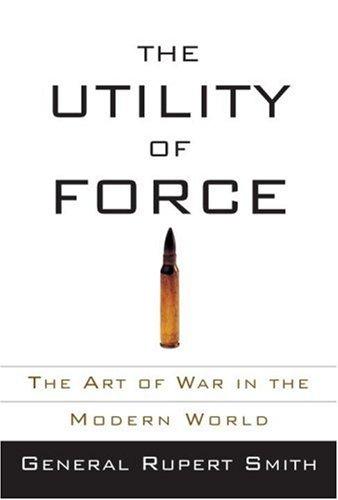
General Sir Rupert Smith commanded British forces in the Gulf War, in Bosnia, and in Northern Ireland, and wrote this analysis of how war has changed since 1945. His central argument: that interstate industrial war — the form of conflict that dominated military thinking from 1914 to 1991 — has given way to "war amongst the people," and that the military institutions built for industrial war are consistently unsuited to the wars they are actually asked to fight. The book is the most systematic analysis of why military success does not translate into political success in modern conflicts. On the CJCS reading list because the argument applies to every operation since the Cold War.
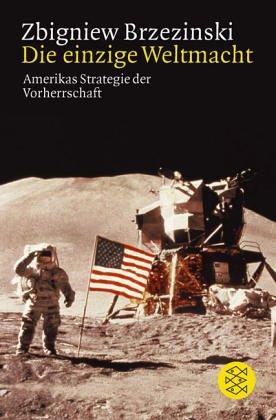
Brzezinski served as National Security Advisor under Carter and wrote this framework for American grand strategy in Eurasia in 1997 — arguing that control of the Eurasian landmass remains the central prize of geopolitical competition, that maintaining American primacy requires managing the relationship between Europe, Russia, China, and the pivotal states of Central Asia, and that Ukraine is the geographic pivot on which Eurasian power balance turns. Published twenty-seven years before the Russian invasion of Ukraine, the book reads as the analytical foundation for understanding why that invasion happened and what its strategic consequences are. On the Army War College reading list as the framework that makes current events legible.
Huntington's 1996 argument — that the post-Cold War world would be organized by civilizational fault lines rather than ideological ones, and that the major conflicts of the coming decades would occur at those fault lines — was dismissed when published and has been validated by nearly every major conflict since. The framework is not deterministic; Huntington did not argue that civilization-based conflict was inevitable, but that understanding civilizational identity was prerequisite to understanding why the post-Cold War liberal order had failed to produce the convergence it predicted. On the CJCS reading list because the strategic environment the joint force operates in is the one Huntington described.
Neustadt taught at Harvard's Kennedy School and May was a military historian. Together they built a course on how decision-makers use — and misuse — history, and this book is the result. Their central argument: that the most common errors in policy and strategy come from drawing analogies from history too quickly, too loosely, and without examining whether the historical case actually resembles the current situation. The case studies, drawn from American foreign policy crises, make the argument concrete. On the CJCS reading list because the analysis applies to every major decision made above the battalion level.
Knox and Murray edited this analysis of the major military revolutions from the gunpowder era through the information age — the moments when technology, doctrine, and organization combined to fundamentally change how war is fought. Their framework distinguishes between 'revolutions in military affairs' (technology-driven changes in military capability) and 'military revolutions' (changes that reshape entire societies and their relationship to war). The distinction is essential for thinking about AI, autonomous systems, and space: not every new technology produces a military revolution, and the institutions that bet everything on incremental technological advantage often lose to adversaries who changed the game. One of six CGSC core texts.
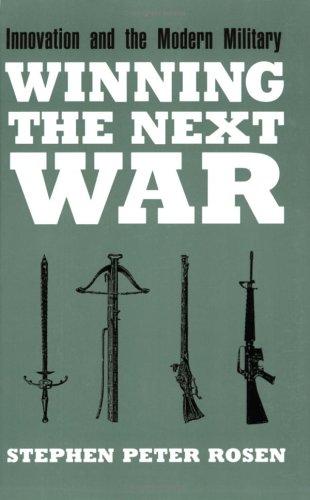
Rosen's analysis of how military organizations innovate — why some services develop new doctrine and new organizations before a war rather than during it, and why others cannot. His case studies — the development of carrier aviation between the wars, the creation of Marine Corps amphibious doctrine — are the best available documentation of the internal politics of military innovation: how new ideas get protected from institutional resistance, who champions them, and what structural conditions allow change. The book that everyone who has read about defense reform should read next.
The Army's post-Vietnam autopsy, written at the War College itself: we won every battle and still lost, because nobody could say what the war was actually for. Summers drags Clausewitz into Saigon and asks the question the brass wouldn't. Required reading precisely because it's uncomfortable.
The case for winning by not ramming your head into the enemy's strongest point — the 'indirect approach' distilled from 2,500 years of battles. Liddell Hart oversells his own theory, but the core insight still shapes how the West thinks about maneuver. Read it, then argue with it.
A Nobel economist explains why the threat that leaves something to chance can beat the threat you fully control. Cold War deterrence logic that reads scarily current every time somebody rattles a saber. Dry in spots, indispensable throughout.
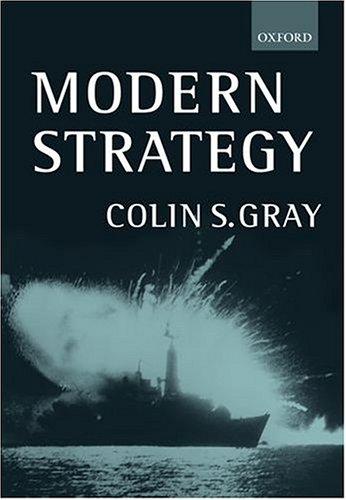
Colin Gray's grand synthesis: strategy is eternal, its character always changing, and technology never repeals the logic. Dense, opinionated, and the closest thing to a unified field theory of strategic studies. Not a beach read — a career reference.

Strachan's clear-eyed argument that the West keeps mistaking operations and tactics for strategy — and then wonders why the wars don't end. Sharp historical essays that double as a diagnosis of Iraq and Afghanistan. Short, blunt, and it lands.

Four enduring traditions — Hamiltonian, Jeffersonian, Jacksonian, Wilsonian — that quietly steer every U.S. foreign policy fight. Once you see the framework you can't unsee it in any cable-news argument. The most useful lens for American grand strategy you'll pick up in a week.

The modern theory of civil-military relations: it's a principal-agent game, and the military can 'work' or 'shirk' whether or not it ever disobeys an order. Feaver replaces Huntington's tidy fence with something messier and truer. Essential for anyone who'll brief a civilian boss.
The sociological counterpunch to Huntington: the officer corps isn't a walled-off warrior caste but a profession shaped by the society it serves. Written in 1960, still the other half of every civil-military debate. Dry, foundational, worth the slog.
The uncomfortable truth armies forget while they're busy winning: starting a war is easy, ending one on decent terms is brutally hard. Ikle shows how governments blunder past the exits. If Washington had read it twice, a few of the last 50 years might have gone differently.
Luttwak's big idea: strategy runs on paradox, where the prudent course invites disaster and the reckless one sometimes works. Explains why success carries the seeds of its own failure. Occasionally maddening, consistently illuminating.
The founding text of realism: states chase power, morality is a luxury, and pretending otherwise gets people killed. Every idealist in the room is arguing with Morgenthau whether they know it or not. Old, cited to death, still the starting line.
Van Creveld's 1991 bet that Clausewitz's state-on-state war was fading and messy non-state conflict was the future — a call that looked prophetic by 2004. Overstated in parts, uncannily right in others. The book that put 'the trinity' on trial.
A career diplomat argues that literature — Thucydides to the books on Kissinger's shelf — teaches statecraft better than any policy memo. Ranging, erudite, occasionally grandiose. A humanist's case for why strategists should read novels.
Kissinger's 900-page tour of great-power statecraft from Richelieu to the Cold War, and yes, the man was in the room for a chunk of it. Newport assigns it because it drills you to think in balance-of-power terms whether or not you can stomach the author's ego. Dense and occasionally self-serving, and still the clearest map of how states actually maneuver.
Cohen and Gooch cut open how militaries fail, and it's never the coward-general myth; it's the systemic breakdowns in learning, anticipation, and adaptation that sink competent forces. If you've ever watched a good unit walk into an avoidable disaster and wondered how, this is the autopsy. It's on the Newport list because it's about the failure you're actually most likely to be part of.
The Cuban Missile Crisis run through three models of how governments actually decide: rational actor, organizational, and bureaucratic politics. It's the book that killed the myth that a state thinks with one brain. A grind in places, a permanent upgrade to how you read any crisis.
Twenty-eight strategists arguing about whether the old principles of war still mean anything after Iraq and Afghanistan — which is exactly the fight CGSS wants you having. It's an anthology, so quality swings essay to essay, but the strong ones will make you defend assumptions you didn't know you were carrying. Read it for the argument, not for tidy answers.
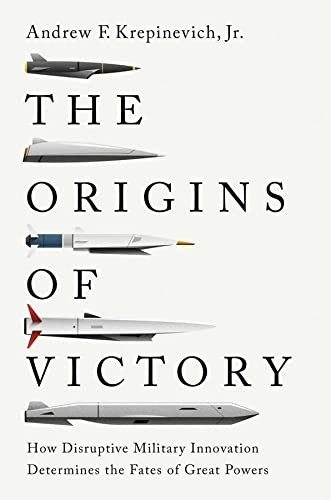
A serious study of the handful of times a military actually out-innovated its rivals -- carriers, blitzkrieg, precision strike -- and what it took each time. Krepinevich argues we're at another of those hinge moments and mostly asleep. Heavy reading, but it's the strategist's case for why Force Design isn't optional.

Freedman walks through how commanders from Korea to Ukraine actually made decisions under political pressure -- where the general ends and the politician begins. It's a heavyweight scholar being genuinely readable, which is rare. The book for understanding why the 'purely military' decision is a myth.
Halberstam spent years investigating why the most credentialed, capable men in the Kennedy and Johnson administrations made the series of decisions that produced Vietnam. The answer is not stupidity. It is the particular kind of institutional failure that occurs when smart people optimize for appearing confident rather than being honest, when the costs of dissent exceed the costs of error, and when the system selects for people who tell leadership what leadership wants to hear. The book that every person who has ever written an optimistic assessment of an operation that was going badly should be required to read.
How the First World War started, written by the historian who understood mobilization plans better than the generals who executed them. Tuchman won the Pulitzer Prize. President Kennedy read it during the Cuban Missile Crisis and handed it to his brother. The lesson is not about 1914. The lesson is about what happens when military planning becomes so committed to the schedule that no political event can stop it — and what it costs when that lesson goes unlearned. Required at every level of professional military education for sixty years. The pattern it documents has not been corrected.
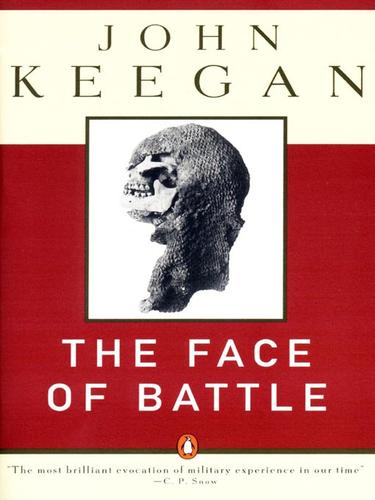
Keegan decided to write a military history that told the truth about what battle actually feels like for the men who fight it — not for the generals who direct it. Agincourt, Waterloo, the Somme: three battles, three centuries, one devastating argument that military history has consistently failed to describe what happens to a human body and a human mind under sustained combat. The chapter on the first day of the Somme — July 1, 1916, 57,470 British casualties — is the most important piece of military writing produced in the twentieth century. It should be assigned in every war college on earth and has not yet changed anything.
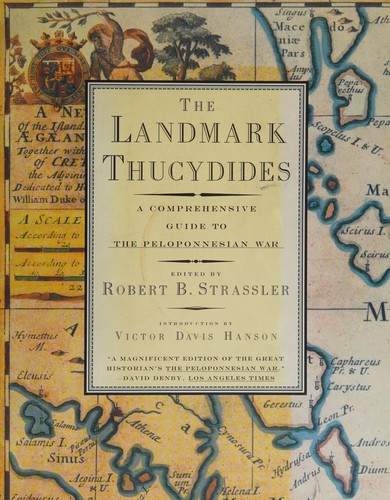
Thucydides was an Athenian general who was exiled for a military failure, spent twenty years documenting the Peloponnesian War with the impartiality of the irrelevant, and produced the founding text of strategic analysis. The Landmark edition — with maps, appendices, and notes that make the text navigable for non-classicists — is the standard military education version. The Melian Dialogue, Pericles' Funeral Oration, and Thucydides' account of the Sicilian Expedition remain the most precise available analysis of the gap between strategic optimism and strategic reality. On the CSA reading list because every officer who has ever thought about power, alliance politics, and the decision to go to war has been thinking about Thucydides, whether they know it or not.
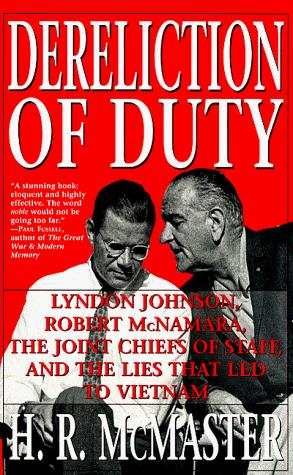
McMaster wrote his PhD dissertation in 1997 naming the Joint Chiefs of Staff by name and arguing, with documentary evidence, that they knew Vietnam was going wrong, had reservations they never voiced, and told the President what he wanted to hear instead of what was true. He was a colonel when it was published. It nearly ended his career. He was eventually a three-star and National Security Advisor. The book remains one of the most damning indictments of institutional military cowardice ever published.
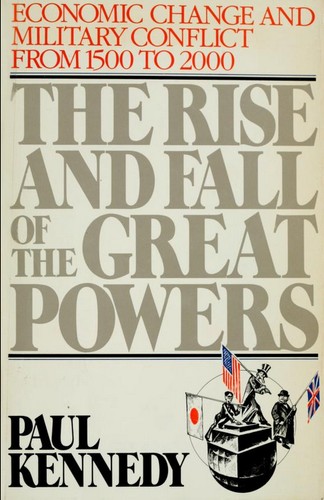
Kennedy's 1987 study of the relationship between economic strength and military power across five centuries — from the Habsburg empire through the Cold War — made the argument that 'imperial overstretch' (the gap between military commitments and the economic base to sustain them) has been the common cause of great power decline. The historical analysis is meticulous; the contemporary application was immediately controversial. On the Army War College and CSA reading lists because the question Kennedy is asking — how long can a dominant power maintain primacy, and what signals that decline has begun — is the question senior American military leaders need frameworks for thinking about.
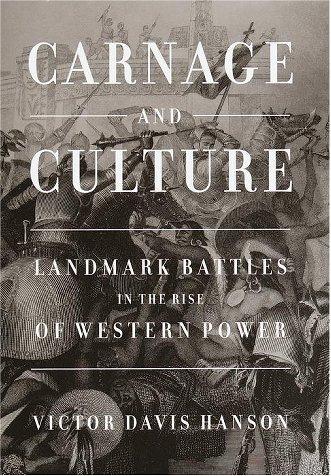
Hanson argues that the Western tradition of decisive battle — the convention that war is won by destroying the enemy's army in open engagement rather than raiding, attrition, or maneuver — is not a military preference but a cultural product. His case studies from Salamis through Midway make the argument that Western armies' consistent success against larger non-Western forces derives from civic values that produce tactical and organizational qualities unavailable to armies that serve authoritarian states: individual initiative, free information flow among officers, and the willingness to absorb casualties to achieve decisive results. The argument is contested among historians but directly relevant to current thinking about the relationship between political systems and military effectiveness.

Murray and Millett's edited volume examines how the major powers developed their doctrine, organization, and technology between WWI and WWII — the case studies that determine how well prepared each nation was for the kind of war that actually began in 1939. The chapters on German armor development, carrier aviation, submarine warfare, and airborne operations are the foundational case studies for thinking about how militaries do or do not adapt to emerging technologies in peacetime. The pattern each chapter reveals — that successful innovation requires champions who protect new ideas from institutional resistance — is the same pattern every defense reformer cites today. One of six CGSC core texts.
The definitive history of how the U.S. learned to fight by overwhelming firepower and total annihilation — and why that reflex keeps failing in wars that aren't about annihilation. Weigley traces the pattern from Washington to Vietnam. If you want to know why America fights the way it does, start here.
Luttwak reverse-engineers how Rome defended a continent for three centuries on a shoestring — deterrence, client states, and roads. Historians fight about the details; strategists mine it for principles. Provocative, readable, and it made 'grand strategy' a live term again.

A thousand years of how weapons, money, and armies co-evolved to build and break states. McNeill connects the crossbow, the joint-stock company, and the machine gun into one argument about power. Big-picture history that makes the strategy books make sense.
The unglamorous truth amateurs ignore and professionals obsess over: campaigns live and die on beans, bullets, and boot leather. Van Creveld follows the wagons from Wallenstein to Patton. Read it and you'll never watch a war map the same way.
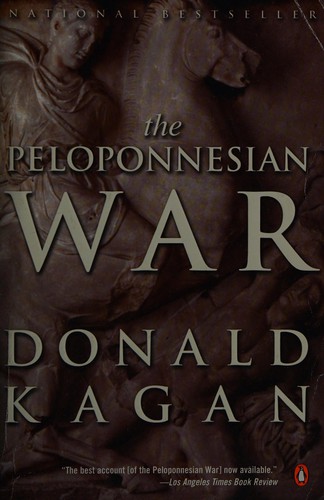
Kagan spent a career on this war and boiled it into one readable volume: Athens and Sparta grinding each other into dust over 27 years, with every lesson about hubris, alliances, and democracies at war that Newport wants in your head. Read it alongside Thucydides, not instead of him. It's the war strategists keep returning to, mostly because we keep repeating it.
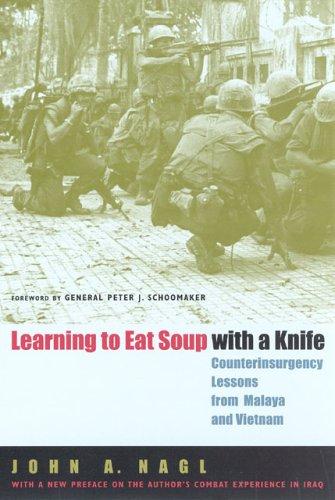
Nagl's doctoral dissertation compared the British Army's adaptation to insurgency in Malaya with the U.S. Army's failure to adapt in Vietnam, and published it in 2002 — one year before the Iraq War. His central argument: that military organizations are or are not institutional learning organizations, and that the difference determines whether they can adapt to insurgencies that their doctrine was not designed to fight. The Malaya counterinsurgency and Vietnam counterinsurgency are studied in parallel throughout. The book shaped the doctrine and the authors of FM 3-24 which the Army published four years later.
Galula served as a French Army officer during the Algerian War and wrote this analysis in 1964. His framework — insurgency is a competition for the support of the population, which is won or lost at the local level through security, governance, and development, in that order — became the theoretical backbone of FM 3-24 and the doctrine that governed American strategy in Iraq and Afghanistan. Galula is the Clausewitz of counterinsurgency: the theorist who derived principles from experience rather than imposing principles on it. Still the essential text for anyone involved in irregular warfare.
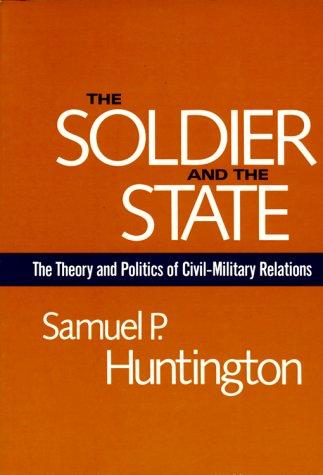
Huntington's 1957 study of civil-military relations — the theoretical framework that American civil-military relations has operated within (and argued against) for seventy years. His argument: that the military is a profession with its own ethic, that this professional ethic is fundamentally conservative, and that the proper relationship between the military and its civilian masters requires both sides to understand and respect this. The book is the reference point for every subsequent debate about military professionalism, civilian control, and the role of military advice in democratic governance. Required context for the Dereliction of Duty and Supreme Command arguments.