Core Curriculum Reading
The Command and General Staff College at Fort Leavenworth is where the Army sends majors to learn to think about war above the company level — to develop the operational art, strategic thinking, and institutional understanding that battalion and brigade command requires. The CGSC core reading list is the intellectual spine of the Intermediate Level Education program: the books on war, strategy, and military history that Leavenworth faculty have determined every field-grade officer should have read before they deploy at the lieutenant colonel level. The list emphasizes foundational theory alongside the history of how armies actually apply — and misapply — that theory in practice.
Buy links go to Bookshop.org (which supports independent bookstores) and Amazon. Some are affiliate links — if you buy, we earn a small commission at no extra cost to you. As an Amazon Associate we earn from qualifying purchases. It never affects which books are on this list or how we describe them. How this works.
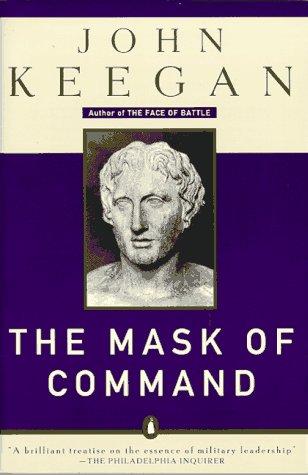
Keegan examines four commanders — Alexander, Wellington, Grant, and Hitler — to ask what heroic leadership actually requires and how the model has changed as armies have changed. His central argument: that the Homeric model of the leader who leads from the front, shares danger with his men, and makes himself visible in the decisive moment became impossible in industrial-age war, and that Grant's model — the commander who accepts invisibility, manages information, and leads through institutional will rather than personal display — is the model that works in modern war. Keegan's final chapter on the anti-hero, the democratic commander who cannot rely on divine right or personal charisma, is the best analysis available of what military leadership looks like in a society that does not celebrate martial values.
Twenty-eight essays by the field's leading scholars on the development of Western strategic thought from Machiavelli through the nuclear age. Paret edited the standard reference for the study of how military thought evolved alongside the political and technological circumstances that shaped it: Jomini, Clausewitz, Mahan, Douhet, Liddell Hart, and the theorists of guerrilla warfare, nuclear deterrence, and limited war. Not light reading. The indispensable graduate-level introduction to why military strategy looks the way it looks and why every generation has to rediscover the same arguments about the relationship between force and policy.
The book everyone in uniform claims to have read and almost no one finishes. War is the continuation of policy by other means — the sentence that launched a thousand PowerPoint slides and at least as many wars entered without an exit strategy. Get past chapter three and you are ahead of 80% of O-6s. Get through Book Eight and you understand why it keeps going wrong.
Brands edited the 2023 Princeton successor to Peter Paret's foundational 1986 anthology — a comprehensive survey of strategic thought from Machiavelli through the AI era, written by leading current scholars. Where the Paret volume covered strategic thinking through the Cold War, Brands's volume adds chapters on irregular warfare, nuclear proliferation, terrorism, cyber, space, and AI. Organized to be read in sections and designed for exactly the purpose military schools use it: as the authoritative reference for what the field of strategy actually says about the problems currently facing military and civilian planners. On both the CMC and CGSC core reading lists as the updated standard.
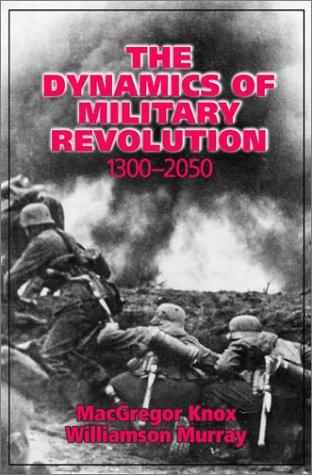
Knox and Murray edited this analysis of the major military revolutions from the gunpowder era through the information age — the moments when technology, doctrine, and organization combined to fundamentally change how war is fought. Their framework distinguishes between 'revolutions in military affairs' (technology-driven changes in military capability) and 'military revolutions' (changes that reshape entire societies and their relationship to war). The distinction is essential for thinking about AI, autonomous systems, and space: not every new technology produces a military revolution, and the institutions that bet everything on incremental technological advantage often lose to adversaries who changed the game. One of six CGSC core texts.
Twenty-eight strategists arguing about whether the old principles of war still mean anything after Iraq and Afghanistan — which is exactly the fight CGSS wants you having. It's an anthology, so quality swings essay to essay, but the strong ones will make you defend assumptions you didn't know you were carrying. Read it for the argument, not for tidy answers.
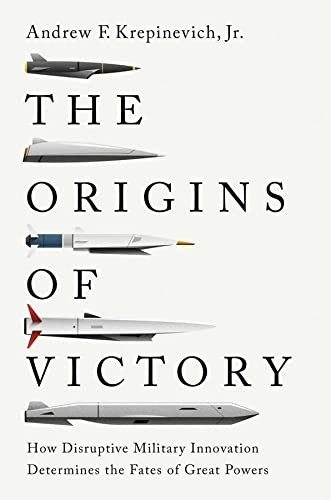
A serious study of the handful of times a military actually out-innovated its rivals -- carriers, blitzkrieg, precision strike -- and what it took each time. Krepinevich argues we're at another of those hinge moments and mostly asleep. Heavy reading, but it's the strategist's case for why Force Design isn't optional.
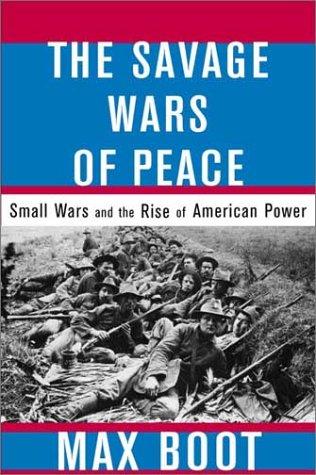
Boot's history of American small wars — from the Barbary pirates through the Philippines insurrection through Nicaragua and Haiti — makes the argument that unconventional conflict is not a modern aberration but America's default mode of military engagement. The United States has fought one major conventional war against a peer competitor and dozens of small wars, expeditions, and counterinsurgencies, most of which are forgotten except by military historians. The book is essential background for understanding why FM 3-24 was not a new idea in 2006, and why the institutional tendency to treat counterinsurgency as a temporary detour from real war is both historically illiterate and operationally dangerous. On the CGSC core reading list because Leavenworth has been trying to teach this lesson for decades.
Parker's edited survey of military history from the ancient world through the late twentieth century — the broadest single-volume account available of how armies have fought, organized, equipped, and thought about war across time and cultures. The book is one of the six core texts assigned in the CGSC/ILE program because it provides the historical context that makes everything else on the reading list legible: the evolution of tactics, the relationship between technology and doctrine, and the recurring patterns of military change that field-grade officers need to recognize in their own era. Dense but rewarding.

Murray and Millett's edited volume examines how the major powers developed their doctrine, organization, and technology between WWI and WWII — the case studies that determine how well prepared each nation was for the kind of war that actually began in 1939. The chapters on German armor development, carrier aviation, submarine warfare, and airborne operations are the foundational case studies for thinking about how militaries do or do not adapt to emerging technologies in peacetime. The pattern each chapter reveals — that successful innovation requires champions who protect new ideas from institutional resistance — is the same pattern every defense reformer cites today. One of six CGSC core texts.
The best general's memoir most Americans have never read. Slim inherited the worst theater of WWII — a beaten army, a forgotten front, jungle, and disease — and wrote the honest account of how he clawed it back, mistakes included. If you want to know what real command feels like without the swagger, start here.
How infantry, armor, artillery, and air stopped fighting their own private wars and learned to operate as one team — traced across a century of hard lessons. It's dry the way a good textbook is dry, but if you've ever wondered why your unit is task-organized the way it is, House shows you the trial and error behind it. A staff-college staple, not beach reading.