Commander's Reading List
The U.S. Indo-Pacific Command is the largest of the combatant commands — responsible for the most strategically consequential geographic area in the world, covering 36 nations and more than half the earth's surface. The INDOPACOM Commander's reading list reflects the intellectual demands of that responsibility: the history of the Pacific theater, the rise of Chinese military power, the theory and practice of deterrence and coalition management in the Indo-Pacific, and the strategic context of the competition that will define American security policy for the next generation. Required reading for anyone deploying to or advising on the Pacific.
Buy links go to Bookshop.org (which supports independent bookstores) and Amazon. Some are affiliate links — if you buy, we earn a small commission at no extra cost to you. As an Amazon Associate we earn from qualifying purchases. It never affects which books are on this list or how we describe them. How this works.
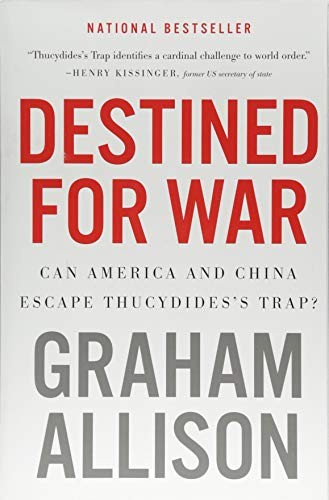
Allison identified the Thucydides Trap — the historical pattern in which a rising power threatens a ruling power and the resulting structural stress makes war more likely — and applied it to the U.S.-China relationship. Twelve of the sixteen cases he examined ended in war. The book is not a prediction but a warning: that the forces driving the United States and China toward conflict are structural, not the result of bad decisions by either side, and that avoiding the trap requires deliberate strategy rather than optimism. Allison directs Harvard's Belfer Center and has advised multiple Secretaries of Defense. On both the INDOPACOM Commander's reading list and the Secretary of the Air Force's China list because understanding the trap is the first step to not walking into it.
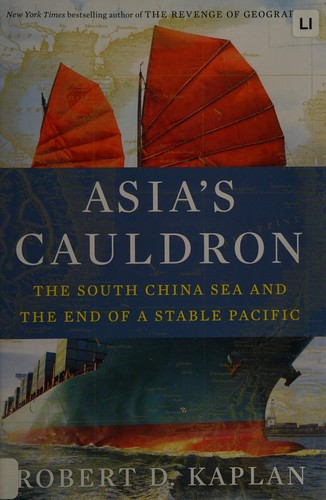
Kaplan traveled the South China Sea littoral and wrote the most accessible analysis available of why the region is the central arena of the twenty-first century's great power competition: the overlapping territorial claims, the energy resources beneath the seabed, the trade routes that carry forty percent of global commerce, and the Chinese naval buildup designed to make the sea a Chinese lake. His analysis of the specific countries — Vietnam, the Philippines, Malaysia, Brunei — and what each wants from the competition is the ground-level complement to the strategic frameworks that dominate Washington's discussion. On the INDOPACOM and SOCOM reading lists.

Eighteen specialists on how the post-9/11, post-Bali security picture actually shifted across the region -- money laundering, arms races, civil-liberties tradeoffs and all. Dense edited-volume territory, not a beach read. On the list because the transnational-threat picture in this theater is genuinely this complicated.
A conference-paper collection arguing that what makes modern terror new is its lethality and its ability to run on the same global rails as everything else. Academic and a bit dated, but sharp on the Asia-Pacific dimension most books ignore. Skim the weak essays, mine the good ones.

Seven hundred pages tracing Australia from penal colony to close ally, and yes, it is a commitment. But if you are going to operate alongside Australians across the Indo-Pacific, knowing how they got here beats the tourist version. Welsh is fair, readable, and only occasionally grinds an axe.
Two thousand years of Japan in about 360 pages -- the word concise is doing real work here. A solid, unglamorous foundation on the ally whose home islands anchor the entire theater. If you are PCS-ing to Yokota or Sasebo, start here before you embarrass yourself.
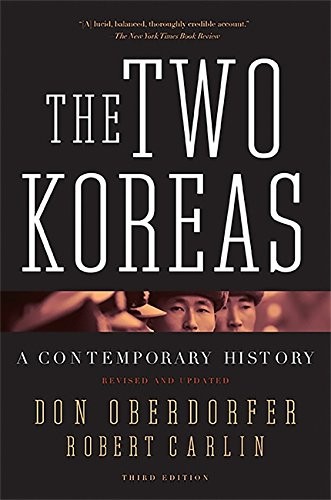
Oberdorfer covered the peninsula for decades and it shows -- the definitive account of how the DMZ became the most dangerous line on earth, drawn from hundreds of interviews on both sides. If you read one book on Korea, INDOPACOM says make it this one, and they are right.
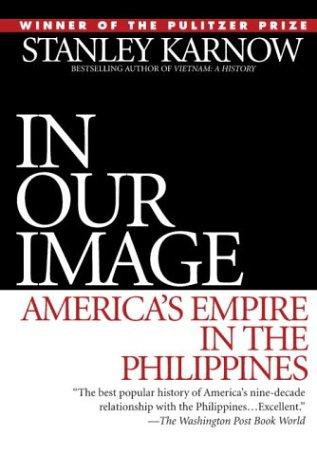
Pulitzer-winning history of America's one real colonial project, written by a journalist who knew how to keep you turning pages. The Philippines alliance runs straight through this story, warts and all. Honest about the ugly parts, which is exactly why it is on the list.
A clean one-volume run through Thai history from the early kingdoms to the modern era. Not thrilling, but it is the standard reference and it will keep you from treating a key partner like set dressing. Do the reading.
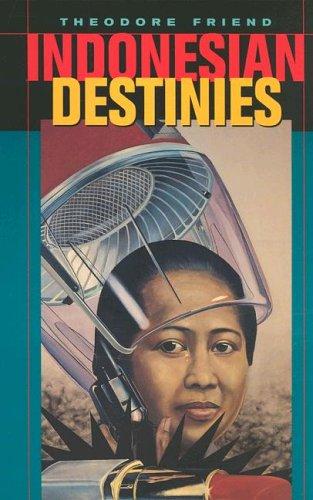
The world's largest Muslim country and the improbable nation holding 17,000 islands together -- Friend blends real scholarship with firsthand memory. Longer than it needs to be, but there is no better single door into modern Indonesia, and it matters more every year as the theater's center of gravity shifts south.
The definitive account of how a swampy trading post became a first-world city-state and an indispensable partner. Turnbull spent her career on this and it is still the reference Singapore uses to teach itself. Dense, but the payoff is understanding the most consequential small country in the theater.
Four thousand years compressed into one readable volume, near-unanimously considered the best single-book history of India. INDOPACOM's line is blunt: if you read one book on India, make it this one. Given how central India is to the whole strategy, read the one book.
Four hundred years from the Manchu conquest to Tiananmen, focused on the role of war and the army in shaping China. Compact and useful for understanding how the PLA sees itself. A good on-ramp before you tackle the heavier China-strategy shelf.
A non-US-centric survey that traces political violence from the Zealots to the present, with real attention to Southeast Asia. Translated from French and occasionally academic, but it sets terrorism in a context most American treatments skip. Read it for the long view, not the headlines.
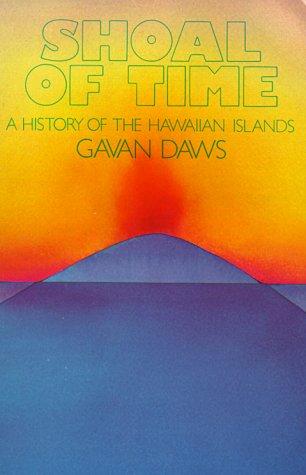
The best single history of Hawaii in print, and required reading for anyone stationed there who does not want to be another oblivious mainlander. Daws is honest about the overthrow of the monarchy and annexation -- an open wound locally. INDOPACOM calls it a must-read; if you are at Camp Smith, they mean you.

Singer is the Pentagon's most-cited defense researcher; Cole is a former Navy intelligence officer. Their novel about a near-future U.S.-China war over Hawaii — fought with autonomous weapons, satellite-blinded aircraft, microchip-compromised weapons systems, and cyber-enabled insurgency — is explicitly designed as a policy argument in narrative form. Every technology in the book either exists or is in development; the footnotes at the back cite the actual defense programs. The Indo-Pacific Command reads it as a planning document disguised as fiction: the scenarios Singer and Cole describe — a surprise attack on INDOPACOM, the U.S. forced to fight with degraded networks and compromised supply chains — are the scenarios INDOPACOM wargames. The most operationally useful work of military fiction published since Red Storm Rising.