Books the Brass Forgot
Every official list has blind spots — books too raw, too funny, too enlisted, or just too inconvenient to get a service chief's stamp. This is where they live: the ones that tell the truth about service in a way a formal reading program tends to sand down. No seal of approval required.
Buy links go to Bookshop.org (which supports independent bookstores) and Amazon. Some are affiliate links — if you buy, we earn a small commission at no extra cost to you. As an Amazon Associate we earn from qualifying purchases. It never affects which books are on this list or how we describe them. How this works.
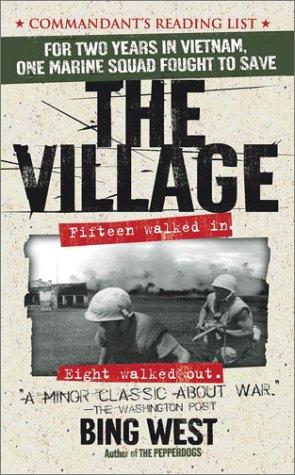
Combined Action Platoons in Vietnam. Marines embedded in Vietnamese villages to live, eat, sleep, and fight alongside the people they were protecting. It worked tactically and by most measures strategically. The MACV command never wanted to scale it because it threatened the conventional force structure's dominance. West watched an idea that worked get deliberately abandoned. He has not forgotten it. This book is why.
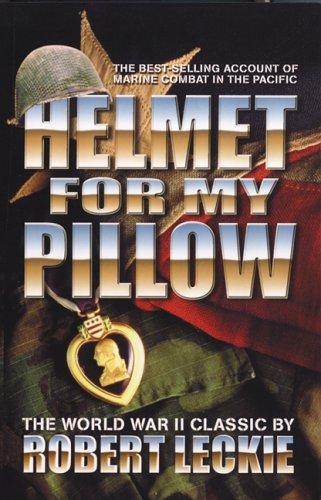
Guadalcanal through the island campaign, written with a journalist's eye and a Marine's unfiltered anger. Leckie is the counterpart to Sledge: sharper, more political, less restrained. Together, their two books constitute the Pacific ground war's ground truth in a way no official history has matched. Leckie writes about the Corps with love and without sentimentality, which is the only honest way to write about the Corps.
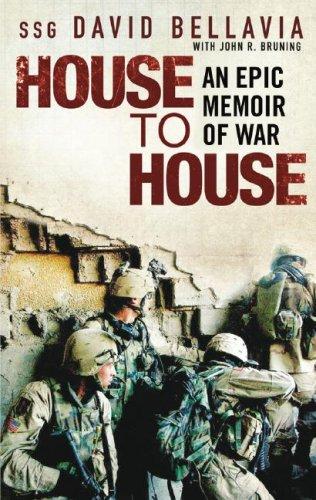
Fallujah, November 2004. Staff Sergeant Bellavia cleared a house full of insurgents by himself. Medal of Honor, 2019. This is the book written before anyone called him a hero — written with the flat, precise honesty of a man who is not sure what he did was heroism versus something else entirely. The most technically detailed account of close-quarters combat in print. Not for everyone. Necessary for many.
A Marine lieutenant in Vietnam in 1965 and 1966, among the first American units deployed for sustained combat. What happened when young officers brought Cold War moral certainty to a war that had none. Caputo describes losing his moral bearings with an honesty that requires courage, and without the self-pity that usually attends that kind of honesty. The military justice system features prominently. So does the question of what an officer owes his men versus what he owes his conscience.
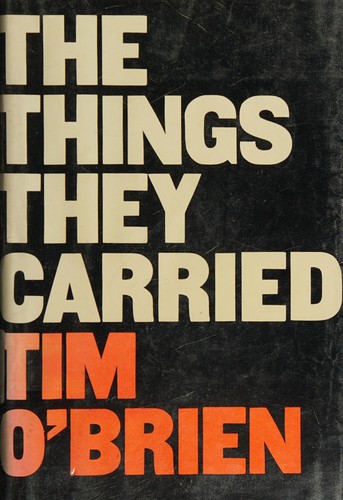
Not a memoir. Not a novel. Something more honest than either. O'Brien served in Vietnam as an infantryman and spent twenty years figuring out how to tell the truth about it. The weight of the physical gear is the point of entry. What it opens into is the weight of everything else: guilt, memory, the stories we tell to survive. The most important American book about ground combat ever written by someone who was there.
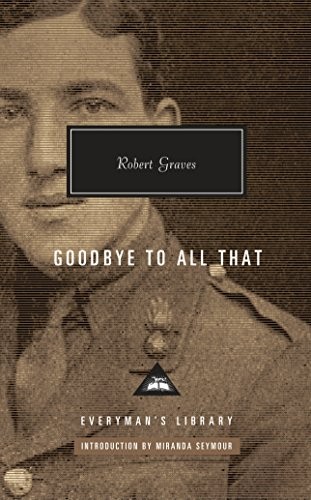
Robert Graves served in the Royal Welch Fusiliers during WWI, was wounded on the Somme, reported dead, wrote this memoir in 1929, and then left England permanently. The book is the first great memoir of modern industrial war: the class structure of the British officer corps, the mechanics of trench warfare, the casualty rates in the infantry, and the way the war systematically destroyed every framework — patriotic, religious, romantic — that a young Englishman had been given to make sense of the world. Written in a tone of controlled rage that never quite overflows. The book that Remarque's novel responds to.
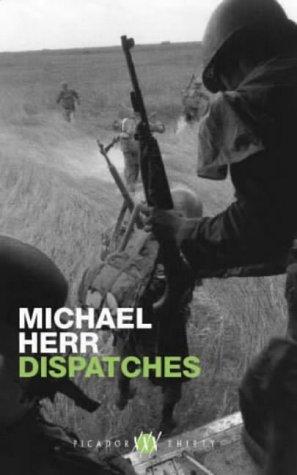
Herr covered Vietnam for Esquire from 1967 through 1969 and published this account in 1977. Dispatches is the book that made Tom Wolfe's New Journalism a war literature: Herr embedded with grunts, walked combat patrols, was present at Hue during Tet, and wrote about it in a prose style that captured the chaos, the drug use, the music, and the specific sensory experience of combat in a way that no previous war journalism had attempted. Francis Ford Coppola and Stanley Kubrick consulted Herr when making Apocalypse Now and Full Metal Jacket. The book that changed how American journalism covered war.
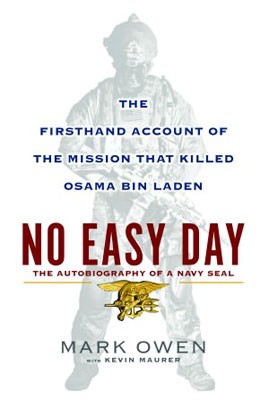
The SEAL who was on the UBL raid wrote this under a pseudonym and was identified within forty-eight hours. Written before the lawyers could close in, in the flat professional tone of a man who found the death of Osama bin Laden to be, in the moment, somewhat anticlimactic. What it is actually like inside Naval Special Warfare Development Group, told without mythology, is worth the read regardless of your feelings about the legal controversy.
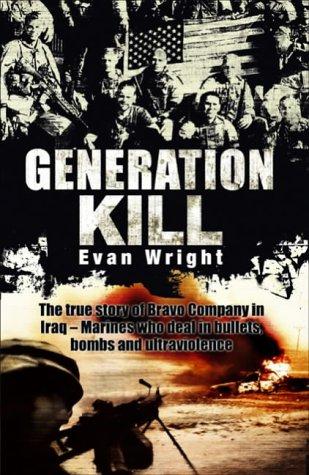
An embedded reporter with 1st Reconnaissance Battalion during the 2003 invasion of Iraq. The real First Recon Marines, before the HBO miniseries made them famous and the fame made them harder to read about honestly. Wright had the discipline to mostly listen, the skill to render what he heard accurately, and the courage to publish it. The gap between what the mission was and what the Marines thought they were doing is one of the most instructive things in the book.
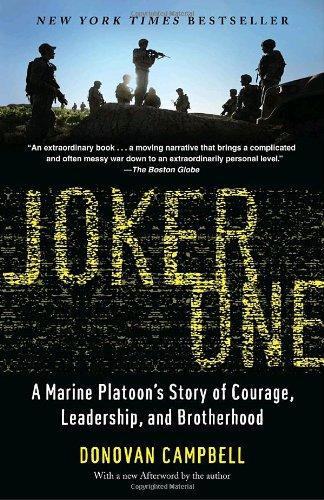
A Marine lieutenant commands an infantry platoon in Ramadi in 2004 — at the time the most dangerous city in the most dangerous country on earth for American forces. Campbell was a Harvard-educated, McKinsey-trained officer who had every credential except the one that mattered, and he writes about learning to lead from the front with an honesty about his own failures that junior officer memoirs rarely achieve. The book is also the most accurate account available of what sustained urban combat in Iraq felt like at the platoon level — the exhaustion, the ethics of ambiguous engagements, and the weight of bringing men home.
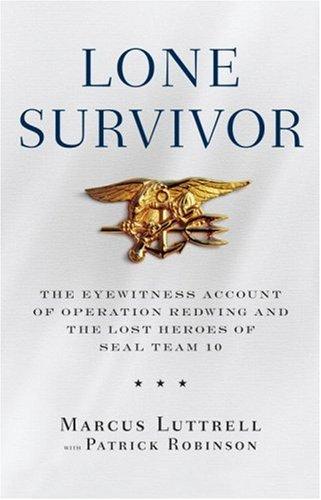
Operation Red Wings, Afghanistan, June 2005. Four SEALs on a reconnaissance mission were compromised by goatherds. They made a vote on what to do. They chose wrong, or right, depending on how you measure. Three SEALs died. Luttrell survived with the help of a Pashtun village that applied the Pashtunwali code at considerable risk to themselves. The book is raw, angry, and does not attempt objectivity. Read it for what it is.
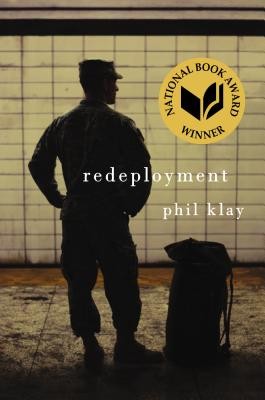
Klay served as a Marine officer in Iraq and published this collection of linked stories in 2014, winning the National Book Award. Each story inhabits a different character — a mortuary affairs Marine, a civil affairs officer, a reservist returning home, a veteran working in a dog shelter — and together they build the most complete portrait of what the Iraq and Afghanistan wars produced at the human level. Klay does not sentimentalize and does not condemn. He documents. The result is the finest American war fiction of the post-9/11 era, and the one that will be read alongside Hemingway and O'Brien in fifty years.
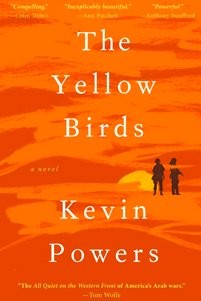
Powers served in the Army in Mosul in 2004 and wrote this novel about two soldiers, a year in Iraq, and what happens to one of them. The novel moves between the deployment and the aftermath, between the Euphrates and Virginia, tracking what Private Bartle carries home and what he cannot explain to anyone who was not there. Powers wrote the novel in verse paragraphs — the prose has the compression of poetry — and produced the most formally ambitious fiction of the Iraq war. The National Book Award finalist that belongs on every reading list that includes The Things They Carried.
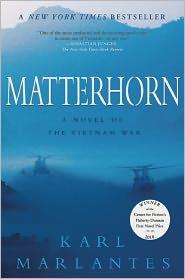
Marlantes spent thirty-five years writing this novel about a Marine rifle company in Vietnam. He was a Marine officer there. The result is six hundred pages that feel earned rather than padded — a complete account of a pointless hill, a pointless campaign, and the men caught inside both. More honest than it had to be. Longer than it needs to be. The most important Vietnam War novel published in the twenty-first century.
Junger embedded with a platoon of the 173rd Airborne Brigade in the Korengal Valley — the most dangerous valley in Afghanistan — for months at a time over two years, and wrote the account of what sustained combat does to the men who fight it. Not what it does to their politics or their opinions about the mission. What it does to their bodies, their friendships, their relationship to fear, and — the observation that drives everything — why so many of them miss it when it is over. The companion to Tribe and the best nonfiction account of what infantry combat in Afghanistan actually looked like at the platoon level.
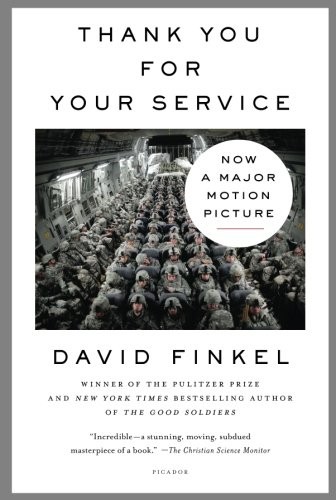
Finkel embedded with the 2-16 Infantry Battalion in Iraq and wrote The Good Soldiers. He then went back to find the men from that battalion years later — back in Kansas, trying to reintegrate — and wrote this account of what the war had done to them and what the country had and had not done about it. The title is the sentence most veterans hear most often and understand least. The book documents what is behind that sentence: the traumatic brain injuries, the marriages that didn't survive, the VA appointments that did not happen, and the specific, identifiable, treatable suffering that a sentence cannot address.
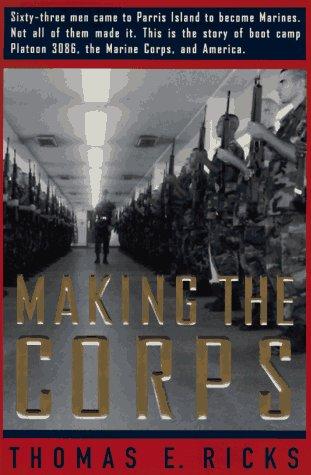
Ricks embedded with a Marine boot camp platoon at Parris Island in 1995 and wrote the definitive account of what recruit training actually does — and why it does it. The book argues that the Marine Corps is creating a separate warrior culture at a time when American civilian society is drifting away from any concept of shared sacrifice. The cultural argument is more provocative now than it was then. The first hundred pages on what actually happens at Parris Island are essential for any Marine officer who wants to understand what their enlisted Marines went through.
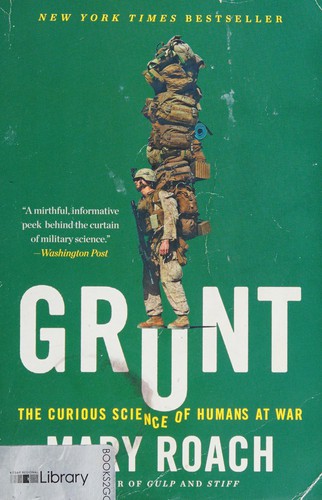
Science writer Mary Roach embedded with military researchers studying the science of keeping soldiers alive: the acoustics of roadside bomb blasts and what they do to the vestibular system, the development of better tourniquets, the physics of heat and what it does to performance, the biology of combat diarrhea. Roach approaches all of it with the curiosity of a science journalist who is not afraid of the material. The result is the most readable account available of the unglamorous science that actually determines whether soldiers survive contact. More useful for understanding force protection than most doctrine.