HonestMOS
InvestigationsHow EUCOM shelved a tax break for 9,000 troops in Poland — for five years.
ArmyOfficial Reading List
Sergeant Major of the Army

Reading List

The Sergeant Major of the Army is the most senior enlisted soldier in the U.S. Army and the principal advisor to the Chief of Staff on all matters concerning the enlisted force. Each SMA publishes a personal reading list — a short, curated set of books that reflects their priorities for NCO development. The current list under SMA Michael Weimer emphasizes leadership culture, talent development, and the science of how people learn and improve. Unlike the CSA list, which is broad and tiered, the SMA list is deliberately short: a handful of books the senior NCO of the Army thinks every sergeant should have read.

6 books on this list·View Official Source

Buy links go to Bookshop.org (which supports independent bookstores) and Amazon. Some are affiliate links — if you buy, we earn a small commission at no extra cost to you. As an Amazon Associate we earn from qualifying purchases. It never affects which books are on this list or how we describe them. How this works.

Leadership
5
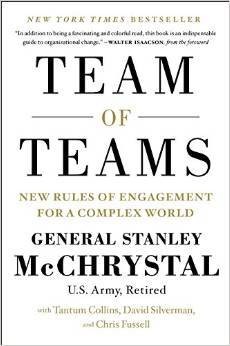
Team of Teams by General Stanley McChrystal
Team of Teams
General Stanley McChrystal

McChrystal commanded JSOC in Iraq and discovered that his organization — optimized for industrial-era warfare — was losing to a network. Al-Qaeda in Iraq was distributed, adaptable, and self-organizing. JSOC was a hierarchical machine built for efficiency. McChrystal had to break his own organization and rebuild it as a network: shared consciousness, distributed authority, persistent information flow. The result is both a memoir of that transformation and a theory of leadership in complex environments. The most practically useful leadership book written by a senior military commander since Slim's Defeat into Victory. The framework transfers.

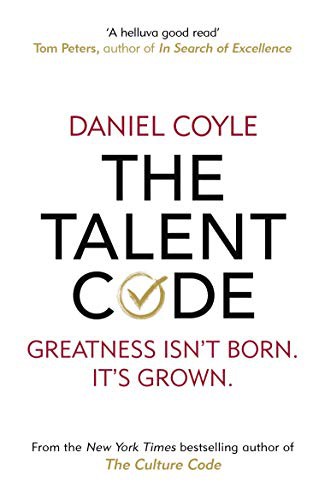
The Talent Code by Daniel Coyle
The Talent Code
Daniel Coyle

Coyle investigated why certain places — a tennis club in Russia, a baseball diamond in the Dominican Republic, a flight school in Colorado — produce extraordinary talent at rates far above their population base. His answer: that deep practice, ignition, and master coaching work together to build myelin — the neural insulation that makes skills automatic and durable — and that the conditions that produce extraordinary skill are replicable by any organization that understands them. The implications for how military training programs should be structured, and what distinguishes programs that develop adaptive operators from programs that develop procedure-followers, are direct and have not been fully applied to military professional development. On the Sergeant Major of the Army reading list because developing the human capital of the NCO corps is the central problem of Army talent management.

Legacy by James Kerr
Legacy
James Kerr

Kerr spent years studying the All Blacks — New Zealand's national rugby team, the most successful sports team in the history of organized competition by winning percentage — and extracted fifteen leadership principles that the organization has maintained across generations of players and coaches. The book is about institutional culture: how an organization with extraordinary expectations maintains excellence as individuals rotate through it, and what practices and rituals sustain institutional identity across time. On both the SMA and CMC reading lists because the problem of maintaining unit culture and excellence across leadership transitions is exactly the problem that NCO corps and staff NCO development is designed to solve. Far more practically useful than most books on this topic.

The Tipping Point by Malcolm Gladwell
The Tipping Point
Malcolm Gladwell

Gladwell's analysis of how ideas, behaviors, and trends spread — why some things go viral and others don't, and what the structural conditions are that allow a small change to tip into a large-scale movement. His three factors (the Law of the Few, the Stickiness Factor, and the Power of Context) provide a framework for thinking about how military culture changes, how NCOs spread best practices through units, and what makes some training innovations stick while others disappear. On the Sergeant Major of the Army reading list because the NCO corps is the transmission mechanism for Army culture, and understanding how transmission works is prerequisite to managing it.

A Message to Garcia by Elbert Hubbard
A Message to Garcia
Elbert Hubbard

Hubbard wrote this pamphlet in 1899 — it took him one hour — and it was distributed more than forty million times before the century was over. The argument is a single anecdote: during the Spanish-American War, President McKinley needed to get a message to General Garcia, somewhere in the mountains of Cuba. Lieutenant Andrew Rowan took the message, went to Cuba, found Garcia, and delivered it — without asking for instructions, without complaining, without making it someone else's problem. Hubbard's point: that the rarest and most valuable quality in any organization is the person who takes an assignment and executes it without being managed every step of the way. On Army NCO reading lists for 125 years because the lesson has not changed.

Culture
1
The Culture Code by Daniel Coyle
The Culture Code
Daniel Coyle

Coyle's follow-up to The Talent Code shifts from individual development to group performance: what makes some teams — Navy SEAL platoons, the San Antonio Spurs, Pixar — dramatically outperform others with comparable talent? His three findings: high-performing groups build safety (members can take risks without losing belonging), share vulnerability (leaders signal fallibility to create trust), and establish purpose (a clear story of why the group exists). The research base is diverse and the examples are concrete. The application to military unit cohesion, particularly in the NCO corps, is direct: the same dynamics that make a startup or a championship team outperform apply to the small-unit leadership that determines whether a rifle company fights as a team or as a collection of individuals.

See all official reading lists
28 official lists from service chiefs and the Chairman of the Joint Chiefs.
← Full Reading List