Commandant's Reading List
The Marine Corps Commandant's Reading List is one of the oldest and most respected official military reading programs in the U.S. armed forces. Organized by rank tier — from junior enlisted through General officer — it reflects the Marine Corps' conviction that professional military education never stops. The books span history, memoir, fiction, doctrine, and leadership, selected not for comfort but for the friction they create in how Marines think about war, leadership, and the institution. Updated periodically by each sitting Commandant, the core titles have remained remarkably stable for decades.
Buy links go to Bookshop.org (which supports independent bookstores) and Amazon. Some are affiliate links — if you buy, we earn a small commission at no extra cost to you. As an Amazon Associate we earn from qualifying purchases. It never affects which books are on this list or how we describe them. How this works.
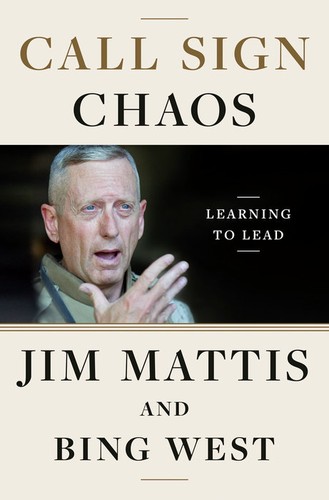
Mattis served as CENTCOM commander, SACEUR, and Secretary of Defense and spent forty years in the Marine Corps before any of that. This book is his account of how he learned to lead — from platoon commander through combatant commander — and the reading and thinking that shaped how he understood military operations and strategy. The book is organized around the problems of leadership at each level, using his own experience as the case study. The section on CENTCOM command and the frustrations of operating in the interagency environment is the most honest available account of what joint senior leadership actually looks like. On the CMC reading list because Mattis is the Marine every subsequent Marine general cites when asked who taught them to think.
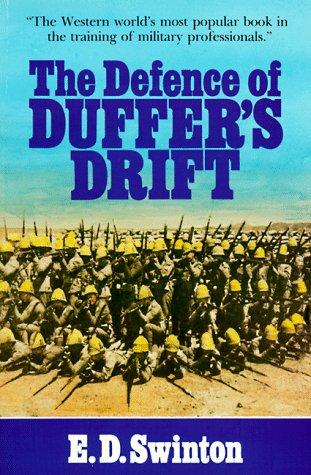
Written in 1904 by a British officer as a teaching device: a young lieutenant dreams his way through six increasingly competent defenses of the same river crossing. The first dream ends in disaster. The sixth succeeds. It reads like a field manual disguised as a short story. On the Commandant's list continuously for over a century because it teaches small-unit defensive tactics through vivid failure. Each dream adds one lesson the lieutenant failed to apply in the last. You can read it in two hours. You will think about it longer than that.
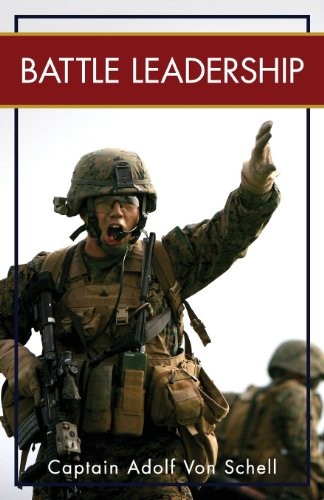
A German general officer wrote this account of small-unit leadership in WWI for the Infantry School at Fort Benning in 1933. The Marine Corps has assigned it ever since. The core argument: leadership under fire is not about giving orders, it is about being the kind of person men will follow when following means dying. Von Schell fought the war he is analyzing, which makes his case studies something other than theory. Seventy pages that have not been surpassed in the literature of small-unit combat leadership.
Marquet commanded the USS Santa Fe — the worst-performing submarine in the Pacific Fleet — and turned it into the best-performing in a single deployment by inverting the traditional command model. Instead of the standard leader-follower structure (officers direct, enlisted execute), he distributed intent and decision authority down to the lowest competent level, trained the crew to act on understanding rather than orders, and created conditions for the crew to think rather than comply. The most specific available account of how leader-follower versus leader-leader command structures produce different results in military units. On both the CMC and SOCOM reading lists because the Santa Fe model is the operational opposite of the zero-defect command culture.
Kerr spent years studying the All Blacks — New Zealand's national rugby team, the most successful sports team in the history of organized competition by winning percentage — and extracted fifteen leadership principles that the organization has maintained across generations of players and coaches. The book is about institutional culture: how an organization with extraordinary expectations maintains excellence as individuals rotate through it, and what practices and rituals sustain institutional identity across time. On both the SMA and CMC reading lists because the problem of maintaining unit culture and excellence across leadership transitions is exactly the problem that NCO corps and staff NCO development is designed to solve. Far more practically useful than most books on this topic.
Admiral McRaven gave a commencement speech at UT Austin in 2014 that went viral and then became a book. Ten lessons from BUD/S that apply to life. Making your bed is lesson one because small standards done daily build the capacity for large ones done under pressure. Short enough to read in one sitting. Dense enough to think about for a year. If you are skeptical going in, that is fine — the skepticism usually dissolves around chapter four.
McRaven's short leadership book built around Navy and life mottos -- 'the only easy day was yesterday' and friends. It's airport-bookstore length and occasionally reads like it. But the man ran the bin Laden raid, so when he talks about making the hard call, it lands.

A catalog of senior military leaders who abused their rank -- the fraud, the affairs, the cover-ups -- and what their organizations let them get away with. It's the anti-hagiography the promotion boards won't hand you. Read it to learn exactly what toxic leadership looks like from the inside before you're tempted to excuse it.
Jocko's leadership book in field-manual format -- decentralized command, extreme ownership, all the SEAL-brand stuff, but organized so you can actually use it. Less shouting than his reputation suggests, more practical checklists. If you lead a fire team tomorrow, there's real gear in here.
The case for doing less but better -- killing the low-value tasks so you can pour effort into the few that matter. It's a civilian productivity book and it repeats itself, but the core idea cuts hard against the military's do-everything-now reflex. Worth it if your calendar is somebody else's to-do list.

A management book on leading a workforce that spans five generations at once -- which is exactly the platoon you're handed. Corporate in tone and light on war, but the friction between the 19-year-old and the 40-year-old gunny is real. Skim it for the parts about actually leading people who aren't like you.

McChrystal's framework for spotting the risks that actually kill organizations -- usually not the exotic ones, but the boring vulnerabilities everyone stopped watching. It's structured and a little consultant-y, but the war stories keep it honest. Useful if 'we didn't see it coming' is a phrase you'd like to say less.
Sinek's argument that treating a long game like a game you can 'win' is how organizations wreck themselves chasing quarterly numbers — or, in our world, the next inspection. One good idea stretched thin, as his books tend to be, but it's the right idea for people who serve something bigger than a fiscal year.
Gaddis runs the Grand Strategy program at Yale and wrote this book from the same curriculum he teaches to both undergraduates and the professional military officers who attend as fellows. His argument, built from Thucydides through the Cold War: that grand strategy is the alignment of unlimited aspirations with limited capabilities, and that the great strategists throughout history are distinguished not by intelligence or resources but by the capacity to maintain that alignment under the pressure of events that constantly demand its abandonment. The most readable available introduction to the theory of strategy, and the one assigned most widely at senior military and civilian education programs. Required reading before you pick up anything else on this list.

Brands edited the 2023 Princeton successor to Peter Paret's foundational 1986 anthology — a comprehensive survey of strategic thought from Machiavelli through the AI era, written by leading current scholars. Where the Paret volume covered strategic thinking through the Cold War, Brands's volume adds chapters on irregular warfare, nuclear proliferation, terrorism, cyber, space, and AI. Organized to be read in sections and designed for exactly the purpose military schools use it: as the authoritative reference for what the field of strategy actually says about the problems currently facing military and civilian planners. On both the CMC and CGSC core reading lists as the updated standard.

Doshi served on the NSC and as China Director at the White House when he published this analysis of Chinese grand strategy. His argument, built from Chinese-language party documents rather than American interpretations of Chinese behavior: that Beijing has been pursuing a consistent strategy of blunting U.S. primacy since the late 1980s, and that the shift from passive blunting to active construction of Chinese-led alternatives began around 2008. The evidence is granular and the sourcing is primary — Chinese Communist Party documents, Politburo speeches, internal planning records. The most rigorous available analysis of how Beijing thinks about strategic competition with the United States. Essential for anyone advising on China policy or preparing for great power competition.
The autopsy of the 2020 Armenia-Azerbaijan war, where cheap drones turned tanks into burning scrap on video. Antal's point is blunt: if you can be seen, you can be killed, and everyone can be seen now. Short, punchy, and genuinely unsettling if your plan still involves massing vehicles in the open.

Antal games out how a near-future fight against a peer actually goes, and the answer is 'badly, if you fight it like the last one.' It's scenario fiction with a doctrine agenda, so take the story with salt and keep the warnings. A fast read that'll make you paranoid about your own signature.
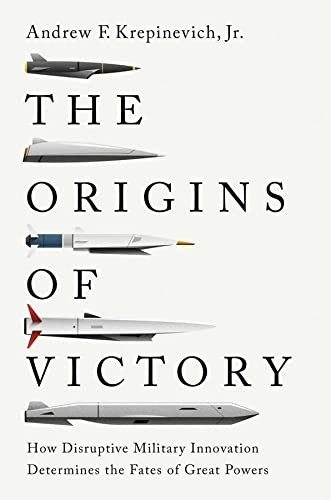
A serious study of the handful of times a military actually out-innovated its rivals -- carriers, blitzkrieg, precision strike -- and what it took each time. Krepinevich argues we're at another of those hinge moments and mostly asleep. Heavy reading, but it's the strategist's case for why Force Design isn't optional.
A pop-science tour of where breakthroughs actually come from, and the answer is never the lone genius -- it's networks, collisions, and slow hunches. Not a military book at all, which is why it's on the list: the Corps put it there to make you think about how ideas move. Breezy, occasionally overstated, but it earns its slot.

A clear-eyed look at what technology is actually doing to the infantry fight, from a RUSI analyst who's watched Ukraine up close. No breathless robot-army hype -- just how sensors, drones, and precision reshape what a squad can survive. If you carry a rifle for a living, this is the honest brief on your next decade.

The most useful plain-English guide to actually working with AI instead of fearing it or worshiping it. Mollick's a professor who runs the experiments, so it's practical, not hype. On the list because the Corps would rather you learn to use the tool than get outworked by someone who did.

The World Economic Forum's big-picture argument that AI, biotech, and automation are stacking into one civilizational shift. It's Davos-brained and abstract, and you'll roll your eyes at parts. It's here to give you the vocabulary for the disruption, not because it has the answers.

A neuroscientist's case that your brain keeps rewiring itself your whole life, and you have more say over it than you think. Half real science, half sales pitch for his own brain-training company -- read it for the first half. On the list because a Corps that bets on learning wants you to believe your brain can still change.
Bloom's 1987 broadside against how universities stopped teaching students to think about anything that matters. It's dense, cranky, and you'll fight with it the whole way. On the list to make you wrestle with big questions about values and relativism, not because you'll agree -- bring coffee.

Connable takes a data scalpel to the comfortable myths about how ground war works -- morale, casualties, why armies really break. He's a former Marine intel officer, so he argues with evidence, not vibes. Read it to stop repeating things about combat that just aren't true.

Freedman walks through how commanders from Korea to Ukraine actually made decisions under political pressure -- where the general ends and the politician begins. It's a heavyweight scholar being genuinely readable, which is rare. The book for understanding why the 'purely military' decision is a myth.

A specialist's guide to how Russia actually thinks about escalation, nuclear threats, and coercion -- which is not how we assume. Adamsky reads their doctrine so you don't have to guess. Dense, but it's the corrective to mirror-imaging an adversary who plays by different rules.
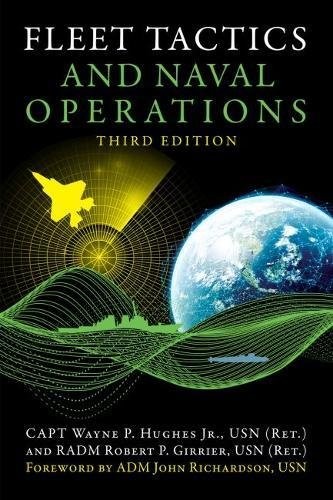
The classic text on how naval combat actually works -- 'attack effectively first' and the hard math of who sees whom. This third edition is updated for the missile-and-sensor age. Written for sailors, but any Marine betting on the littorals should understand the fight happening over the horizon.
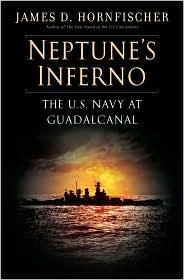
Guadalcanal's naval campaign, 1942-43. The Navy losing ships faster than it could replace them, fighting night surface battles against Japanese forces that were, for a sustained period, tactically superior. Hornfischer wrote six of the best naval history books ever produced and this is arguably the best. You will learn what it means to fight a ship, what it costs to command one, and why the men who did it at Guadalcanal deserve more recognition than they have received.
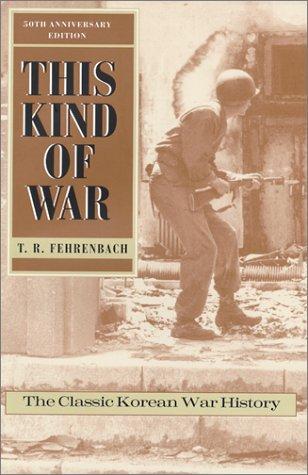
Korea. The forgotten war, unforgotten lessons. When light infantry trained for WWII conventional combat ran headlong into Chinese regulars who had been fighting since 1937, the results were instructive. Fehrenbach's analysis of why the Army was unprepared and what it cost them is still more relevant than most current doctrine. Still on the CGSC reading list. Still largely ignored until the next time it is relevant.

How the interwar Navy built the command culture that won at Midway — by tolerating failure in peacetime wargames. If your command punishes every honest mistake, leave this one on the XO's desk.

The academic autopsy of how the Corps manufactured its own legend between 1874 and 1918 -- the recruiting posters, the press stunts, the deliberate myth-making. Venable is a Marine historian, so it's affectionate but not fooled. Read it and you'll never look at 'first to fight' branding the same way again.
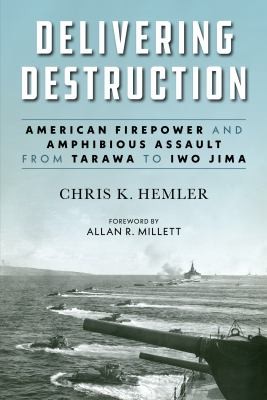
How the Corps went from getting slaughtered on the reef at Tarawa to coordinating naval gunfire that actually worked by Iwo Jima. It's the unglamorous fire-support side of the island war -- targeting, coordination, lessons paid for in blood. Drier than a memoir, but it's the part that decided who lived.
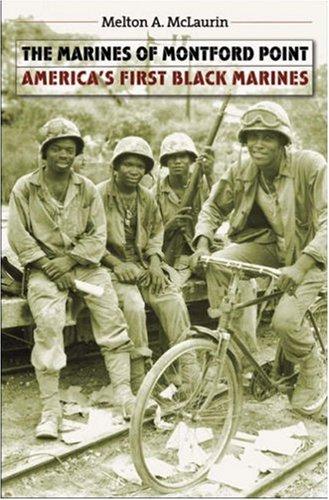
The oral history of the first Black Marines, who trained at a segregated swamp camp while the Corps that didn't want them found out they could fight. Told mostly in their own words, which is the only way it should be told. Required reading before anyone lectures you about Corps 'tradition.'
The most honest single-volume account of the 20-year war, written by a guy who was actually in the valleys as an advisor, not just in a think tank. Malkasian keeps asking the question the briefings never answered: why did we keep losing to farmers? Long, but it's the one book on Afghanistan that doesn't flinch.

A two-volume swing through the whole history of amphibious warfare -- the disasters as much as the Inchons -- assembled by military professionals arguing about what still works. It reads unevenly, like the anthology it is, but it's the intellectual backbone behind why the Corps is betting everything on small units and contested beaches. Homework for anyone who wants to argue about Force Design.
The deep investigation into the 1983 barracks bombing that killed 241 Americans in a single morning -- the intel that got ignored, the rules of engagement that got Marines killed. Thriller-writer Carr and historian Scott make it read fast without cheapening it. The origin story of a war we didn't know we were in yet.
The true story of the young women who ran the wargame that cracked the U-boat wolfpacks, while the admirals who'd dismissed them watched their tactics work. It's an innovation story dressed as a WWII page-turner. Read it for the reminder that the person with the answer usually isn't the one with the rank.
How the Navy war-gamed the entire Pacific campaign at Newport years before Pearl Harbor -- and mostly got it right, except for the carriers and the kamikazes. It's a study of how a service thinks about a war it hasn't fought yet. Niche, but it's the source material for every 'we need to wargame this' argument you'll ever sit through.
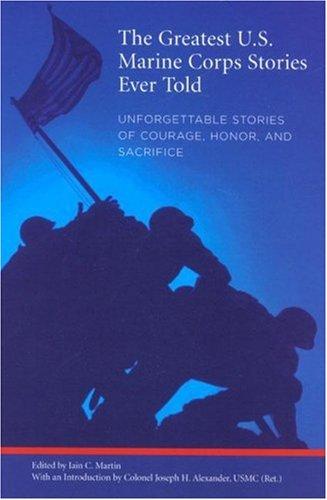
An anthology of Marine war stories from Belleau Wood to Fallujah, the kind of thing you read in twenty-minute chunks. It's uneven and unabashedly proud of itself, which is the point. Good heritage reading for a new Marine; skippable if you've already lived a few of these.
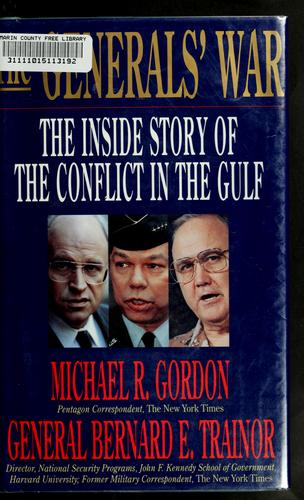
The inside account of how the 1991 Gulf War was actually run at the top -- the ego clashes and bad calls behind the clean-looking victory. Gordon and Trainor had the access, and they use it to puncture the highlight reel. The corrective to remembering Desert Storm as flawless.

Peleliu and Okinawa, 1944-45. Sledge was a gentle, educated young man from Mobile, Alabama who became an 81mm mortar man in the 1st Marine Division and wrote the most honestly devastating memoir of the Pacific ground war. No heroics. No retrospective meaning-making. Just what it looked like from the coral and mud of two of the worst island battles the Marine Corps ever fought. Ken Burns called it one of the most profound accounts of war ever written by an American. He was right.
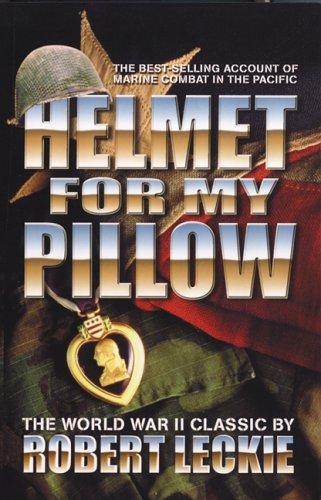
Guadalcanal through the island campaign, written with a journalist's eye and a Marine's unfiltered anger. Leckie is the counterpart to Sledge: sharper, more political, less restrained. Together, their two books constitute the Pacific ground war's ground truth in a way no official history has matched. Leckie writes about the Corps with love and without sentimentality, which is the only honest way to write about the Corps.
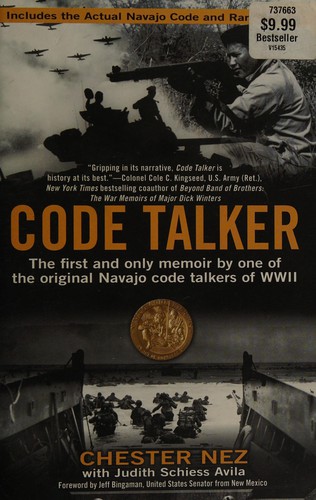
The only full memoir by one of the original Navajo code talkers, who built an unbreakable code out of a language the government had spent his childhood beating out of him. The irony is the whole story, and Nez tells it plainly. Worth it for the boot-camp-through-Peleliu stretch alone.
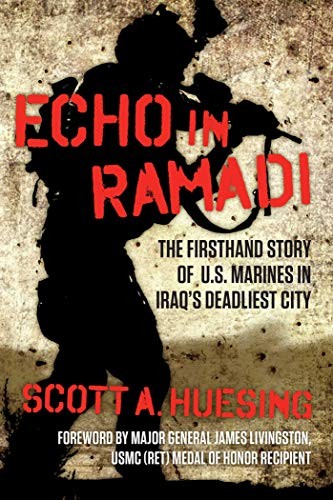
A company commander's ground-level account of one of the ugliest fights in Iraq, told without the movie polish. Huesing writes like he's briefing you, not selling a screenplay. If you want to know what a Marine rifle company actually did in Ramadi in 2006, this is it.
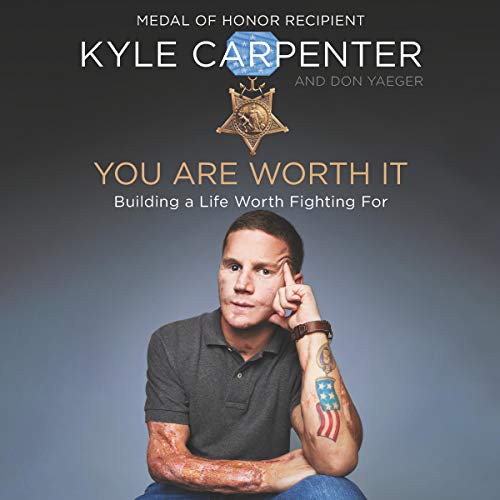
Kyle Carpenter jumped on a grenade at 21 and spent years being rebuilt, and this is his book about what a life is worth after that. It's motivational-adjacent and it earns every bit of it, because he actually paid the price on the cover. Read it on a bad day.
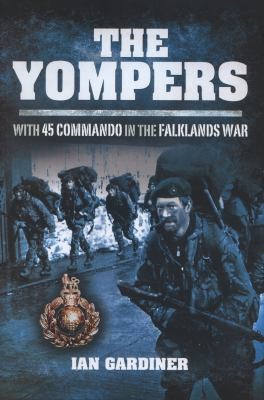
A British Royal Marine officer's account of the 1982 Falklands war -- the brutal march they called the yomp, the cold, the fighting at the end of a very long supply line. It's the rare expeditionary-warfare case study from someone who lived it. On the list because the next island fight might look more like this than like Iraq.

Symonds, the Navy's premier WWII historian, wrote this account of Chester Nimitz's command of the Pacific Fleet from Pearl Harbor through the Japanese surrender — focused specifically on Nimitz as a commander rather than on the battles he directed. His argument: that Nimitz's greatest contribution was not tactical brilliance but the command climate he created — the willingness to give subordinates authority, to accept risk, and to protect capable officers from institutional politics while relieving commanders who couldn't deliver. The contrast with MacArthur runs through every chapter. On the CMC and CNO reading lists as the model of what theater-level command leadership looks like.
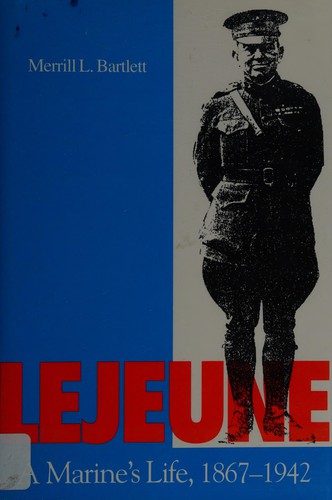
The full life of the Marine every base sign and every 'greatest of all Leathernecks' speech invokes. Before he was a legend he was an ambitious, scheming officer who dragged the Corps into the modern age, and Bartlett doesn't sand off the politics. If you've ever stood at Camp Lejeune wondering who the guy actually was, here's the answer.
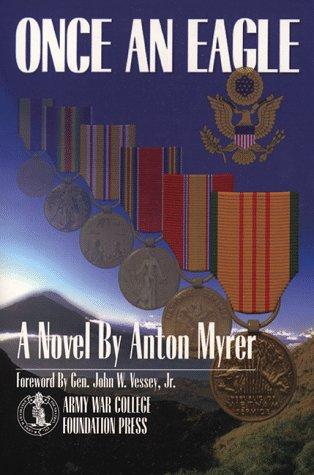
The Army's unofficial scripture, though every branch recognizes the type. Two officers, two wars, two completely different answers to the question of what kind of officer you want to be. The fact that Courtney Massengale keeps getting promoted should tell you everything you need to know about how institutions work. Sam Damon is who you want to be. Massengale is who gets the star.
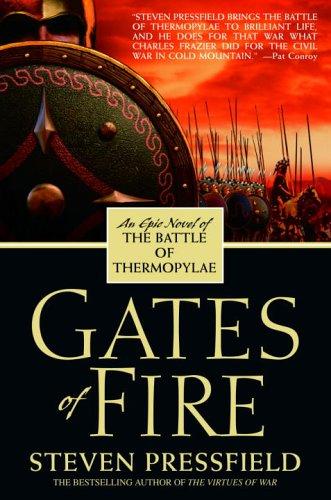
Three hundred Spartans at Thermopylae, told from the perspective of the sole survivor — a body servant, not a warrior, which turns out to be the better vantage point. Pressfield researched the Spartan military culture to uncomfortable depth and then wrote a novel that makes you feel the weight of their shields. Assigned reading at West Point, Annapolis, and every leadership course that wants to look like it takes things seriously. There is a reason.
Marlantes spent thirty-five years writing this novel about a Marine rifle company in Vietnam. He was a Marine officer there. The result is six hundred pages that feel earned rather than padded — a complete account of a pointless hill, a pointless campaign, and the men caught inside both. More honest than it had to be. Longer than it needs to be. The most important Vietnam War novel published in the twenty-first century.
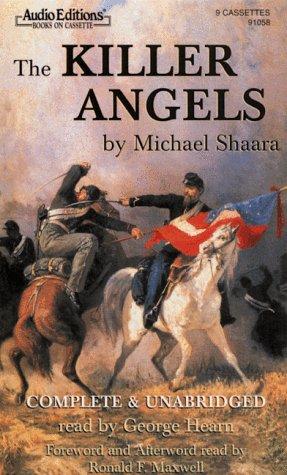
The Battle of Gettysburg told through the eyes of the commanders on both sides: Lee and Longstreet, Chamberlain and Buford. Shaara spent years on the research and the prose and produced the only novel that fully renders the military experience of the Civil War's decisive battle — the command pressures, the physical reality of the ground, and the specific moment when Chamberlain's 20th Maine, out of ammunition, fixed bayonets and charged downhill. On the Commandant's reading list. Assigned at West Point. Required not because the Civil War will recur but because command under impossible conditions looks exactly like this.
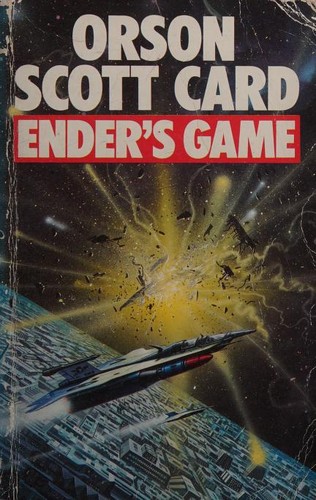
On the official Air Force reading list and with good reason. A child prodigy trained in a military school in orbit to command a war he does not fully understand. The twist still lands on readers who know it is coming. The questions about leadership, simulation versus reality, and the moral weight of orders given without full information do not resolve — they deepen. The last chapter has caused more thoughtful discomfort among officers than most required reading combined.
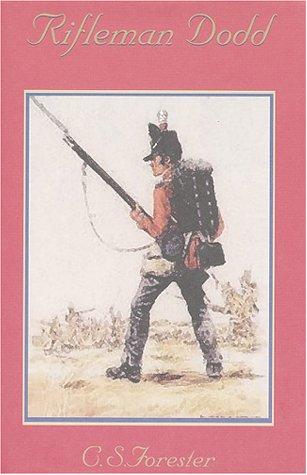
A British rifleman cut off behind French lines in Portugal in 1810, trying to get back to his regiment with no food, no support, no communications, and no clear picture of where his regiment actually is. One hundred and sixty pages. Still on the Marine Corps reading list. Still one of the most precise studies of individual soldier resourcefulness, mission focus, and the refusal to accept that an assignment is over simply because circumstances make it difficult. Forester wrote it as a character study. It reads as a leadership manual.
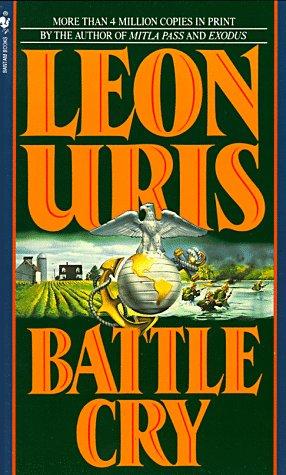
The Marine Corps before, during, and through the Pacific island campaign as experienced by a rifle company from enlistment to Saipan. Uris served in the Marines in WWII and wrote this novel directly from that experience — not as memoir but as the composite truth of what those men were, what they became, and what it cost them. The Marine Corps has assigned it for decades not for its literary sophistication but for what it accurately conveys about unit cohesion under sustained pressure and why men fight for each other when the original reasons for fighting have long since dissolved.
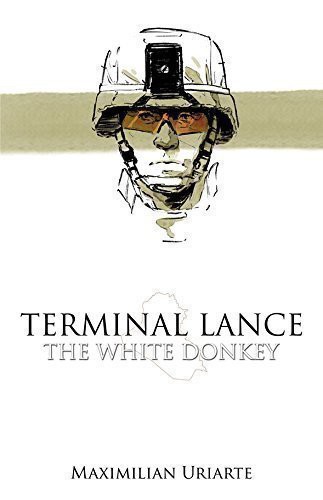
The Terminal Lance guy's graphic novel about the boredom, the bullshit, and the grief of a deployment where nothing and everything happens. It's funny until it suddenly isn't, and the turn will stay with you. The rare official-list pick that actually sounds like the barracks.
The foundational maneuver warfare doctrine document produced in 1989 under General Alfred Gray. Not a checklist. Not a manual. A philosophy of war — what war is, how friction and uncertainty dominate it, and what it demands of the people who fight it. The thinking draws from Clausewitz, Boyd's OODA loop, and the Wehrmacht's Auftragstaktik. Available as a free PDF from the Marine Corps website. That does not make it light reading. Read it slowly. Read it twice. Then watch how rarely the people who claim to have read it actually apply what it says.
Lieutenant General Victor Krulak served in WWII and Korea, commanded Marine forces in the Pacific, and wrote this account of how the Marine Corps maintains its institutional identity — what the Corps is, why it is the way it is, and how it has survived repeated Congressional attempts to eliminate it since 1947. The book is the essential text for understanding Marine Corps institutional culture from the inside: the amphibious mission that defines the Corps's reason for existence, the training culture that distinguishes Marine recruit training from other services, and the leadership philosophy the Corps has maintained across a century of organizational pressure. On the CMC heritage reading list as the internal account of what the institution is for.
Ricks embedded with a Marine boot camp platoon at Parris Island in 1995 and wrote the definitive account of what recruit training actually does — and why it does it. The book argues that the Marine Corps is creating a separate warrior culture at a time when American civilian society is drifting away from any concept of shared sacrifice. The cultural argument is more provocative now than it was then. The first hundred pages on what actually happens at Parris Island are essential for any Marine officer who wants to understand what their enlisted Marines went through.
Grossman's analysis of the psychology of killing in combat — why humans have an innate resistance to killing other humans, how military training overcomes that resistance, and what the psychological consequences of killing are for the individuals who do it. Based on S.L.A. Marshall's WWII research and Grossman's own work as a West Point psychology professor. The book is controversial in its statistical foundations but has shaped every subsequent discussion of combat psychology, PTSD, and the ethical obligations of military training. Required context for anyone thinking seriously about what military training actually does to people.