Chief of Staff Reading List
The Chief of Staff of the Air Force reading list develops airmen across the full spectrum of the profession — airpower theory and history, leadership under extraordinary pressure, the culture of innovation that aviation demands, and the strategic thinking required at the highest levels of air and joint operations. The list reflects both the heritage of the service and the forward-leaning culture that aviation tends to produce in the people who choose it.
Buy links go to Bookshop.org (which supports independent bookstores) and Amazon. Some are affiliate links — if you buy, we earn a small commission at no extra cost to you. As an Amazon Associate we earn from qualifying purchases. It never affects which books are on this list or how we describe them. How this works.
Marquet commanded the USS Santa Fe — the worst-performing submarine in the Pacific Fleet — and turned it into the best-performing in a single deployment by inverting the traditional command model. Instead of the standard leader-follower structure (officers direct, enlisted execute), he distributed intent and decision authority down to the lowest competent level, trained the crew to act on understanding rather than orders, and created conditions for the crew to think rather than comply. The most specific available account of how leader-follower versus leader-leader command structures produce different results in military units. On both the CMC and SOCOM reading lists because the Santa Fe model is the operational opposite of the zero-defect command culture.
Newport's pitch: the ability to focus without a phone buzzing every 90 seconds is now a superpower, because almost nobody has it anymore. The advice is solid and a little smug, but if your inbox owns your calendar, this is the kick in the pants you keep pretending you don't need.
The un-sexy truth that strategy is the easy part and actually doing the thing is where organizations die. It's a corner-office business book with all the trimmings, but the core discipline of linking people, strategy, and operations or failing survives the jargon.
Duckworth's research argument that sustained passion plus perseverance beats raw talent more often than we admit. The science has taken some fair hits since, and yes it can read like a TED talk with footnotes, but the core is a healthy antidote to the natural-talent myth.

A quick management parable built on one idea: don't ambush your people at review time, coach them so they can pass a test you already showed them. Thin and a little corporate, but the no-surprises philosophy is genuinely worth stealing for how you run a team.
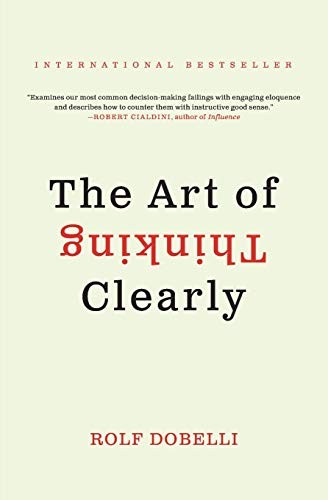
Ninety-nine short chapters, each on a different way your brain quietly lies to you: sunk cost, confirmation bias, the whole rogues' gallery. It's snackable to a fault and covers ground Kahneman did deeper, but as a field guide to your own bad decisions it earns its spot.
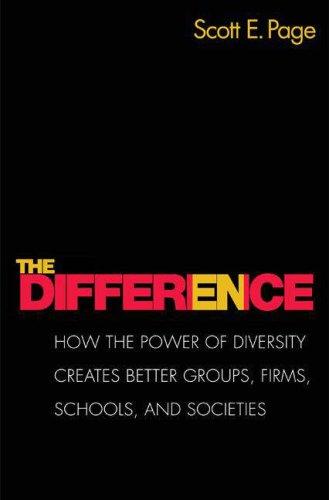
The academic case that a diverse group of thinkers genuinely outperforms a smarter homogeneous one, with the models to back it instead of a poster slogan. It's more math-forward than the buzzword crowd expects, which is the point: he proves the thing everyone else just asserts.
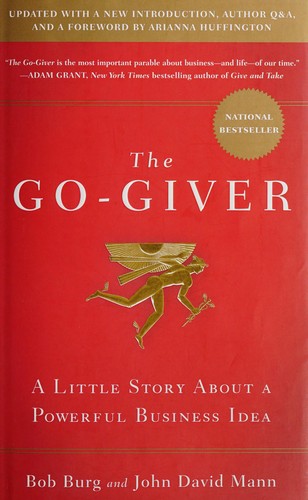
A short business fable arguing that giving value first beats grabbing it, which lands as either cliche or revelation depending on how cynical your week has been. Read it in one sitting. Take the five laws, leave the schmaltz.
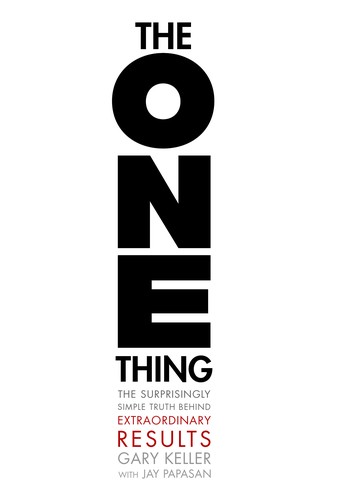
One idea stretched to book length: find the single most important thing and stop pretending your twelve priorities are all priorities. You'll get the message by chapter three and could stop there, but it's a good message.
Kissinger opened China to the United States in 1971, conducted the secret negotiations that established the framework for the relationship, and spent the next fifty years as the foreign policy world's most credible interpreter of Chinese strategic thinking. This book is his account of Chinese foreign policy from the imperial era through his own negotiations with Mao, Deng Xiaoping, and their successors — and his analysis of how Chinese strategic culture differs from Western strategic culture in ways that make misunderstanding structurally likely. Whether you agree with his prescription for managing the relationship or not, his analysis of how Chinese leaders think about strategy, sovereignty, and the relationship between diplomatic form and political substance is the most informed available from an American source.
Space is getting congested, contested, and it is no longer just a superpower club, and Moltz lays out the cooperation-versus-conflict stakes without the sci-fi. A clear primer for anyone who suddenly has to care about orbital debris and who holds the high ground.

The closest thing to a real textbook on cyber conflict, from the RAND analyst who actually thinks about deterrence in a domain with no front line. Dense and not a beach read, but if you want to sound less clueless than the average cyber briefing, this is the source.
The Cuban Missile Crisis run through three models of how governments actually decide: rational actor, organizational, and bureaucratic politics. It's the book that killed the myth that a state thinks with one brain. A grind in places, a permanent upgrade to how you read any crisis.
Scharre's map of the AI competition, i.e. data, compute, talent, and institutions, and why it's the fight that decides the next century of military power. Current, clear-eyed, and free of both doomer panic and Silicon Valley hype. If one book on this list is about your actual future, it's this one.
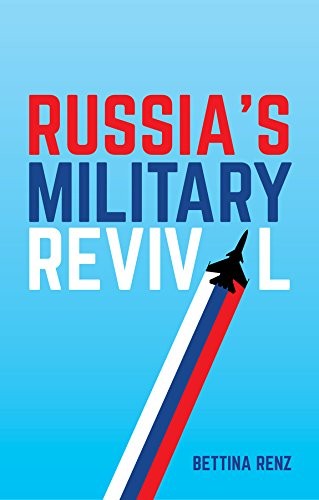
A sober, jargon-light look at how Russia rebuilt its military and what it's actually for, written before 2022, which makes it a sharp gut-check on what the analysts got right and wrong. Short and clear, no chest-thumping.
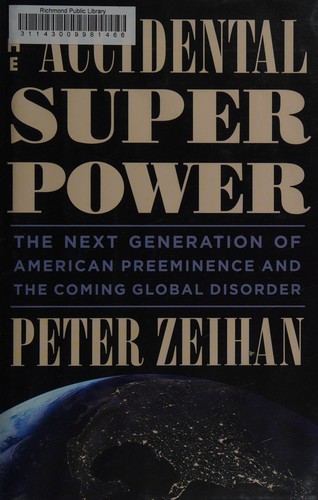
Zeihan's geography-is-destiny take on why America keeps winning almost by accident while everyone else is demographically cooked. He's confident to the point of cocky and a few calls have aged loudly, but as a provocation about the next few decades it does the job.
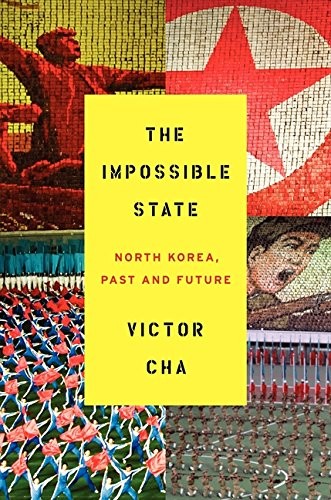
Cha, who has briefed presidents on North Korea, explains why the regime is both absurd and terrifyingly durable. If your mental model of Pyongyang is a cable-news cartoon, this replaces it with something you can actually reason about.
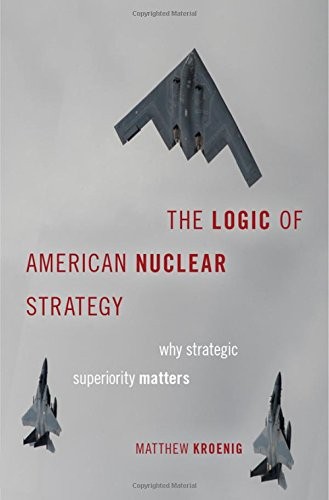
A hawkish, tightly argued case that nuclear superiority still matters, which is deeply unfashionable in arms-control circles, which is exactly why it's on the list. Read it to steelman a position you may not hold. Skip it if you want comfort.
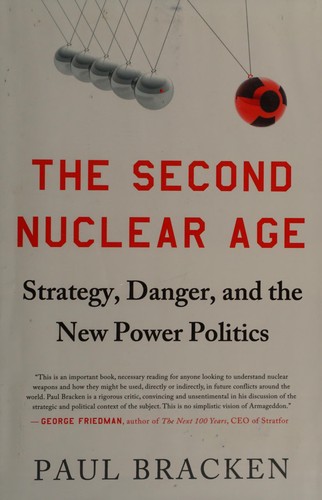
Bracken's argument: the Cold War's tidy two-player standoff is dead, and the new game has more players, worse math, and none of the old guardrails. More than a decade on it reads as uncomfortably prescient. Worth it for the strategic vertigo alone.
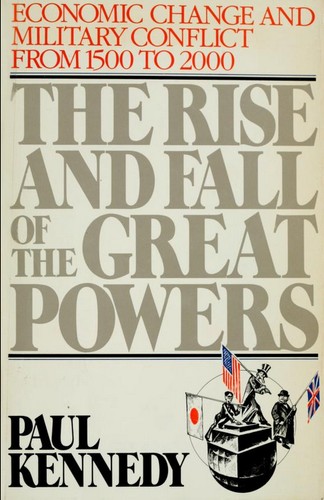
Kennedy's 1987 study of the relationship between economic strength and military power across five centuries — from the Habsburg empire through the Cold War — made the argument that 'imperial overstretch' (the gap between military commitments and the economic base to sustain them) has been the common cause of great power decline. The historical analysis is meticulous; the contemporary application was immediately controversial. On the Army War College and CSA reading lists because the question Kennedy is asking — how long can a dominant power maintain primacy, and what signals that decline has begun — is the question senior American military leaders need frameworks for thinking about.
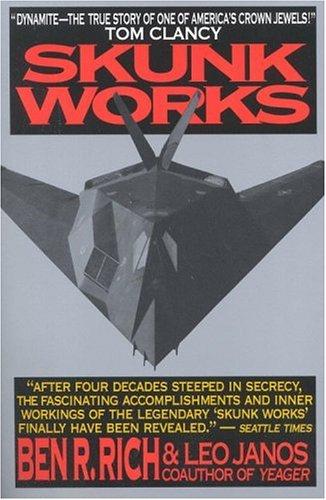
Rich ran Lockheed's Skunk Works advanced development division after Kelly Johnson — the group that produced the U-2, the SR-71, and the F-117. His account of how small, isolated engineering teams operating outside normal procurement processes create revolutionary aircraft is the best available documentation of how defense innovation actually works. The organizational model — small teams, fast decisions, minimal bureaucracy, direct access to the user — is explicitly referenced in every subsequent discussion of how the military should acquire advanced technology. Essential reading for anyone involved in defense acquisition or military innovation.
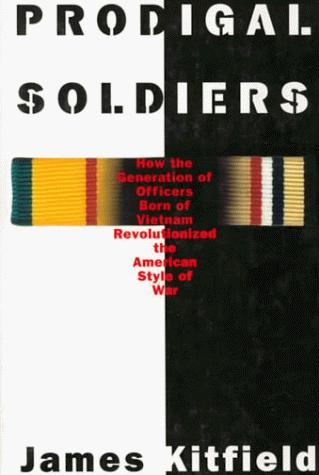
Kitfield's account of the transformation of the American military from the disaster of Vietnam through the triumph of Desert Storm — told through the careers of the officers who were junior in 1975 and commanded in 1991. The book traces how the all-volunteer force was built, how doctrine was reformed after Vietnam, how the services rebuilt their training and equipment programs under Reagan, and what the men who commanded the Gulf War coalition actually learned from the previous generation's failure. On the CSAF reading list because the Air Force's transformation from the demoralized post-Vietnam service to the precision air campaign force of 1991 is the institutional reform story every service needs to understand.
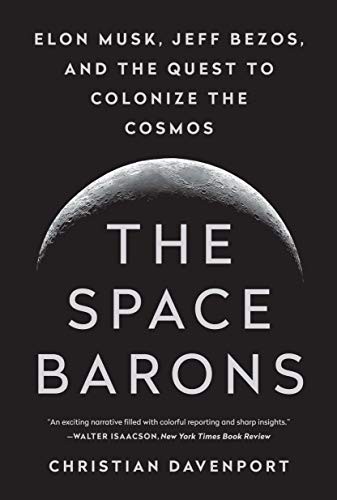
Elon Musk, Jeff Bezos, Richard Branson, and Paul Allen competing to build the infrastructure for commercial spaceflight. Required context for anyone in the Space Force trying to understand the strategic environment: the domain you are defending and operating in is being reshaped faster by private capital than by government programs. The politics, the personalities, the technical failures and breakthroughs, and what it means for national security are all here.
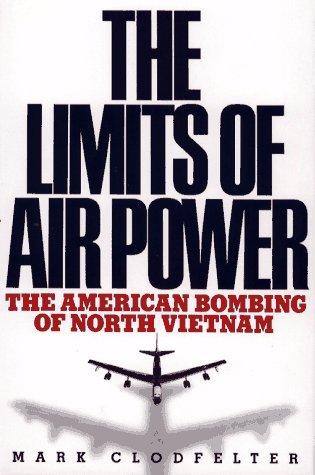
Clodfelter's analysis of the American air campaign against North Vietnam — the most sustained strategic bombing campaign since WWII — is the most rigorous available case study of what air power cannot accomplish. His argument: that the strategic bombing of North Vietnam failed not because of targeting restrictions (the standard Air Force explanation) but because air power was applied to achieve a political objective — coercing Hanoi to change its behavior — that air power is structurally unsuited to achieve against a determined adversary. The book is on the CSAF reading list not as a criticism of air power but as the honest accounting of its limits that any service serious about its own doctrine must engage.
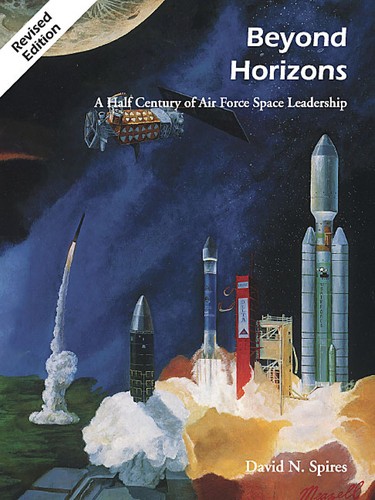
The official-history spine of Air Force space power, from Sputnik to the Gulf War. It's dry and institutional with no way around it, but it's the actual record, not a documentary's highlight reel, and Space Force types should know where the road came from.
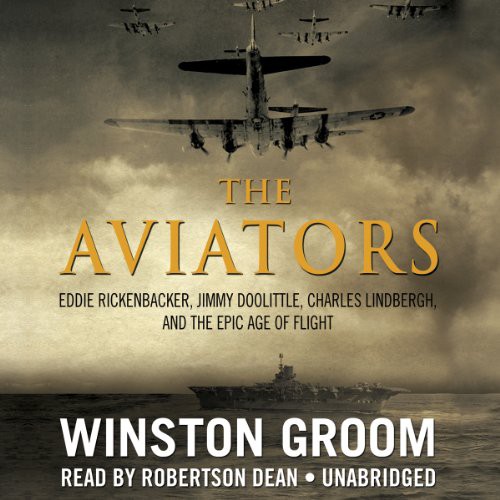
Rickenbacker, Doolittle, and Lindbergh, told by the guy who wrote Forrest Gump, so it moves. More popular history than analysis, but it's a genuinely fun way to absorb the heritage the Air Force keeps telling you to absorb.
The autobiography of the man who broke the sound barrier, and then served as the template for "the right stuff" that Tom Wolfe described. Yeager flew 64 combat missions in WWII, was shot down over France, escaped through the resistance, flew in Korea, and became the chief test pilot at Edwards Air Force Base at the exact moment when the sound barrier was still a serious engineering and human question. He did not approach any of it with the gravity posterity has assigned it. He was a West Virginia boy who was exceptionally good at flying airplanes and relatively unimpressed by the mythology that formed around him. The most grounded of the great aviator memoirs.
Gann flew commercial airliners in the 1930s and 1940s when aviation was still individually, specifically, probably-going-to-kill-you-eventually dangerous. Fate Is the Hunter is his accounting of the accidents, equipment failures, weather, mistakes, and pure chance that killed colleagues he considered better pilots than himself and left him alive. The book is a meditation on skill, luck, and the gap between the two — and on the particular cultural obligation of those who survive to understand why. Every aviator who has ever grown confident should read this before that confidence becomes something the enemy of good airmanship.
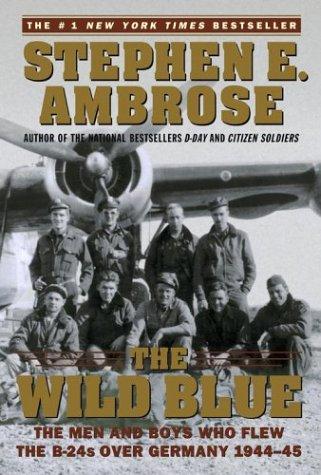
Ambrose wrote this account of the men who flew B-24 Liberator bombers over occupied Europe in 1944-1945 — centered on the crew of the Dakota Queen, piloted by a young George McGovern. Unlike most WWII air war histories that focus on tactics or strategy, Ambrose focuses on the human experience: the average age of 21, the losses that made completing thirty missions statistically improbable, and what it looked like to return to civilian life after flying combat missions that killed hundreds of people per raid. The complement to The Bomber Mafia for understanding the human dimension of strategic air power. On the CSAF reading list as a primary account of what airmen actually experienced.
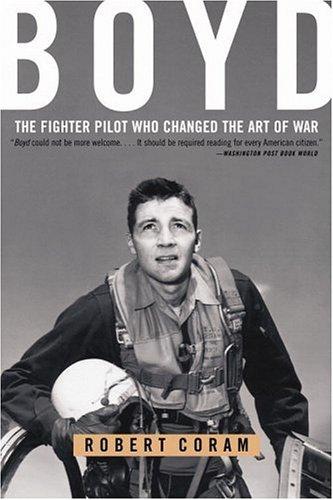
John Boyd was the most important military thinker of the twentieth century and an Air Force colonel nobody above his rank liked and everyone below it feared and followed. He invented energy-maneuverability theory, which changed how fighter aircraft are designed. He developed the OODA loop, which is now misunderstood by virtually everyone who cites it but still shapes military and business thinking globally. He wrote the maneuver warfare doctrine the Marine Corps uses. He did all of it while chain-smoking, borrowing Air Force computer time without authorization, and refusing every promotion that would have taken him off the flight line. The system never broke him because he never needed the system.
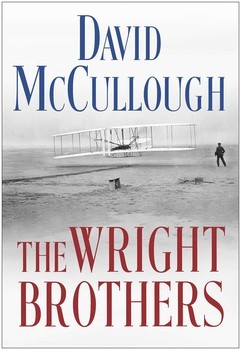
McCullough turns two bicycle mechanics from Ohio into the origin story of everything you fly. It's short by his standards and reads like a great long magazine piece. If the schoolbook version bored you, this is the fix.
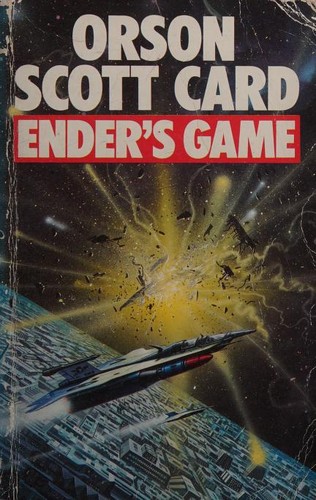
On the official Air Force reading list and with good reason. A child prodigy trained in a military school in orbit to command a war he does not fully understand. The twist still lands on readers who know it is coming. The questions about leadership, simulation versus reality, and the moral weight of orders given without full information do not resolve — they deepen. The last chapter has caused more thoughtful discomfort among officers than most required reading combined.
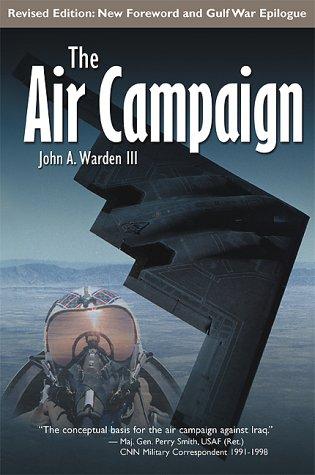
Warden wrote this analysis of air campaign planning in 1988 — the theoretical framework behind the AirLand Battle concept and the planning model that shaped the air campaign in Desert Storm. His five-rings model (leadership, system essentials, infrastructure, population, fielded forces) provides a framework for thinking about what an air campaign is actually trying to accomplish: not destroying the enemy's fielded forces but collapsing the system that sustains them. Controversial within the Air Force when published, vindicated by the Gulf War, and still the most systematic available framework for thinking about what air power can accomplish when properly planned. On the CSAF reading list as the doctrine that shaped modern airpower.
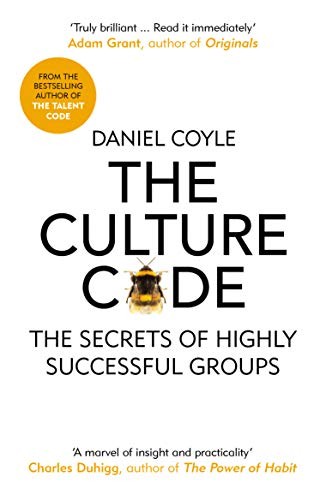
Coyle's follow-up to The Talent Code shifts from individual development to group performance: what makes some teams — Navy SEAL platoons, the San Antonio Spurs, Pixar — dramatically outperform others with comparable talent? His three findings: high-performing groups build safety (members can take risks without losing belonging), share vulnerability (leaders signal fallibility to create trust), and establish purpose (a clear story of why the group exists). The research base is diverse and the examples are concrete. The application to military unit cohesion, particularly in the NCO corps, is direct: the same dynamics that make a startup or a championship team outperform apply to the small-unit leadership that determines whether a rifle company fights as a team or as a collection of individuals.