Leadership Under Fire
Our shelf for leadership that was tested under actual pressure, not in a slide deck. Memoirs and studies from people who led troops in combat and in garrison, plus the handful of business and psychology books that survive contact with a real unit. If a leadership book has never been within earshot of a real decision that got someone hurt or home safe, it doesn't make this shelf.
Buy links go to Bookshop.org (which supports independent bookstores) and Amazon. Some are affiliate links — if you buy, we earn a small commission at no extra cost to you. As an Amazon Associate we earn from qualifying purchases. It never affects which books are on this list or how we describe them. How this works.
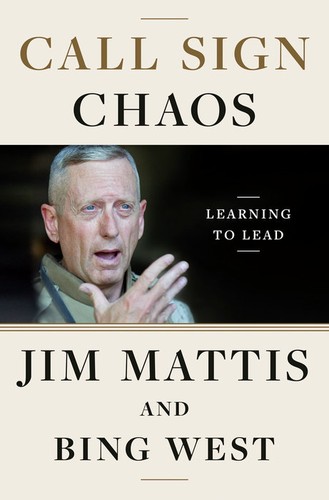
Mattis served as CENTCOM commander, SACEUR, and Secretary of Defense and spent forty years in the Marine Corps before any of that. This book is his account of how he learned to lead — from platoon commander through combatant commander — and the reading and thinking that shaped how he understood military operations and strategy. The book is organized around the problems of leadership at each level, using his own experience as the case study. The section on CENTCOM command and the frustrations of operating in the interagency environment is the most honest available account of what joint senior leadership actually looks like. On the CMC reading list because Mattis is the Marine every subsequent Marine general cites when asked who taught them to think.
Blaber commanded Delta Force during the early years of the Afghanistan campaign and wrote the leadership philosophy that emerged from those operations. The framework is deceptively simple: understand the mission; understand the men executing it; understand the environment they are operating in; and in that order. What is unusual is the rigor with which Blaber applies this framework to specific operations, including the catastrophic planning failure at Takur Ghar that killed seven Americans. He does not protect the institution at the expense of the analysis. The lessons are transferable well beyond the special operations context.

Ernest Shackleton's 1914–1916 Imperial Trans-Antarctic Expedition — the ship crushed by pack ice, twenty-eight men stranded on the ice, and the eight-hundred-mile open-boat voyage to South Georgia Island that saved them all. Lansing reconstructed the ordeal from diaries and interviews with survivors. The leadership case study is as clean as it gets: a crew in conditions that should have killed them all, kept alive and functional by a commander who maintained morale, managed individual personalities, and made decisions under conditions of total uncertainty with no margin for error. Nobody died. That is the outcome that requires explanation.
McChrystal commanded JSOC in Iraq and discovered that his organization — optimized for industrial-era warfare — was losing to a network. Al-Qaeda in Iraq was distributed, adaptable, and self-organizing. JSOC was a hierarchical machine built for efficiency. McChrystal had to break his own organization and rebuild it as a network: shared consciousness, distributed authority, persistent information flow. The result is both a memoir of that transformation and a theory of leadership in complex environments. The most practically useful leadership book written by a senior military commander since Slim's Defeat into Victory. The framework transfers.
The book they should hand you at OCS or BOLC and sometimes do not. Unglamorous, practical, and right. How to lead soldiers when you are scared, tired, wrong, and responsible for everything simultaneously — which is always. Malone spent a career studying what actually works in small unit command versus what looks good in doctrine. The gap is significant. This book is about closing it.
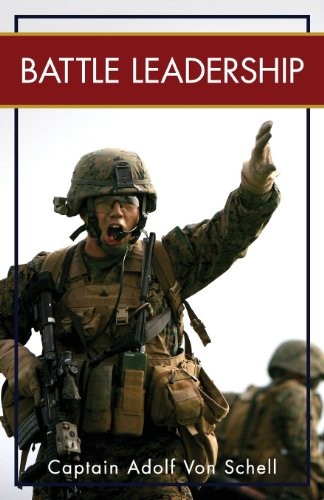
A German general officer wrote this account of small-unit leadership in WWI for the Infantry School at Fort Benning in 1933. The Marine Corps has assigned it ever since. The core argument: leadership under fire is not about giving orders, it is about being the kind of person men will follow when following means dying. Von Schell fought the war he is analyzing, which makes his case studies something other than theory. Seventy pages that have not been surpassed in the literature of small-unit combat leadership.
Marquet commanded the USS Santa Fe — the worst-performing submarine in the Pacific Fleet — and turned it into the best-performing in a single deployment by inverting the traditional command model. Instead of the standard leader-follower structure (officers direct, enlisted execute), he distributed intent and decision authority down to the lowest competent level, trained the crew to act on understanding rather than orders, and created conditions for the crew to think rather than comply. The most specific available account of how leader-follower versus leader-leader command structures produce different results in military units. On both the CMC and SOCOM reading lists because the Santa Fe model is the operational opposite of the zero-defect command culture.

Kerr spent years studying the All Blacks — New Zealand's national rugby team, the most successful sports team in the history of organized competition by winning percentage — and extracted fifteen leadership principles that the organization has maintained across generations of players and coaches. The book is about institutional culture: how an organization with extraordinary expectations maintains excellence as individuals rotate through it, and what practices and rituals sustain institutional identity across time. On both the SMA and CMC reading lists because the problem of maintaining unit culture and excellence across leadership transitions is exactly the problem that NCO corps and staff NCO development is designed to solve. Far more practically useful than most books on this topic.
Collins and his research team studied 1,435 companies over forty years to identify the eleven that made sustained transitions from good to great performance, then reverse-engineered what those companies had in common. The findings — Level 5 Leadership (leaders who combine personal humility with professional will), the Hedgehog Concept (doing one thing better than anyone else in the world), a culture of discipline, and technology as an accelerator of existing momentum rather than a substitute for it — have been applied widely across military organizations. On the Air Force enlisted professional military education track because the question it answers — what turns a competent institution into an exceptional one — is the question every unit commander asks. The contrast between good-enough and great performance is especially pointed in an organization where the gap between the two is measured in aircraft and aircrew.
Grant's argument that the ability to reconsider — to update beliefs in response to new evidence rather than defend prior positions — is the most underrated cognitive skill in professional and organizational life. His framework distinguishes between thinking like a scientist (forming hypotheses and testing them against evidence) versus thinking like a preacher (defending your beliefs), a prosecutor (attacking others'), or a politician (pursuing approval). The military application is direct: the organizations that failed most catastrophically in the post-9/11 wars were the ones that couldn't update doctrine and strategy in response to evidence that their initial assessments were wrong. On the CMSAF reading list.
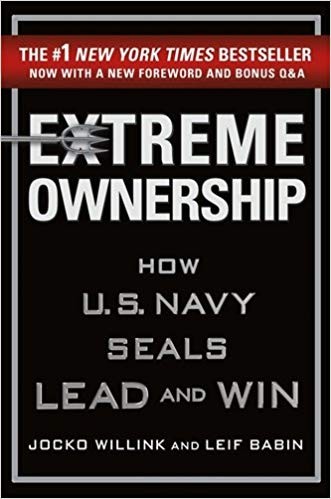
Two SEALs went to Ramadi, came back, and wrote a leadership manual for people who run companies. Slightly cultish. Ruthlessly practical. The principle — every failure is a leadership failure, including the ones that look like someone else's fault — is either the most freeing or most terrifying idea in military leadership depending on what kind of officer you are. Half your chain of command has read it. Half of them didn't change anything. Be the other half.
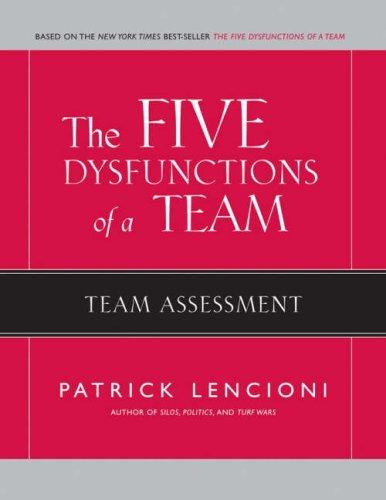
Lencioni's framework for team failure — presented as a fable about a CEO taking over a dysfunctional Silicon Valley company — identifies five nested dysfunctions: absence of trust, fear of conflict, lack of commitment, avoidance of accountability, and inattention to results. The model is sequential: each dysfunction enables the next, and fixing it requires starting at the bottom. The military application is direct: every team that underperforms in garrison or in combat is usually traceable to one of these five failure modes. On the CMSAF enlisted PME reading list because the problems Lencioni describes — teams that avoid productive conflict, leaders who cannot hold peers accountable, units that mistake unanimity for commitment — are exactly the problems that erode effectiveness before they erode performance.
Roberts used the historical figure of Attila the Hun as a vehicle for leadership principles — the book is presented as Attila's own wisdom to his chieftains, covering loyalty, delegation, development of subordinates, the use of conflict, and the management of success and failure. The conceit works: Attila was the most effective military leader of the fifth century, and the principles Roberts extracts from his career are sound regardless of the vehicle. On the SEAC reading list because it is genuinely readable, immediately applicable to NCO leadership, and makes the point that leadership principles transcend the era in which they're applied.
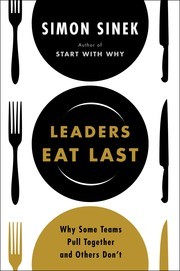
Sinek's argument is biological before it is motivational: human beings evolved to follow leaders who prioritize the group's survival over their own comfort, and the neurochemistry of trust — oxytocin, serotonin — is the mechanism. The military examples are not decoration; they are the evidence base. The title comes from a Marine general who explained that the most junior Marines ate first in the chow line. Sinek's framework of the "Circle of Safety" translates directly to the command climate literature. Less cult-y than Extreme Ownership. More biological. Useful for leaders who want to understand why their people will or will not follow them into difficult situations.
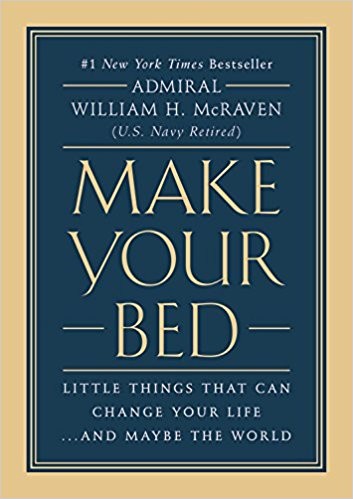
Admiral McRaven gave a commencement speech at UT Austin in 2014 that went viral and then became a book. Ten lessons from BUD/S that apply to life. Making your bed is lesson one because small standards done daily build the capacity for large ones done under pressure. Short enough to read in one sitting. Dense enough to think about for a year. If you are skeptical going in, that is fine — the skepticism usually dissolves around chapter four.
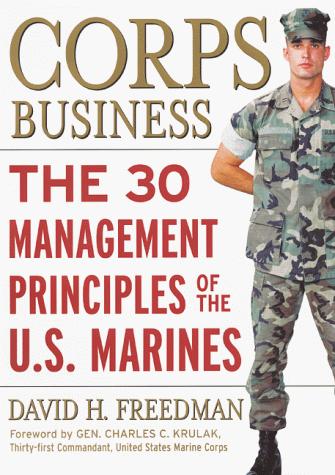
Freedman spent a year embedded with Marine units and wrote an analysis of Marine Corps leadership practices designed for a business audience — but which reads better as an account of how the Marine Corps actually trains leaders than most books written from inside the institution. The emphasis on decentralized decision-making, on giving junior leaders clear intent and the authority to achieve it, and on the institutional culture that makes this possible is presented with the specificity of observation rather than the abstraction of theory. Useful precisely because it is written by an outsider who had to explain what he was seeing.
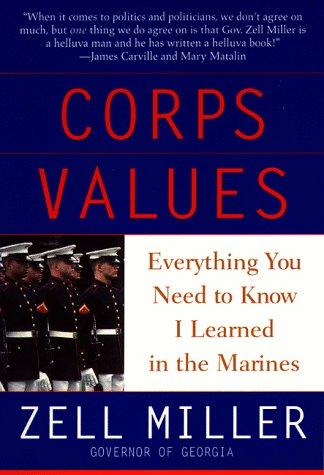
The former Governor of Georgia and U.S. Senator on what the Marine Corps actually teaches and why civilian life is impoverished without those lessons. Surprisingly rigorous — Miller argues for specific values with specific evidence rather than the sentiment that usually attends this kind of book. Whether or not you agree with his politics, the values he is describing are real, and the argument for why they matter outside a military context is worth engaging.
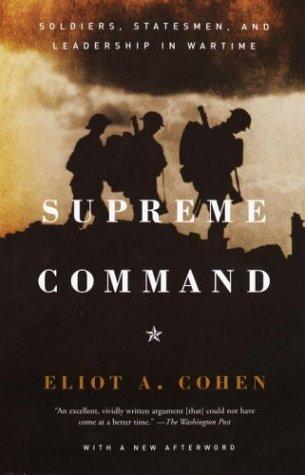
Four case studies in how democratic leaders have controlled — or failed to control — their military commanders in wartime: Lincoln, Clemenceau, Churchill, Ben-Gurion. Cohen's argument is that the successful ones did not stay in their lane. They interfered, questioned, argued with their generals, and demanded answers when the answers were not forthcoming. The unequal dialogue between civilian authority and military expertise is not a dysfunction of civil-military relations — it is its healthiest form. Every officer who has thought "the politicians should just let us fight" needs to read this before saying it again.
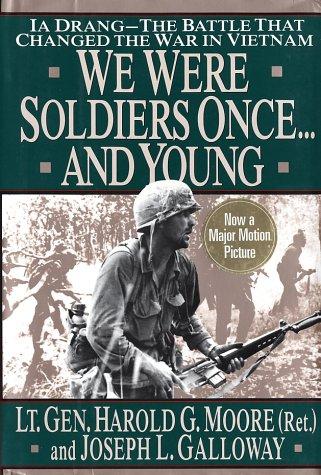
Ia Drang Valley, November 1965. The first major battle between U.S. Army and North Vietnamese Army forces. Moore commanded the battalion. Galloway was the reporter embedded with them. Both were there for the full three days. Both tell the truth, which is rare when officer and journalist collaborate. The helicopters that made the battle possible also made it impossible to disengage. That tension never resolved.
The most decorated American soldier of the Vietnam era wrote his memoirs and proceeded to indict the entire Army leadership structure, by name, with evidence. They took his Army career. He took theirs in the court of history. Whether Hackworth was right about everything is debatable. Whether the Army in Vietnam had serious institutional rot at senior levels is not. The most honest senior officer memoir ever published by an active American soldier. They got him for it.
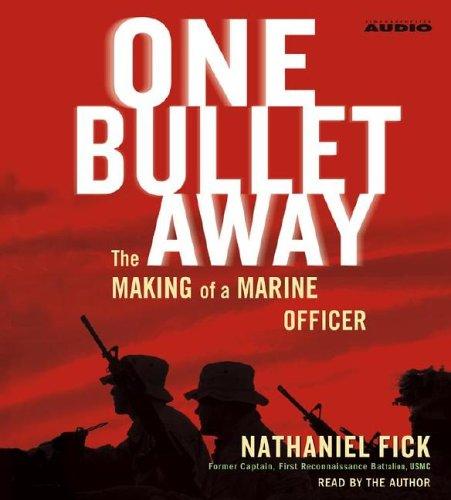
Fick led the same platoon that Evan Wright rode with in Generation Kill — 1st Reconnaissance Battalion during the 2003 invasion. Where Generation Kill is Wright's outsider account, One Bullet Away is Fick's insider account: what it was like to command the platoon from Dartmouth ROTC through TBS through the reconnaissance school through the invasion. The two books should be read together. Fick's account of the gap between what he was taught about leadership and what the invasion actually demanded is the best available account of what initial-entry officer development does and does not prepare officers for.
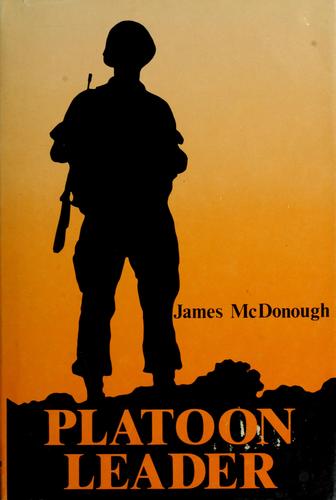
An Army lieutenant in Vietnam writes about his first command with the particular honesty of a man who knows he made mistakes that cost lives and is unwilling to pretend otherwise. Fear, incompetence — his own included — and what it actually costs to lead men in contact are documented without the retrospective heroism that tends to accumulate over decades. The best of the Vietnam lieutenant memoirs and one of the few that tells the truth about what junior leadership actually feels like.
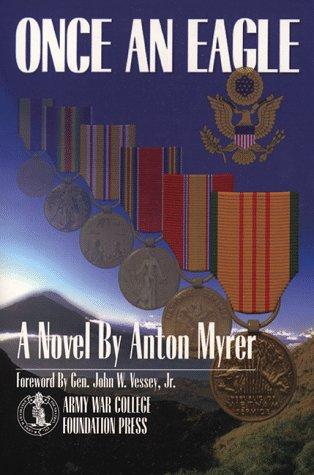
The Army's unofficial scripture, though every branch recognizes the type. Two officers, two wars, two completely different answers to the question of what kind of officer you want to be. The fact that Courtney Massengale keeps getting promoted should tell you everything you need to know about how institutions work. Sam Damon is who you want to be. Massengale is who gets the star.
The foundational maneuver warfare doctrine document produced in 1989 under General Alfred Gray. Not a checklist. Not a manual. A philosophy of war — what war is, how friction and uncertainty dominate it, and what it demands of the people who fight it. The thinking draws from Clausewitz, Boyd's OODA loop, and the Wehrmacht's Auftragstaktik. Available as a free PDF from the Marine Corps website. That does not make it light reading. Read it slowly. Read it twice. Then watch how rarely the people who claim to have read it actually apply what it says.
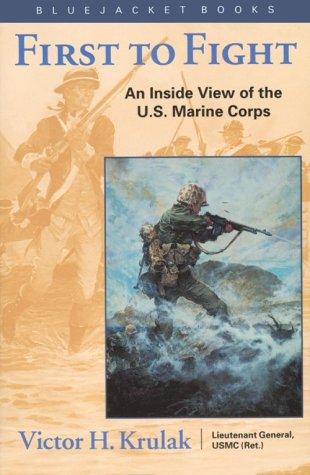
Lieutenant General Victor Krulak served in WWII and Korea, commanded Marine forces in the Pacific, and wrote this account of how the Marine Corps maintains its institutional identity — what the Corps is, why it is the way it is, and how it has survived repeated Congressional attempts to eliminate it since 1947. The book is the essential text for understanding Marine Corps institutional culture from the inside: the amphibious mission that defines the Corps's reason for existence, the training culture that distinguishes Marine recruit training from other services, and the leadership philosophy the Corps has maintained across a century of organizational pressure. On the CMC heritage reading list as the internal account of what the institution is for.
Coyle's follow-up to The Talent Code shifts from individual development to group performance: what makes some teams — Navy SEAL platoons, the San Antonio Spurs, Pixar — dramatically outperform others with comparable talent? His three findings: high-performing groups build safety (members can take risks without losing belonging), share vulnerability (leaders signal fallibility to create trust), and establish purpose (a clear story of why the group exists). The research base is diverse and the examples are concrete. The application to military unit cohesion, particularly in the NCO corps, is direct: the same dynamics that make a startup or a championship team outperform apply to the small-unit leadership that determines whether a rifle company fights as a team or as a collection of individuals.