Professional Reading List
The Chief Master Sergeant of the Air Force is the senior enlisted leader of the Air Force and Space Force, the principal advisor to the Chief of Staff and Secretary on enlisted matters. The CMSAF reading program is the most systematically developed enlisted reading program in any U.S. military branch — integrated directly into the Air Force's enlisted professional military education (PME) tracks at the NCOA, SNCOA, and Airman Leadership School levels. The books are selected to develop the professional, personal, and organizational competencies that Airmen at each career stage need, and are reviewed and updated as PME curricula evolve.
Buy links go to Bookshop.org (which supports independent bookstores) and Amazon. Some are affiliate links — if you buy, we earn a small commission at no extra cost to you. As an Amazon Associate we earn from qualifying purchases. It never affects which books are on this list or how we describe them. How this works.
Kerr spent years studying the All Blacks — New Zealand's national rugby team, the most successful sports team in the history of organized competition by winning percentage — and extracted fifteen leadership principles that the organization has maintained across generations of players and coaches. The book is about institutional culture: how an organization with extraordinary expectations maintains excellence as individuals rotate through it, and what practices and rituals sustain institutional identity across time. On both the SMA and CMC reading lists because the problem of maintaining unit culture and excellence across leadership transitions is exactly the problem that NCO corps and staff NCO development is designed to solve. Far more practically useful than most books on this topic.
Collins and his research team studied 1,435 companies over forty years to identify the eleven that made sustained transitions from good to great performance, then reverse-engineered what those companies had in common. The findings — Level 5 Leadership (leaders who combine personal humility with professional will), the Hedgehog Concept (doing one thing better than anyone else in the world), a culture of discipline, and technology as an accelerator of existing momentum rather than a substitute for it — have been applied widely across military organizations. On the Air Force enlisted professional military education track because the question it answers — what turns a competent institution into an exceptional one — is the question every unit commander asks. The contrast between good-enough and great performance is especially pointed in an organization where the gap between the two is measured in aircraft and aircrew.
Grant's argument that the ability to reconsider — to update beliefs in response to new evidence rather than defend prior positions — is the most underrated cognitive skill in professional and organizational life. His framework distinguishes between thinking like a scientist (forming hypotheses and testing them against evidence) versus thinking like a preacher (defending your beliefs), a prosecutor (attacking others'), or a politician (pursuing approval). The military application is direct: the organizations that failed most catastrophically in the post-9/11 wars were the ones that couldn't update doctrine and strategy in response to evidence that their initial assessments were wrong. On the CMSAF reading list.
Lencioni's framework for team failure — presented as a fable about a CEO taking over a dysfunctional Silicon Valley company — identifies five nested dysfunctions: absence of trust, fear of conflict, lack of commitment, avoidance of accountability, and inattention to results. The model is sequential: each dysfunction enables the next, and fixing it requires starting at the bottom. The military application is direct: every team that underperforms in garrison or in combat is usually traceable to one of these five failure modes. On the CMSAF enlisted PME reading list because the problems Lencioni describes — teams that avoid productive conflict, leaders who cannot hold peers accountable, units that mistake unanimity for commitment — are exactly the problems that erode effectiveness before they erode performance.
Two SEALs went to Ramadi, came back, and wrote a leadership manual for people who run companies. Slightly cultish. Ruthlessly practical. The principle — every failure is a leadership failure, including the ones that look like someone else's fault — is either the most freeing or most terrifying idea in military leadership depending on what kind of officer you are. Half your chain of command has read it. Half of them didn't change anything. Be the other half.
Sinek's argument is biological before it is motivational: human beings evolved to follow leaders who prioritize the group's survival over their own comfort, and the neurochemistry of trust — oxytocin, serotonin — is the mechanism. The military examples are not decoration; they are the evidence base. The title comes from a Marine general who explained that the most junior Marines ate first in the chow line. Sinek's framework of the "Circle of Safety" translates directly to the command climate literature. Less cult-y than Extreme Ownership. More biological. Useful for leaders who want to understand why their people will or will not follow them into difficult situations.
The un-sexy truth that strategy is the easy part and actually doing the thing is where organizations die. It's a corner-office business book with all the trimmings, but the core discipline of linking people, strategy, and operations or failing survives the jargon.
One idea stretched to book length: find the single most important thing and stop pretending your twelve priorities are all priorities. You'll get the message by chapter three and could stop there, but it's a good message.
Duckworth's research argument that sustained passion plus perseverance beats raw talent more often than we admit. The science has taken some fair hits since, and yes it can read like a TED talk with footnotes, but the core is a healthy antidote to the natural-talent myth.

A quick management parable built on one idea: don't ambush your people at review time, coach them so they can pass a test you already showed them. Thin and a little corporate, but the no-surprises philosophy is genuinely worth stealing for how you run a team.
A short business fable arguing that giving value first beats grabbing it, which lands as either cliche or revelation depending on how cynical your week has been. Read it in one sitting. Take the five laws, leave the schmaltz.

The straight-talk manual on men mentoring women without weirdness, excuses, or the 'I don't want to get accused of something' cop-out. Practical, a little dry, but it names the exact behaviors that keep half your talent from ever getting sponsored. Worth the couple hours if you supervise anyone.

A soccer legend's short, punchy riff on teamwork built from her Barnard commencement speech. Long on energy, short on pages — you'll finish it in an afternoon and remember maybe three rules, which is honestly the point. Good gateway drug for people who don't read leadership books.
The vulnerability researcher's take on leadership, and yes, plenty of NCOs roll their eyes at the word 'feelings.' Push past that and there's real substance on hard conversations and giving feedback that isn't just a gut-punch with a bow on it. The workbook parts drag; the ideas don't.
An executive coach's catalog of the small habits that make good leaders insufferable — winning every argument, adding your two cents to everything, needing to be the smartest voice. Uncomfortably specific if you're honest with yourself. The kind of book that's more useful the higher you get promoted.

A whole book arguing you should say less, which is a little ironic, but it earns it. If your briefings run long and your emails bury the BLUF three paragraphs down, this is the fix. The techniques are simple enough to use in your next stand-up.
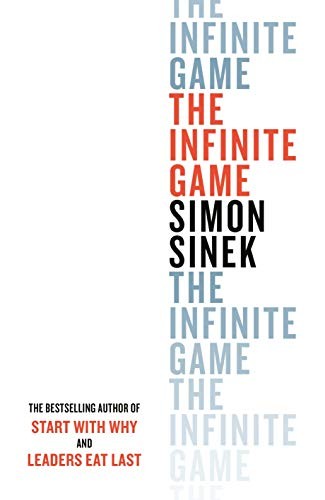
Sinek's argument that treating a long game like a game you can 'win' is how organizations wreck themselves chasing quarterly numbers — or, in our world, the next inspection. One good idea stretched thin, as his books tend to be, but it's the right idea for people who serve something bigger than a fiscal year.
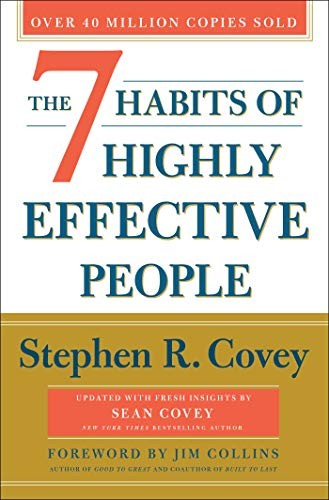
The granddaddy of the genre, and yes, 'begin with the end in mind' is a laminated-poster cliché now — because this book made it one. Cut through the dated framing and the core habits are still solid. If you've somehow never read it, the reputation is earned.

Doshi served on the NSC and as China Director at the White House when he published this analysis of Chinese grand strategy. His argument, built from Chinese-language party documents rather than American interpretations of Chinese behavior: that Beijing has been pursuing a consistent strategy of blunting U.S. primacy since the late 1980s, and that the shift from passive blunting to active construction of Chinese-led alternatives began around 2008. The evidence is granular and the sourcing is primary — Chinese Communist Party documents, Politburo speeches, internal planning records. The most rigorous available analysis of how Beijing thinks about strategic competition with the United States. Essential for anyone advising on China policy or preparing for great power competition.
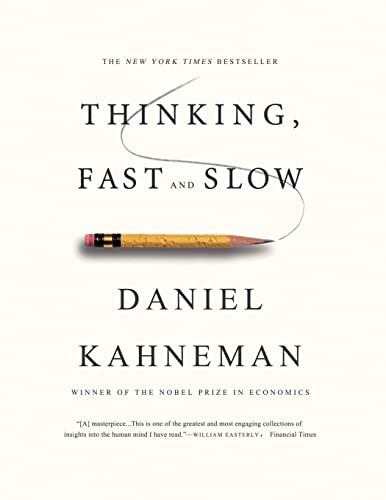
A Nobel laureate's account of how human beings actually make decisions versus how they think they make decisions. System 1 is fast, intuitive, pattern-matching, and wrong in predictable ways. System 2 is slow, deliberate, effortful, and frequently overridden by System 1 under pressure. Every military decision made under time pressure, incomplete information, and physical stress is dominated by System 1 — which is exactly what the enemy is designing their actions to exploit. The research on cognitive bias is the most important thing a military leader can read that is not about military history. And unlike most leadership books, this one is right.

Singer and Brooking's analysis of how social media has become a weapon of war — how state and non-state actors weaponize information networks to shape narratives, recruit fighters, coordinate action, and manipulate adversary populations. The case studies span ISIS's social media strategy, Russian information operations in Ukraine and the 2016 U.S. election, Chinese influence campaigns, and the ways that the viral dynamics of social platforms amplify extremist content. On the CMSAF reading list because information operations are now conducted by every level of the military, and understanding the environment those operations occur in is prerequisite to conducting them effectively or defending against them.
The argument that the world is a complex system that punishes people who plan for the last war — which is every military ever. Written in 2009 and it called a lot of the last decade. Occasionally in love with its own metaphors, but the core idea earns the shelf space.

A COVID-era study of how organizations actually adapt to disruption, versus the buzzword version on the PowerPoint. Heavier on business cases than warfighting, so you'll be translating, but the lesson — agility beats the perfect plan — is exactly why it's on an Air Force list. Skimmable in the slow chapters.
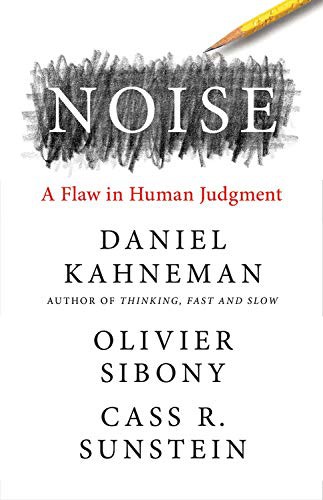
Kahneman's follow-up to Thinking, Fast and Slow, about why two people looking at the same facts reach wildly different calls — think promotion boards, discipline decisions, threat assessments. It's long and repeats itself, but if you make judgment calls that affect people's careers, it'll change how you build the process. Skim the middle.

How China came to dominate the 5G hardware your entire life runs on, from a telecom insider who watched it happen. Less abstract than most China-threat books because the author was in the room. If you want to understand the fight over the network before the shooting kind, start here.
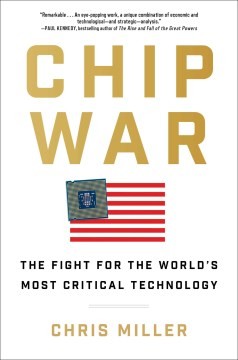
Miller's history of the semiconductor industry and the geopolitical competition over chip manufacturing that has become the central economic and military contest of the twenty-first century. The argument: whoever controls advanced chip production controls the foundation of all modern military and commercial technology, and the U.S.-Taiwan-South Korea manufacturing ecosystem is both the critical chokepoint of the current world order and its most vulnerable point. The Chinese military's dependence on advanced chips it cannot manufacture is the central vulnerability that explains both Beijing's urgency and its strategy in the Indo-Pacific. The most important single book for understanding why Taiwan matters beyond the abstract principle of democratic solidarity. Pulitzer Prize finalist.
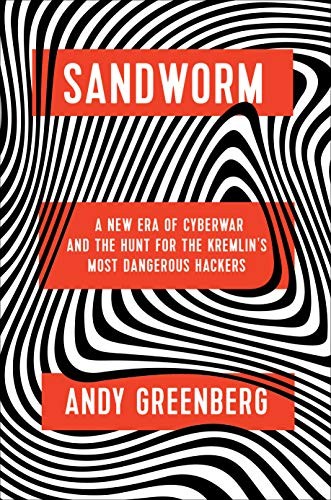
Greenberg traced the Russian military hacking unit GRU Sandworm from their first intrusions into Ukrainian power grids in 2015 through their deployment of the NotPetya malware in 2017 — the most destructive cyberattack in history, which caused ten billion dollars in damage and shut down shipping, logistics, and financial systems across the globe. The book is the most complete available account of what large-scale offensive cyber operations look like in practice: the target selection, the tools, the operational security failures that revealed the unit, and the absence of any effective response from the countries attacked. On the CMSAF reading list because cyber is the Air Force's fourth domain and most Airmen don't understand what operations in it actually look like.
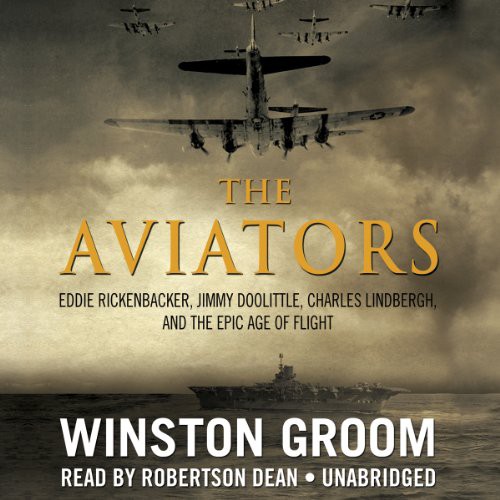
Rickenbacker, Doolittle, and Lindbergh, told by the guy who wrote Forrest Gump, so it moves. More popular history than analysis, but it's a genuinely fun way to absorb the heritage the Air Force keeps telling you to absorb.
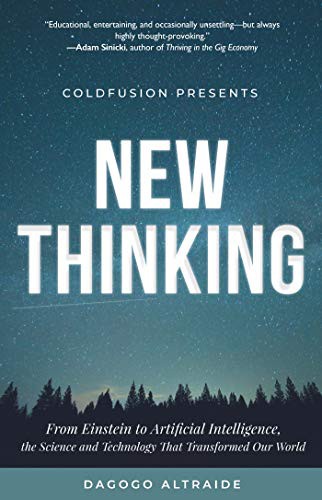
From the ColdFusion YouTube guy — a fast, readable tour of how the big technologies actually got invented, from electricity to AI. Not deep, but genuinely fun, and good context for anyone whose job now involves tech nobody trained them on. A palate cleanser between the heavy strategy reads.

Thirty years on Alabama's death row for a crime he didn't commit, told without a shred of self-pity. It's on a leadership list because it's a masterclass in keeping your humanity when the system has decided you don't have any. Read it and try to complain about your OPR.
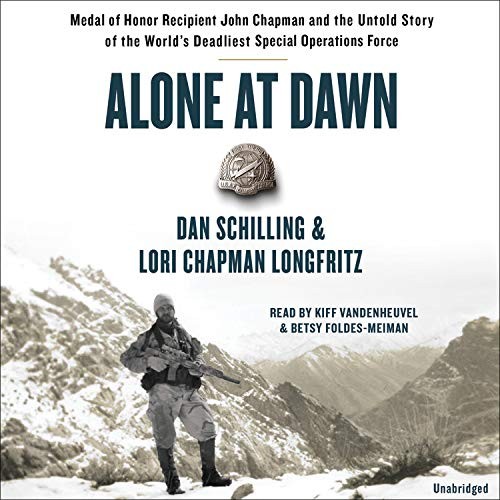
The story of Combat Controller John Chapman, who fought alone against an enemy assault on Takur Ghar and earned a posthumous Medal of Honor — the reconstruction from surveillance footage is harrowing. This is the AFSOC ethos on the page, no gloss required. If you wear the beret or want to understand the people who do, read it.
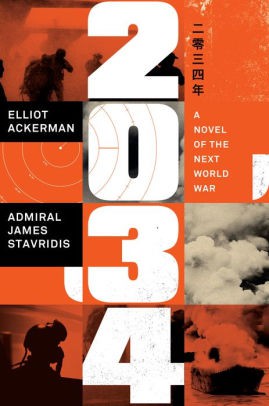
Ackerman is a Marine veteran and novelist; Stavridis is a retired four-star admiral and former NATO Supreme Allied Commander. Their near-future novel about a U.S.-China naval war that begins with a confrontation in the South China Sea and escalates to nuclear use is written with the operational specificity that only actual commanders can bring to the scenario — the chain of decisions, the command breakdown, the escalation that becomes uncontrollable not from intent but from the institutional logic of conflict. Unlike Ghost Fleet, which focuses on tactical innovation, 2034 focuses on strategic failure: how a war that neither side wants begins and cannot be stopped once it starts. On the CMSAF reading list as the fiction that policy analysis cannot fully replace.

On the official Air Force reading list and with good reason. A child prodigy trained in a military school in orbit to command a war he does not fully understand. The twist still lands on readers who know it is coming. The questions about leadership, simulation versus reality, and the moral weight of orders given without full information do not resolve — they deepen. The last chapter has caused more thoughtful discomfort among officers than most required reading combined.
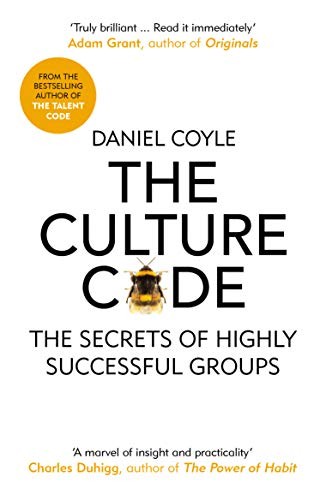
Coyle's follow-up to The Talent Code shifts from individual development to group performance: what makes some teams — Navy SEAL platoons, the San Antonio Spurs, Pixar — dramatically outperform others with comparable talent? His three findings: high-performing groups build safety (members can take risks without losing belonging), share vulnerability (leaders signal fallibility to create trust), and establish purpose (a clear story of why the group exists). The research base is diverse and the examples are concrete. The application to military unit cohesion, particularly in the NCO corps, is direct: the same dynamics that make a startup or a championship team outperform apply to the small-unit leadership that determines whether a rifle company fights as a team or as a collection of individuals.

A conflict-resolution researcher's breakdown of the ten ways people get treated like they don't matter — and how much damage it does. If you've ever watched a good troop quit over how they were spoken to, not what they were asked to do, this explains the mechanism. Slower going than it needs to be, but the framework sticks.

If you're a senior NCO wondering why the new airmen don't work like you did, this is the field guide. Some of it reads like an anthropologist describing a strange tribe, but it beats the alternative of just griping about 'kids these days.' Actually useful for anyone leading first-term troops.
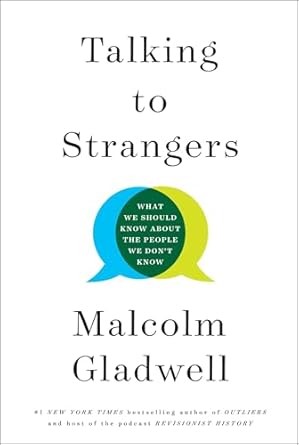
Gladwell on why we're terrible at reading people we don't know — a real problem when your job is interrogations, first meetings with foreign partners, or reading a room. Classic Gladwell: seductive stories, arguments that don't always hold up under a second look. Read it critically and it's worth the trip.