Recommended Reading
The Space Force is the newest service and its reading list reflects a self-conscious effort to build a professional culture from scratch. The Chief of Space Operations list draws on space history, space policy and strategy, and the science fiction that shaped the imagination of the people who built the space age. It is simultaneously backward-looking — understanding what brought us here — and forward-looking: developing the strategic mindset for a domain that will be contested in ways that current doctrine has barely begun to address.
Buy links go to Bookshop.org (which supports independent bookstores) and Amazon. Some are affiliate links — if you buy, we earn a small commission at no extra cost to you. As an Amazon Associate we earn from qualifying purchases. It never affects which books are on this list or how we describe them. How this works.
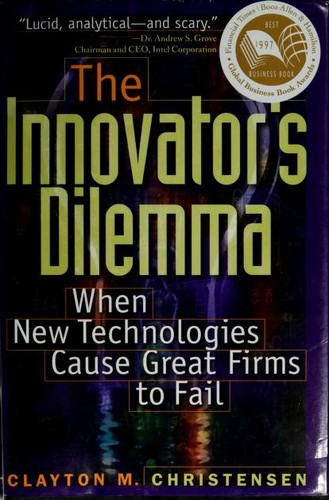
Christensen's analysis of why great companies fail — not through incompetence but through disciplined adherence to what made them successful — is the foundational text for thinking about organizational disruption. His framework: sustaining innovations improve existing products for existing customers; disruptive innovations start small, serve different customers, and eventually destroy established leaders. The military application is direct: every service that has been disrupted in a war (cavalry by tanks, battleships by carriers, surface fleets by submarines) was disrupted by a Christensen-style innovation that existing institutions couldn't recognize as a threat until it was too late. On SOCOM and Space Force reading lists.
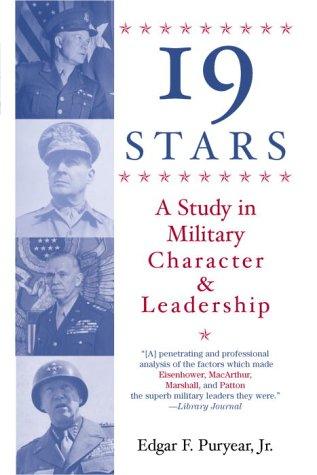
A study of Marshall, MacArthur, Eisenhower, and Patton -- four very different generals, one hard look at what character actually does under command. Older and a little dry, but it made the CSO's list because leadership is not a personality type, it is a set of habits you can steal. Read it for the contrasts.

Janis autopsies the Bay of Pigs, Pearl Harbor, and Vietnam to show how smart people in one room talk each other into disasters nobody in that room actually wanted. If you have ever sat in a briefing where everyone nodded and the plan was garbage, this explains why. Read it before you run your first meeting that matters.
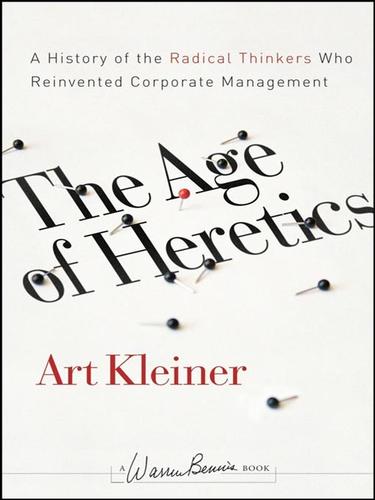
A history of the corporate rebels who dragged big organizations into changing when the org would rather have died first. Reads like management theory, lands like a survival guide for anyone reforming a bureaucracy from the inside. The Space Force is a young service inside an old machine, so you can see why this made the cut.
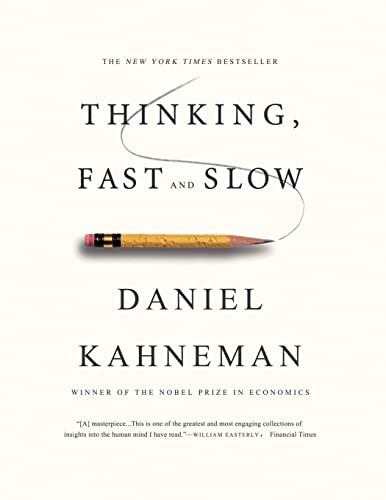
A Nobel laureate's account of how human beings actually make decisions versus how they think they make decisions. System 1 is fast, intuitive, pattern-matching, and wrong in predictable ways. System 2 is slow, deliberate, effortful, and frequently overridden by System 1 under pressure. Every military decision made under time pressure, incomplete information, and physical stress is dominated by System 1 — which is exactly what the enemy is designing their actions to exploit. The research on cognitive bias is the most important thing a military leader can read that is not about military history. And unlike most leadership books, this one is right.
Neustadt taught at Harvard's Kennedy School and May was a military historian. Together they built a course on how decision-makers use — and misuse — history, and this book is the result. Their central argument: that the most common errors in policy and strategy come from drawing analogies from history too quickly, too loosely, and without examining whether the historical case actually resembles the current situation. The case studies, drawn from American foreign policy crises, make the argument concrete. On the CJCS reading list because the analysis applies to every major decision made above the battalion level.
Singer examined the robotics and autonomous systems revolution in warfare — drones, ground robots, autonomous weapons — and the ethical, legal, and strategic questions those systems raise that military institutions were not prepared to answer. Published in 2009, the trends he identified have accelerated beyond his predictions: autonomous systems now operate across all domains, and the questions he raised about accountability, escalation risk, and the changing psychology of remote combat have become operational rather than theoretical. On the Space Force reading list because the domain warfare Space Force is responsible for is increasingly autonomous, and the doctrine to govern it barely exists.
The Cuban Missile Crisis run through three models of how governments actually decide: rational actor, organizational, and bureaucratic politics. It's the book that killed the myth that a state thinks with one brain. A grind in places, a permanent upgrade to how you read any crisis.
Bryson takes every science you slept through -- geology, chemistry, cosmology -- and makes it genuinely fun without dumbing it down. It is on the CSO's shelf because a Guardian who does not understand how the universe actually works has no business operating in it. The rare book that makes you smarter and never feels like homework.
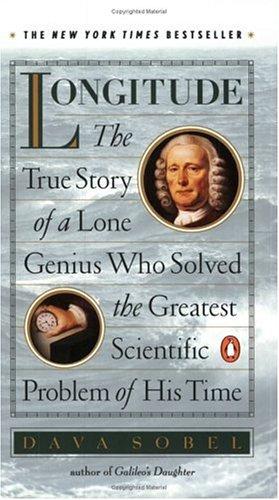
The story of a self-taught clockmaker who solved the deadliest navigation problem of his age while the scientific establishment sneered. Short, sharp, and secretly a book about how institutions punish the person who turns out to be right. The CSO put it on the list for a reason -- sit with that one.
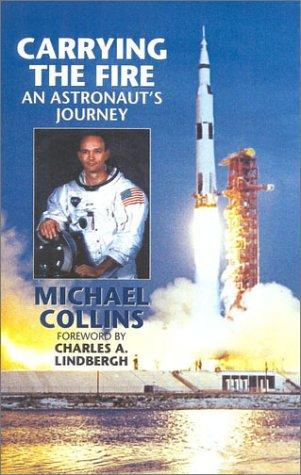
Collins was the Apollo 11 command module pilot who orbited the Moon alone while Armstrong and Aldrin descended to the surface — and wrote what is widely considered the finest astronaut memoir ever published. Unlike most mission accounts, Carrying Fire is about the full arc of a career in aviation and spaceflight: the test pilot years, the Gemini missions, the training, and what it actually feels like to be sixty miles from another human being in the void of space. On the Space Force reading list because the mindset Collins describes — rigorous, adaptive, comfortable with radical uncertainty — is the mindset the newest military branch is trying to cultivate.

Two of the original Mercury Seven tell the Apollo story from inside the capsule, ego and all. Not the most rigorous space history on the shelf, but it is the one written by men who actually rode the rocket. Worth it for the swagger and the reminder that spaceflight used to kill people on a schedule.

An astronaut is accidentally left behind on Mars and has to engineer his own survival until a rescue mission can reach him. The fiction that the Space Force training culture should study — not for the space, but for the problem-solving architecture. Watney's approach to an impossible situation is methodical, documented, creative within constraints, and unfailingly honest about what he does not know. He also grows potatoes in his own feces on an alien planet. Peak can-do spirit.
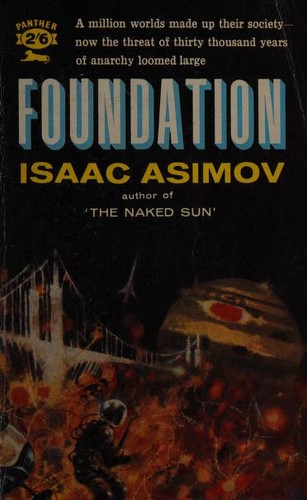
A mathematician who predicts the fall of a galactic empire and designs a plan to shorten the dark age that follows. The series is on multiple service branch reading lists, less for the science fiction than for the strategic thinking. Seldon's problem is the central problem of all long-range military planning: how do you design systems robust enough to survive contact with a future you cannot fully predict? The answer Asimov proposes involves redundancy, distributed capability, and the honest acknowledgment of institutional mortality.
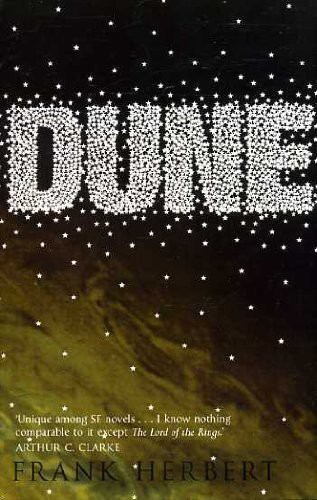
Herbert's 1965 novel about the struggle for control of Arrakis — the desert planet whose spice is the most valuable substance in the universe — is the most sophisticated study of resources, strategy, and power ever written as fiction. The ecological, religious, political, and military systems Herbert built are interdependent in ways that reward repeated reading; what looks like fantasy on the surface is a rigorous analysis of how control of a critical resource shapes every other dimension of power. On the Space Force CSO reading list because the space domain is Arrakis: the critical resource corridor whose control defines the century's strategic competition.
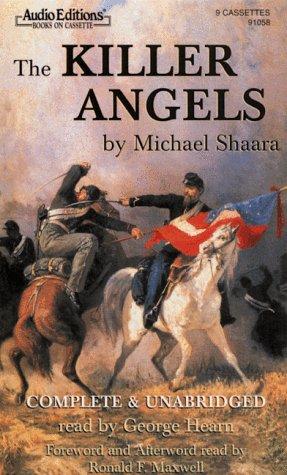
The Battle of Gettysburg told through the eyes of the commanders on both sides: Lee and Longstreet, Chamberlain and Buford. Shaara spent years on the research and the prose and produced the only novel that fully renders the military experience of the Civil War's decisive battle — the command pressures, the physical reality of the ground, and the specific moment when Chamberlain's 20th Maine, out of ammunition, fixed bayonets and charged downhill. On the Commandant's reading list. Assigned at West Point. Required not because the Civil War will recur but because command under impossible conditions looks exactly like this.