The Vietnam Shelf
No war shaped the modern American military — its doctrine, its distrust, its reforms — like Vietnam. This shelf is the honest record: the strategic autopsies, the ground-level memoirs, and the histories that explain how it went wrong and what the force rebuilt afterward. Required reading for understanding why today's military thinks the way it does.
Buy links go to Bookshop.org (which supports independent bookstores) and Amazon. Some are affiliate links — if you buy, we earn a small commission at no extra cost to you. As an Amazon Associate we earn from qualifying purchases. It never affects which books are on this list or how we describe them. How this works.
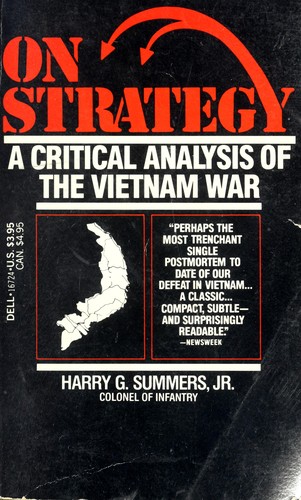
The Army's post-Vietnam autopsy, written at the War College itself: we won every battle and still lost, because nobody could say what the war was actually for. Summers drags Clausewitz into Saigon and asks the question the brass wouldn't. Required reading precisely because it's uncomfortable.
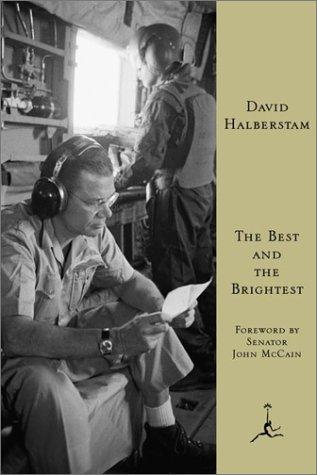
Halberstam spent years investigating why the most credentialed, capable men in the Kennedy and Johnson administrations made the series of decisions that produced Vietnam. The answer is not stupidity. It is the particular kind of institutional failure that occurs when smart people optimize for appearing confident rather than being honest, when the costs of dissent exceed the costs of error, and when the system selects for people who tell leadership what leadership wants to hear. The book that every person who has ever written an optimistic assessment of an operation that was going badly should be required to read.
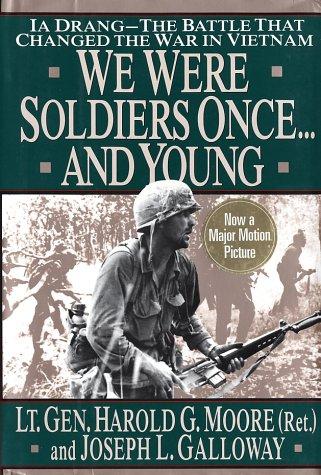
Ia Drang Valley, November 1965. The first major battle between U.S. Army and North Vietnamese Army forces. Moore commanded the battalion. Galloway was the reporter embedded with them. Both were there for the full three days. Both tell the truth, which is rare when officer and journalist collaborate. The helicopters that made the battle possible also made it impossible to disengage. That tension never resolved.
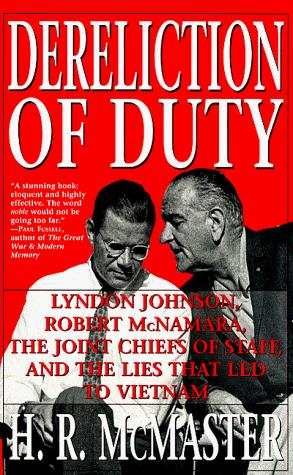
McMaster wrote his PhD dissertation in 1997 naming the Joint Chiefs of Staff by name and arguing, with documentary evidence, that they knew Vietnam was going wrong, had reservations they never voiced, and told the President what he wanted to hear instead of what was true. He was a colonel when it was published. It nearly ended his career. He was eventually a three-star and National Security Advisor. The book remains one of the most damning indictments of institutional military cowardice ever published.
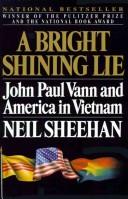
John Paul Vann went to Vietnam believing in the mission, discovered that the South Vietnamese Army could not and would not fight, reported this accurately, was ignored by his superiors, resigned his commission, and went back as a civilian to run the war the way he thought it should be run. Sheehan spent fifteen years writing this Pulitzer Prize-winning account of how the most capable American officer in Vietnam was destroyed by the same institution that produced him. The most comprehensive single account of why Vietnam failed at the institutional and strategic level — and why the Army's official version of events was constructed after the fact to protect careers rather than produce understanding.
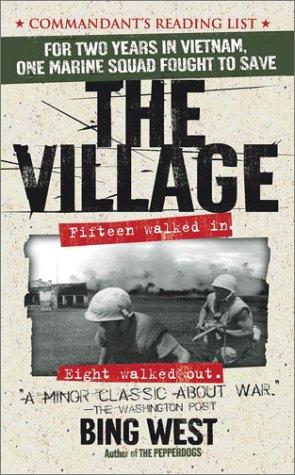
Combined Action Platoons in Vietnam. Marines embedded in Vietnamese villages to live, eat, sleep, and fight alongside the people they were protecting. It worked tactically and by most measures strategically. The MACV command never wanted to scale it because it threatened the conventional force structure's dominance. West watched an idea that worked get deliberately abandoned. He has not forgotten it. This book is why.
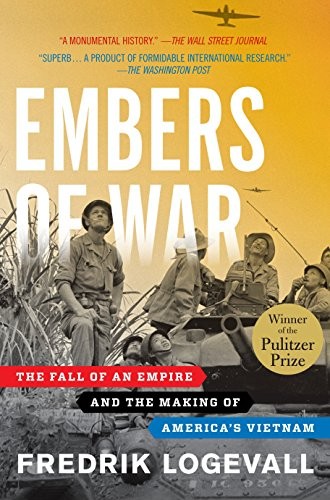
How France lost Indochina and handed the U.S. a war nobody read the fine print on. Logevall's Pulitzer winner is the prequel everyone skips — the decades of arrogance and missed off-ramps before the first American boot landed. Read it and the whole thing stops looking like an accident.
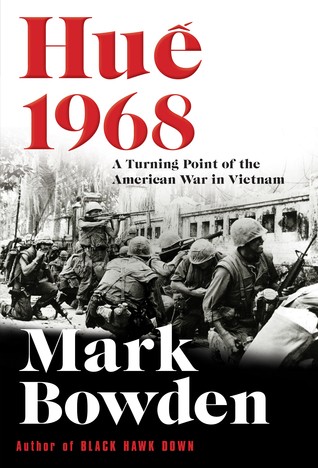
The Black Hawk Down author on the bloodiest single battle of the Tet Offensive, block by urban block. Bowden reconstructs the fight from both sides and pinpoints the moment Washington's optimism died on camera. The most readable account of the turning point nobody in charge saw coming.
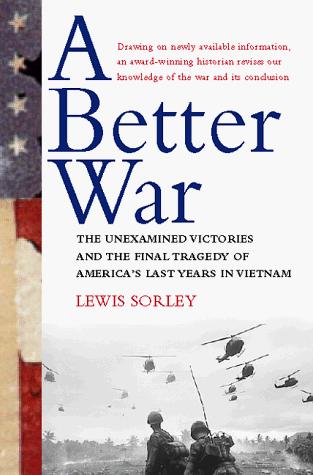
The revisionist case that the war was being won after 1968 — and lost in Washington, not the field. You don't have to buy the whole argument to find Sorley's look at the Abrams years genuinely uncomfortable for both sides. Argue with it; you can't ignore it.
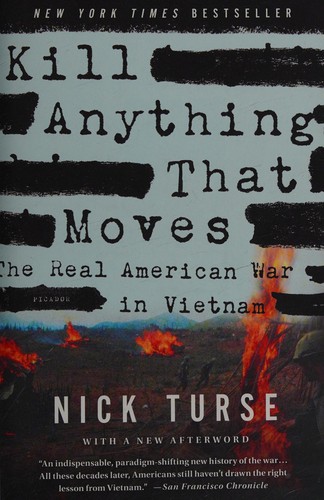
The war crimes that weren't aberrations — Turse's archive dive argues atrocity was policy, not a My Lai one-off. It's a hard, contested read that names the machinery behind the body counts. Bring it alongside the memoirs; the truth lives in the argument between them.
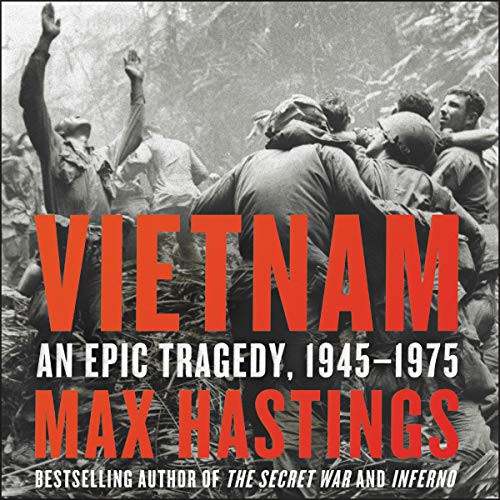
One volume, all sides, no flag-waving — Hastings covers 1945 to 1975 with a British historian's allergy to national myth. He's rough on everybody, which is exactly why it works. The best single-book starting point in print.
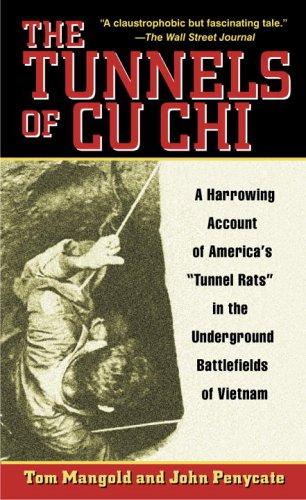
The underground war — miles of VC tunnels and the 'tunnel rats' who went down after them with a pistol and a flashlight. Told from both ends of the hole, which is what makes it. Claustrophobia as military history.
The Pulitzer-winning argument that America lost because it never bothered to understand Vietnam as a place with its own history. FitzGerald's cultural autopsy was a gut-punch in 1972 and still lands. The 'we didn't know who we were fighting' thesis, done right.
The companion to the landmark PBS series, and for a generation the default one-volume history. Karnow interviewed everyone from GIs to Giap. Dated in spots but still a rock-solid orientation before you go deeper.
The definitive account of Dien Bien Phu, the 1954 siege where France lost Indochina and set the table for everything that followed. Fall was the sharpest Western observer of the war and died covering it. Start here to understand why Vietnam was never going to be quick.
Fall watched France lose Indochina and wrote the book America should have read before Vietnam and didn't. The definitive study of how a Western army gets ground down in a war it doesn't understand — still assigned for a reason.
Not a memoir. Not a novel. Something more honest than either. O'Brien served in Vietnam as an infantryman and spent twenty years figuring out how to tell the truth about it. The weight of the physical gear is the point of entry. What it opens into is the weight of everything else: guilt, memory, the stories we tell to survive. The most important American book about ground combat ever written by someone who was there.
A Marine lieutenant in Vietnam in 1965 and 1966, among the first American units deployed for sustained combat. What happened when young officers brought Cold War moral certainty to a war that had none. Caputo describes losing his moral bearings with an honesty that requires courage, and without the self-pity that usually attends that kind of honesty. The military justice system features prominently. So does the question of what an officer owes his men versus what he owes his conscience.
Herr covered Vietnam for Esquire from 1967 through 1969 and published this account in 1977. Dispatches is the book that made Tom Wolfe's New Journalism a war literature: Herr embedded with grunts, walked combat patrols, was present at Hue during Tet, and wrote about it in a prose style that captured the chaos, the drug use, the music, and the specific sensory experience of combat in a way that no previous war journalism had attempted. Francis Ford Coppola and Stanley Kubrick consulted Herr when making Apocalypse Now and Full Metal Jacket. The book that changed how American journalism covered war.
An Army lieutenant in Vietnam writes about his first command with the particular honesty of a man who knows he made mistakes that cost lives and is unwilling to pretend otherwise. Fear, incompetence — his own included — and what it actually costs to lead men in contact are documented without the retrospective heroism that tends to accumulate over decades. The best of the Vietnam lieutenant memoirs and one of the few that tells the truth about what junior leadership actually feels like.
A Huey pilot's account of flying over 1,000 combat assaults in Vietnam — the closest thing to being strapped into the war's worst commute. Mason doesn't glamorize the flying or the drinking that chased him home. The gold standard for what the air war felt like from the left seat.
Before The Things They Carried, O'Brien wrote the straight memoir — drafted, terrified, marching through the same ground as the My Lai massacre. It's the honest version of 'I didn't want to go and I went anyway.' Short, cold, and it stays with you.
Gung-ho Marine ships out, comes home paralyzed, and spends the rest of the book learning what the recruiter left out. Kovic's account of the VA hospital alone should be mandatory reading before anyone signs. The parade never shows the wheelchair ramp.
An Army advisor running a rural district mostly on his own, learning that hearts and minds is a full-time job nobody trained him for. Donovan's memoir is the quiet counterpoint to the big-unit war. What counterinsurgency actually looked like at the village level.
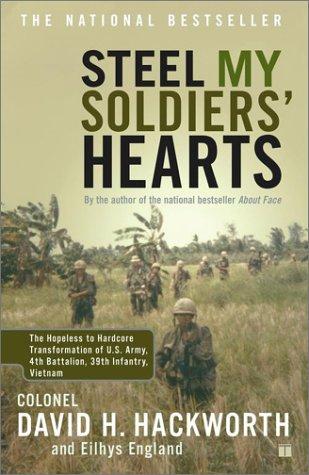
Hackworth takes over a busted battalion and drags it from hopeless to hardcore, telling you exactly how in language the Army wishes he'd toned down. Half tactical manual, half middle finger to careerism. If About Face was the whole life, this is the master class on fixing a broken unit.
A CBS correspondent's decade covering the war, from the streets of Hue to the cat he smuggled home. Laurence writes the journalist's war — close enough to bleed, obligated to keep filming. Long, human, and honest about what watching does to you.
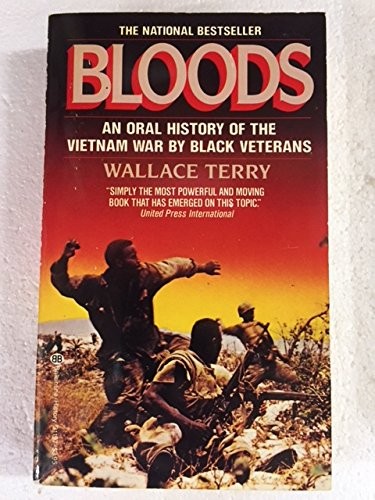
Twenty Black veterans, in their own words, on fighting two wars at once — the one in Vietnam and the one waiting back home. Terry's oral history captures a piece of the war the big narratives keep skipping. Essential, and still under-read.
The This Boy's Life author on his tour as an advisor in the Mekong Delta — spare, funny, and merciless about his own younger self. Wolff finds the absurdity without ever letting himself off the hook. A small, sharp masterpiece.
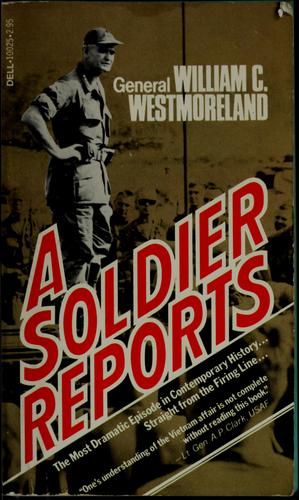
The general who ran the war, defending the way he ran it. Read it as a primary source, not gospel — Westmoreland's attrition-and-body-count worldview is the exact thing every other book on this shelf is arguing with. Know the case for the defense.
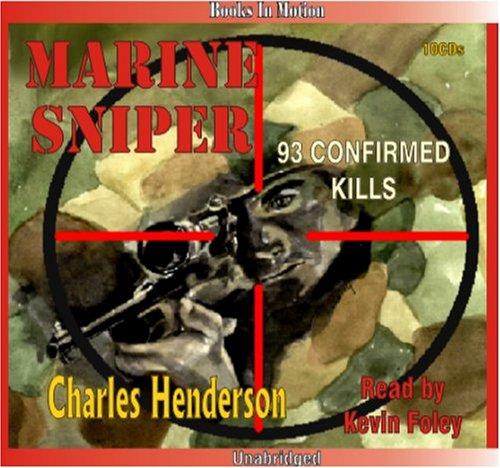
The story of Carlos Hathcock — 93 confirmed kills and a legend the Corps still teaches. Henderson's biography is where the Hathcock myth got written down. Straight-ahead war storytelling; take the hero polish with a grain of salt and enjoy the marksmanship.
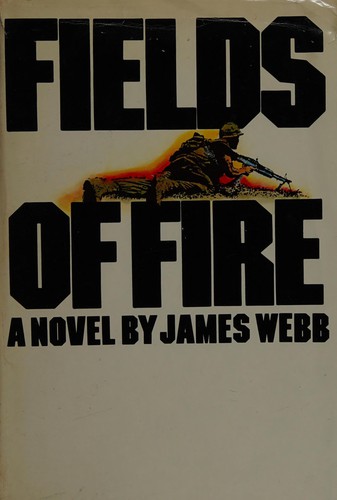
The best American novel about the Vietnam War at the grunt level. Webb was a Marine platoon commander in An Hoa Basin and wrote the fiction that captured what the war actually felt like — not from the colonel's command post but from the patrol base and the rice paddies. Three college men, different backgrounds, all fed into the same machine. What comes out is not what went in. Webb won't let anyone off the hook, including the antiwar movement and the soldiers themselves.
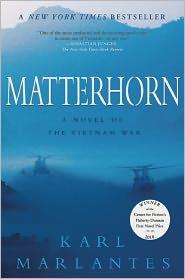
Marlantes spent thirty-five years writing this novel about a Marine rifle company in Vietnam. He was a Marine officer there. The result is six hundred pages that feel earned rather than padded — a complete account of a pointless hill, a pointless campaign, and the men caught inside both. More honest than it had to be. Longer than it needs to be. The most important Vietnam War novel published in the twenty-first century.
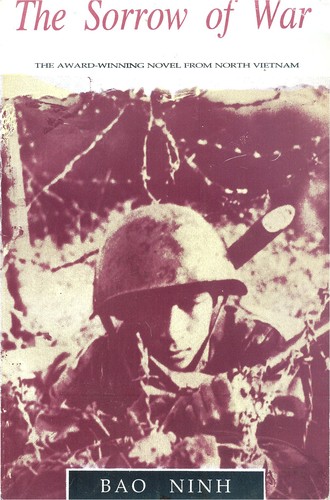
The Vietnam War from the other side of the tree line — a North Vietnamese veteran's novel his own government tried to bury. Bao Ninh writes grief and memory better than almost anyone in any language. If you only read the war from the American foxhole, you're reading half a book.
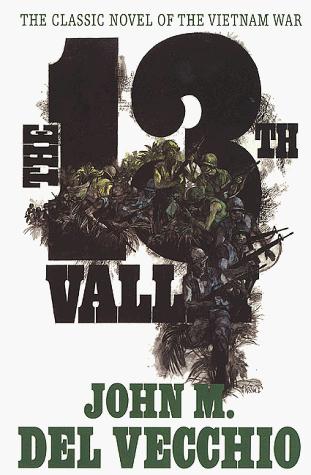
A single air-cav operation stretched to novel length, radio-static realism and all. Del Vecchio was there, and it shows in the exhaustion and the jargon he refuses to translate for you. About as close to humping the boonies as print gets.
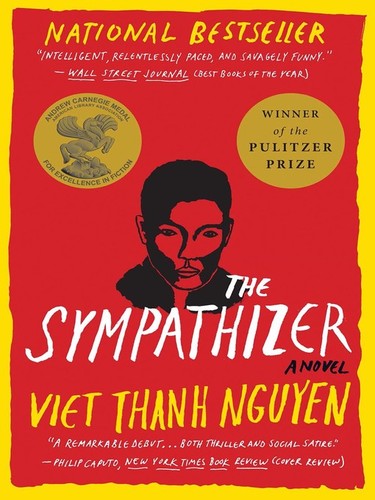
A communist double agent narrates the fall of Saigon and the refugee aftermath, skewering everyone — Americans, Vietnamese, and Hollywood — on the way. Won the Pulitzer for good reason. The war from an angle almost no English-language book bothers with.
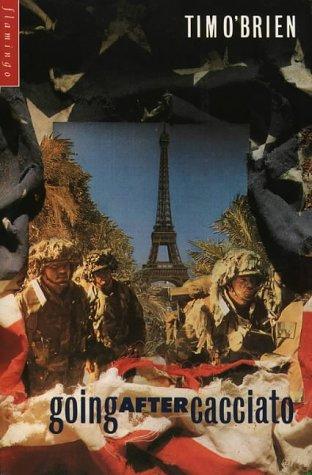
A soldier daydreams his way out of the war — a squad chasing a deserter all the way to Paris, or maybe not. O'Brien's National Book Award winner blurs the line between what happened and what a terrified mind invents to survive. Weirder than his other work, and worth it.
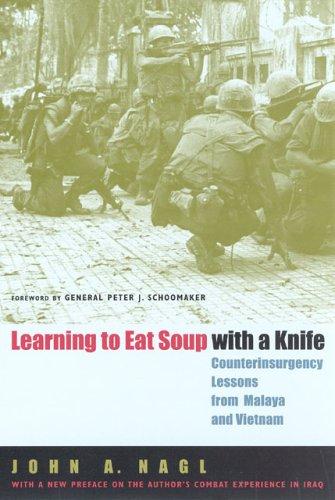
Nagl's doctoral dissertation compared the British Army's adaptation to insurgency in Malaya with the U.S. Army's failure to adapt in Vietnam, and published it in 2002 — one year before the Iraq War. His central argument: that military organizations are or are not institutional learning organizations, and that the difference determines whether they can adapt to insurgencies that their doctrine was not designed to fight. The Malaya counterinsurgency and Vietnam counterinsurgency are studied in parallel throughout. The book shaped the doctrine and the authors of FM 3-24 which the Army published four years later.