The China Shelf
Every service now organizes around the same question, and the honest answer requires actually reading about China rather than sloganeering about it. This is our shelf for understanding the pacing challenge on its own terms: the PLA's modernization, Chinese strategic thought and history, the economics and technology behind the competition, and the Indo-Pacific geography where it plays out. Know the problem before you argue about the solution.
Buy links go to Bookshop.org (which supports independent bookstores) and Amazon. Some are affiliate links — if you buy, we earn a small commission at no extra cost to you. As an Amazon Associate we earn from qualifying purchases. It never affects which books are on this list or how we describe them. How this works.
Pillsbury spent four decades as a China analyst for the U.S. government — advising multiple administrations, running covert programs to strengthen Chinese military capability, and helping construct the strategic framework that brought China into international institutions. Then he concluded that he and everyone else had been wrong. His argument: that China has been executing a century-long strategy to replace the United States as the world's dominant power by 2049, and that American analysts failed to see it because they assumed China would westernize as it modernized. The intelligence failures he documents are not bureaucratic errors — they are systematic misreadings of Chinese strategic intent that shaped U.S. policy for fifty years. On the Secretary of the Air Force's China competition reading list because it is the argument that changed how the U.S. government thinks about the pacing threat.

Doshi served on the NSC and as China Director at the White House when he published this analysis of Chinese grand strategy. His argument, built from Chinese-language party documents rather than American interpretations of Chinese behavior: that Beijing has been pursuing a consistent strategy of blunting U.S. primacy since the late 1980s, and that the shift from passive blunting to active construction of Chinese-led alternatives began around 2008. The evidence is granular and the sourcing is primary — Chinese Communist Party documents, Politburo speeches, internal planning records. The most rigorous available analysis of how Beijing thinks about strategic competition with the United States. Essential for anyone advising on China policy or preparing for great power competition.
Mearsheimer's offensive realism — the argument that great powers inevitably compete for regional hegemony because the anarchic international system provides no guarantees of security, and that states therefore maximize power rather than optimize it — is the most systematic challenge to the liberal internationalism that shaped American foreign policy after the Cold War. His predictions, dismissed when published in 2001, have been borne out by Chinese behavior and Russian revanchism in ways that make the book more relevant with each year. On the Army War College and CJCS reading lists as the theoretical counterweight to the liberal institutionalist assumptions that most senior officers absorbed in their undergraduate education.
Allison identified the Thucydides Trap — the historical pattern in which a rising power threatens a ruling power and the resulting structural stress makes war more likely — and applied it to the U.S.-China relationship. Twelve of the sixteen cases he examined ended in war. The book is not a prediction but a warning: that the forces driving the United States and China toward conflict are structural, not the result of bad decisions by either side, and that avoiding the trap requires deliberate strategy rather than optimism. Allison directs Harvard's Belfer Center and has advised multiple Secretaries of Defense. On both the INDOPACOM Commander's reading list and the Secretary of the Air Force's China list because understanding the trap is the first step to not walking into it.
Kissinger opened China to the United States in 1971, conducted the secret negotiations that established the framework for the relationship, and spent the next fifty years as the foreign policy world's most credible interpreter of Chinese strategic thinking. This book is his account of Chinese foreign policy from the imperial era through his own negotiations with Mao, Deng Xiaoping, and their successors — and his analysis of how Chinese strategic culture differs from Western strategic culture in ways that make misunderstanding structurally likely. Whether you agree with his prescription for managing the relationship or not, his analysis of how Chinese leaders think about strategy, sovereignty, and the relationship between diplomatic form and political substance is the most informed available from an American source.

Economy runs the Council on Foreign Relations' Asia Studies program and has spent her career analyzing Chinese foreign policy. This 2022 book is her most direct account of Beijing's current strategy: what China actually wants to accomplish in international institutions, in the global economy, and in territorial disputes in the Indo-Pacific — not what its diplomats say it wants. Her analysis of how China uses multilateral institutions to pursue unilateral objectives, and how it applies economic coercion to enforce political compliance from smaller states, is the most current available account of the operational toolkit of Chinese great power competition. The companion volume to her earlier The Third Revolution.
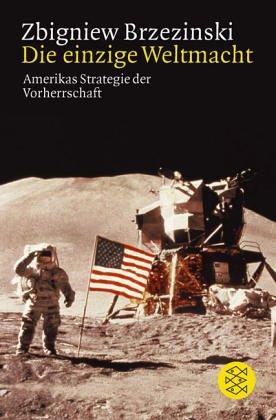
Brzezinski served as National Security Advisor under Carter and wrote this framework for American grand strategy in Eurasia in 1997 — arguing that control of the Eurasian landmass remains the central prize of geopolitical competition, that maintaining American primacy requires managing the relationship between Europe, Russia, China, and the pivotal states of Central Asia, and that Ukraine is the geographic pivot on which Eurasian power balance turns. Published twenty-seven years before the Russian invasion of Ukraine, the book reads as the analytical foundation for understanding why that invasion happened and what its strategic consequences are. On the Army War College reading list as the framework that makes current events legible.
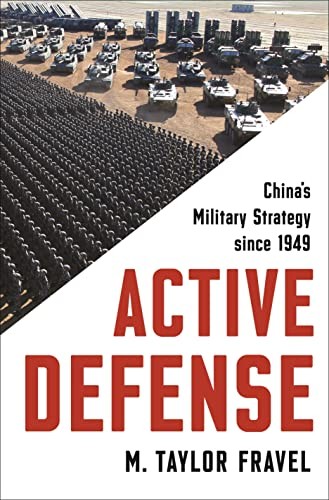
Fravel's academic analysis of Chinese military strategy from 1949 through the present — the most rigorous available account of how the People's Liberation Army actually thinks about military operations and deterrence, reconstructed from Chinese-language military documents, party records, and the operational history of how Chinese military strategy has changed in response to external threats and internal politics. His central finding: that Chinese military strategy is not static or simply reactive but has evolved through distinct phases driven by both threat perception and leadership politics. The essential companion to the political and economic analysis of China — the military doctrine that the strategic competition is ultimately designed to support.
Rudd served as Prime Minister of Australia, speaks Mandarin, and has spent his career in the middle of the U.S.-China relationship from the Indo-Pacific side. His framework: that conflict between Washington and Beijing is not predetermined — that a managed peace is available if both sides understand each other's red lines and build durable guardrails around the competition. He lays out, chapter by chapter, the scenarios that could trigger war and the conditions that would make each more or less likely. The most operationally useful framework available for thinking about what deterrence in the Indo-Pacific actually requires: not just military capability but political signaling, alliance management, and a clear-eyed understanding of Beijing's domestic political constraints.
McGregor spent years as the Financial Times bureau chief in Beijing and wrote the most accessible account available of how the Chinese Communist Party actually works — not its formal structure, but the informal mechanisms of power, patronage, and control that function beneath the official institutions. His account of how the Party maintains control over nominally separate institutions (the military, state enterprises, the legal system, the media) is the operating manual for understanding Chinese strategic behavior. The key insight: there is no meaningful separation between the CCP and the Chinese state in any domain that matters for great power competition, and Western analysis that treats Chinese institutions as analogous to their Western counterparts systematically misreads what China is doing.

Blanchette tracks the resurgence of Maoist ideology within the Chinese Communist Party under Xi Jinping — the revival of political movements and institutional forms that most China analysts had assumed were permanently discredited after the Cultural Revolution. His argument: that Xi is not simply a pragmatic modernizer who uses leftist language for domestic legitimacy, but a genuine believer in Maoist political organization as a tool for consolidating power and preparing for strategic competition with the West. The implications for how to read Chinese intentions are significant: a leadership that has revived Mao's ideological framework is not operating on the same incentive structure that Western analysts have been modeling since Deng's reforms in 1978.
Economy's focused analysis of Xi Jinping's transformation of the Chinese state — the concentration of power in Xi's person that reversed thirty years of collective leadership, the revival of ideology in party governance, and the ambitions Xi has articulated that his predecessors deliberately avoided expressing. Her argument: that Xi represents a genuine break with the post-Mao era, not a continuation of it, and that the assumptions about convergence and gradual liberalization that shaped Western China policy were not just wrong but were actively exploited by the party leadership that always intended something different. Essential context for understanding why the entire SecAF China competition reading list exists as a list.
Brown directs the Lowy Institute's Asia program; Wu is a Taiwan-focused analyst. Their book is the most direct analysis available of the Taiwan problem from all three perspectives simultaneously — Beijing's, Washington's, and Taipei's — and of the domestic political constraints that make the problem harder to manage than the military and diplomatic analysis alone suggests. The argument: that Taiwan is a problem that cannot be resolved, only managed, and that the management requires understanding how domestic politics in all three capitals interact with the strategic calculation. The one book on the SecAF list that addresses the specific contingency INDOPACOM most needs to prevent.
Kaplan traveled the South China Sea littoral and wrote the most accessible analysis available of why the region is the central arena of the twenty-first century's great power competition: the overlapping territorial claims, the energy resources beneath the seabed, the trade routes that carry forty percent of global commerce, and the Chinese naval buildup designed to make the sea a Chinese lake. His analysis of the specific countries — Vietnam, the Philippines, Malaysia, Brunei — and what each wants from the competition is the ground-level complement to the strategic frameworks that dominate Washington's discussion. On the INDOPACOM and SOCOM reading lists.
Haddick spent his career in the Marine Corps and at SOCOM, and this book is his analysis of the challenge China's anti-access/area-denial capabilities pose to U.S. power projection in the Western Pacific — the missile systems, submarine force, and electronic warfare capabilities that China has built specifically to prevent the U.S. from reinforcing Taiwan or projecting power in the South China Sea in a crisis. His argument: that the U.S. military has been slowly priced out of the Western Pacific by a Chinese strategy that exploits the asymmetry between cheap missiles and expensive aircraft carriers and bases. Published in 2014, the trends he identified have become more acute every year since.
Zakaria's 2008 argument — that the defining feature of the emerging world order is not American decline but the 'rise of the rest,' the simultaneous economic and political development of China, India, Brazil, and dozens of other nations — provides the strategic context that makes current great power competition legible. His framework: that American primacy is not ending but becoming relative, and that the United States will need to lead a world it can no longer dominate through the sheer weight of economic and military advantage it enjoyed from 1991 to 2008. On the CSA and CJCS reading lists as the framework for understanding why the world the joint force operates in is harder to navigate than the unipolar moment suggested it would be.
Cole retired as a Navy captain and China analyst at the National War College, and this book is his assessment of Chinese maritime strategy — how Beijing is using its rapidly expanding naval power to assert control over the South and East China Seas, protect sea lanes critical to Chinese energy imports, and position the PLA Navy for eventual power projection beyond the first island chain. The specific analysis of how Chinese oil dependency shapes military strategy is directly applicable to INDOPACOM planning: the sea lanes Cole identifies as critical to Chinese strategy are the same sea lanes INDOPACOM is responsible for defending. Written by someone who spent a career studying the problem from inside the Navy intelligence community.

Shambaugh is the preeminent American scholar of Chinese foreign policy in Southeast Asia, and this is his most current analysis of how Beijing has displaced American influence throughout the ASEAN region through economic investment, diplomatic engagement, and military pressure — and what that displacement means for the regional architecture that American security in the Indo-Pacific depends on. The book maps the actual terrain of the competition: country by country, institution by institution, the specific mechanisms by which China has been consolidating influence in the most strategically consequential region in the world. The ground-level view of what great power competition actually looks like to the states caught between the two.
Khanna's argument that the twenty-first century's center of gravity is not the U.S.-China bilateral relationship but the broader Asian integration — the economic, technological, and demographic trends that are producing an Asian-led world order centered on the Indo-Pacific. His analysis of the infrastructure, trade, and connectivity projects creating new regional dependencies is the broadest available context for understanding what INDOPACOM is actually competing for: not just military dominance in the Western Pacific but the shape of the economic and political order that will define the century. A corrective to the tendency to treat China as the only story in the region.
An Australian general's field guide to how drones, AI, and information warfare are rewriting the rules faster than doctrine can keep up. Short, current, and mercifully free of buzzword fog — read it before someone quotes it at you in a briefing.
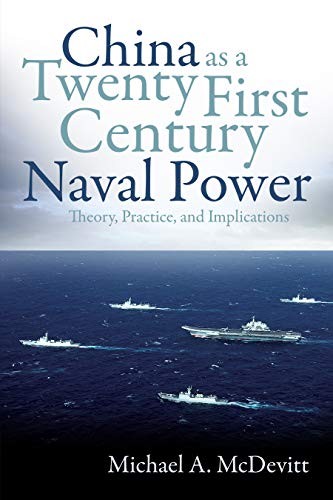
A retired admiral lays out exactly how and why the PLA Navy went from coastal afterthought to blue-water competitor. Dry in spots, but it's the clearest map of the pacing threat you'll find without a clearance.
The book that made the Navy take Chinese sea power seriously. Mahan, but read in Beijing — it explains China's maritime strategy in China's own terms, which is more than most talking heads bother to do.

The scary-comforting counter-take: China isn't a rising juggernaut, it's a peaking power with a closing window — and a country that thinks its moment is slipping is exactly the kind that rolls the dice. Brands and Beckley argue the most dangerous decade is the one we're in now, not 2049. If you only read one book on the timeline of a Taiwan fight, make it this one.
An Australian strategist tells Washington something it hates hearing: you can't have primacy in Asia forever, and pretending otherwise is how you stumble into a war nobody survives. White lays out the share-power option cold and honest, whether or not you end up agreeing. It's the argument the hawks have to beat, not ignore.

Luttwak's thesis is brutal and simple: the bigger and pushier China gets, the faster it scares its neighbors into ganging up on it — great-power success carries the seed of its own containment. He's arrogant and occasionally maddening, but he makes you see the paradox that raw GDP charts miss. Strategy, he insists, doesn't run on straight lines.
The competition isn't just carriers and chips — it's a pitch to the rest of the world that you can get rich without going democratic, and plenty of governments are buying. Halper maps how the China model sells and why it's stickier than the West assumed. Know the sales deck you're up against.

The actual field manual: how the MSS, the United Front, and PLA intelligence really recruit, run sources, and steal — written by analysts who name names instead of waving vaguely at 'the Chinese.' Dry in the best way, like a good intel brief. If you work anywhere near cleared spaces, this is the threat, spelled out.

McCain's former staff director explains why America's gold-plated ships and jets could lose to a country that just builds cheaper things that shoot first — the war is won by whoever closes the sensor-to-shooter loop faster, and we've been buying the wrong stuff. A gut-punch about a Pentagon acquisitions system optimized for everything except winning. Not the Cockburn book of the same name — this one's the strategy argument.
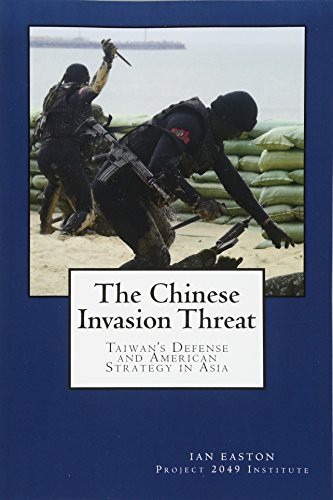
Easton went through the PLA's own writings on how it would actually take Taiwan — the beaches, the timelines, the things that have to go right — and the picture is both more detailed and more daunting than the slogans suggest. It's the closest thing to reading the other side's OPORD. Sobering for anyone who thinks the island falls in a weekend.
A Singaporean diplomat plays devil's advocate for Beijing better than Beijing does, and the discomfort is the point — he thinks Washington is sleepwalking into a contest it doesn't understand. You don't have to buy his conclusions to sharpen yours against them. Steelman the other side or lose to it.

Two seasoned hands argue America forgot how to use money, trade, and sanctions as instruments of statecraft while China turned economics into a weapon of first resort. Geoeconomics is the fight happening under the fight. If you want to understand Belt and Road and rare-earth chokeholds, start here.
The counterinsurgency guru turns to the big leagues: after watching the US fight guerrillas for 20 years, China and Russia studied the tape and learned to bleed us without ever triggering a shooting war. Kilcullen shows how the great powers went to school on our weaknesses. A smart bridge from the last wars to the next one.
The single clearest map of the arena itself — why 'Indo-Pacific' beat 'Asia-Pacific' as the mental model, and how India, Japan, Australia, and the ASEAN middle powers fit into the contest instead of just watching it. Medcalf zooms out so the theater finally makes sense. Geography is destiny, and this is the geography.

A retired Air Force general's alarmed, blunt tour of how Beijing competes in the spaces we weren't guarding — 5G, universities, Hollywood, Wall Street, city councils. Spalding runs hot and light on caveats, so read him with a critical eye, but he named the soft-power front early. Useful for seeing the parts of the fight that don't wear a uniform.
Two Wall Street Journal reporters who covered the trade war from both capitals give you the room-by-room account of how the US and China stopped pretending to be economic partners. It reads like a thriller and doubles as an education in how the decoupling actually started. The tariffs made a lot more sense after this.
A guy who ran Google China and now funds Chinese startups explains why China's messy, data-drenched, copy-then-crush tech scene may out-execute Silicon Valley on applied AI. Lee is a booster, not a neutral, so weigh the optimism — but nobody explains the two ecosystems side by side better. The chip war has a software half, and this is it.
A leading China hand argues the counterintuitive case that Beijing is a 'partial power' — wide but shallow, everywhere but influential nowhere in the way it wants. A useful cold shower for anyone who thinks the takeover is inevitable. Written before the Xi hardening, so read it as the baseline the last decade has been testing.
Spence spent his career at Yale studying China and wrote the standard comprehensive history of China from the mid-Ming dynasty through the modern era — the book that China historians assign when someone needs to understand how the current Chinese state emerged from two centuries of internal collapse, foreign humiliation, and revolutionary politics. The argument that runs through it: that China's sense of itself as a civilization temporarily deranged by foreign intrusion, rather than a developing state like any other, explains both its foreign policy and its domestic political culture. On the Secretary of the Air Force's China competition reading list as the historical foundation for understanding why contemporary Chinese strategic behavior looks the way it does.
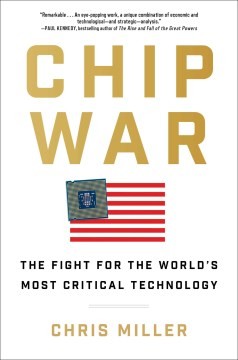
Miller's history of the semiconductor industry and the geopolitical competition over chip manufacturing that has become the central economic and military contest of the twenty-first century. The argument: whoever controls advanced chip production controls the foundation of all modern military and commercial technology, and the U.S.-Taiwan-South Korea manufacturing ecosystem is both the critical chokepoint of the current world order and its most vulnerable point. The Chinese military's dependence on advanced chips it cannot manufacture is the central vulnerability that explains both Beijing's urgency and its strategy in the Indo-Pacific. The most important single book for understanding why Taiwan matters beyond the abstract principle of democratic solidarity. Pulitzer Prize finalist.
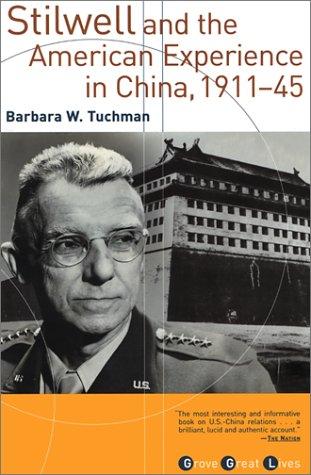
Tuchman won a Pulitzer for The Guns of August and wrote this history of Joseph Stilwell's experience as commander of American forces in the China-Burma-India theater — and as the American officer assigned to reform a Nationalist Chinese army that refused to be reformed. Her account of the gap between what American advisors were trying to accomplish and what the Chinese military and political leadership was actually doing is, seventy-five years later, one of the most useful frameworks available for understanding the structural obstacles in U.S.-China military engagement. The frustrations Stilwell documented in 1944 reappear in every subsequent account of American-Chinese military interaction. On the SecAF China list because the history rhymes.
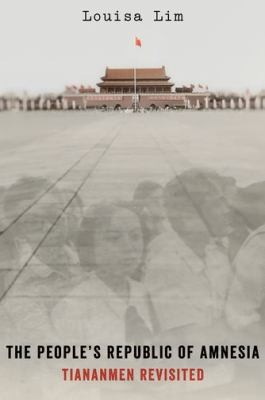
Lim covered China for the BBC and NPR for years, and this book is about the deliberate erasure of June 4th, 1989 — the Tiananmen Square massacre and its systematic removal from Chinese public consciousness. The argument is not primarily about what happened (that history is well-documented) but about what the deliberate forgetting reveals about the Chinese state: its relationship to its own population, the brittleness that forced the crackdown, and what the suppression of memory produces in a society whose government maintains that it never happened. On the SecAF China list because understanding the CCP's relationship to historical truth is necessary context for evaluating everything the Chinese government says about its intentions.

Wang's analysis of the social and institutional origins of imperial Chinese state development — how the examination system, bureaucratic structure, and gentry class produced a political order simultaneously resilient and brittle across two thousand years. More academic than the other books on the SecAF list, but on it for a specific reason: the patterns Wang documents — the tendency to recentralize power under threat, the relationship between elite compliance and regime stability, the way the Chinese state absorbs and depletes reformers — are the same patterns Xi Jinping is replicating. Understanding why those patterns are structurally embedded rather than contingent is prerequisite to understanding why they are so hard to change.
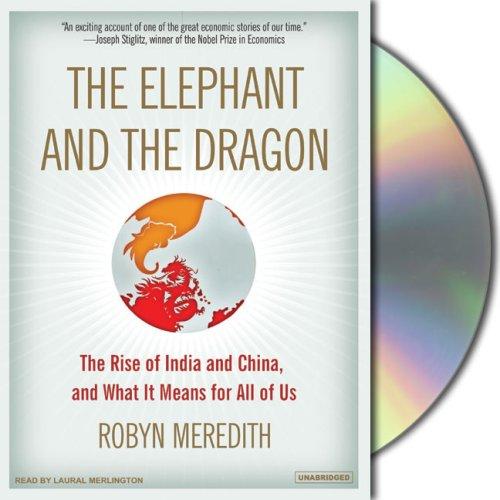
Meredith's comparative analysis of the Chinese and Indian economic rises and their strategic implications — the demographic, economic, and military trajectories of the two Asian giants and what their competition with each other and with the United States means for the regional order. The Indo-Pacific strategic competition is not bilateral; India's relationship to both the United States and China, its naval ambitions, and its own claims in the Indian Ocean are part of the same strategic environment that INDOPACOM navigates. Meredith's comparative framework is the most readable introduction to the three-way dynamic, written before the relationship hardened into competition but more useful now than when published.
NWC's own S.C.M. Paine reframes the Chinese Civil War, the Sino-Japanese War, and the Pacific War as one interlocking contest, and argues Japan lost by winning the wrong war. If your mental map of the Pacific starts at Pearl Harbor, this rewires it. Academic in density, but it's the strategic backstory to every headline coming out of the region today.
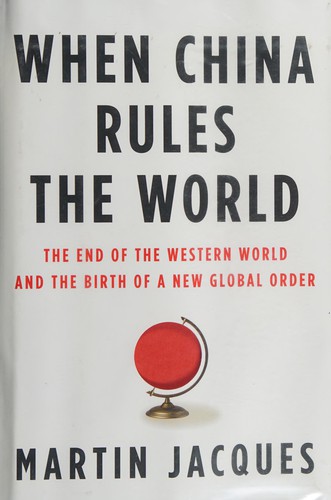
The maximalist case that China won't just get powerful, it'll rewrite the operating system — that a civilization-state with 2,000 years of thinking it's the center doesn't play by a Western rulebook it never signed. Jacques overshoots and knows it, but the core idea rewires how you read Beijing's ambitions. Read it as the strong version of the argument, then push back.

China's entire modern project — the obsession with wealth and power after a century of humiliation — told through eleven people who tried to drag the country back to greatness. It's the emotional operating code behind everything Beijing does now. History as motive, not just chronology.
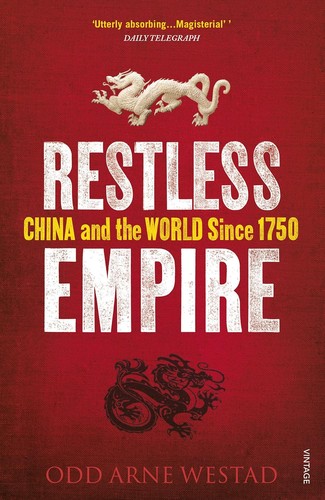
A Cold War historian's antidote to the 'China was sealed off until yesterday' myth: for 250 years it's been entangled with the world, trading and fighting and absorbing, and today's outward push is a return to form. Westad gives you the long arc so current events stop looking like surprises. Context is a weapon.
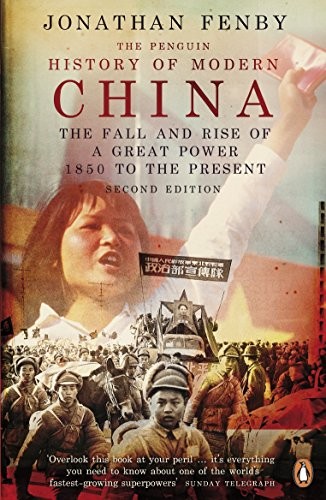
If you need one book to go from zero to conversant on how China got from the Opium Wars to now, this is the fast, readable spine — warlords, the Japanese invasion, Mao's famines, Deng's pivot, all in a line you can actually follow. Fenby is a journalist, so it moves. The backstory everything else assumes you already know.
French argues you can't read China's moves in the South China Sea without the old idea of tianxia — 'all under heaven' — the tributary worldview where China sits at the center and everyone else pays respect. Suddenly the nine-dash line looks less like aggression and more like restoration. History as the source code for current policy.
An insider who made a fortune at the top of the Party-business machine tells how it really works — until his ex-wife vanished into the system and he decided to talk. It's the rare view from inside the golden cage, and it's not flattering. Proof that in China no amount of money buys you out of the Party's reach.
The definitive doorstop on the man who took Mao's wreckage and turned it into the world's second economy without ever loosening the Party's grip. Vogel's Deng is the pragmatist who authorized both the reforms and Tiananmen — the contradiction that still defines the place. Long, but you'll finally understand where modern China came from.

Singer is the Pentagon's most-cited defense researcher; Cole is a former Navy intelligence officer. Their novel about a near-future U.S.-China war over Hawaii — fought with autonomous weapons, satellite-blinded aircraft, microchip-compromised weapons systems, and cyber-enabled insurgency — is explicitly designed as a policy argument in narrative form. Every technology in the book either exists or is in development; the footnotes at the back cite the actual defense programs. The Indo-Pacific Command reads it as a planning document disguised as fiction: the scenarios Singer and Cole describe — a surprise attack on INDOPACOM, the U.S. forced to fight with degraded networks and compromised supply chains — are the scenarios INDOPACOM wargames. The most operationally useful work of military fiction published since Red Storm Rising.
Ackerman is a Marine veteran and novelist; Stavridis is a retired four-star admiral and former NATO Supreme Allied Commander. Their near-future novel about a U.S.-China naval war that begins with a confrontation in the South China Sea and escalates to nuclear use is written with the operational specificity that only actual commanders can bring to the scenario — the chain of decisions, the command breakdown, the escalation that becomes uncontrollable not from intent but from the institutional logic of conflict. Unlike Ghost Fleet, which focuses on tactical innovation, 2034 focuses on strategic failure: how a war that neither side wants begins and cannot be stopped once it starts. On the CMSAF reading list as the fiction that policy analysis cannot fully replace.
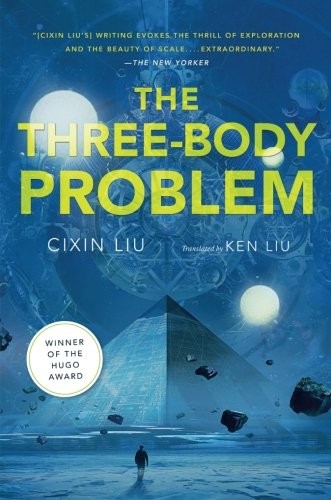
China's biggest sci-fi export opens in the Cultural Revolution and spirals out to first contact with a hostile civilization — and it made Xi-era China's anxieties and ambitions legible to millions of Western readers, Obama and Pentagon planners included. The 'dark forest' idea alone reframes how you think about rising powers eyeing each other across the dark. Fiction, yes; also the clearest look into the strategic imagination of a generation of Chinese elites.
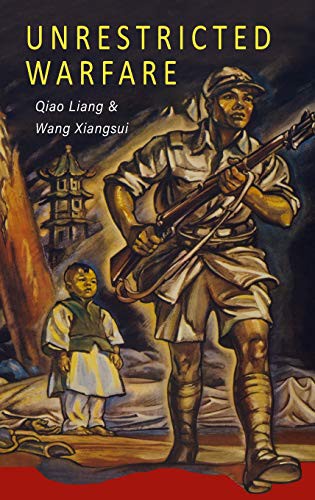
Two PLA colonels sat down in 1999 and asked what war looks like when you can't beat America gun-for-gun: trade, hacking, lawfare, finance, terror — everything is a weapon and nothing is off the table. Read it not as prophecy but as a window into how Beijing frames the fight. The lurid US subtitle oversells it; the thinking underneath does not.
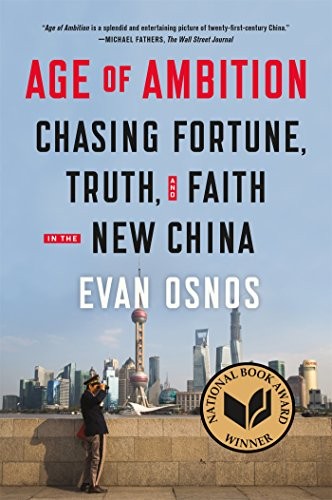
Forget the think-tank abstractions — Osnos spent years in China listening to strivers, dissidents, and true believers, and the result is what the country feels like at eye level. The tension between individual hunger and Party control is the whole story, told through people you remember. The best on-ramp for understanding the society under the regime.
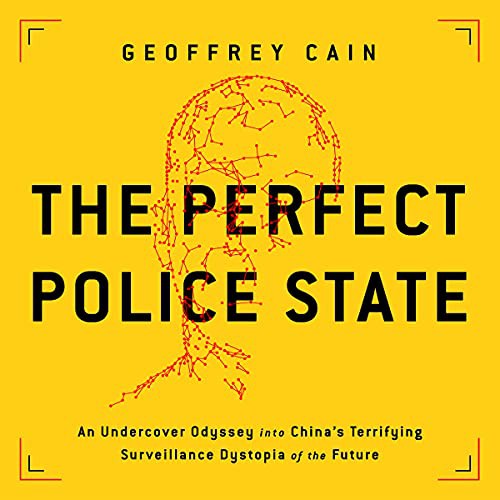
Cain reports out what happened in Xinjiang when the state fused facial recognition, DNA sweeps, and a million cameras into a machine for controlling an entire people — the beta test for techno-authoritarianism the rest of the world should be watching. It's the future of surveillance, already running. Read it and never look at your phone the same way.