Reading Room List
The U.S. Naval War College in Newport is where the Navy sends officers to study strategy at the graduate level, and its reading room list reflects that altitude: sea power theory, strategic history, civil-military relations, and the classic texts on how navies win and lose. The College also manages the CNO Professional Reading Program, but this list is the deeper, more academic cut — the books behind the seminar table where the Navy's future strategists argue about Mahan, deterrence, and the character of war at sea.
Buy links go to Bookshop.org (which supports independent bookstores) and Amazon. Some are affiliate links — if you buy, we earn a small commission at no extra cost to you. As an Amazon Associate we earn from qualifying purchases. It never affects which books are on this list or how we describe them. How this works.
Written 2,500 years before your current chain of command was born. Every general cites it. Most politicians misquote it. Read it so you can tell the difference — and so you understand why the enemy who reads it too is not automatically beaten. Five chapters take longer to internalize than they do to read. That is the point.
Twenty-eight essays by the field's leading scholars on the development of Western strategic thought from Machiavelli through the nuclear age. Paret edited the standard reference for the study of how military thought evolved alongside the political and technological circumstances that shaped it: Jomini, Clausewitz, Mahan, Douhet, Liddell Hart, and the theorists of guerrilla warfare, nuclear deterrence, and limited war. Not light reading. The indispensable graduate-level introduction to why military strategy looks the way it looks and why every generation has to rediscover the same arguments about the relationship between force and policy.
The book everyone in uniform claims to have read and almost no one finishes. War is the continuation of policy by other means — the sentence that launched a thousand PowerPoint slides and at least as many wars entered without an exit strategy. Get past chapter three and you are ahead of 80% of O-6s. Get through Book Eight and you understand why it keeps going wrong.
The most comprehensive single-volume account of strategic thought ever published — from the Greek city-states through the wars in Afghanistan and Iraq. Freedman covers military strategy, political strategy, business strategy, and the theory of change across three thousand years with the rigor of an academic and the clarity of a practitioner. The central argument: that strategy is about managing an irreducible gap between aspiration and the means available to achieve it, and that this gap has always been the central problem of anyone who has ever tried to accomplish anything against resistance.
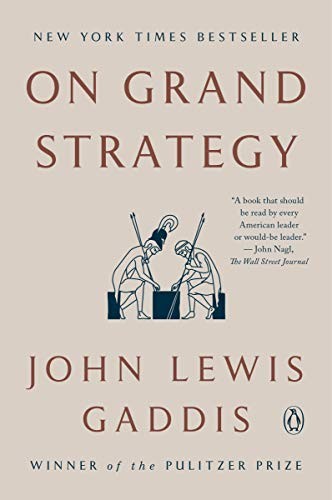
Gaddis runs the Grand Strategy program at Yale and wrote this book from the same curriculum he teaches to both undergraduates and the professional military officers who attend as fellows. His argument, built from Thucydides through the Cold War: that grand strategy is the alignment of unlimited aspirations with limited capabilities, and that the great strategists throughout history are distinguished not by intelligence or resources but by the capacity to maintain that alignment under the pressure of events that constantly demand its abandonment. The most readable available introduction to the theory of strategy, and the one assigned most widely at senior military and civilian education programs. Required reading before you pick up anything else on this list.
Published in 1890 and read simultaneously by Theodore Roosevelt, Kaiser Wilhelm II, and the Japanese Naval Staff — then used to justify naval buildups across four continents. Mahan's argument is that national greatness follows from sea power, sea power follows from merchant marine and forward bases, and both require naval protection. He was right enough that every great power restructured its fleet around his ideas, contributing to the naval arms race before World War I. Required reading to understand why the Navy exists and what it is supposed to accomplish at the strategic level.
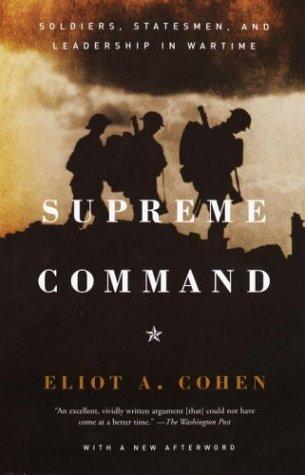
Four case studies in how democratic leaders have controlled — or failed to control — their military commanders in wartime: Lincoln, Clemenceau, Churchill, Ben-Gurion. Cohen's argument is that the successful ones did not stay in their lane. They interfered, questioned, argued with their generals, and demanded answers when the answers were not forthcoming. The unequal dialogue between civilian authority and military expertise is not a dysfunction of civil-military relations — it is its healthiest form. Every officer who has thought "the politicians should just let us fight" needs to read this before saying it again.

Brands edited the 2023 Princeton successor to Peter Paret's foundational 1986 anthology — a comprehensive survey of strategic thought from Machiavelli through the AI era, written by leading current scholars. Where the Paret volume covered strategic thinking through the Cold War, Brands's volume adds chapters on irregular warfare, nuclear proliferation, terrorism, cyber, space, and AI. Organized to be read in sections and designed for exactly the purpose military schools use it: as the authoritative reference for what the field of strategy actually says about the problems currently facing military and civilian planners. On both the CMC and CGSC core reading lists as the updated standard.
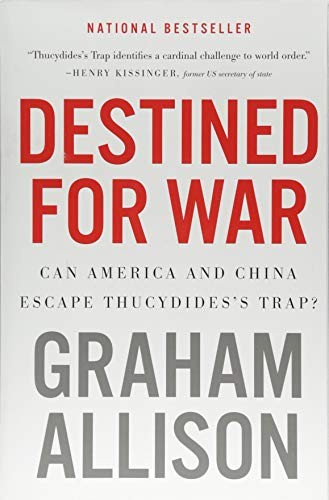
Allison identified the Thucydides Trap — the historical pattern in which a rising power threatens a ruling power and the resulting structural stress makes war more likely — and applied it to the U.S.-China relationship. Twelve of the sixteen cases he examined ended in war. The book is not a prediction but a warning: that the forces driving the United States and China toward conflict are structural, not the result of bad decisions by either side, and that avoiding the trap requires deliberate strategy rather than optimism. Allison directs Harvard's Belfer Center and has advised multiple Secretaries of Defense. On both the INDOPACOM Commander's reading list and the Secretary of the Air Force's China list because understanding the trap is the first step to not walking into it.
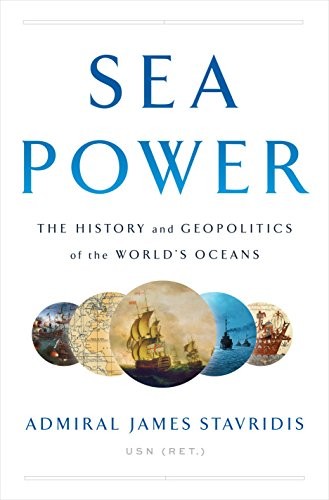
Stavridis served as NATO Supreme Allied Commander and SOUTHCOM commander and wrote this history and analysis of the world's ocean regions — Pacific, Atlantic, Indian, Mediterranean, Arctic, Caribbean — as the geopolitical terrain that determines the character of conflict and competition. Each chapter covers one ocean's history and current strategic importance. More accessible than Mahan and more current than Corbett, it is the senior naval officer's framework for understanding why sea power matters and what controlling the world's ocean commons actually requires. On both the Coast Guard and CNO reading lists because both services exist to secure those commons.
The book that made the Navy take Chinese sea power seriously. Mahan, but read in Beijing — it explains China's maritime strategy in China's own terms, which is more than most talking heads bother to do.
Kissinger's 900-page tour of great-power statecraft from Richelieu to the Cold War, and yes, the man was in the room for a chunk of it. Newport assigns it because it drills you to think in balance-of-power terms whether or not you can stomach the author's ego. Dense and occasionally self-serving, and still the clearest map of how states actually maneuver.
Cohen and Gooch cut open how militaries fail, and it's never the coward-general myth; it's the systemic breakdowns in learning, anticipation, and adaptation that sink competent forces. If you've ever watched a good unit walk into an avoidable disaster and wondered how, this is the autopsy. It's on the Newport list because it's about the failure you're actually most likely to be part of.
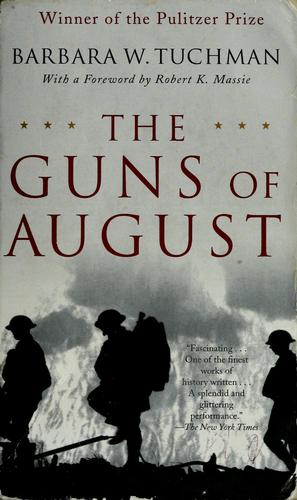
How the First World War started, written by the historian who understood mobilization plans better than the generals who executed them. Tuchman won the Pulitzer Prize. President Kennedy read it during the Cuban Missile Crisis and handed it to his brother. The lesson is not about 1914. The lesson is about what happens when military planning becomes so committed to the schedule that no political event can stop it — and what it costs when that lesson goes unlearned. Required at every level of professional military education for sixty years. The pattern it documents has not been corrected.
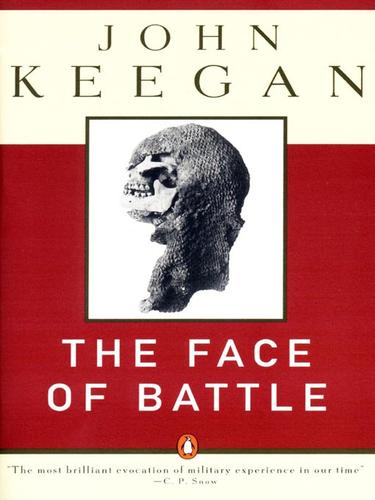
Keegan decided to write a military history that told the truth about what battle actually feels like for the men who fight it — not for the generals who direct it. Agincourt, Waterloo, the Somme: three battles, three centuries, one devastating argument that military history has consistently failed to describe what happens to a human body and a human mind under sustained combat. The chapter on the first day of the Somme — July 1, 1916, 57,470 British casualties — is the most important piece of military writing produced in the twentieth century. It should be assigned in every war college on earth and has not yet changed anything.
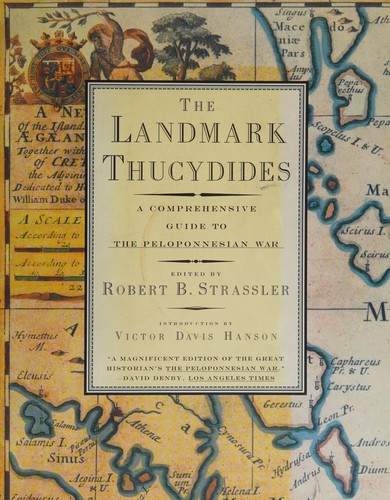
Thucydides was an Athenian general who was exiled for a military failure, spent twenty years documenting the Peloponnesian War with the impartiality of the irrelevant, and produced the founding text of strategic analysis. The Landmark edition — with maps, appendices, and notes that make the text navigable for non-classicists — is the standard military education version. The Melian Dialogue, Pericles' Funeral Oration, and Thucydides' account of the Sicilian Expedition remain the most precise available analysis of the gap between strategic optimism and strategic reality. On the CSA reading list because every officer who has ever thought about power, alliance politics, and the decision to go to war has been thinking about Thucydides, whether they know it or not.
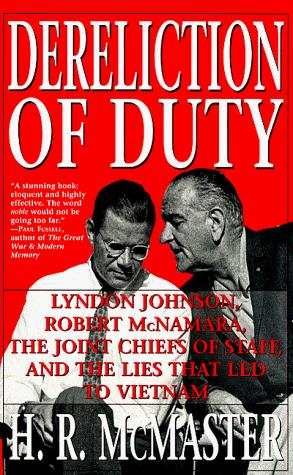
McMaster wrote his PhD dissertation in 1997 naming the Joint Chiefs of Staff by name and arguing, with documentary evidence, that they knew Vietnam was going wrong, had reservations they never voiced, and told the President what he wanted to hear instead of what was true. He was a colonel when it was published. It nearly ended his career. He was eventually a three-star and National Security Advisor. The book remains one of the most damning indictments of institutional military cowardice ever published.
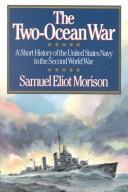
Morison served as official U.S. Navy historian during WWII and sailed with the fleet to compile his fifteen-volume history. This single-volume condensation is the essential account of American naval operations across both oceans: the Atlantic convoy battles, the Pacific carrier campaigns, the amphibious assaults, and the submarine war that strangled Japan's supply lines. Morison wrote with the authority of a man who was there and the rigor of a Harvard historian. The standard reference for anyone who wants to understand what the Navy accomplished between 1941 and 1945.
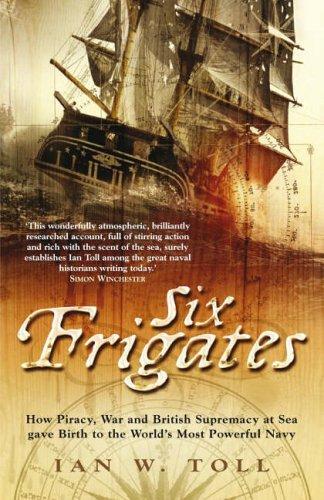
How the United States built its first Navy from nothing. The politics of the early republic, the personalities who demanded a naval force when the country could barely afford one, the ship designs that produced the Constitution and her sisters, and the officers who turned six wooden frigates into the beginning of a global naval tradition. Everything that followed is, in some sense, a footnote to these decisions.

How the interwar Navy built the command culture that won at Midway — by tolerating failure in peacetime wargames. If your command punishes every honest mistake, leave this one on the XO's desk.
NWC's own S.C.M. Paine reframes the Chinese Civil War, the Sino-Japanese War, and the Pacific War as one interlocking contest, and argues Japan lost by winning the wrong war. If your mental map of the Pacific starts at Pearl Harbor, this rewires it. Academic in density, but it's the strategic backstory to every headline coming out of the region today.
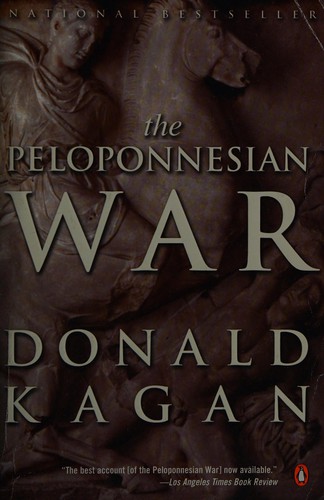
Kagan spent a career on this war and boiled it into one readable volume: Athens and Sparta grinding each other into dust over 27 years, with every lesson about hubris, alliances, and democracies at war that Newport wants in your head. Read it alongside Thucydides, not instead of him. It's the war strategists keep returning to, mostly because we keep repeating it.
Corbett published this analysis of maritime strategy in 1911 — the theoretical complement to Mahan's sea-power history and, arguably, the more practically useful of the two. Where Mahan argued for concentrated battle fleets seeking decisive engagement, Corbett argued that control of maritime communications — sea lanes — is the actual objective of naval strategy, and that this control can be achieved through operations short of decisive fleet engagement. His analysis of the relationship between limited war, maritime blockade, and land power is more applicable to the current strategic environment than Mahan's fleet-concentration doctrine. On the CNO reading list as the second foundational text of naval theory.
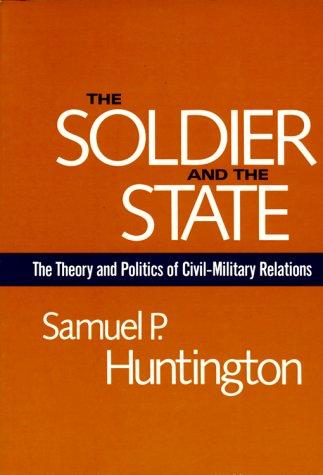
Huntington's 1957 study of civil-military relations — the theoretical framework that American civil-military relations has operated within (and argued against) for seventy years. His argument: that the military is a profession with its own ethic, that this professional ethic is fundamentally conservative, and that the proper relationship between the military and its civilian masters requires both sides to understand and respect this. The book is the reference point for every subsequent debate about military professionalism, civilian control, and the role of military advice in democratic governance. Required context for the Dereliction of Duty and Supreme Command arguments.