WWII: Europe
The European theater is where the modern Western way of war was forged, and its literature is vast. This shelf is the honest core: the airborne and infantry memoirs, the campaign histories from Normandy to the Bulge to Berlin, and the Eastern Front accounts that dwarf everything the West experienced. History written close enough to the ground to still smell the cordite.
Buy links go to Bookshop.org (which supports independent bookstores) and Amazon. Some are affiliate links — if you buy, we earn a small commission at no extra cost to you. As an Amazon Associate we earn from qualifying purchases. It never affects which books are on this list or how we describe them. How this works.
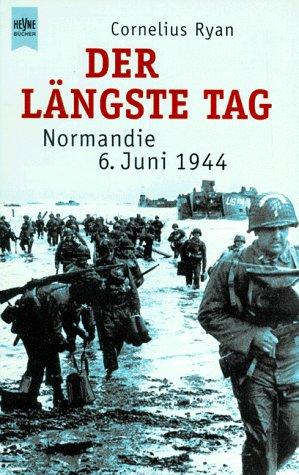
D-Day, June 6, 1944, told through hundreds of interviews conducted with American, British, Canadian, and German participants — generals, infantrymen, paratroopers, sailors, nurses, and French civilians. Ryan assembled the first comprehensive account of the invasion from all sides simultaneously. The result is the definitive portrait of the largest amphibious operation in history: what the planning looked like, what went catastrophically wrong on Omaha Beach, and why the operation succeeded despite the chaos. The Omaha chapter remains one of the most harrowing pieces of military journalism ever published.
Atkinson's Pulitzer Prize-winning account of the American Army in North Africa in 1942–1943 — the first sustained American ground combat of WWII, against battle-hardened German and Italian forces in Tunisia. The book is the first volume of the Liberation Trilogy and the most complete account available of what happened when a partially-trained American Army entered combat for the first time: the tactical failures at Kasserine Pass, the command dysfunction, and the institutional learning process that transformed the Army into the force that won in Europe two years later. Atkinson's account of how the Army learned from disaster — the specific changes in tactics, command culture, and logistics that turned defeat into the foundation for eventual victory — is the most useful case study of institutional adaptation under fire.
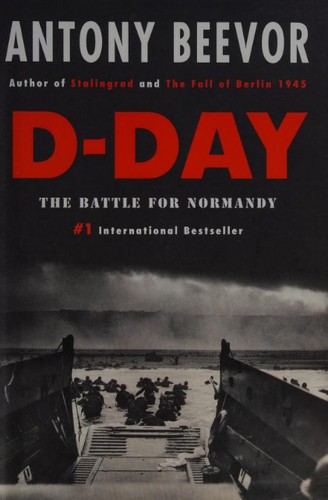
The definitive one-volume account of the Normandy campaign from the landings through the liberation of Paris — written by the historian who has spent thirty years making WWII accessible without making it simple. Beevor synthesizes German, American, British, French, and Canadian archives to produce a campaign history that never loses sight of the men on the ground while maintaining the operational and strategic picture. The failure at Falaise and the breakout that followed are covered with the same rigor as the beach landings. The best single book for understanding what the European theater's decisive campaign actually looked like.
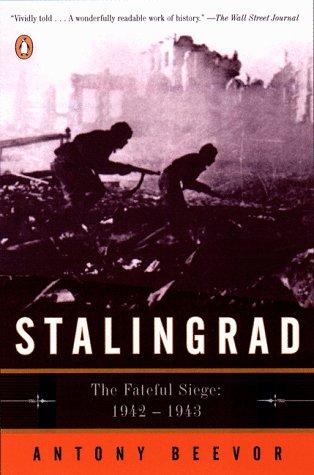
The battle that broke the German army, told through archives that were inaccessible until the Soviet collapse. Beevor reconstructed the encirclement of the German Sixth Army from both sides — the optimism of the advance, the horror of the cauldron, the psychological disintegration of a trapped army in winter. What is documented here about institutional failure — the Wehrmacht's inability to tell Hitler what he did not want to hear, the systematic destruction of an army by a command structure that prioritized loyalty over accuracy — belongs in any library on civil-military relations alongside Dereliction of Duty.
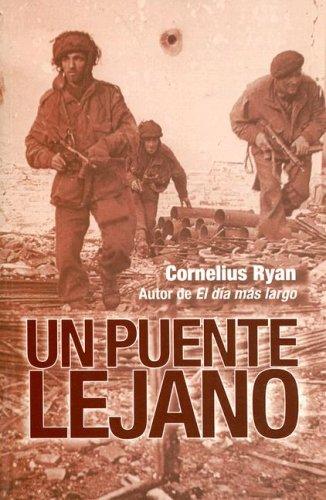
Operation Market Garden, September 1944: the largest airborne operation ever attempted and one of the most catastrophic Allied failures of the war. Ryan interviewed over a thousand participants and spent years reconstructing why Montgomery's plan failed — and more importantly, why it was pushed forward despite intelligence that German armor was at Arnhem. The pattern documented here — optimistic intelligence estimates, command overconfidence, institutional resistance to bad news, and the fatal consequences of all three simultaneously — has not been retired from military operations. The bridge at Arnhem was one too many.
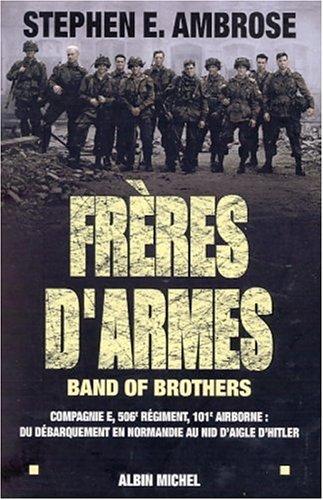
Easy Company, 506th Parachute Infantry Regiment, 101st Airborne. Normandy to Berchtesgaden. Ambrose interviewed the survivors while they were still sharp and built the definitive account of what small unit cohesion looks like under the most sustained pressure the 20th century produced. The HBO series is excellent. The book is the source. Read the source.
Terkel spent years interviewing American veterans of WWII — soldiers, sailors, Marines, airmen, civilians, women who served, men who didn't — and assembled their oral histories without editorial interpretation. The result is the most complete portrait available of what WWII looked like to the people who actually lived through it: the racism in the military, the combat exhaustion that was handled with transfer rather than treatment, the prisoners of war, the home front workers, the women in uniform, and alongside all of it, the genuine conviction that this was a necessary war. Pulitzer Prize winner.
How American GIs actually solved the tactical problems of hedgerows, cities, forests, and forts between D-Day and V-E Day — not the myth, the mechanics. Doubler shows an army learning under fire and adapting faster than the doctrine writers back home. The antidote to the lazy line that the Germans were just better and we won on tonnage.
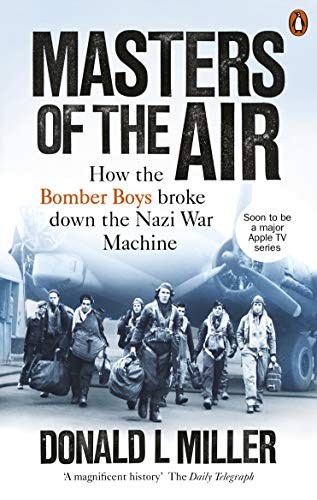
The Eighth Air Force over Germany, where finishing a tour was worse odds than a coin flip and the crews knew it going up. Miller does not romanticize the daylight bombing campaign; he counts the cost mission by mission. The book behind the series.
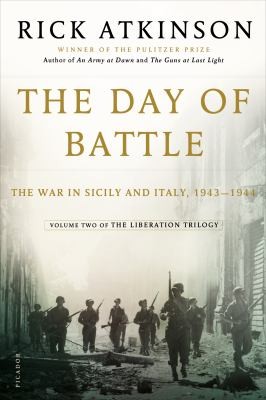
Volume two of Atkinson's Liberation Trilogy, and the one nobody wants to talk about: Sicily and Italy, 1943-44, the theater Churchill sold as the "soft underbelly" of Europe. It was neither soft nor an underbelly. Anzio, Monte Cassino, and a grinding campaign that killed men by the tens of thousands to pin down German divisions while everyone waited for Normandy. Atkinson writes it like the tragedy it was.
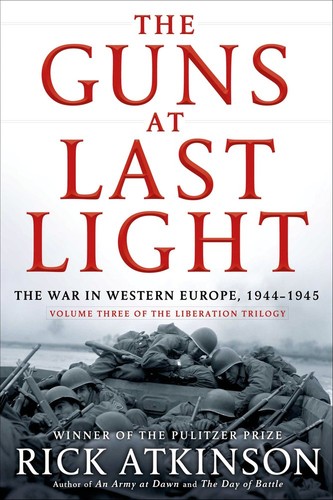
The finale of the Liberation Trilogy: D-Day to the fall of Berlin, the eleven months that ended the war in the West. Atkinson had the whole trilogy building to this and he does not waste it — the breakout, the race across France, the disaster in the Hürtgen Forest, the Bulge, the Rhine. If you read one narrative history of the Western Front, this is the one. If you read three, read the whole trilogy in order.
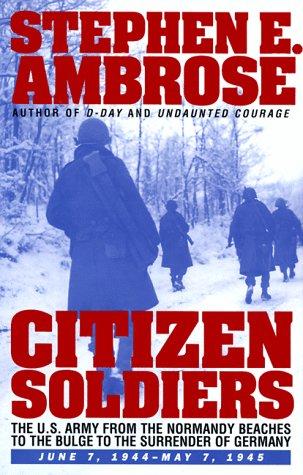
Ambrose's follow-up to Band of Brothers, widened out to the whole US Army in Northwest Europe from Normandy to the German surrender. The thesis is in the title: an army of clerks, farmers, and college kids who six months earlier had never fired at a man, and who out-fought the most professional military on earth. He gets criticized for hero-worship and earns some of it — but the interviews with the men who were there are the reason to read it.
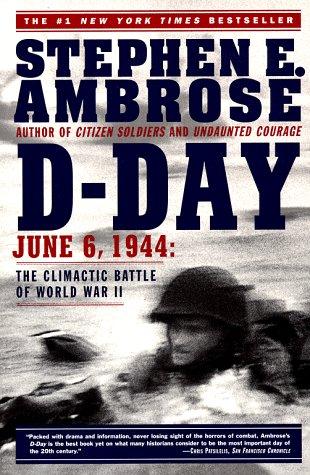
The single most detailed hour-by-hour account of the Normandy landings in print, built from over 1,400 oral histories Ambrose collected before those men died. Omaha Beach alone runs a hundred pages and you feel every yard of it. Read it alongside Cornelius Ryan's The Longest Day — Ryan wrote the story, Ambrose wrote the reckoning.
Ambrose zooms all the way in: one glider-borne British company, one bridge over the Caen Canal, seized in the first ten minutes of D-Day and held all day against counterattack. It is a masterclass in what a small unit with a clear mission and a good commander can do. Major John Howard's coup de main is still taught as the model. Short, tight, and the best thing Ambrose ever wrote at company scale.
One volume, the entire war, Poland to Nagasaki, by the historian who owns the Eastern Front. If you never learned how the pieces fit — how Stalingrad and Midway and North Africa and the Holocaust were one connected catastrophe — this is the book that assembles it. Nine hundred pages that read faster than most 300-page ones. Start here, then go deep on whatever theater grabs you.
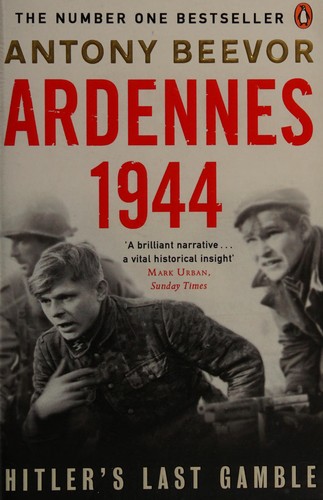
The Battle of the Bulge, Hitler's last gamble in the West, told with Beevor's eye for the difference between the map and the mud. The Germans achieved total surprise, the weather grounded Allied airpower, and for a week it genuinely looked like it might work. Then it did not, and the cost of stopping it — Malmedy, Bastogne, the frozen dead in the pines — is the part the "brilliant Patton pivot" version leaves out.
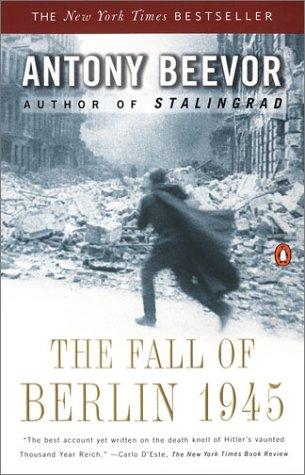
The last three months of the war in Europe, from the Vistula to the Reichstag, and the book that made Beevor's reputation for telling the whole truth. The Red Army's drive on Berlin was one of the largest and most brutal operations in military history, and Beevor documents both the fighting and the mass atrocities against German civilians that Soviet histories buried for fifty years. Dead serious, meticulously sourced, and not for the faint of heart.
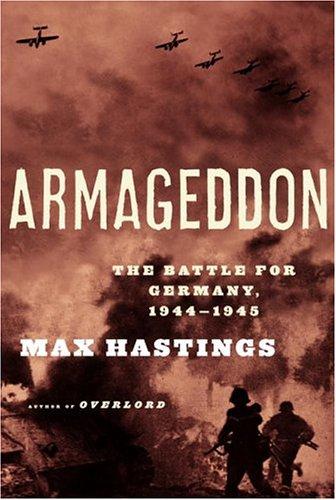
The last eight months of the war in West and East, 1944-45, from a historian who refuses to let victory sand off the horror. Hastings argues the Allies were often out-fought man-for-man by the Germans and won on materiel, airpower, and Soviet blood — a less flattering story than the one you were raised on, and better documented. Pair it with his Pacific volume, Retribution, for the full ledger.
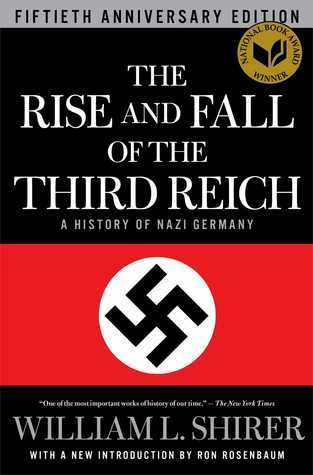
Shirer was an American correspondent in Berlin through the 1930s — he watched the Nazi state rise in person, then wrote the 1,200-page account that defined it for generations. It is dated in places and heavy, but no single book better explains how a modern nation talked itself into catastrophe. Read it to understand the enemy your grandfather's army was actually fighting, and how ordinary the machinery of it looked from the inside.
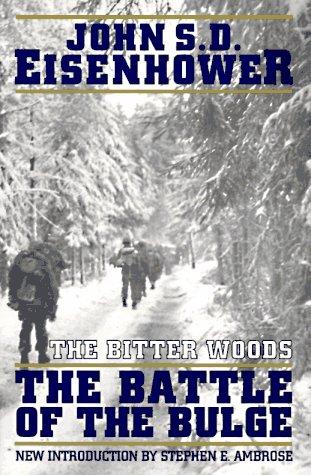
The Battle of the Bulge, written by a career Army officer who happened to be Dwight Eisenhower's son — which gave him access to commanders on both sides that other historians never got. The Hürtgen and Ardennes fighting was some of the worst the US Army endured in the war, and this is one of the definitive accounts. Rigorous, professional, and told by someone who understood the difference between a plan and its execution firsthand.
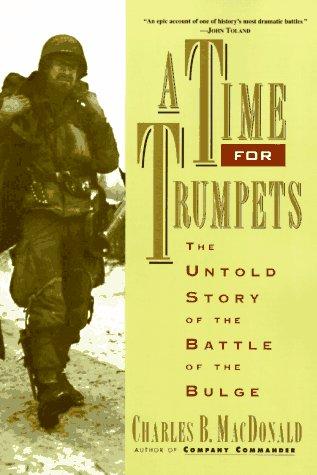
Charles MacDonald was a rifle-company commander in the Bulge before he became an Army historian, and A Time for Trumpets is widely considered the best single book on the battle. He knew what a firefight in the snow actually felt like, and he pairs that with decades of official-history research. The result reads like memoir and holds up like scholarship. If you read one book on the Ardennes, plenty of people say make it this one.
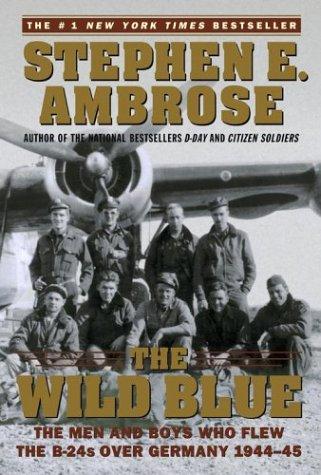
Ambrose wrote this account of the men who flew B-24 Liberator bombers over occupied Europe in 1944-1945 — centered on the crew of the Dakota Queen, piloted by a young George McGovern. Unlike most WWII air war histories that focus on tactics or strategy, Ambrose focuses on the human experience: the average age of 21, the losses that made completing thirty missions statistically improbable, and what it looked like to return to civilian life after flying combat missions that killed hundreds of people per raid. The complement to The Bomber Mafia for understanding the human dimension of strategic air power. On the CSAF reading list as a primary account of what airmen actually experienced.
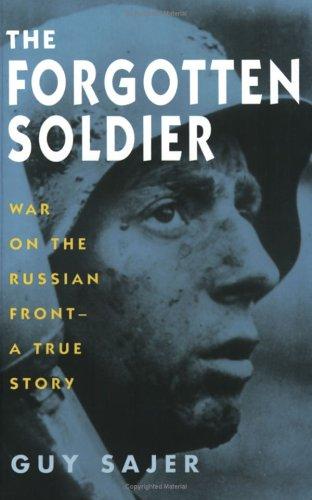
A young Alsatian who was conscripted into the German Army and fought on the Eastern Front from 1942 to 1945. The most harrowing infantry combat memoir ever published, by a man who was technically on the wrong side and tells the truth anyway. What sustained ground combat does to a human being — the cold, the hunger, the losses, the way the self narrows to the next hour — is documented here without mercy or self-pity. Read it and understand what your army will never be asked to do. Hope it stays that way.
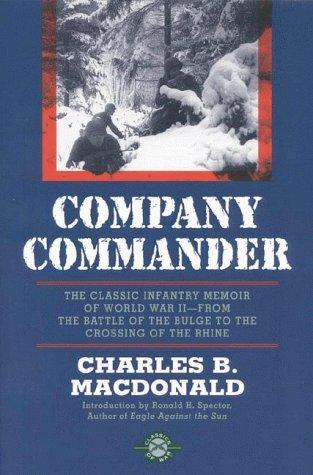
MacDonald took over a rifle company in the Huertgen Forest at 23 and wrote down exactly what that felt like: the cold, the fear, the men you lose, the calls you make on no sleep. Nobody has ever put the weight of company command on the page more honestly. Read it before you pin on the bars, not after.
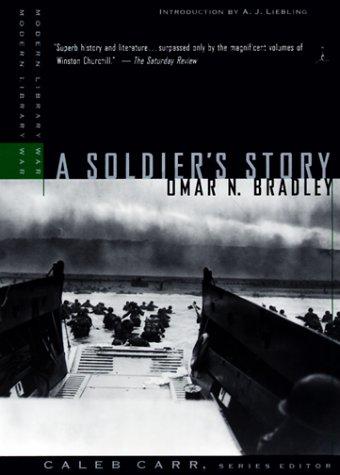
Omar Bradley commanded more American ground troops in combat than any general in history, and his memoir of the Normandy-to-Germany campaign is the view from army-group level: logistics, personalities, and the constant friction with Montgomery and Patton. Bradley was called "the GI's general" and writes like it — plainspoken, unshowy, occasionally settling scores. Read it next to Eisenhower's Crusade in Europe to triangulate who actually decided what.
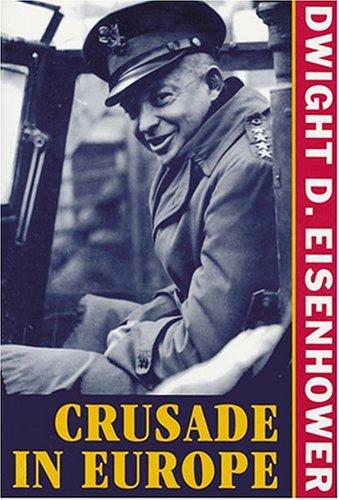
The Supreme Allied Commander's own account of running the Western Front, written in 1948 before he was president and while the details were still sharp. Eisenhower's gift was managing a coalition of enormous egos — Montgomery, Patton, de Gaulle, Churchill — without the whole thing flying apart, and the book is a quiet clinic in coalition command. Less blood than the grunt memoirs, more insight into why the war was run the way it was.
Ernie Pyle was the most beloved war correspondent in American history because he wrote about the private and the sergeant, not the general. Brave Men collects his dispatches from Sicily, Italy, and Normandy — the mud, the exhaustion, the small kindnesses, the dead. Pyle was killed by machine-gun fire in the Pacific in 1945. This is why the infantry loved him.
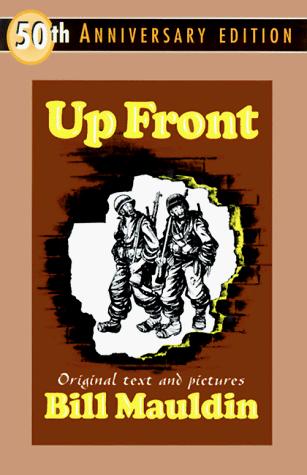
Bill Mauldin was a young infantryman who drew Willie and Joe, two filthy, exhausted dogface GIs whose cartoons ran in Stars and Stripes and told more truth about the ground war than any communiqué. Patton wanted him court-martialed for it. Up Front pairs the drawings with Mauldin's own prose, and together they are the enlisted man's war — cold, tired, sardonic, and unimpressed with the brass. Won the Pulitzer at 23.
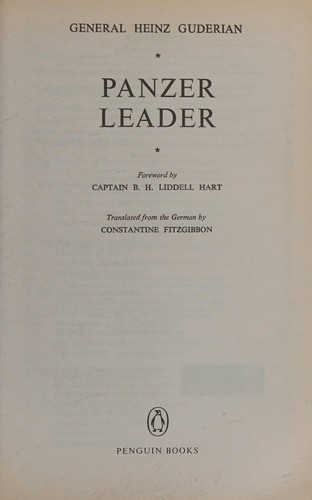
The memoir of the general who wrote the book on armored warfare — literally — and then drove his panzers across Poland, France, and into Russia. Guderian is self-serving about his own record and conveniently vague about the regime he served, so read him with a raised eyebrow. But as a study of how blitzkrieg was actually conceived and commanded, from the man who did it, there is nothing else like it.
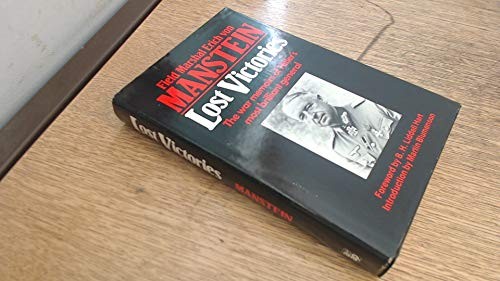
Erich von Manstein was probably the most gifted operational commander Germany produced, and this memoir is his case for how the war could have been won if Hitler had just listened to him. Take the self-justification with a shaker of salt — Manstein whitewashes plenty, including his own record in the East. But for the operational art of the Eastern Front, from Sevastopol to the "backhand blow" at Kharkov, it is essential and grudgingly admired reading.
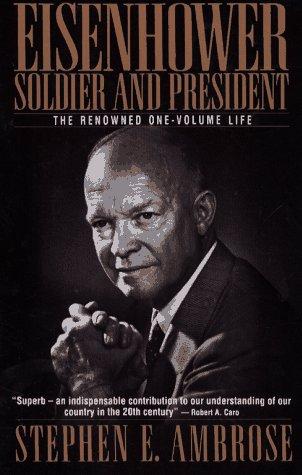
The one-volume condensation of Ambrose's two-volume biography of Eisenhower — the Supreme Allied Commander who managed the most complex coalition in history and then became the President who managed the most dangerous peace. Ambrose had access to Eisenhower's papers and to Eisenhower himself. What emerges is the portrait of a man of extraordinary administrative and diplomatic ability who could integrate the competing demands of Churchill, Montgomery, de Gaulle, Patton, and Marshall while maintaining strategic clarity. The WWII chapters on coalition command are the best case study available of what joint operations actually require.
The most thorough biography of George Patton — the Army's most aggressive, most controversial, and most effective operational commander of WWII. D'Este spent years on the primary sources and produced a portrait that is neither the myth of popular culture nor the caricature of his critics: a man of genuine military genius whose emotional volatility and political recklessness repeatedly threatened his career, and whose career survived because the Army needed what he could do and could not find anyone else who could do it. The campaign chapters on Sicily, France, and the Bulge are the best operational analysis of Patton's command available.
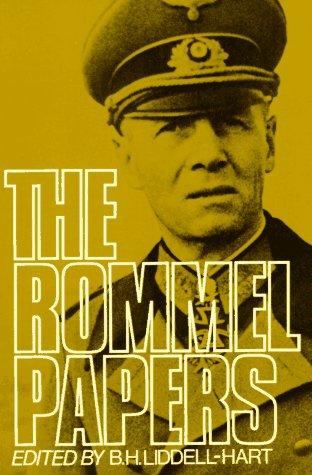
Rommel's diaries, letters, and operational notes, assembled and edited after the war. The tactical thinking is immediate and specific: how he read the ground, how he kept the initiative, why he drove forward when doctrine said to consolidate, and what his assessment of his own army's strengths and limitations actually was. Liddell Hart's commentary provides the strategic context that Rommel's documents lack — Rommel was the greatest operational commander of WWII and had almost no strategic insight. Reading the documents alongside the commentary is a case study in the difference between operational and strategic skill.