The Techno-Thriller Shelf
The techno-thriller is the only fiction genre with a security clearance. Clancy built it, the Cold War fed it, and its modern heirs — often written by people who actually held the jobs they're fictionalizing — have become a semi-official way for the defense world to argue about the next war in public. This shelf runs from the classics of the form to the new generation of future-war novels that combatant commanders assign to their staffs. Read them for the plot; notice, while you're at it, how much of the current force-design debate is happening in paperback.
Buy links go to Bookshop.org (which supports independent bookstores) and Amazon. Some are affiliate links — if you buy, we earn a small commission at no extra cost to you. As an Amazon Associate we earn from qualifying purchases. It never affects which books are on this list or how we describe them. How this works.
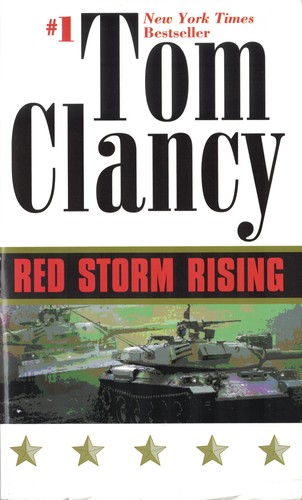
The big one. Clancy and Larry Bond gamed out a conventional NATO-Warsaw Pact war using Bond's Harpoon wargame, then wrote it down — convoy battles in the Atlantic, tank fights in Germany, a shooting war for Iceland, and no Jack Ryan to hold your hand. Forty years on, it's still the book officers hand each other when they want to explain what a peer war actually costs per day in ships, jets, and people. The characters are cardboard and the Soviets lose a little too politely, but nobody has written large-scale conventional war this legibly since. The genre's load-bearing wall.
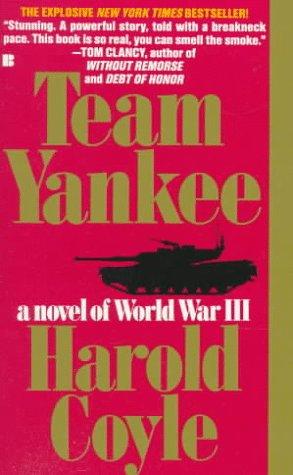
Coyle was a serving Army armor officer when he wrote this: World War III from the turret of one tank company inside Hackett's Third World War framework. No White House scenes, no submarine chases — just a company commander named Bannon fighting his fourteen tanks through the Fulda-corridor war every Cold War tanker trained for and never fought. Generations of armor lieutenants got handed this book by their platoon sergeants for a reason: it teaches battle drills, casualty math, and what command actually feels like at the only echelon where you can smell the diesel. Still the best company-level war novel in the genre.
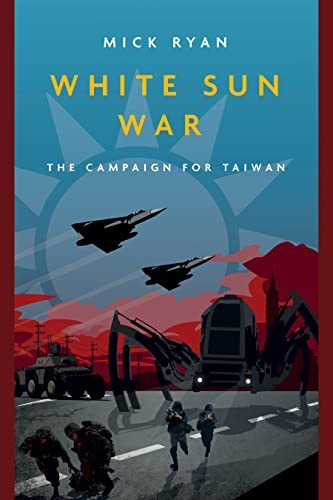
A retired Australian Army major general writes the Taiwan war as future history — drones, loitering munitions, contested satellites, and the ugly math of amphibious assault against a prepared defender. Ryan spent a career thinking about how militaries adapt, and it shows: this is less a thriller than a campaign study wearing a novel's clothes, which is exactly why war colleges assign it. If 2034 is the warning shot, White Sun War is the staff ride. Read it for the operational detail; forgive it the prose, which is workmanlike and knows it.

The World War III novel with no American characters. Peters, a career Army intelligence officer who spent his service studying the Soviets, tells the invasion of West Germany entirely from the Russian side — privates, staff officers, and generals who believe in what they're doing and are often better at it than NATO wants to admit. It's the anti-Red Storm Rising: no technology porn, all people, and the unsettling discovery that the enemy has NCOs with problems just like yours. The best argument in fiction for taking your adversary seriously as human beings who intend to win.
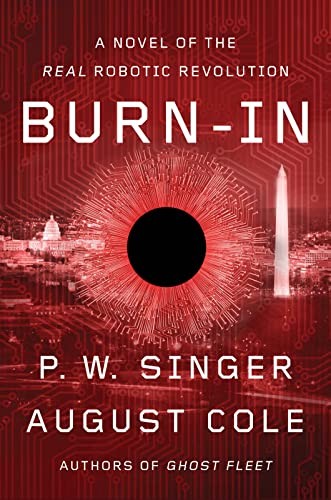
The Ghost Fleet team does it again, this time at home: an FBI agent gets assigned a robot partner and Washington gets a taste of what automation does to a country that isn't ready. Like Ghost Fleet, every technology in the book is real or in development, and the endnotes prove it — Singer and Cole call it 'useful fiction,' and the Pentagon keeps assigning it because the footnotes are doing analysis the think-tank reports can't make anyone read. The thriller plot is serviceable; the point is the world, which is arriving on schedule whether you read the book or not.

Greaney brings the thriller craft; Rawlings, a Marine lieutenant colonel, brings the tactics — and the result is the closest thing this generation has to Red Storm Rising. Russia launches a two-front operation: a lightning strike into Europe as the loud diversion while the real objective is a rare-earth mine in Africa. Tank battles, helicopter assaults, a submarine duel, and logistics treated like the main character it actually is in real war. Written before 2022 made 'Russian armored columns underperforming' a news genre, which makes some of it read differently now. Big, loud, and technically honest.
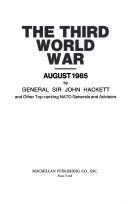
Before Clancy, there was Hackett — a retired British general and Arnhem veteran who assembled fellow NATO officers and wrote World War III as a sober after-action history from the future. Published in 1978, it wasn't entertainment; it was advocacy, a warning that NATO's conventional forces were too thin to stop the Warsaw Pact without going nuclear, dressed as a bestseller so politicians would actually read it. It worked — millions of copies, and a direct line to Team Yankee and Red Storm Rising, both of which borrowed its war. Dry as a staff study in places, and that's precisely its authority.
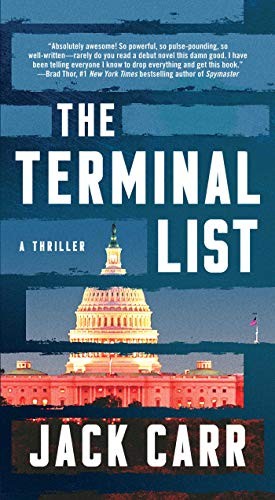
Carr did twenty years as a SEAL, and his debut reads like it: the gear, the tactics, and the tribal politics of the Teams are rendered by someone who lived them, not someone who interviewed them. The plot — a SEAL commander whose troop is wiped out by a conspiracy that reaches into the government, and who starts working down a list — is pure revenge-fantasy machinery, and it knows it. What earns the shelf space is the authenticity underneath the mayhem, and the fact that Carr kicked off the current wave of operator-turned-novelist fiction. The Amazon series made it famous; the book is meaner.
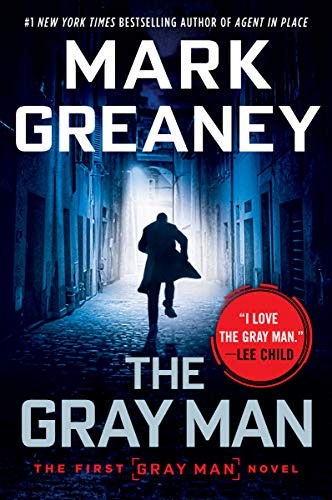
Court Gentry, ex-CIA, hunted across Europe by everyone with a budget — the book that launched Greaney before he became the man Clancy's publisher trusted to continue Jack Ryan. Greaney never served, and he compensates the honest way: obsessive research, range time, and a policy of getting the hardware right that most veteran authors would respect. The Gray Man novels are the genre's reliable heartbeat — one a year, competent violence, clean prose, zero pretension. Start here, and know that the later entries get better as Greaney's craft catches up with his ambition. The Netflix movie is not the book's fault.

Bond is the co-author Clancy fans forget: a former Navy officer who designed the Harpoon wargame and co-plotted Red Storm Rising, then went solo with this — a full-scale second Korean War, fought corps-on-corps down the peninsula. The wargamer's fingerprints are everywhere: air campaigns that obey sortie rates, logistics that run out, and a front line that moves the way front lines actually move. Decades later, with Korea scenarios back in every planner's inbox, Red Phoenix holds up disturbingly well. If you want to understand why 'the next Korean war' keeps professionals up at night, this is the readable version.
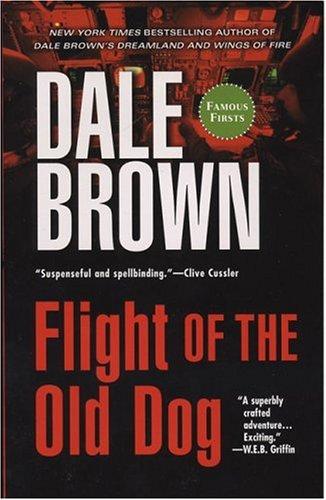
Brown flew as an Air Force navigator, and his debut is a love letter to the crew dogs of Strategic Air Command: a hot-rodded B-52 — the Old Dog — sent deep into Soviet territory to kill a laser site that's blinding American satellites. It's the flying itself that sells the book: terrain-following at night, fuel math, crew coordination under fire, written by someone who sat at the nav station for real. Brown went on to write a shelf of increasingly gadget-heavy sequels; this first one, where the airplane is old and the crew is scared, is the keeper.
Taylor retired as a Special Forces lieutenant colonel after two decades in Army special operations, including years in the unit everyone calls 'the Unit,' and then started writing what he knew with the serial numbers filed off. Pike Logan runs with the Taskforce, an off-the-books counterterror outfit, and the details that land hardest aren't the gunfights — they're the tradecraft, the surveillance-detection runs, the bureaucratic knife-fighting over authorities. The prose is meat-and-potatoes and Pike's grief-fueled rage borders on melodrama, but the operational texture is the real thing. First of a long series that stays remarkably consistent.
The World War III novel your favorite World War III novel is afraid of. Published in 1982 and set in British Chieftain tanks on the North German Plain, it does what Team Yankee politely declines to do: it kills the characters you love, burns the tanks you've bonded with, and refuses to promise the good guys are winning. Long out of print and passed around by tankers like contraband until a reissue finally rescued it. No grand strategy, no Washington scenes — just crews, armor, and the arithmetic of attrition. The bleakest and arguably most honest entry in the entire genre.

Singer is the Pentagon's most-cited defense researcher; Cole is a former Navy intelligence officer. Their novel about a near-future U.S.-China war over Hawaii — fought with autonomous weapons, satellite-blinded aircraft, microchip-compromised weapons systems, and cyber-enabled insurgency — is explicitly designed as a policy argument in narrative form. Every technology in the book either exists or is in development; the footnotes at the back cite the actual defense programs. The Indo-Pacific Command reads it as a planning document disguised as fiction: the scenarios Singer and Cole describe — a surprise attack on INDOPACOM, the U.S. forced to fight with degraded networks and compromised supply chains — are the scenarios INDOPACOM wargames. The most operationally useful work of military fiction published since Red Storm Rising.
Ackerman is a Marine veteran and novelist; Stavridis is a retired four-star admiral and former NATO Supreme Allied Commander. Their near-future novel about a U.S.-China naval war that begins with a confrontation in the South China Sea and escalates to nuclear use is written with the operational specificity that only actual commanders can bring to the scenario — the chain of decisions, the command breakdown, the escalation that becomes uncontrollable not from intent but from the institutional logic of conflict. Unlike Ghost Fleet, which focuses on tactical innovation, 2034 focuses on strategic failure: how a war that neither side wants begins and cannot be stopped once it starts. On the CMSAF reading list as the fiction that policy analysis cannot fully replace.

The sequel to 2034 jumps twenty years past the war and swaps naval combat for a nastier question: what happens to a wounded, paranoid America when artificial intelligence starts moving faster than the humans nominally in charge. A president dies on camera, nobody can agree on what killed him, and the scramble that follows is really a race for the technology that will decide who matters next. It's a stranger, more speculative book than 2034 — less Tom Clancy, more fever dream — and it divides readers accordingly. Read it for where a Marine combat veteran and a former SACEUR think the threat actually lives now.
Clancy's best pure novel, and the one with the least technology in it. This is the origin story of John Clark — Vietnam-era SEAL John Kelly, who loses everything and works his way through the people responsible while a POW-rescue mission spins up in the background. Stripped of the usual acronym cascade, Clancy turns out to be genuinely good at grief and rage, and the book runs darker than anything else he wrote. If the Jack Ryan books are about the system working, Without Remorse is about a man who has stopped waiting for it to. The fans who call it his finest are right.
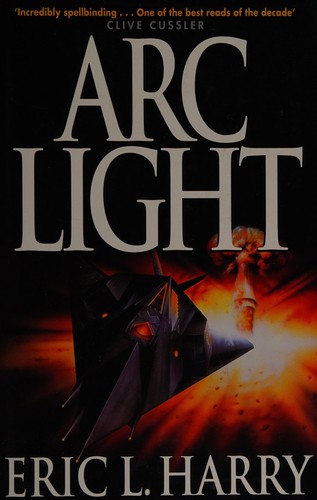
The techno-thriller that goes where the rest of the genre flinches: past the nuclear threshold. Harry's 1994 novel walks through a limited nuclear exchange between the United States and Russia — the strikes, the decapitated chains of command, the retaliation debates conducted by exhausted men in bunkers — and then keeps going into the conventional war that follows. Most WWIII fiction treats nukes as the ending; Arc Light treats them as chapter one and takes escalation control seriously as a plot engine. Long, dense, occasionally soapy in its subplots, and still the standard recommendation when someone asks for fiction about how deterrence fails.
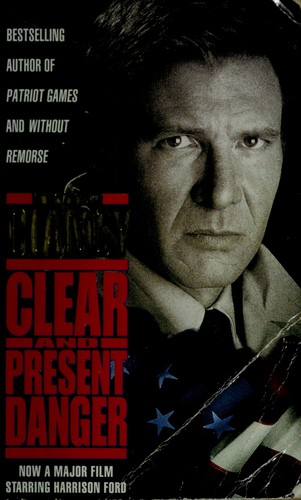
Clancy at the height of his powers, and the rare thriller whose villain is a decision memo. The US quietly inserts light infantry into Colombia to fight the cartels off the books, and when the political winds shift, Washington simply abandons them in the jungle. The chapters that made the book a phenomenon aren't the firefights — they're the meetings where deniability gets engineered, one careful sentence at a time. For anyone who's ever executed a mission downstream of a policy nobody will sign their name to, this one lands differently. The soldiers left on the ground are the whole argument.

The prototype. In 1977 — seven years before The Hunt for Red October — a Welsh schoolteacher wrote the mission that defined the template: steal the Soviets' thought-controlled superfighter from inside Russia and fly it out. Mitchell Gant, the burned-out Vietnam pilot sent to do the stealing, is a mess of trauma the genre wouldn't attempt again for decades, and Thomas grinds him through the infiltration with real cruelty. Clint Eastwood's 1982 film made the airplane famous; the book is tighter and colder. If you want to know where the techno-thriller actually starts, it starts here, in the snow, in someone else's uniform.
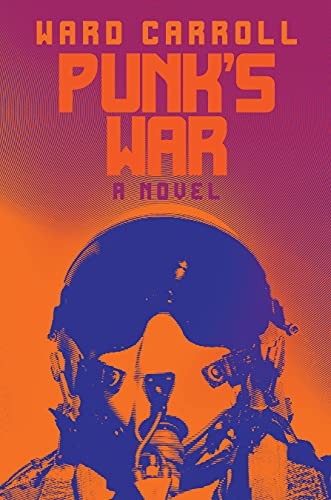
Carroll spent his career in the back seat of F-14s, and Punk's War is the naval aviation novel that trades Top Gun glamour for the truth of the ready room: a junior officer flying tedious, dangerous patrols over the Gulf while careerists above him optimize for their next fitness report. The flying is rendered with a RIO's precision, but the real subject is institutional — what happens to a squadron when the commander cares more about looking good than being good. Every JO who's ever watched a boss chase a ribbon will recognize this book on sight. Funny, angry, and dead accurate.
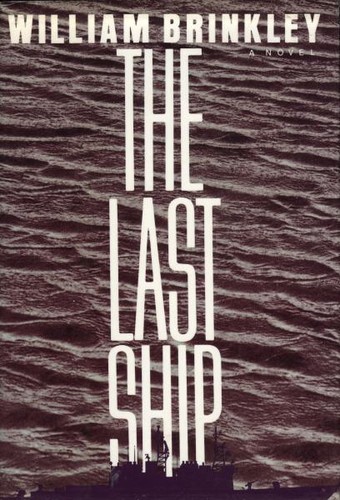
A destroyer, the USS Nathan James, survives the nuclear war that erases the world it sailed from, and her captain has to invent purpose, law, and hope for a crew with nowhere to home-port. Brinkley — a Navy veteran of the Second World War — writes it in long, rolling, almost Melvillean sentences that will either hypnotize you or drive you overboard; this is a literary novel wearing a techno-thriller's premise. Forget the TNT series, which kept the hull and jettisoned the soul. The book is a meditation on command as the loneliest job left on Earth, sometimes literally.
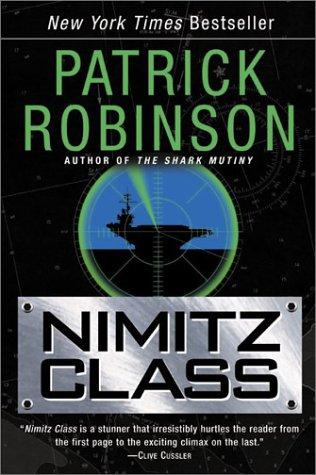
A Nimitz-class carrier vanishes in a nuclear flash, and the question that drives the book is the one the Navy least wants asked: could someone actually do it, and how would we even find out who? Robinson's 1997 debut is a submarine procedural at heart — the hunt works backward through diesel boats, harbor gossip, and the physics of getting close to a battle group that believes itself untouchable. The geopolitics have aged and the characterization was never the point. What endures is the premise's cold logic, which is why carrier-vulnerability arguments still sound like this book's plot summary.

Bob Lee Swagger, Marine scout sniper out of Vietnam, gets talked out of retirement by men who need a patsy — and discovers they picked the one man in America you should never frame for a shooting. Hunter, a film critic by trade who won a Pulitzer for it, writes ballistics the way other novelists write love scenes: reverentially, precisely, at length. The gun-culture detail is the deepest in popular fiction, and Swagger himself — bitter, wounded, and smarter than everyone hunting him — became the template for two generations of sniper protagonists. The movie Shooter is the diet version; take the real dose.

An Army veteran's debut that reads like a deliberate throwback: Russia comes across the German border in a winter blitz, and the thin American tripwire force gets the war nobody budgeted for. Gragg writes from the mud up — tank crews, forward-deployed grunts, and communications soldiers holding doomed positions while the generals argue — and he is ruthless about what a first week of peer war does to undermanned units. It's old-school in structure and occasionally blunt in prose, but it asks the question that got very current after 2022: what actually happens to the tripwire when someone trips it?
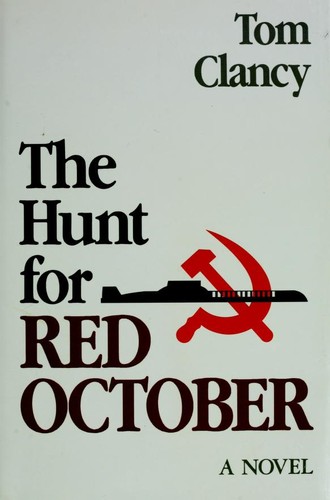
The novel that invented the modern technothriller and launched Jack Ryan: a Soviet sub captain tries to defect with the fleet's best boat, and both navies go looking. Cold War cat-and-mouse under the ice, and still the gold standard for the genre.
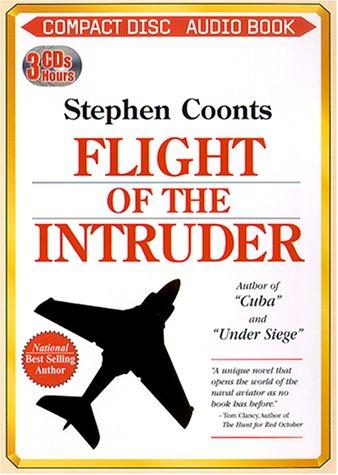
A Navy A-6 pilot, sick of dumping bombs on empty jungle, decides to hit a real target in Hanoi off the books. Coonts flew the jet, so the carrier and the cockpit ring true. A cracking thriller that's really about a war run by committee.