The Sea Services
The sea has its own literature, older and stranger than the land's. This shelf runs the full sweep of naval and maritime warfare — sea power theory, the great fleet actions, submarine and surface command, and the memoirs of people who fought where there's nowhere to dig in. For sailors, Marines, and anyone who wants to understand why the ocean is the hardest place to win.
Buy links go to Bookshop.org (which supports independent bookstores) and Amazon. Some are affiliate links — if you buy, we earn a small commission at no extra cost to you. As an Amazon Associate we earn from qualifying purchases. It never affects which books are on this list or how we describe them. How this works.
Stavridis and Watkins updated this classic Naval Institute guide to naval command — originally written by Admiral Fiske in 1905, revised through multiple editions — into the standard reference for what commanding officers of U.S. Navy ships are expected to know about the professional, legal, administrative, and leadership dimensions of command. The book covers the full scope of what a commanding officer is responsible for: tactical readiness, crew welfare, legal authority, administrative systems, and the human leadership that determines whether a ship functions as a team or a collection of departments. On the CNO reading list as the reference manual for what command actually requires.

A case for actually reading and thinking, aimed at sailors who'd rather just check the box. Meta — but the CNO put it on the list for a reason. It's the argument for the whole rest of this shelf.
A four-star admiral profiles ten great naval commanders across history and asks what actually made them good — and where their character failed them. It's a leadership book that admits its heroes were flawed, which is more than most manage. Short chapters, real reflection, no LinkedIn platitudes.
Published in 1890 and read simultaneously by Theodore Roosevelt, Kaiser Wilhelm II, and the Japanese Naval Staff — then used to justify naval buildups across four continents. Mahan's argument is that national greatness follows from sea power, sea power follows from merchant marine and forward bases, and both require naval protection. He was right enough that every great power restructured its fleet around his ideas, contributing to the naval arms race before World War I. Required reading to understand why the Navy exists and what it is supposed to accomplish at the strategic level.
Stavridis served as NATO Supreme Allied Commander and SOUTHCOM commander and wrote this history and analysis of the world's ocean regions — Pacific, Atlantic, Indian, Mediterranean, Arctic, Caribbean — as the geopolitical terrain that determines the character of conflict and competition. Each chapter covers one ocean's history and current strategic importance. More accessible than Mahan and more current than Corbett, it is the senior naval officer's framework for understanding why sea power matters and what controlling the world's ocean commons actually requires. On both the Coast Guard and CNO reading lists because both services exist to secure those commons.
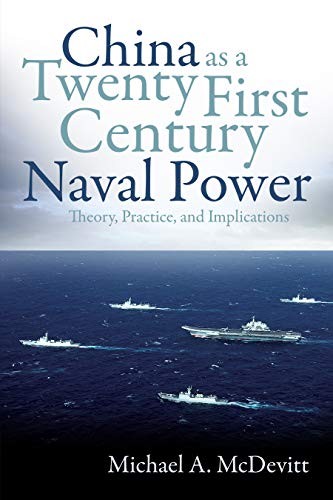
A retired admiral lays out exactly how and why the PLA Navy went from coastal afterthought to blue-water competitor. Dry in spots, but it's the clearest map of the pacing threat you'll find without a clearance.
The book that made the Navy take Chinese sea power seriously. Mahan, but read in Beijing — it explains China's maritime strategy in China's own terms, which is more than most talking heads bother to do.
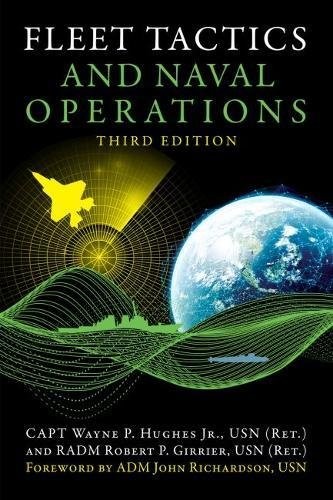
The classic text on how naval combat actually works -- 'attack effectively first' and the hard math of who sees whom. This third edition is updated for the missile-and-sensor age. Written for sailors, but any Marine betting on the littorals should understand the fight happening over the horizon.
Guadalcanal's naval campaign, 1942-43. The Navy losing ships faster than it could replace them, fighting night surface battles against Japanese forces that were, for a sustained period, tactically superior. Hornfischer wrote six of the best naval history books ever produced and this is arguably the best. You will learn what it means to fight a ship, what it costs to command one, and why the men who did it at Guadalcanal deserve more recognition than they have received.
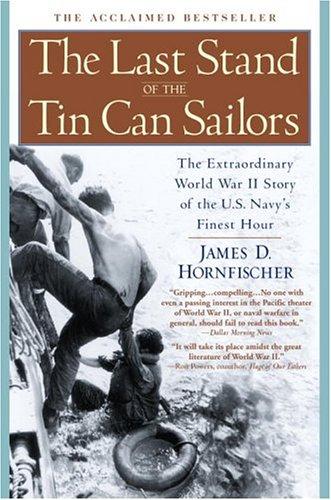
Leyte Gulf, October 1944. A formation of destroyers and destroyer escorts—antisubmarine ships—charged a Japanese fleet of battleships, heavy cruisers, and destroyers to protect the escort carriers of Taffy 3. The math was impossible. They knew the math was impossible. They did it anyway. The highest award for valor given to a ship in U.S. Navy history went to USS Johnston's commander that day. Every surface warfare officer should read this book twice.
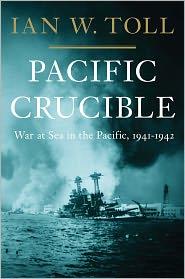
The first volume of Toll's Pacific War trilogy — from Pearl Harbor through the Battle of Midway. Toll is the finest naval historian writing today. His reconstruction of how the Pacific Fleet rebuilt from Pearl Harbor, how carrier aviation doctrine evolved in four months of combat, and how the intelligence work behind Midway actually functioned is the best account available of the most consequential naval battle of the war. The Midway section, in which six minutes of dive-bombing destroyed three Japanese carriers and decided the Pacific war's direction, is the most gripping narrative in naval history writing since Hornfischer.
Morison served as official U.S. Navy historian during WWII and sailed with the fleet to compile his fifteen-volume history. This single-volume condensation is the essential account of American naval operations across both oceans: the Atlantic convoy battles, the Pacific carrier campaigns, the amphibious assaults, and the submarine war that strangled Japan's supply lines. Morison wrote with the authority of a man who was there and the rigor of a Harvard historian. The standard reference for anyone who wants to understand what the Navy accomplished between 1941 and 1945.
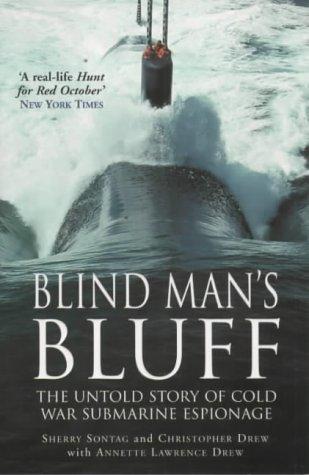
The American submarine espionage program during the Cold War, assembled from declassified documents and interviews with former submariners. USS Halibut, USS Seawolf, USS Parche — submarines operating deep in Soviet territorial waters to tap undersea communication cables, photograph ballistic missile submarines, and recover Soviet hardware from the ocean floor. The missions that technically did not happen. The crews who cannot officially confirm what they did. The book tells the story anyway. The best account available of the Cold War's most secret naval operations, and an essential corrective to the impression that the Navy's Cold War role was primarily surface and aviation.
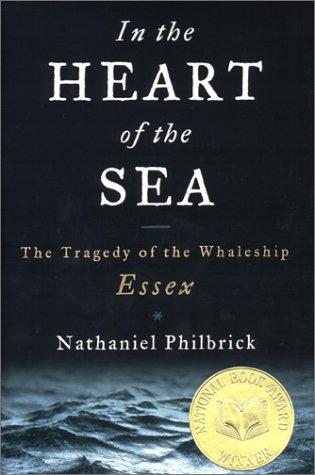
Philbrick reconstructed the 1820 sinking of the Nantucket whaleship Essex — rammed by a sperm whale and sunk in the middle of the Pacific Ocean — from surviving journals and the oral history passed down by the rescue crews. The account of how the survivors decided what to do, who lived and who died, and what the experience of ninety-three days at sea does to a crew is the most complete study available of human behavior at the edge of survival. On the Coast Guard Commandant's reading list because the decisions the Essex's officers made in the hours after the sinking are the same decisions Coast Guard crews practice in every rescue scenario.
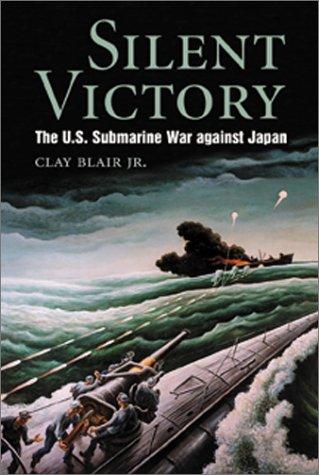
The history of the American submarine war against Japan — the campaign that sank four million tons of Japanese shipping and cut Japan off from the oil and raw materials that kept its war machine running. Blair spent years on the operational records and produced the most complete account of what the submarine service accomplished: a strategic campaign that destroyed Japan's capacity to fight without being recognized as such at the time. The early chapters on the torpedo failures — American torpedoes that ran too deep and whose contact exploders did not work — and the institutional resistance to acknowledging the defect are a case study in how military organizations deny problems that reflect badly on institutional decisions.
The storm that drowned the Andrea Gail and six of her crew off the Grand Banks in October 1991 — reconstructed by Junger from meteorological records, Coast Guard logs, interviews with survivors from other vessels in the storm, and the memories of the families on shore. The technical account of what happens to a fishing boat in a storm of that intensity is precise enough to serve as a seamanship case study. The Coast Guard's rescue operations during the same storm, which Junger covers in parallel, produced the most audacious helicopter rescue in the service's modern history.
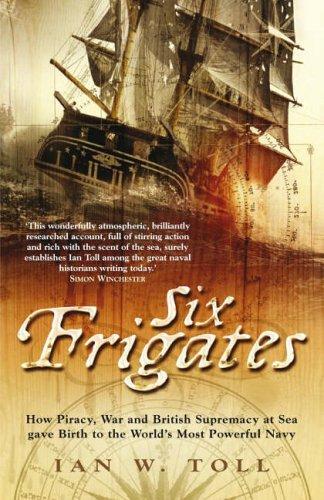
How the United States built its first Navy from nothing. The politics of the early republic, the personalities who demanded a naval force when the country could barely afford one, the ship designs that produced the Constitution and her sisters, and the officers who turned six wooden frigates into the beginning of a global naval tradition. Everything that followed is, in some sense, a footnote to these decisions.
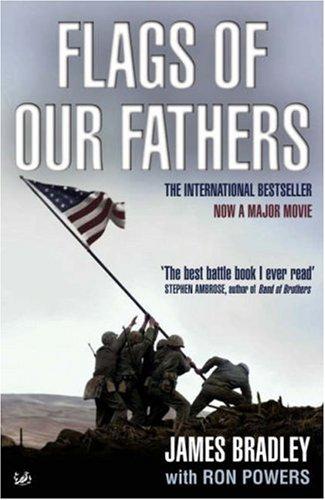
The story of the six men who raised the flag at Iwo Jima — told by the son of one of them. Bradley spent years interviewing survivors and reconstructing not just the battle but what happened to the men who became accidental symbols of American victory: the bond tours, the celebrity, the drinking, the silence about what they had actually seen. Iwo Jima produced more American casualties in six weeks than the entire Gulf War. The flag photograph became the most reproduced photograph of WWII. The distance between the image and the reality is what this book is about.
The standard one-volume history of the Pacific theater from Pearl Harbor to the Japanese surrender — written before the memoirs and oral histories of the 1990s but with access to the post-war decryptions and strategic assessments. Costello covers the naval battles, the island campaigns, the strategic bombing campaign, and the decision to use atomic weapons with the analytical rigor of a military historian who understood that the Pacific was a fundamentally different kind of war from Europe: coalition-less, supply-intensive, and decided ultimately by industrial capacity and carrier aviation.
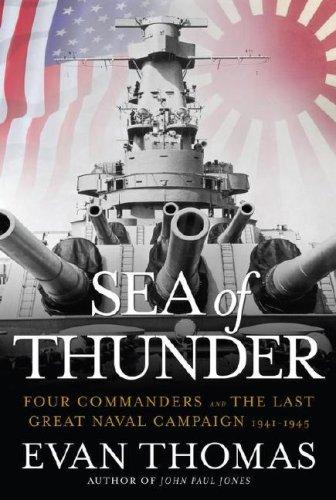
Four commanders at the Battle of Leyte Gulf — two American, two Japanese — and what the largest naval battle in history looked like from the inside of command. Thomas captures why naval command is one of the most isolating jobs on earth: you are making decisions with incomplete information, at distance, with no ability to correct before the shells land. The battle produced both the greatest offensive charge and the greatest command failure in American naval history simultaneously.
The nine-day pursuit and sinking of the German battleship Bismarck in May 1941 — the greatest naval chase in the twentieth century. Kennedy served in the Royal Navy during the war and reconstructed the pursuit from both sides: the technical problem of finding a fast battleship in the North Atlantic with 1941 sensors, the command decisions on the British side, and the final battle. HMS Hood's destruction in three minutes of combat, and what it did to the psychology of the pursuit, is the book's dramatic center. The most accessible single account of surface warfare in the Atlantic.
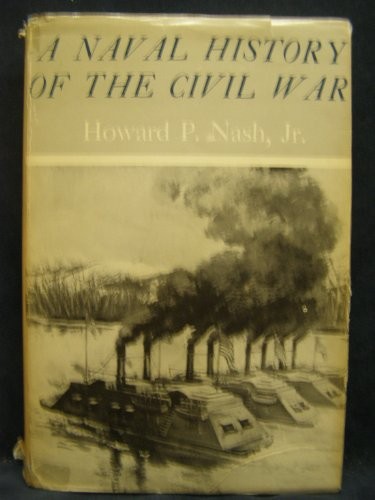
The Union and Confederate naval campaigns of the Civil War — the blockade, the river campaigns, the ironclad battles, the torpedo boats, and the Confederate submarine Hunley. The naval dimensions of the Civil War are almost always subordinated to the land campaigns in popular accounts, but the blockade was strategically decisive: it slowly strangled Confederate supply lines and was the economic mechanism by which the Union translated its industrial advantage into strategic victory. Nash's account is the standard reference for the naval dimensions of the war that decided the character of the American state.

The academic autopsy of how the Corps manufactured its own legend between 1874 and 1918 -- the recruiting posters, the press stunts, the deliberate myth-making. Venable is a Marine historian, so it's affectionate but not fooled. Read it and you'll never look at 'first to fight' branding the same way again.
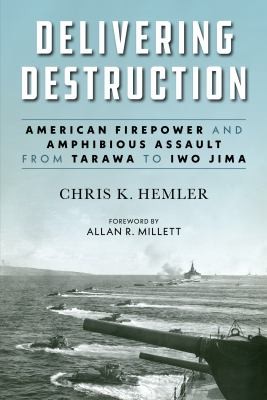
How the Corps went from getting slaughtered on the reef at Tarawa to coordinating naval gunfire that actually worked by Iwo Jima. It's the unglamorous fire-support side of the island war -- targeting, coordination, lessons paid for in blood. Drier than a memoir, but it's the part that decided who lived.

A two-volume swing through the whole history of amphibious warfare -- the disasters as much as the Inchons -- assembled by military professionals arguing about what still works. It reads unevenly, like the anthology it is, but it's the intellectual backbone behind why the Corps is betting everything on small units and contested beaches. Homework for anyone who wants to argue about Force Design.
How the Navy war-gamed the entire Pacific campaign at Newport years before Pearl Harbor -- and mostly got it right, except for the carriers and the kamikazes. It's a study of how a service thinks about a war it hasn't fought yet. Niche, but it's the source material for every 'we need to wargame this' argument you'll ever sit through.
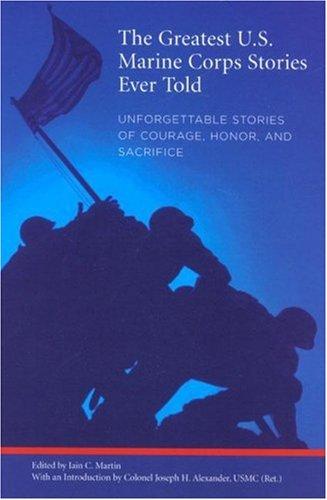
An anthology of Marine war stories from Belleau Wood to Fallujah, the kind of thing you read in twenty-minute chunks. It's uneven and unabashedly proud of itself, which is the point. Good heritage reading for a new Marine; skippable if you've already lived a few of these.
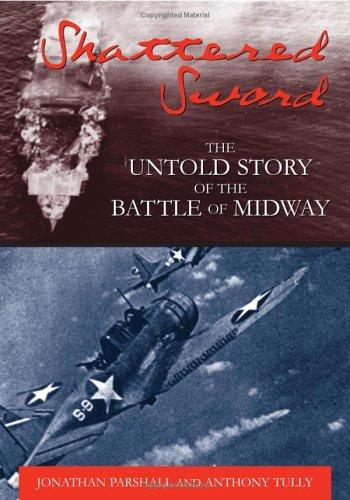
The Battle of Midway told from the Japanese carrier decks, using their own records — and it quietly demolishes half the legends you were taught. No 'five minutes' miracle, no fully-armed strike waiting on deck; just doctrine, hubris, and damage control done wrong. Read it before you repeat the myth.
Prange's blow-by-blow of the four days that broke Japan's offensive, built on decades of interviews with both sides. Dense, authoritative, and the standard narrative account for a reason.
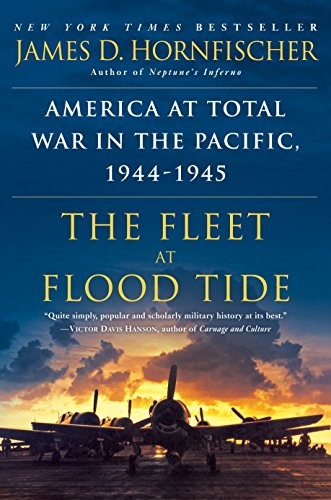
Hornfischer on 1944-45 — Saipan, the Marianas Turkey Shoot, the B-29s, the kamikazes — when the US Navy became the most powerful fleet in history. If you liked Tin Can Sailors, this is the big picture.
Hornfischer tells the story of the cruiser USS Houston — sunk early, forgotten, and the survivors forced to build the Burma-Thailand 'Death Railway' as POWs. Combat history that turns into a survival story.
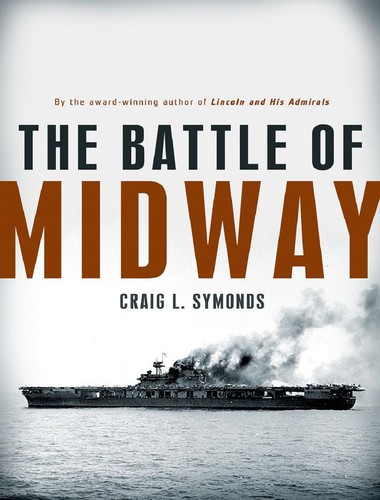
Symonds' modern, tightly argued single volume — the scholarship of Shattered Sword in a leaner package. If you want Midway right and readable, start here.
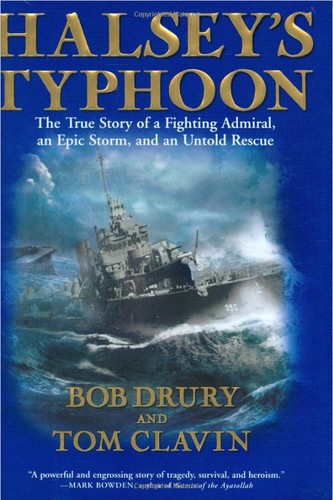
In December 1944 Admiral Halsey sailed his fleet straight into a typhoon that killed nearly 800 men and sank three destroyers — no enemy required. A gripping account of command failure and the sailors who paid for it.
Jutland went sideways because the Royal Navy had spent a generation training officers to wait for the flag hoist instead of thinking for themselves. Gordon's autopsy of signal-book culture is really a book about what happens when "follow the doctrine" beats "read the fight" — a lesson every wardroom still needs. Long, dense, and worth every page.
The dreadnought war at sea, from the chase of the Goeben to the muddy anticlimax of Jutland, told by a writer who makes admirals human. Massie shows you the machines that cost a nation's treasury and the men who were terrified to risk them. If you only read one WWI naval history, read this one.
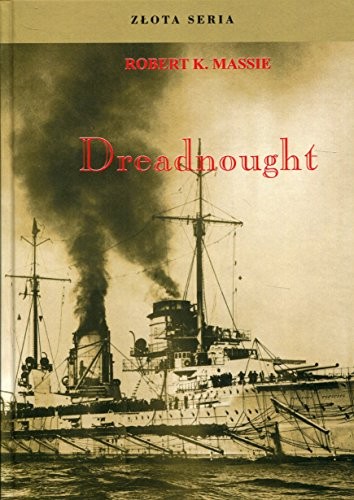
How Britain and Germany talked themselves into building the most expensive weapons on earth and then into the war they were built for. It's a naval arms-race story that's really about ego, empire, and the men who couldn't stop. The prequel to Castles of Steel and just as good.
The USS Squalus goes down with thirty-three men trapped on the bottom, and one stubborn officer named Swede Momsen has spent years building the rescue gear the Navy didn't want to fund. The operation that follows is the reason submariners have a fighting chance today. A reminder that the guy the brass ignored is often the guy who saves the crew.
Forget the mutiny you think you know. Alexander digs through the court records and finds a messier, sadder story than any movie — Bligh wasn't the monster, and the "romantic" mutineers mostly ended badly. A masterclass in how a command relationship rots, and how history gets rewritten by whoever survives to tell it.
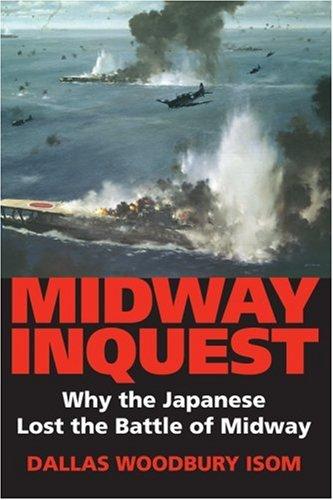
Everyone "knows" why Japan lost at Midway — the five fateful minutes, the rearming decks caught full of ordnance. Isom spent years in the Japanese records and argues most of what you've been told is wrong. Whether he convinces you or not, it'll ruin your appetite for lazy Midway takes.
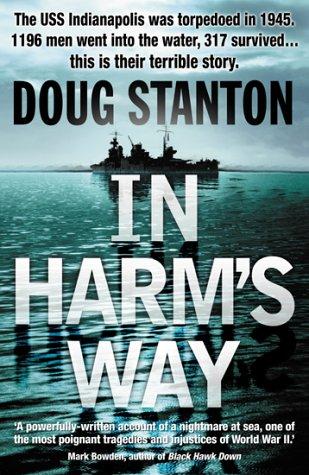
The USS Indianapolis delivers the atomic bomb, gets torpedoed, and nearly nine hundred men go into shark-filled water for four days because nobody noticed she was overdue. Then the Navy court-martialed the captain to cover its own failure. Stanton tells it through the survivors, and it will haunt you.

The definitive institutional history of the Imperial Japanese Navy — how it was built, what it believed, and why its worship of the "decisive battle" set it up to lose. Dense, scholarly, and essential if you want to understand the enemy the Pacific Fleet actually faced. Know the other side's playbook.
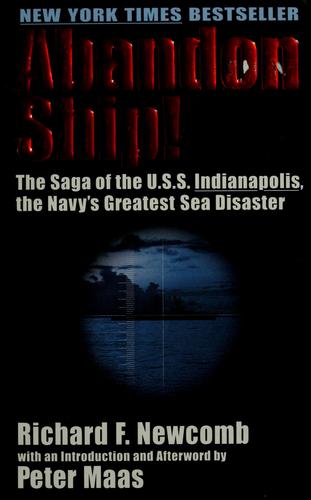
The first full account of the Indianapolis disaster and the scapegoating of Captain McVay, written before the survivors finally cleared his name. Newcomb lays out how the Navy hung one man to bury its own negligence. The book that started the long fight for the truth.
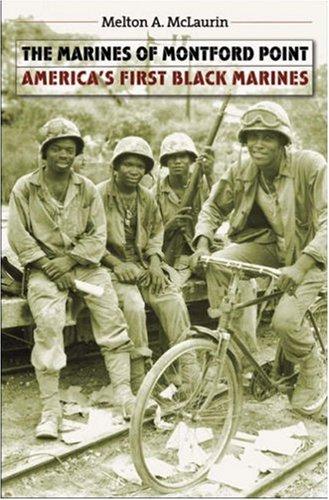
The oral history of the first Black Marines, who trained at a segregated swamp camp while the Corps that didn't want them found out they could fight. Told mostly in their own words, which is the only way it should be told. Required reading before anyone lectures you about Corps 'tradition.'

Peleliu and Okinawa, 1944-45. Sledge was a gentle, educated young man from Mobile, Alabama who became an 81mm mortar man in the 1st Marine Division and wrote the most honestly devastating memoir of the Pacific ground war. No heroics. No retrospective meaning-making. Just what it looked like from the coral and mud of two of the worst island battles the Marine Corps ever fought. Ken Burns called it one of the most profound accounts of war ever written by an American. He was right.
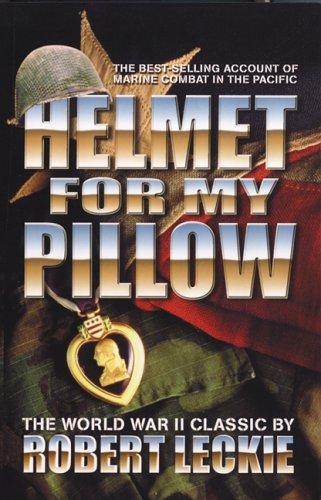
Guadalcanal through the island campaign, written with a journalist's eye and a Marine's unfiltered anger. Leckie is the counterpart to Sledge: sharper, more political, less restrained. Together, their two books constitute the Pacific ground war's ground truth in a way no official history has matched. Leckie writes about the Corps with love and without sentimentality, which is the only honest way to write about the Corps.
Not a Coast Guard book. A sailor who survived seventy-six days adrift in the Atlantic in an inflatable life raft after his sloop sank. Every Coast Guard rescue swimmer, aviation survival technician, and small boat crew should read this account of what survival actually requires, what rescue looks like from the perspective of the person being rescued, and what a human being can endure when there is no alternative.
Hara fought from Pearl Harbor to the last suicide sortie of the battleship Yamato and lived to write about it. A rare, unvarnished look at the war from the other bridge — professional, bitter, and human.
A Harvard kid ships out as a common sailor in 1834 and writes down exactly what life below decks was like — the floggings, the scurvy, the sheer grind — before anyone was polishing it for a recruiting poster. The original enlisted-eye view of the sea. Dana went to fix his failing eyes and came back with the truth.
A WWII submariner's actual patrol diary, not the cleaned-up after-action version. Ruhe gives you the boredom, the terror, the dud torpedoes, and the officers who got men killed being stupid. If you want to know what the silent service really smelled like, start here.
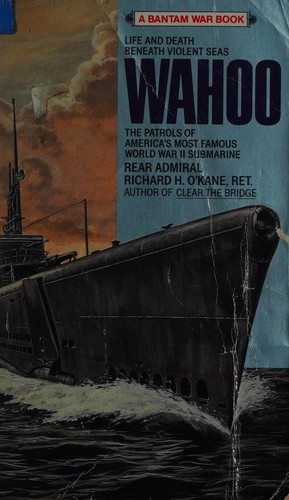
Before he had his own boat, O'Kane learned the trade under Mush Morton on Wahoo, one of the most aggressive submarines of the war. This is how you forge a crew into killers — and what it costs. Written by a man who was there for the wins and the reckoning.

O'Kane took Tang on five patrols, sank a pile of tonnage, and then watched his own circular-running torpedo come back and sink him. His account, reconstructed from a POW's memory, is the definitive submarine-skipper story. Medal of Honor, and every page earns it.
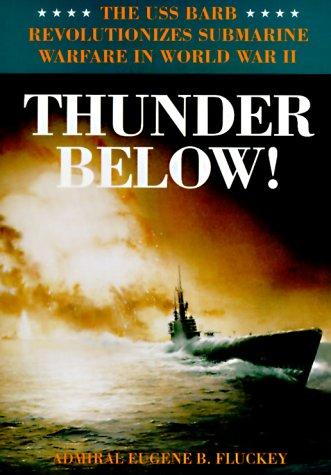
Eugene Fluckey took the Barb so deep into enemy waters he launched rockets at the Japanese mainland and put a landing party ashore to blow up a train — the only ground combat of the submarine war. It reads like a thriller because it happened. Aggressive command, written by the man who defined it.
The U-boat war from the losing side, by an officer who somehow survived when three out of four of his comrades didn't. Werner strips away the propaganda and leaves the claustrophobia, the depth charges, and the slow realization that command was sending them to die. A brutal corrective to any romance about the Grey Wolves.
The admiral who ran the Pacific submarine force tells how he finally fixed the scandal of the dud torpedoes the Navy spent two years denying existed. Part memoir, part indictment of a bureaucracy that blamed sailors for its own broken weapons. The command view of the campaign that strangled Japan.
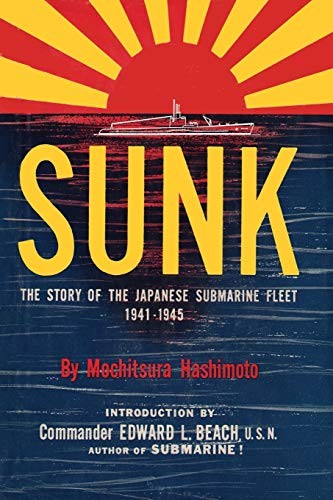
The Japanese submarine war told by the officer whose boat put the torpedoes into the Indianapolis. Hashimoto's account of a service that threw its subs away on bad doctrine is a rare look from the other periscope. History gets written by both sides; read this one.
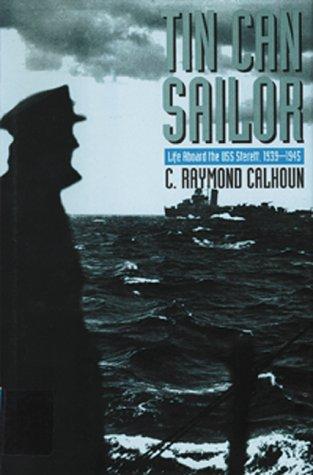
Life aboard a destroyer at Guadalcanal, where the "small boys" took on battleships in night knife-fights and paid for it. Calhoun was there on the Sterett and writes it without gloss. The destroyer Navy's war, straight from the deck plates.
Reagan's Navy Secretary tells how he pushed toward a 600-ship fleet and fought the Pentagon bureaucracy to do it. Self-serving in places — he's grinding his own axes — but a rare inside look at how naval policy actually gets made. Read it knowing the author is also a character in his own story.
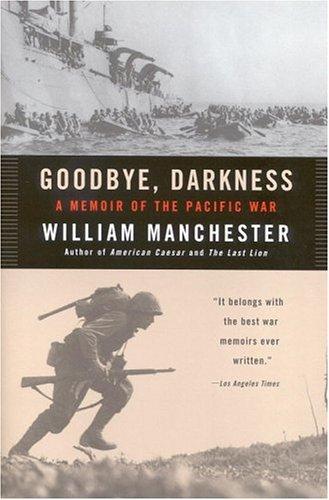
Manchester survived the Pacific as a Marine, then went back decades later to walk the islands and figure out what it did to him and the boys he watched die. Part memoir, part reckoning, all haunting. The best writer on this shelf trying to process the worst thing that ever happened to him.
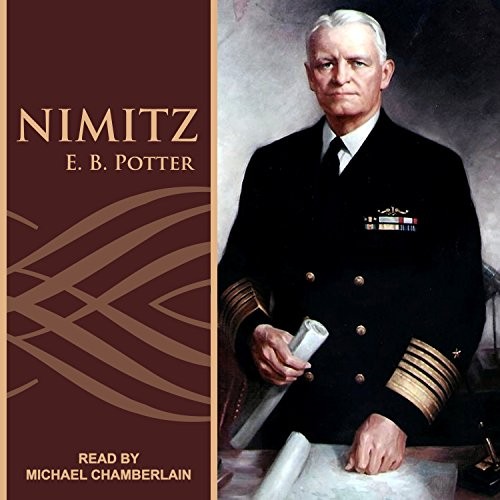
The definitive biography of Fleet Admiral Chester Nimitz — the man who rebuilt the Pacific Fleet after Pearl Harbor and commanded it to victory. Potter had access to Nimitz's papers and to Nimitz himself. The result is the best study available of how quiet, methodical competence under sustained pressure operates at the highest level of naval command. Nimitz never dramatized anything. Neither does Potter.

Symonds, the Navy's premier WWII historian, wrote this account of Chester Nimitz's command of the Pacific Fleet from Pearl Harbor through the Japanese surrender — focused specifically on Nimitz as a commander rather than on the battles he directed. His argument: that Nimitz's greatest contribution was not tactical brilliance but the command climate he created — the willingness to give subordinates authority, to accept risk, and to protect capable officers from institutional politics while relieving commanders who couldn't deliver. The contrast with MacArthur runs through every chapter. On the CMC and CNO reading lists as the model of what theater-level command leadership looks like.
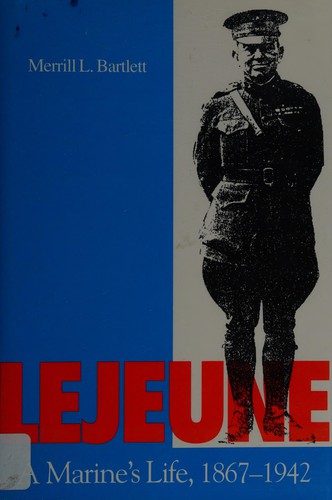
The full life of the Marine every base sign and every 'greatest of all Leathernecks' speech invokes. Before he was a legend he was an ambitious, scheming officer who dragged the Corps into the modern age, and Bartlett doesn't sand off the politics. If you've ever stood at Camp Lejeune wondering who the guy actually was, here's the answer.
A destroyer-minesweeper captain in the Pacific, 1944, who may or may not be losing his mind under the pressure of command. The questions the novel asks — about loyalty, about authority, about the line between relief of command and mutiny, about whether Queeg was right or wrong — have never been resolved satisfactorily, which is why the book is still read. Wouk served on destroyers in WWII. He knew what he was writing about.
A Pacific War submarine novel written by a submarine officer who commanded USS Trigger and USS Piper and spent most of WWII on patrol. Beach knew what a submerged approach in enemy waters actually felt like — the sonar pings, the depth charges, the mathematics of a torpedo attack computed manually under pressure. The result is the gold standard of submarine fiction: technically rigorous, narratively compelling, and built around a command conflict that has no clean resolution. The Navy has used it as recommended reading for decades because it is the most accurate account available of what submarine warfare looked like from inside the boat.

Singer is the Pentagon's most-cited defense researcher; Cole is a former Navy intelligence officer. Their novel about a near-future U.S.-China war over Hawaii — fought with autonomous weapons, satellite-blinded aircraft, microchip-compromised weapons systems, and cyber-enabled insurgency — is explicitly designed as a policy argument in narrative form. Every technology in the book either exists or is in development; the footnotes at the back cite the actual defense programs. The Indo-Pacific Command reads it as a planning document disguised as fiction: the scenarios Singer and Cole describe — a surprise attack on INDOPACOM, the U.S. forced to fight with degraded networks and compromised supply chains — are the scenarios INDOPACOM wargames. The most operationally useful work of military fiction published since Red Storm Rising.
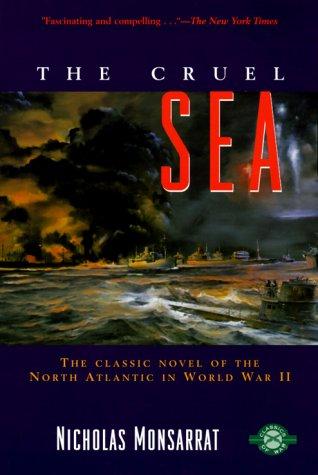
The Battle of the Atlantic as experienced by the crew of a corvette, from 1939 to 1945. Monsarrat served in the Atlantic and wrote the fiction that best captures what convoy escort warfare was — the cold, the fear, the monotony, and the sudden violence. One of the great naval novels in any language. The American Navy reads it. So should you.
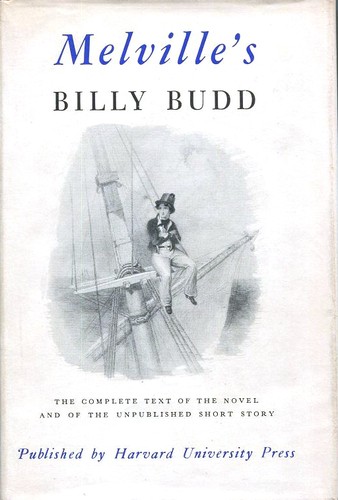
Melville's last word: an innocent sailor, a lie, a blow, and a captain who hangs a good man because the regulation says he must. It's the cleanest gut-punch ever written about the gap between what's just and what's legal aboard a ship. Short enough to read in an afternoon, heavy enough to sit with for years.
The first Aubrey-Maturin novel and the best historical fiction ever written about the age of sail — the seamanship is real, the friendship is real, and O'Brian never dumbs it down for you. Yes, it takes a chapter to find your sea legs in the jargon. Stick with it; twenty books later you'll wish there were more.
Corbett published this analysis of maritime strategy in 1911 — the theoretical complement to Mahan's sea-power history and, arguably, the more practically useful of the two. Where Mahan argued for concentrated battle fleets seeking decisive engagement, Corbett argued that control of maritime communications — sea lanes — is the actual objective of naval strategy, and that this control can be achieved through operations short of decisive fleet engagement. His analysis of the relationship between limited war, maritime blockade, and land power is more applicable to the current strategic environment than Mahan's fleet-concentration doctrine. On the CNO reading list as the second foundational text of naval theory.
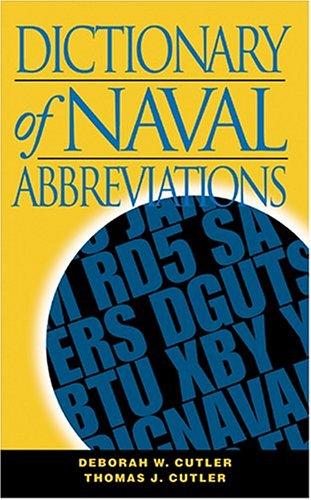
Because the Navy has never met a phrase it wouldn't rather turn into four capital letters. The decoder ring for every message that assumes you already know.
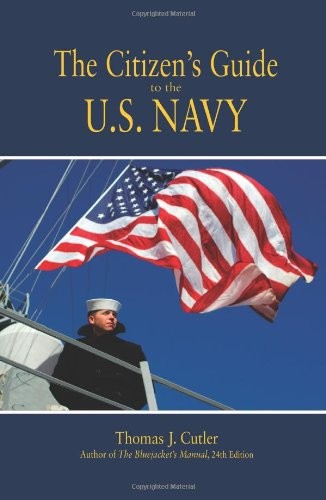
The plain-English orientation to how the Navy is built and why it does things the way it does. Hand it to your parents, your spouse, or the Congressional staffer who keeps getting it wrong.