The Hard Path
The mental-toughness genre is nine parts poster, one part substance — this shelf is the one part. The memoirs of people who actually rebuilt themselves the hard way, the frameworks that survive contact with a real selection course or a real deployment, and the psychology and physiology research that explains why any of it works. We're not here to yell at you about the wolf inside; we're here for the books that hold up when the motivation wears off around week three and what's left is you, the standard, and the gap between them.
Buy links go to Bookshop.org (which supports independent bookstores) and Amazon. Some are affiliate links — if you buy, we earn a small commission at no extra cost to you. As an Amazon Associate we earn from qualifying purchases. It never affects which books are on this list or how we describe them. How this works.

Private notes written by the Roman Emperor and general to himself, never intended for publication. Marcus Aurelius commanded the Danube frontier campaigns against Germanic tribes while writing these Stoic reflections. What makes them militarily relevant: the consistent focus on the things within your control versus the things that are not, the duty to act correctly regardless of outcome, and the discipline of attention in the face of fear, loss, and institutional pressure. Two thousand years of military leaders have returned to these notes for the same reasons. The empire that produced them is gone. The notes are not.
A series of real letters from Greitens — Rhodes Scholar, humanitarian worker, Navy SEAL — to a former teammate who came home to lost purpose, heavy drinking, and a collapsing life. The letters walk through the classical tradition on suffering, purpose, and practice with more depth than the stoic-poster industry usually manages, and the frame keeps it honest: this is one veteran trying to talk another one back from the edge. Full disclosure the book itself can't offer: Greitens' political career later ended in scandal and resignation. Judge the letters on their content. On content, they hold up.
Two SEALs went to Ramadi, came back, and wrote a leadership manual for people who run companies. Slightly cultish. Ruthlessly practical. The principle — every failure is a leadership failure, including the ones that look like someone else's fault — is either the most freeing or most terrifying idea in military leadership depending on what kind of officer you are. Half your chain of command has read it. Half of them didn't change anything. Be the other half.
Duckworth's research argument that sustained passion plus perseverance beats raw talent more often than we admit. The science has taken some fair hits since, and yes it can read like a TED talk with footnotes, but the core is a healthy antidote to the natural-talent myth.

The 'growth mindset' book that launched a thousand PowerPoint slides. The core idea is genuinely useful, that you get better by treating ability as trainable instead of fixed, but the repetition padding it to book length is not. Read the first hundred pages and you've got the whole thing.
Stoicism repackaged for people who'd never pick up Marcus Aurelius: the obstacle isn't in your way, it is the way. It's more of a greatest-hits remix than an original work, but the reframe is a legitimately useful tool for a bad week. Pairs with 'Meditations,' which is the source and shorter.
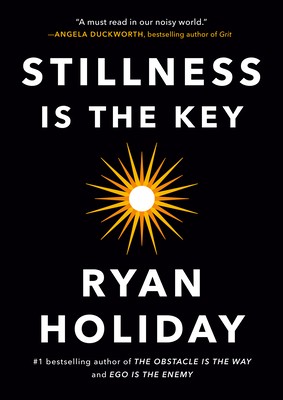
The third of Holiday's Stoic-lite trilogy, this one on slowing down enough to actually think in a job that rewards frantic motion. It's more of the same reframing-with-anecdotes formula, but the message, that stillness is a discipline and not laziness, is one high-tempo military types genuinely need. Short.
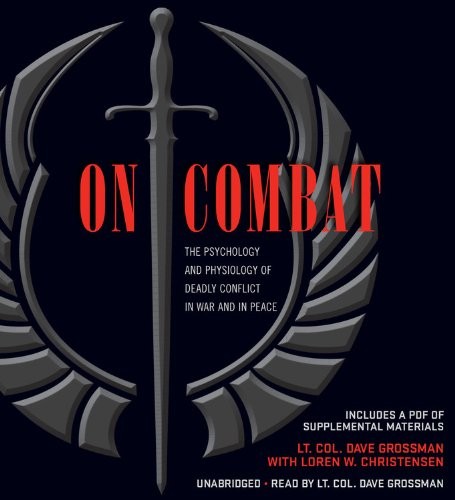
What actually happens to your body and brain when the shooting starts: heart rate through the roof, tunnel vision, the auditory exclusion nobody warned you about. Grossman's follow-up to On Killing explains why trained people freeze and how to train so you don't. Keep the physiology, skip the hype some fans bolt onto it, and it earns its shelf.
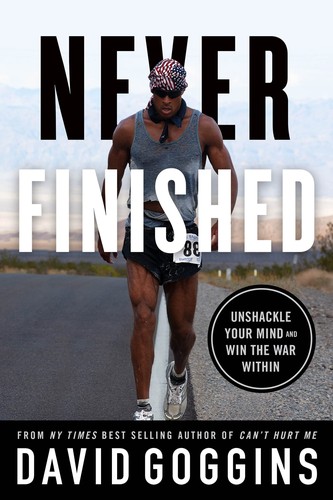
The sequel to Can't Hurt Me, for readers who finished the first one and wanted another lap. Goggins picks up where the origin story ended — more ultras, more self-imposed suffering, more of the internal monologue that made him the patron saint of the 4 a.m. alarm. Honest assessment: it's the same book with new material, and whether that's a criticism depends on whether the first one worked on you. For a lot of people it genuinely did — Goggins is the rare motivation guy whose résumé of misery is real. If Can't Hurt Me got you through a hard season, this refills the tank. If it didn't, this won't.
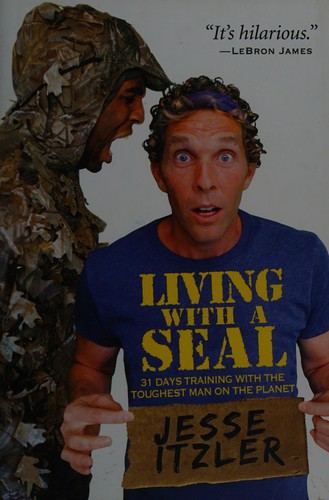
Itzler, a rich entrepreneur gone soft, invited a Navy SEAL to move into his Manhattan apartment for a month and do whatever the SEAL said. The SEAL — unnamed in the book, later revealed to be David Goggins — made him run in a frozen lake, do hundreds of push-ups at midnight, and generally dismantle his assumptions about his own limits. This is the comedy entry on the shelf, and it's genuinely funny, but the payload is serious: watching an ordinary comfortable person discover that the wall is a lot further out than he thought. Read it as the accessible on-ramp to everything else here.

A Navy SEAL who went from broke and 300 pounds to ultramarathons on the theory that you're running at 40% and lying to yourself about the rest. Loud, profane, occasionally exhausting — and the callus-your-mind message lands anyway.

A psychiatrist who survived the death camps and walked out with one finding: they can strip everything from you except how you choose to respond. The most hard-earned book on resilience you'll ever read — no throw-pillow version of these quotes survives contact with the original.
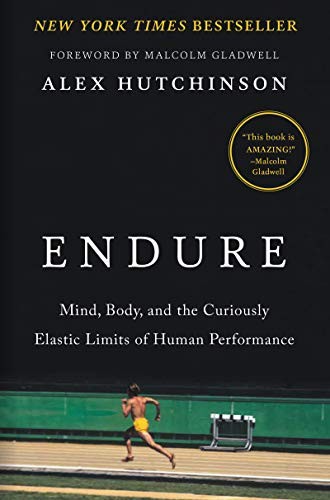
The science book this genre needed. Hutchinson — a physicist turned sports journalist and a former elite runner — spent a decade chasing the question every motivation guru waves at: when your body says it's done, is it actually done? The evidence-backed answer is mostly no; the limit is a negotiation your brain conducts on your behalf, and it low-balls you. Heat, pain, oxygen, fuel, belief — each gets a chapter, each is rigorous, none of it is a poster. If you want the mechanism underneath Goggins' 40% rule instead of the slogan, this is the book. The rare shelf entry with citations.
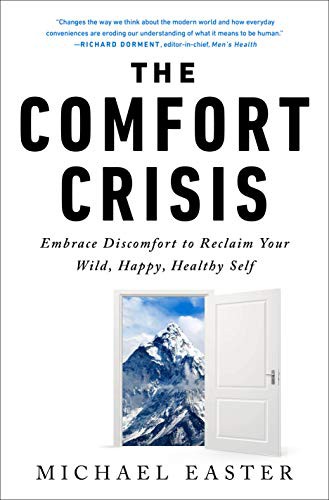
Easter's argument: modern life has engineered away nearly all discomfort, and it's quietly wrecking us — so he frames the book around a brutal month-long caribou hunt in the Alaskan backcountry and reports back on hunger, boredom, cold, and carrying heavy things over bad terrain. It's journalism, not bro-science; he interviews actual researchers and the evidence mostly holds up. For military readers the thesis lands differently, because the military is one of the last institutions that deliberately keeps discomfort in the curriculum. This book explains why that's a feature. One of the best-written entries in a genre not known for prose.

Willink's non-leadership book: no client stories, no business framing, just short declarative bursts about getting up, doing the work, and not negotiating with yourself — formatted like scripture and designed to be opened at random when your discipline flags. The poster-to-substance ratio is real here; there are pages that are essentially typography. But the central mechanism is sound and Willink lived it for twenty years in the SEAL Teams before he sold it: discipline isn't punishment, it's the thing that buys you options. Keep it in reach for the mornings when the longer books feel like homework. That's the use case it was built for.
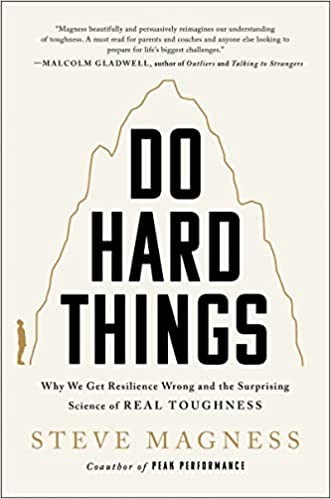
The loyal opposition, shelved deliberately next to the books it's arguing with. Magness — an elite running coach who's seen the wreckage of fake toughness up close — makes the case that the bulldoze-through-everything model gets resilience backwards: real toughness is accurate self-assessment under stress, not performative callousness, and the yell-louder school mostly produces people who hide injuries and break quietly. Anyone who's watched a unit run on bravado until something snapped will recognize every chapter. Read Goggins for the fire, then read this for the engineering. The two books disagree, and the disagreement is where the actual education is.

Pressfield — a former Marine best known for Gates of Fire — wrote this short book about why people don't do the work they know they should, and gave the enemy a name: Resistance, the internal force that manufactures every excuse, distraction, and convenient emergency between you and the hard thing. It was written for blocked writers, but the mechanism is universal; anyone who's watched themselves reorganize a wall locker instead of studying for a board has met Resistance personally. His answer is the most military idea in the genre: turn pro. Show up on schedule, do the work like it's a duty day, and stop waiting to feel like it.

Bassham won Olympic gold in rifle shooting in 1976, then spent decades turning what he learned into a teachable system — and his Mental Management framework has been quietly circulating through competitive marksmanship and military shooting communities ever since. The premise: performance under pressure is a rehearsable skill with components — self-image, mental rehearsal, controlling what you feed your own head — not a personality trait you either have or don't. The prose is plain and the examples are mostly shooting, which for this audience is a feature. The least famous book on this shelf and possibly the most immediately applicable to a qual range.

The whole book compresses into one equation — stress plus rest equals growth — and its value is in taking the second term seriously. Stulberg and Magness pull from sports science, cognitive research, and the training logs of elite performers to argue that the limiting factor for driven people usually isn't effort, it's recovery, and that grinding without rest is just slow-motion quitting. For a military audience marinated in a culture where sleep is negotiable and more is always the answer, this is the useful heresy. Readable, evidence-based, occasionally listicle-flavored. The airport-book packaging undersells how sound the underlying argument is.
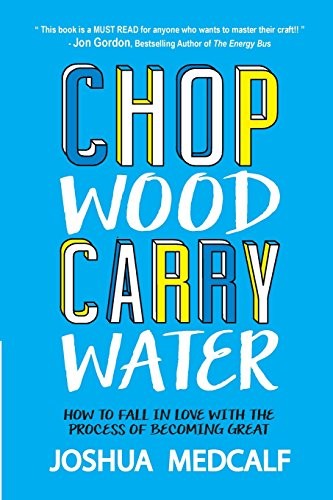
A slim parable about a young man who moves to Japan to become a samurai archer and learns, over years of unglamorous repetition, that the process is the point. It's a fable — simple sentences, a lesson per chapter, readable in an evening — and cynics will bounce off it. But the message maps cleanly onto the first years of a military career, which consist almost entirely of chopping wood and carrying water while you wait to be trusted with the job you signed up for. The person who embraces that stretch outperforms the person who resents it, every time. This book is that argument, in story form, at a length a non-reader will actually finish.
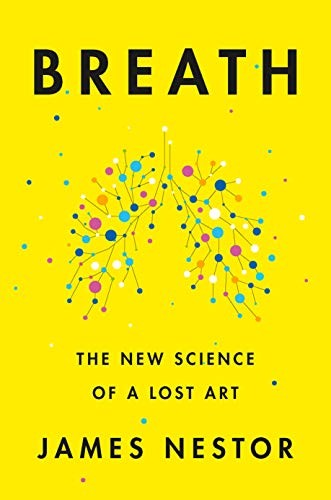
A journalist spends years investigating the one physical skill everyone assumes they already have, and comes back with a case that most of us do it badly enough to matter. The borderline entry on this shelf, admitted for one reason: breath control is the cheapest stress-regulation tool that exists, it's standard teaching in marksmanship and tactical settings for a reason, and Nestor covers the how and the why better than anyone else writing for civilians. Some chapters drift toward the woo — treat the ancient-wisdom detours as scenery. The slow-nasal-breathing core is solid, free, and usable the day you read it.
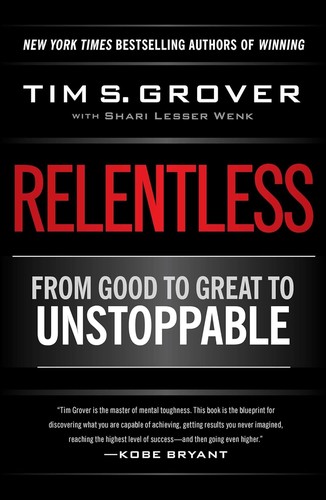
Grover trained Michael Jordan and Kobe Bryant, and this book is his taxonomy of competitors — coolers, closers, and 'cleaners,' the apex predators who take over when everything's on the line. Honest assessment: the poster-to-substance ratio runs high, the tone is relentless self-mythology, and some of the alpha posturing has aged like milk. But underneath the swagger is a real observation from a man who watched the best up close — the elite don't rely on feeling motivated, they've simply removed the option of not performing. Read it fast, keep the observation, leave the persona. Included because the genre isn't complete without it.
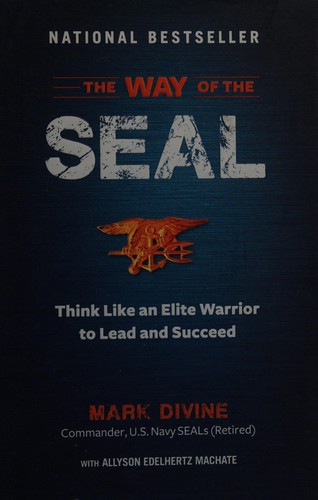
Divine is a retired SEAL commander who built a second career teaching mental-toughness systems to civilians and special-operations candidates, and this is his framework in book form: front-sight focus, box breathing, visualization, feeding the courage wolf. The packaging is heavy on warrior-monk branding and the exercises can read like a seminar workbook, so calibrate expectations. What earns it shelf space is that Divine actually systematizes what most books in this genre only gesture at — concrete drills, done on a schedule, instead of vibes. If you're the type who needs a program rather than a philosophy, this is the entry built like one.