Logistics & the Business of War
Logistics is the unglamorous truth of war: the beans, bullets, fuel, and factories that decide campaigns before the first shot. This shelf covers the supply lines, the wartime economies, and the industrial mobilization that turned strategy into victory — the reason the side that can count usually beats the side that can only shoot.
Buy links go to Bookshop.org (which supports independent bookstores) and Amazon. Some are affiliate links — if you buy, we earn a small commission at no extra cost to you. As an Amazon Associate we earn from qualifying purchases. It never affects which books are on this list or how we describe them. How this works.
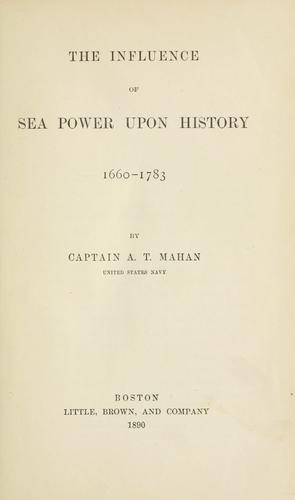
Published in 1890 and read simultaneously by Theodore Roosevelt, Kaiser Wilhelm II, and the Japanese Naval Staff — then used to justify naval buildups across four continents. Mahan's argument is that national greatness follows from sea power, sea power follows from merchant marine and forward bases, and both require naval protection. He was right enough that every great power restructured its fleet around his ideas, contributing to the naval arms race before World War I. Required reading to understand why the Navy exists and what it is supposed to accomplish at the strategic level.
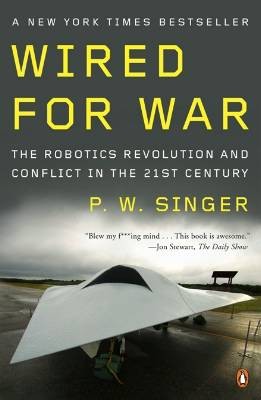
Singer examined the robotics and autonomous systems revolution in warfare — drones, ground robots, autonomous weapons — and the ethical, legal, and strategic questions those systems raise that military institutions were not prepared to answer. Published in 2009, the trends he identified have accelerated beyond his predictions: autonomous systems now operate across all domains, and the questions he raised about accountability, escalation risk, and the changing psychology of remote combat have become operational rather than theoretical. On the Space Force reading list because the domain warfare Space Force is responsible for is increasingly autonomous, and the doctrine to govern it barely exists.

McCain's former staff director explains why America's gold-plated ships and jets could lose to a country that just builds cheaper things that shoot first — the war is won by whoever closes the sensor-to-shooter loop faster, and we've been buying the wrong stuff. A gut-punch about a Pentagon acquisitions system optimized for everything except winning. Not the Cockburn book of the same name — this one's the strategy argument.

The supply chain isn't neutral plumbing — Cowen shows it's a security architecture, born from military logistics and now policing the whole global economy. Sharp, unsettling, and it'll change how you look at a container port. The system that moves everything is also a system that controls it.
Starting a war is easy; ending one on your terms is the part everyone botches. Rose walks America's wars from 1898 to Iraq and finds the same mistake on repeat — no serious plan for the day after victory. Required reading before anyone at the podium says the word 'winning.'
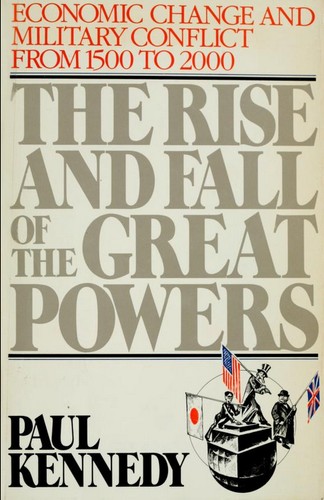
Kennedy's 1987 study of the relationship between economic strength and military power across five centuries — from the Habsburg empire through the Cold War — made the argument that 'imperial overstretch' (the gap between military commitments and the economic base to sustain them) has been the common cause of great power decline. The historical analysis is meticulous; the contemporary application was immediately controversial. On the Army War College and CSA reading lists because the question Kennedy is asking — how long can a dominant power maintain primacy, and what signals that decline has begun — is the question senior American military leaders need frameworks for thinking about.
Miller's history of the semiconductor industry and the geopolitical competition over chip manufacturing that has become the central economic and military contest of the twenty-first century. The argument: whoever controls advanced chip production controls the foundation of all modern military and commercial technology, and the U.S.-Taiwan-South Korea manufacturing ecosystem is both the critical chokepoint of the current world order and its most vulnerable point. The Chinese military's dependence on advanced chips it cannot manufacture is the central vulnerability that explains both Beijing's urgency and its strategy in the Indo-Pacific. The most important single book for understanding why Taiwan matters beyond the abstract principle of democratic solidarity. Pulitzer Prize finalist.
How the United States built its first Navy from nothing. The politics of the early republic, the personalities who demanded a naval force when the country could barely afford one, the ship designs that produced the Constitution and her sisters, and the officers who turned six wooden frigates into the beginning of a global naval tradition. Everything that followed is, in some sense, a footnote to these decisions.
WWII wasn't won by generals giving speeches — it was won by the problem-solvers who figured out how to actually cross the Atlantic, own the sky, and get onto a beach alive. A love letter to the tinkerers who make strategy work.
How American industry out-built the Axis, told through the executives who pulled it off. The unglamorous truth that production and logistics win wars — and a quiet rebuke to anyone who thinks the shooting is the hard part.

China's entire modern project — the obsession with wealth and power after a century of humiliation — told through eleven people who tried to drag the country back to greatness. It's the emotional operating code behind everything Beijing does now. History as motive, not just chronology.
How the Corps went from getting slaughtered on the reef at Tarawa to coordinating naval gunfire that actually worked by Iwo Jima. It's the unglamorous fire-support side of the island war -- targeting, coordination, lessons paid for in blood. Drier than a memoir, but it's the part that decided who lived.

A thousand years of how weapons, money, and armies co-evolved to build and break states. McNeill connects the crossbow, the joint-stock company, and the machine gun into one argument about power. Big-picture history that makes the strategy books make sense.
The unglamorous truth amateurs ignore and professionals obsess over: campaigns live and die on beans, bullets, and boot leather. Van Creveld follows the wagons from Wallenstein to Patton. Read it and you'll never watch a war map the same way.
Ferguson takes a wrecking ball to the received wisdom — Britain didn't have to fight, the war wasn't inevitable, and the economics tell a different story than the poppies. Provocative, argumentative, and worth reading precisely because it'll make you fight back. The contrarian's WWI.
The myth says the Wehrmacht was an unstoppable machine. Tooze does the accounting and shows a Reich that was broke, out-produced, and running on stolen labor and borrowed time from the day it started. Read this and you'll never again believe wars are won by élan instead of GDP.
The uncomfortable truth every logistician already knows: armies don't march on courage, they march on beans, bullets, and boot leather. Lynn's collection traces how supply — not tactics — set the real limits of Western warfare from the ancients to the Gulf. If you move things for a living, this is your history.
DARPA's whole job is to make sure the next war has no technological surprises — for us. Jacobsen tells the story from the H-bomb to autonomous weapons, and it reads like the classified brief the recruiter never mentioned. The gadgets you'll sign for started here.
Keegan takes a flamethrower to the Clausewitz gospel that war is just politics by other means, and argues it's culture first. Sweeping, opinionated, and worth arguing with on every page. A strategy education in one volume.
Four revolutions — gunpowder, industry, the second industrial age, and the information age — and how the militaries that adapted ate the ones that didn't. Boot's point lands hard: the edge is never the weapon, it's who reorganizes around it first. Sobering for anyone betting the next war looks like the last one.
Detroit built a bomber an hour and won the war on the assembly line, and it nearly killed Edsel Ford to do it. Baime shows the ugly, brilliant scramble to turn car plants into the thing that actually beat the Axis. Production was the weapon.
The comfortable story is that free enterprise armed America and won WWII. Wilson pulls the receipts and shows how much of the arsenal came from government itself — and how business spent the postwar years rewriting who got the credit. The best history of where the military-industrial complex actually came from.
Overy dismantles the tidy Blitzkrieg legend and shows a German war economy that was improvised, mismanaged, and never actually mobilized the way the myth claims. Dense, but it's the primary-source spine under every serious argument about how the Nazis really fought. Economics as autopsy.
The hard case that a lot of Western corporations did just fine under the Reich — and kept doing business well past the point of decency. Pauwels names names and swings hard. Read it as the counterweight to any story that treats industry as an innocent bystander to fascism.
Wars run on oil, and Yergin's Pulitzer winner is the definitive history of the stuff and the power it buys. A century of empires, coups, and campaigns decided by who controlled the tap. If you want to understand why the map looks the way it does, start with the fuel.
One boring steel box — the shipping container — remade the global economy and, quietly, military logistics with it. Levinson's history of containerization is the best explanation of how the modern world learned to move anything anywhere cheap. Unglamorous and completely essential.
A century of American weapons — from the machine gun to the smart bomb — and the engineers, salesmen, and generals who built the killing business. Coffey is clear-eyed about the moral tradeoffs nobody in the procurement briefing wants to name out loud. The tools of the trade, with the price tag showing.
Victory in WWII wasn't inevitable, and Overy refuses to let you pretend it was. He builds the case on production, technology, and organization — the boring stuff that actually decides wars — over the myths of destiny and morale. The honest answer to 'how did they really win.'
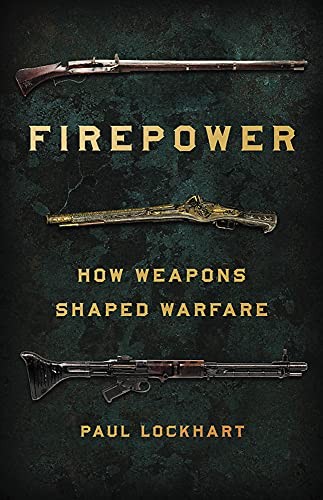
Five centuries of how the weapon in your hands got made, and how each leap rewired armies, states, and the men who carried them. Lockhart connects the forge to the battlefield without ever losing the human on the trigger. The story of the tools, told by someone who respects the people who use them.
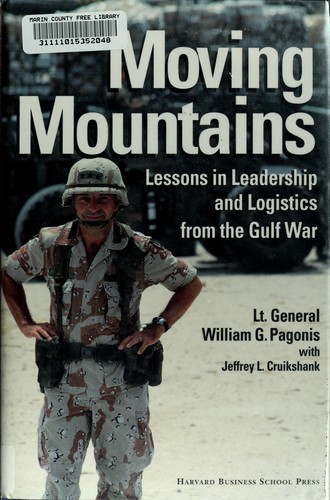
The three-star who ran the Gulf War's logistics tells you how you move a half-million troops and their gear across the planet and keep them fed, fueled, and armed. Part memoir, part master class in the unglamorous work that actually wins. The guys with the rifles get the movies; Pagonis got them there.
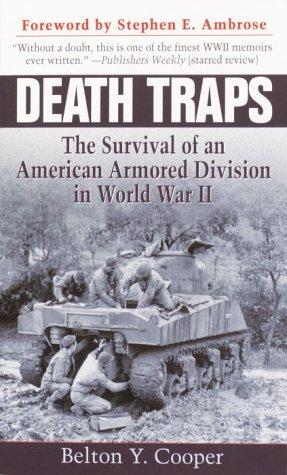
Cooper spent WWII as a maintenance officer recovering shot-up Shermans, and he counted the dead crews. His charge — that the brass sent GIs into a tank they knew was outgunned — is contested by historians, but nobody tells the recovery-and-repair side of the war like this. Glory from the maintainer's grease pit.

The 1921 book that told every air force it could win wars alone by bombing the enemy's cities and skipping the bloody ground slog. Douhet got a lot wrong, but every airpower argument since is basically a fight with his ghost. Read the source before you quote the theory.