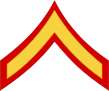
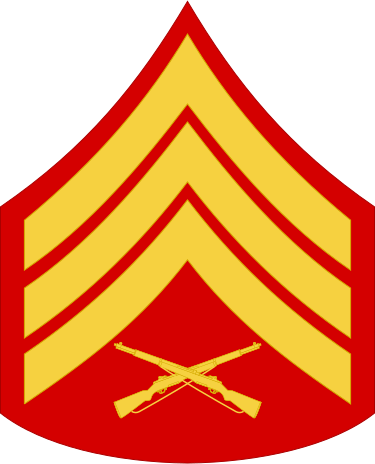
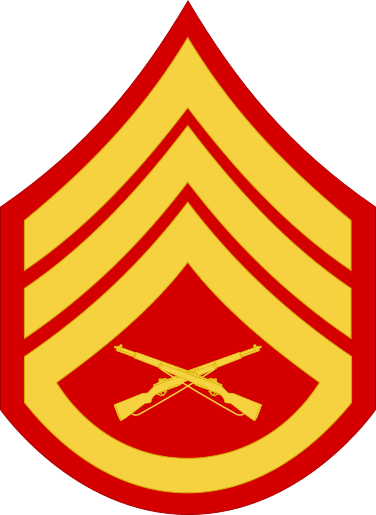
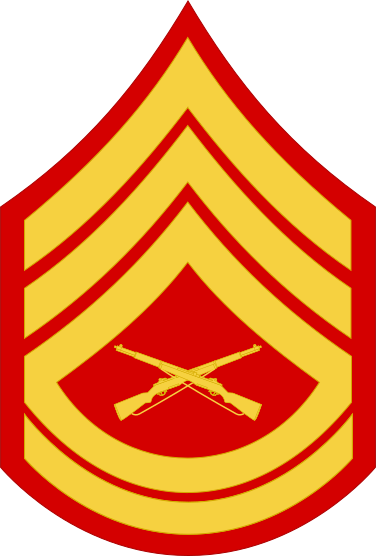
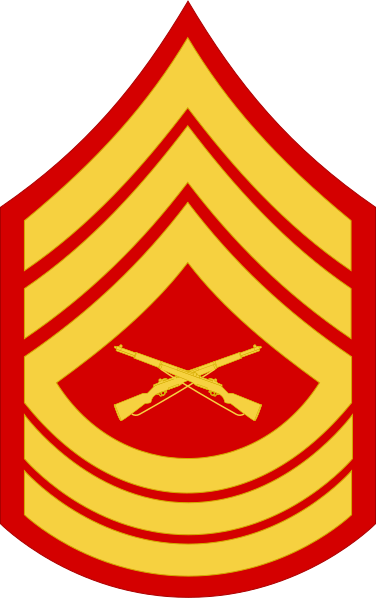
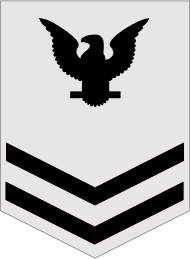
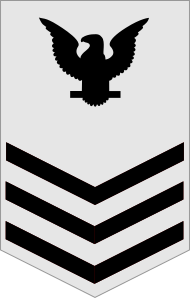
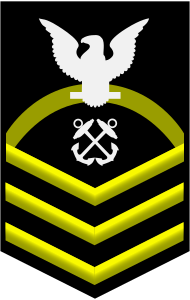
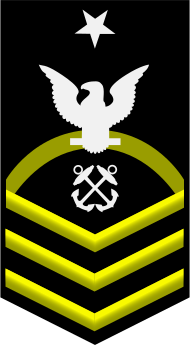
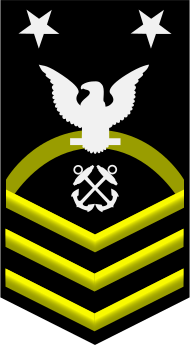
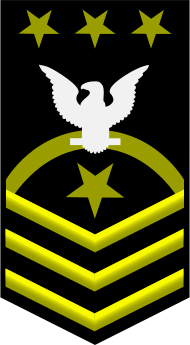
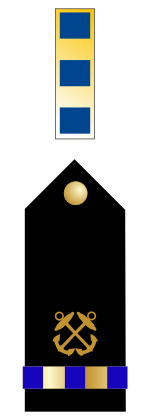
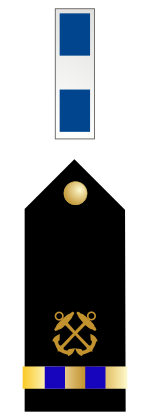
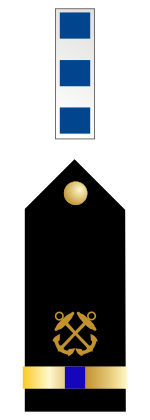
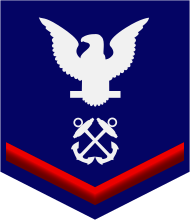
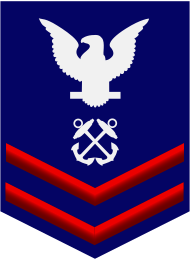
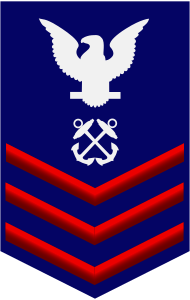
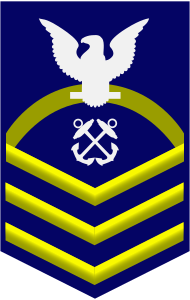
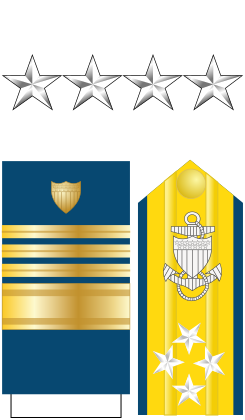
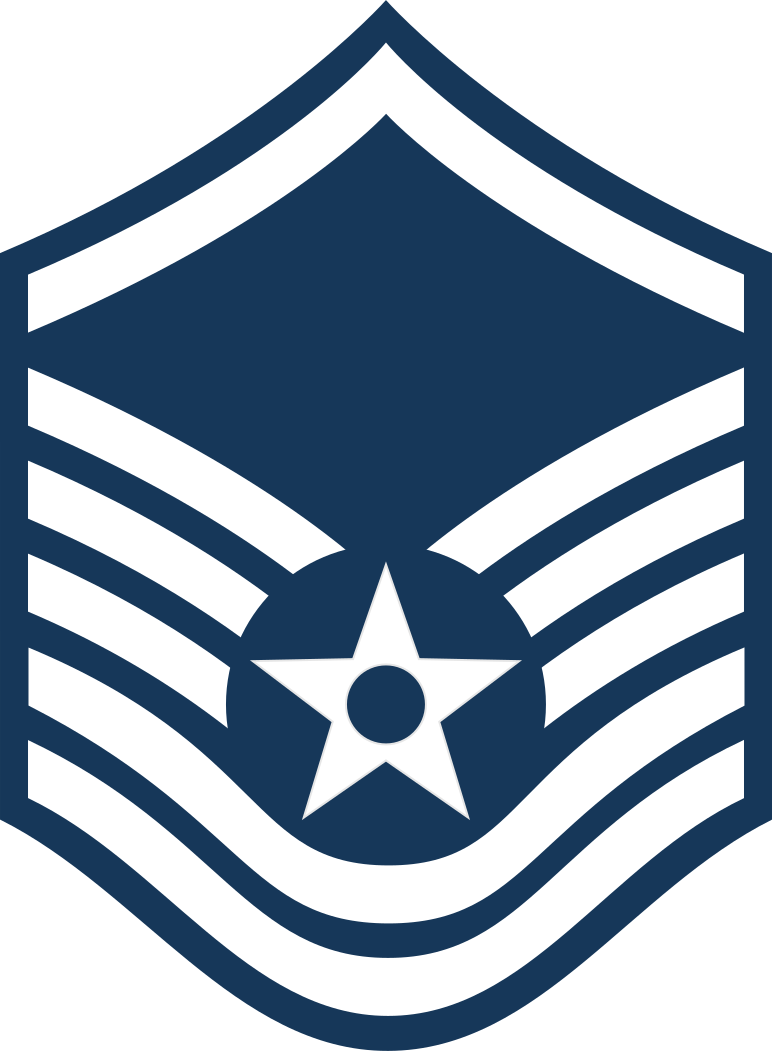
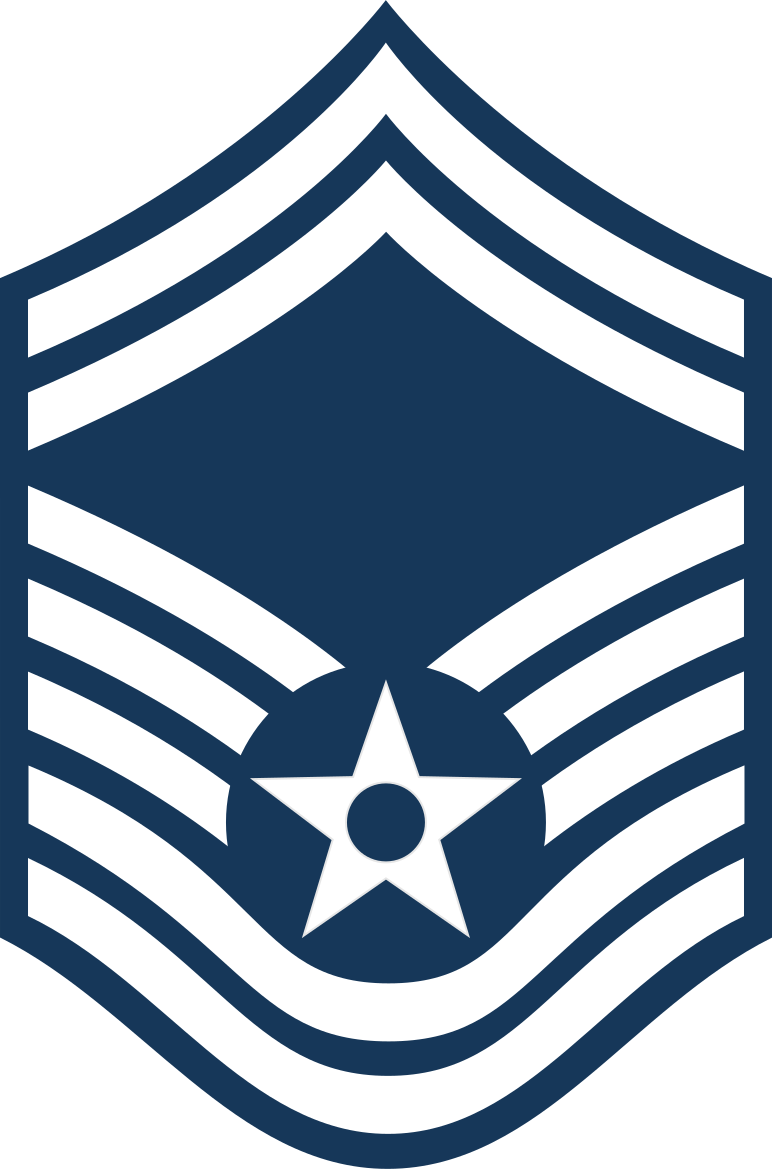
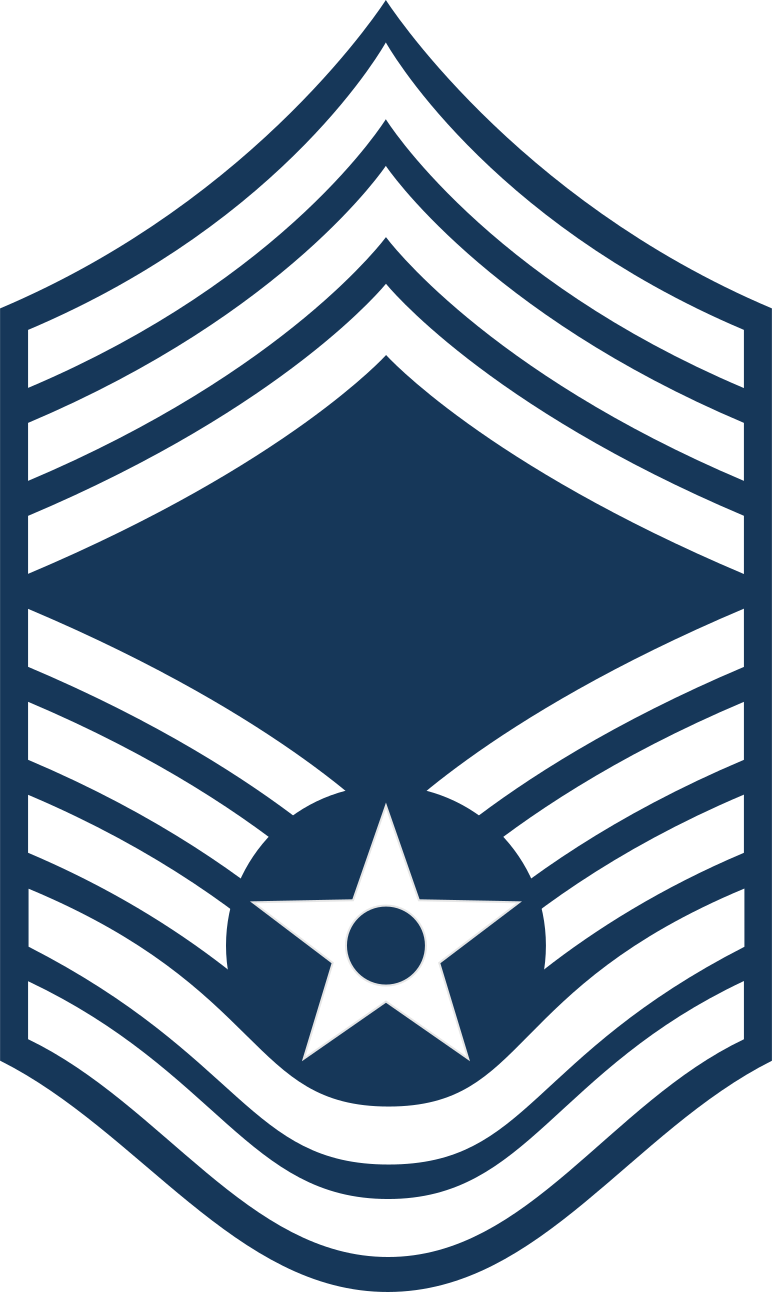
A chevron is an angled stripe. In all US services that use them, chevrons point UP. The number of chevrons grows with seniority. Army and Marines stack them. Air Force inverts the visual arc (chevron on top of stripes). Marine chevrons have crossed rifles inside them at NCO grades — a Marine touch the other services do not share.
Every Military Rank Insignia, all 6 branches. Decoded.
Chevrons that point up. Stripes that wrap a sleeve. Bars that flip from gold to silver. Oak leaves that become eagles that become stars. The US military uses six different visual languages to encode the same pay grades — and once you can read them, you can read a uniform across a room. This is the visual companion to our four branch-specific rank pages: how to decode every insignia, what each one signals, and where it is worn.
Insignia descriptions reflect current US military uniform regulations: AR 670-1 (Army), MCO 1020.34 (Marines), NAVPERS 15665 (Navy), COMDTINST M1020.6 (Coast Guard), AFI 36-2903 (Air Force), and Space Force uniform guidance. Glyphs are text approximations of visual devices — they are not the regulation graphics. For official imagery, consult the cited regulation or the branch's personnel command website.
How to read US military insignia
Thirteen symbols make up almost everything you will ever see on a US military uniform. Once you know what each one signals, you can read a rank chart from any branch.
A rocker is a curved arc that sits beneath the chevrons. One, two, or three rockers signal increasing seniority among senior NCOs (E-6 through E-9). In the Army, Sergeant Major is three chevrons over three rockers with a star in the middle.
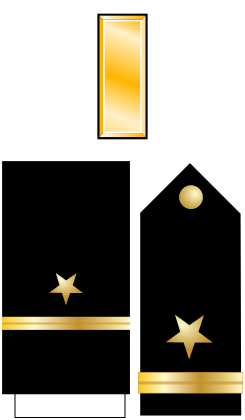
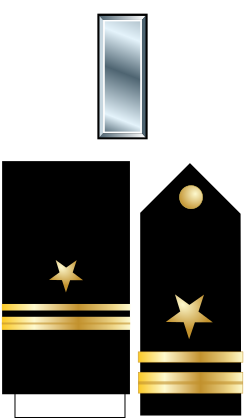
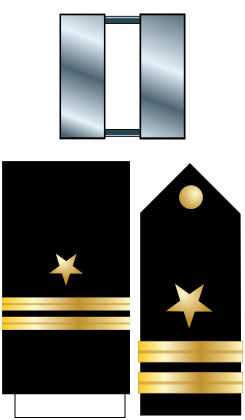
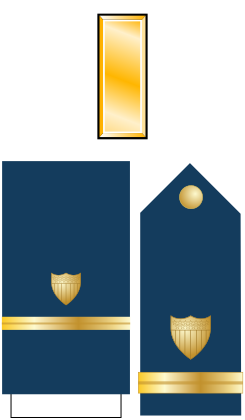
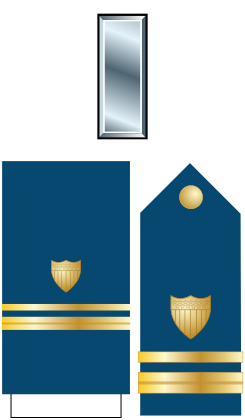
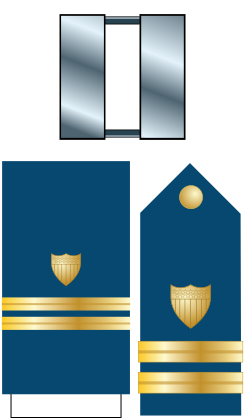
A flat rectangular pin. Gold bar = O-1 (most junior — Second Lieutenant or Ensign). Silver bar = O-2 (First Lieutenant or Lieutenant Junior Grade). Two silver bars side by side = O-3 (Captain or Lieutenant). The "gold is junior, silver is senior" inversion confuses every civilian — silver outranks gold in officer insignia, the opposite of most medal hierarchies.
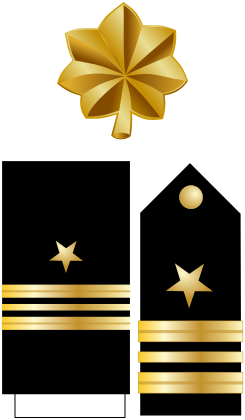
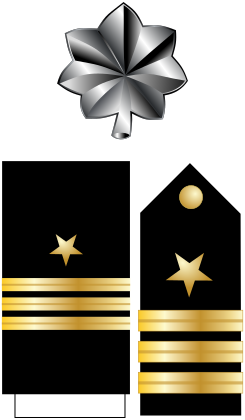
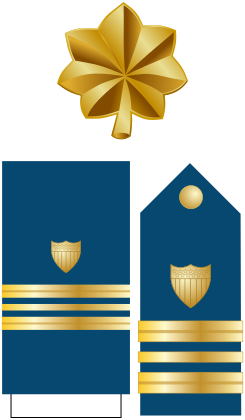
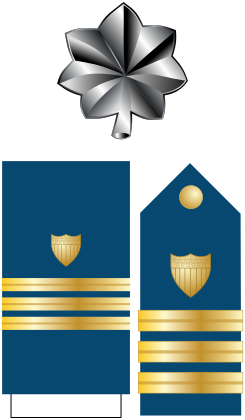
A small embossed oak leaf cluster. Gold oak leaf = O-4 (Major or Lieutenant Commander). Silver oak leaf = O-5 (Lieutenant Colonel or Commander). Again, silver outranks gold. The leaf comes from European heraldry and has been on US officer insignia since 1832.

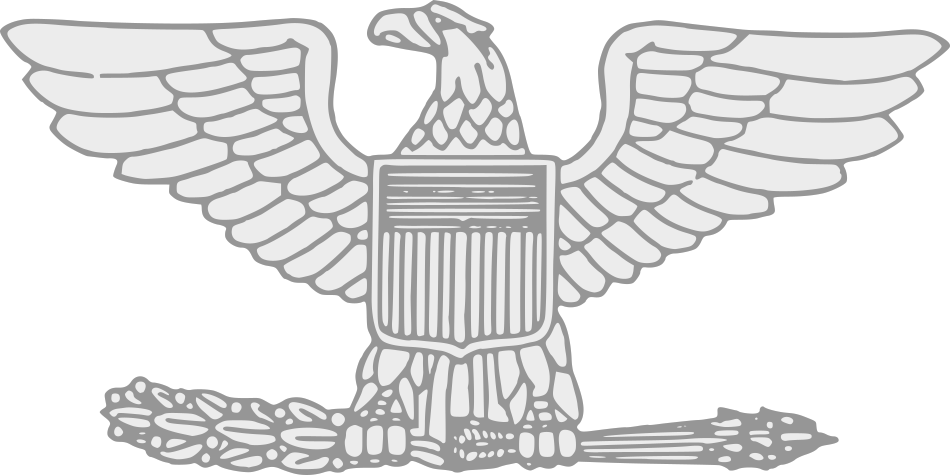
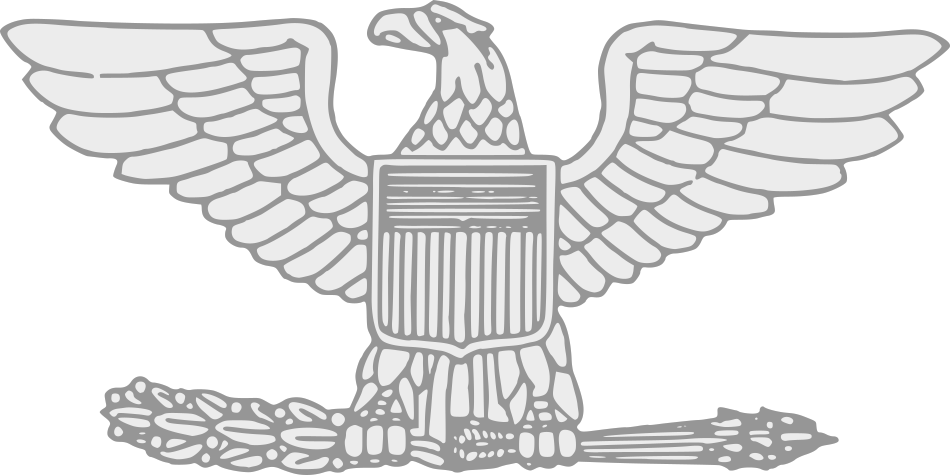
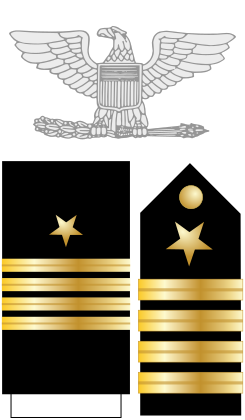
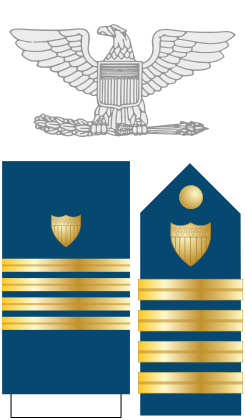
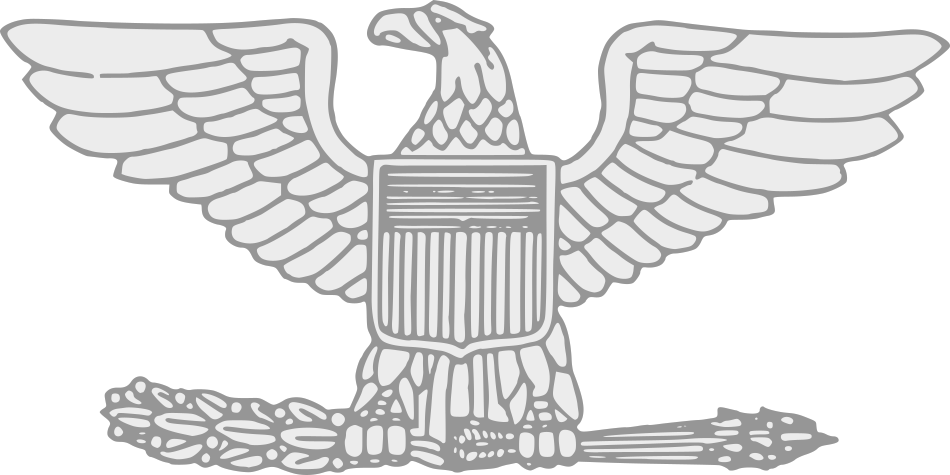
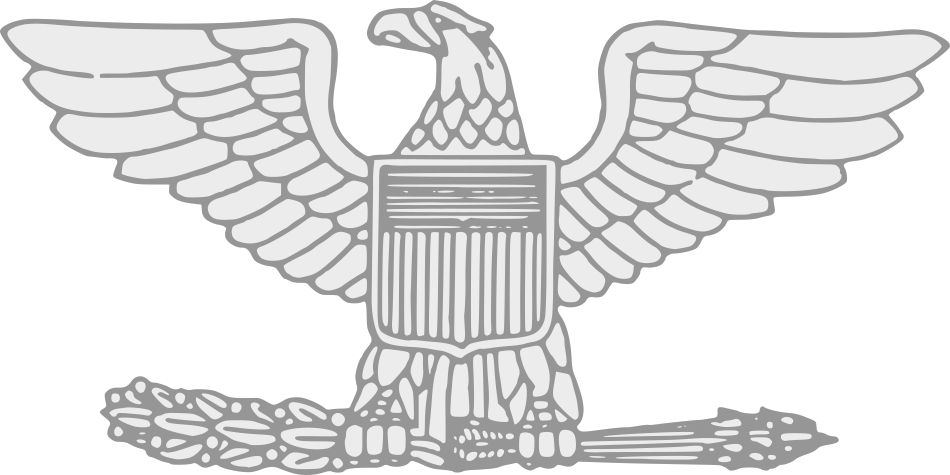
A silver eagle, wings spread, clutching arrows and an olive branch. Nicknamed "the bird" or "full bird" to distinguish a Colonel from a Lt. Colonel. The same insignia is worn by all O-6 grades across all branches.
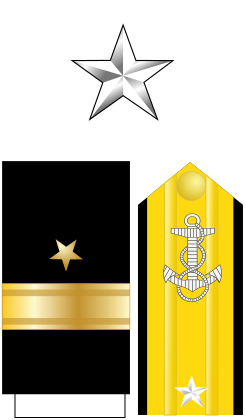
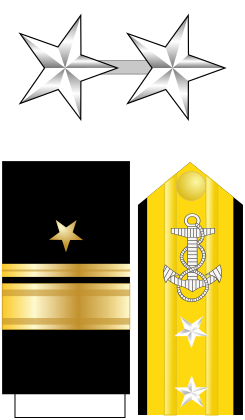
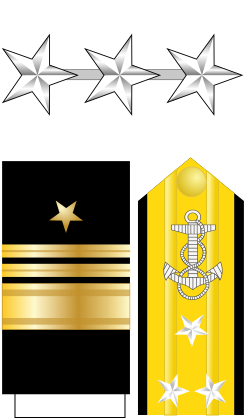
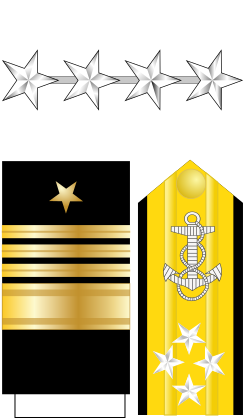
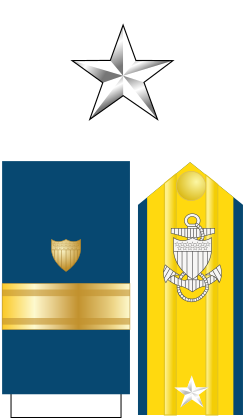
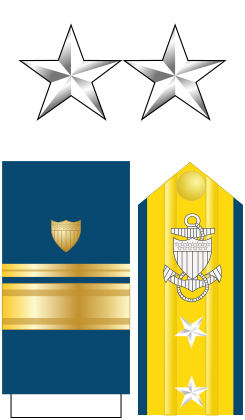
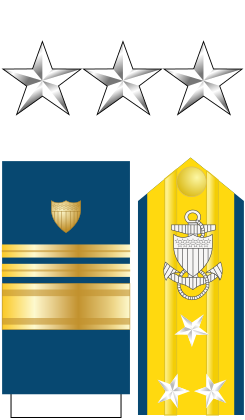
One star = Brigadier General / Rear Admiral (lower half). Two = Major General / Rear Admiral (upper half). Three = Lieutenant General / Vice Admiral. Four = General / Admiral. Five-star ranks (General of the Army, Fleet Admiral) exist only in wartime authorization and have not been awarded since 1950.
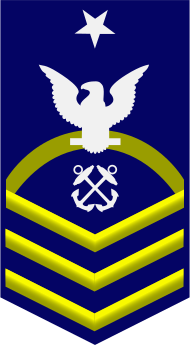
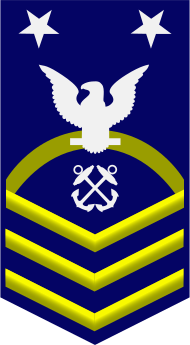
The "fouled anchor" — an anchor with a chain or rope wrapped around it. Earning the anchor (becoming a CPO) is one of the most distinctive cultural transitions in the US military. Stars stack above the anchor for Senior Chief (1 star) and Master Chief (2 stars). The Navy officer cover (cap) device is also a fouled anchor on a shield with an eagle.
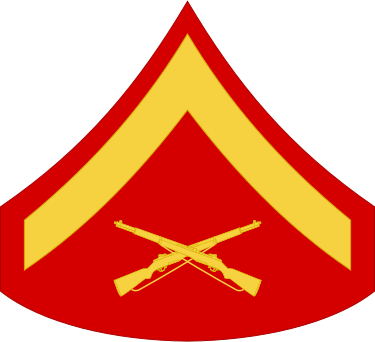
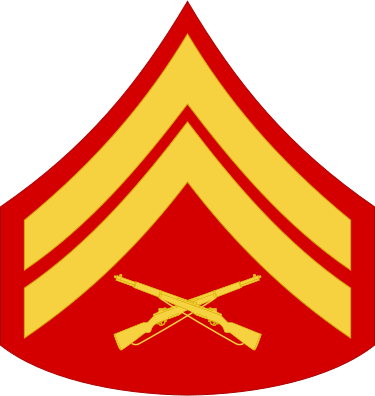
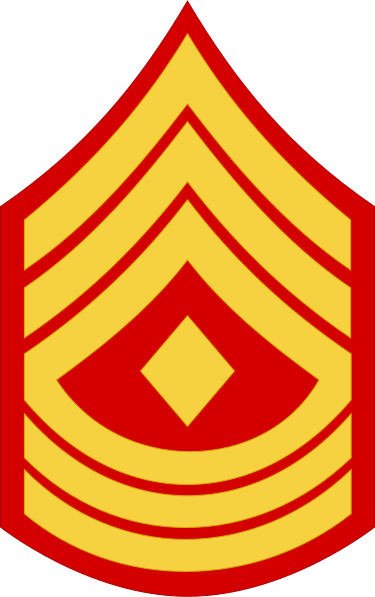
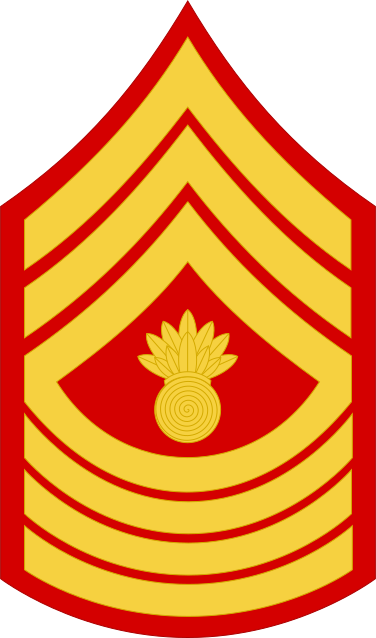
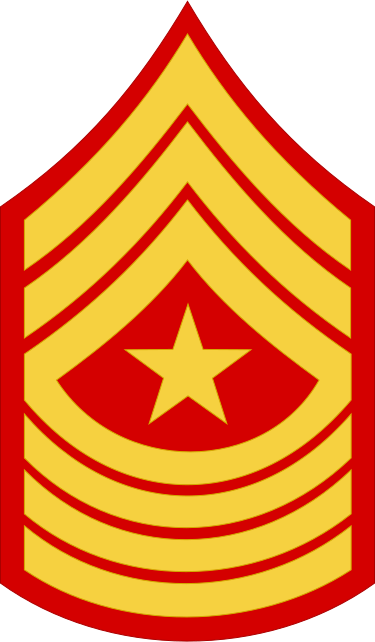
Marine chevrons from Corporal (E-4) through Sergeant Major (E-9) display two crossed M1 Garand-pattern rifles in the chevron field. Marines wear rifles on their rank, every day, as a reminder that every Marine is a rifleman.
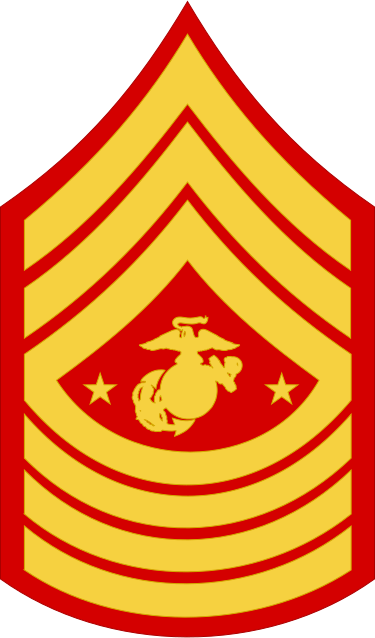
The EGA appears on Marine officer rank insignia at certain points and is the universal symbol of the Marine Corps. The eagle = service to the nation. The globe = global commitment. The anchor = naval heritage. Earned at the end of Marine boot camp.
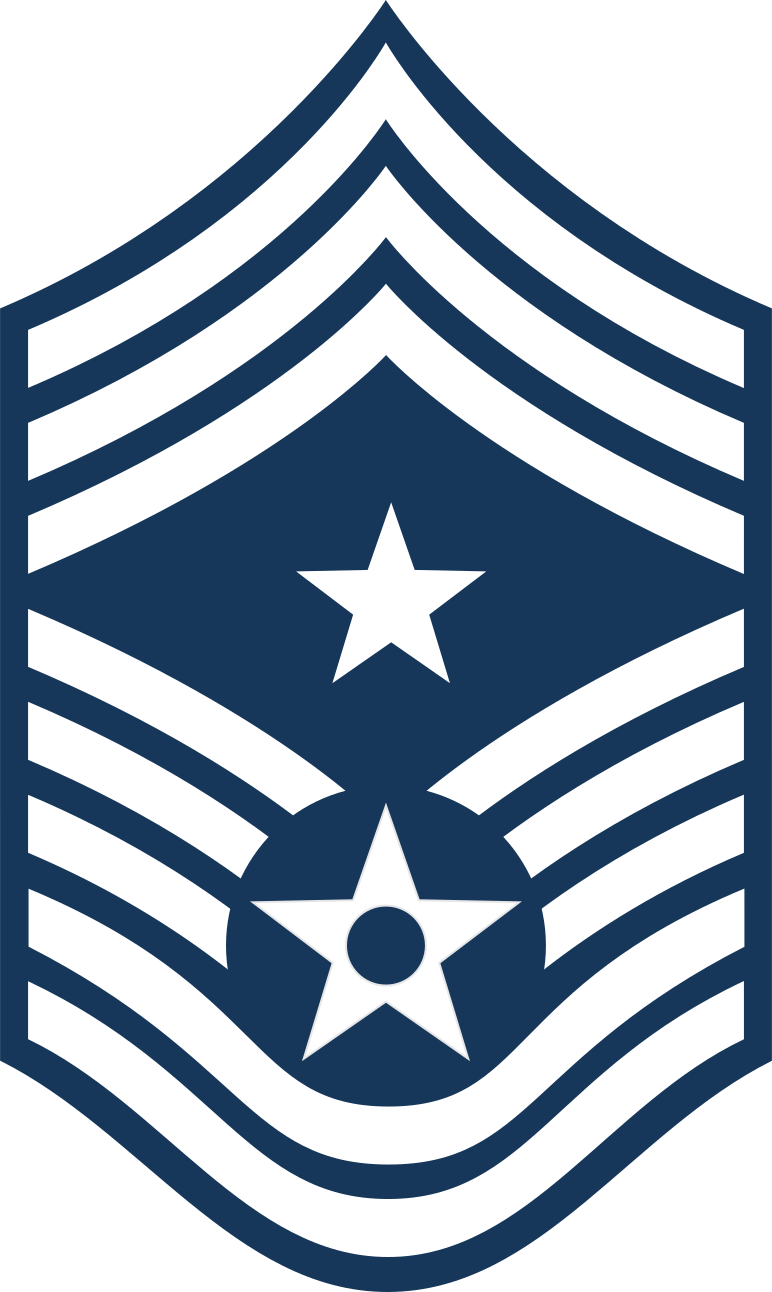
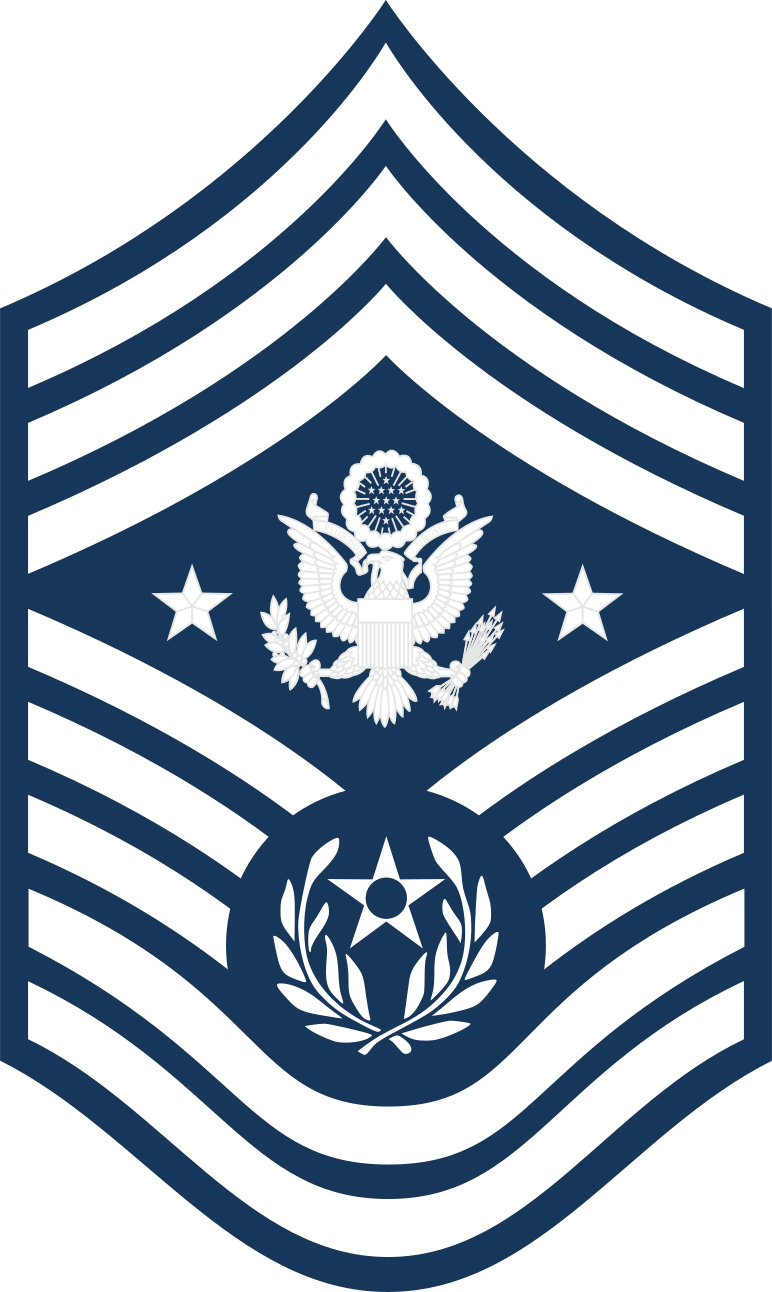
The Air Force enlisted chevron is unique. Instead of stacking up, the insignia is shaped like a stylized arc with a "Hap Arnold" star at the top (a five-pointed star inside a circle, honoring General Henry "Hap" Arnold, the first General of the Air Force). Stripes radiate downward from it.
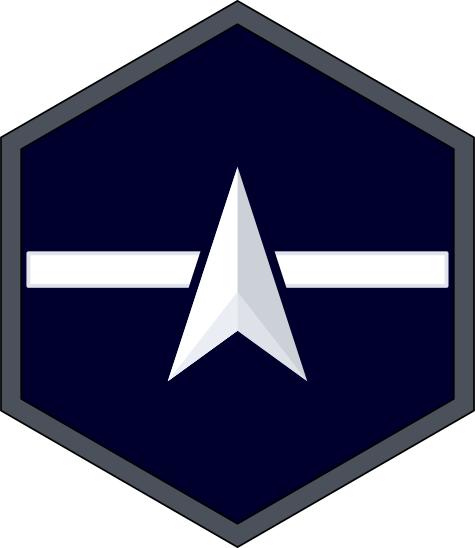
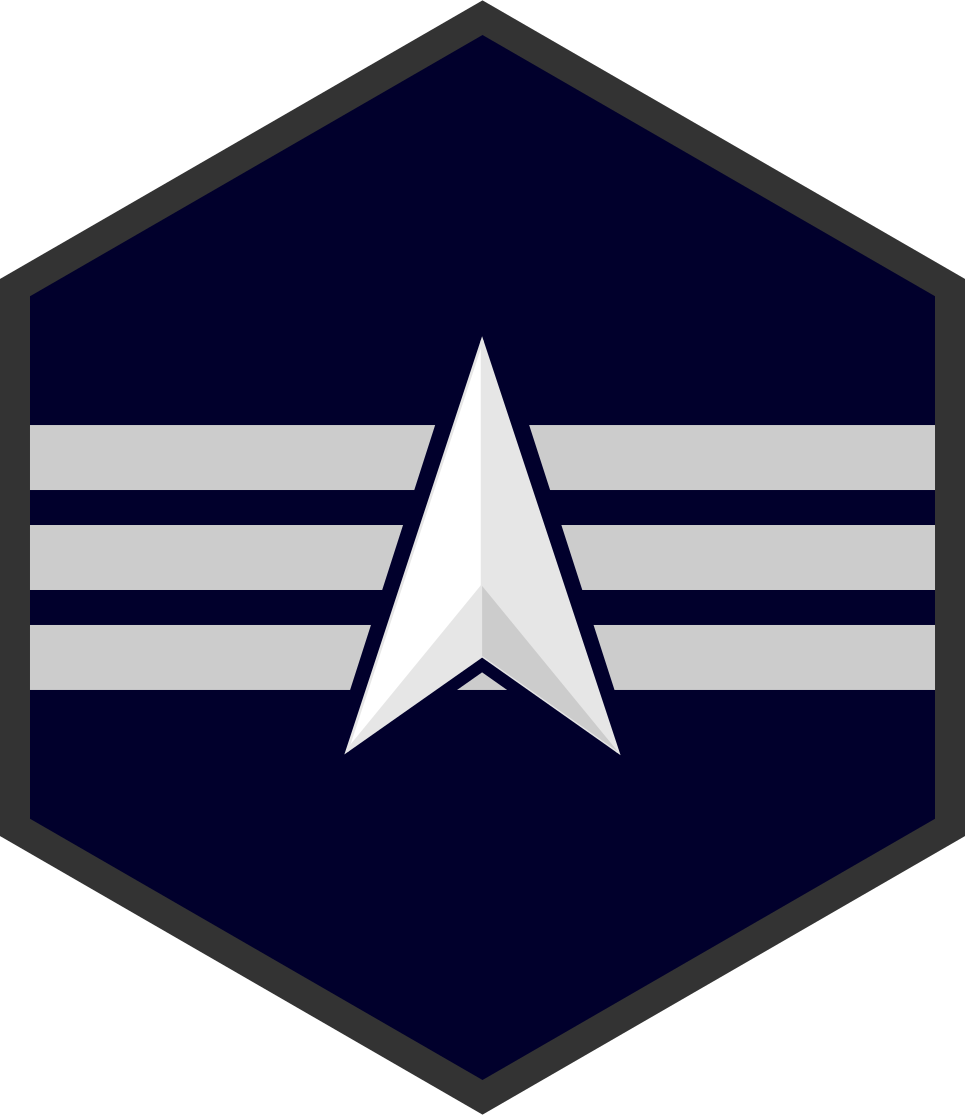
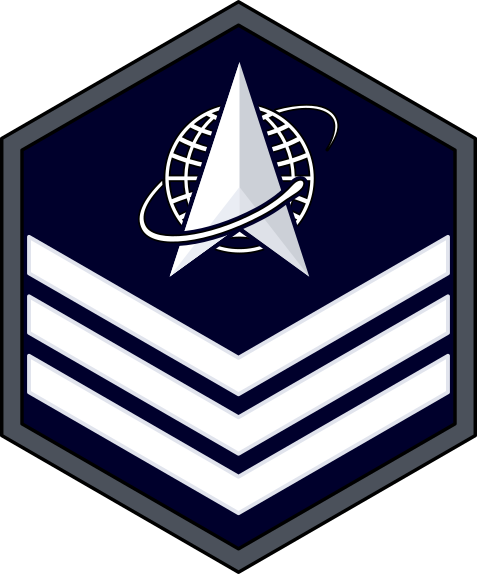
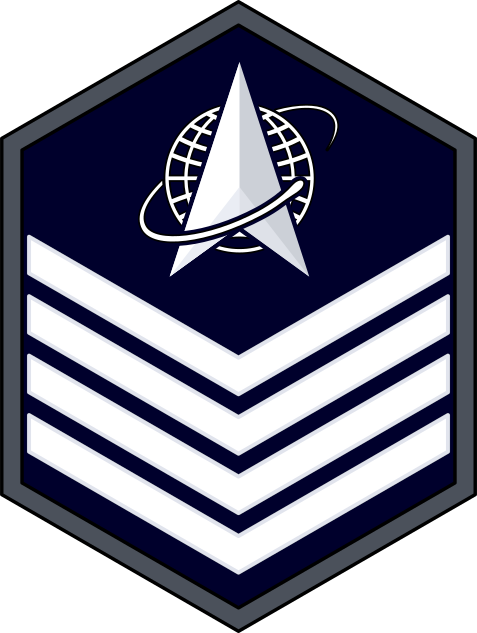
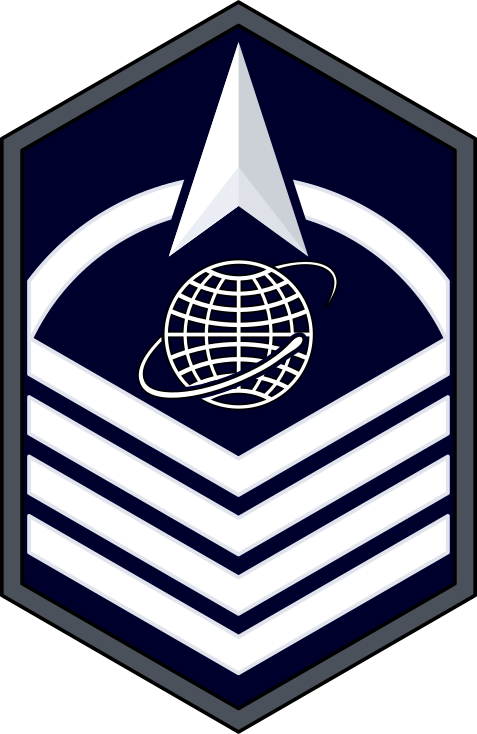
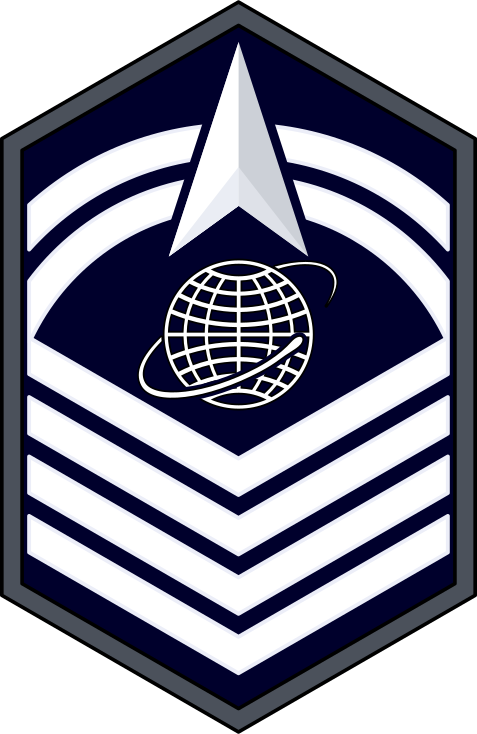
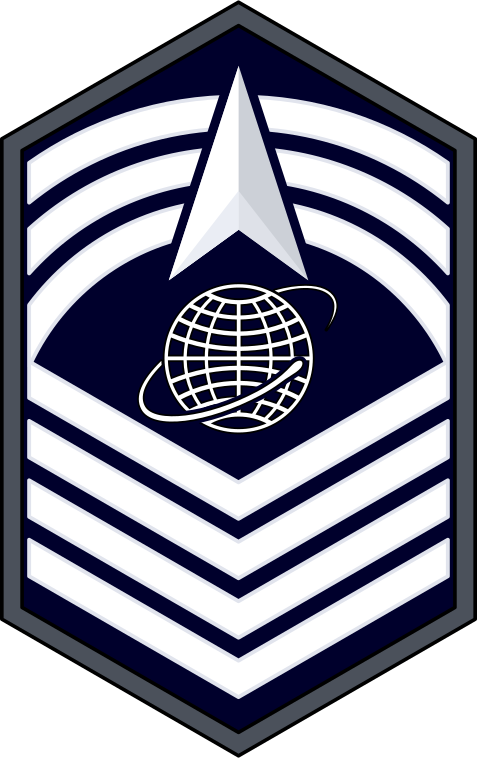
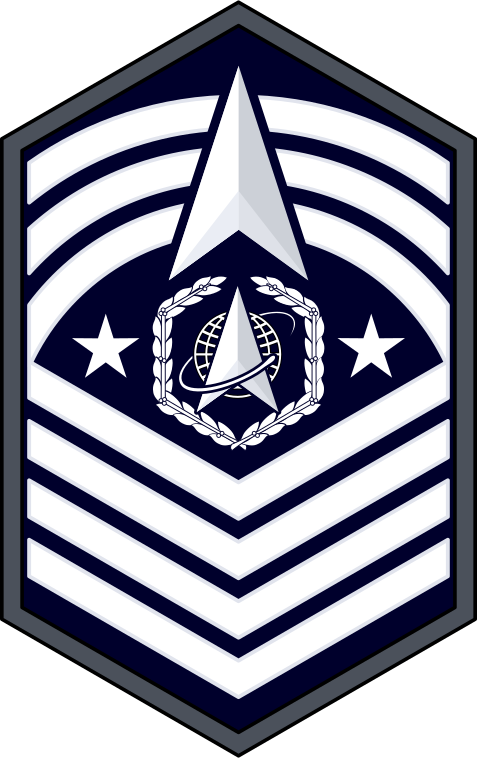
The delta shape — a stylized arrowhead pointing skyward — is the core Space Force identity. It appears in the service emblem and several rank devices. Space Force is also the only US branch where E-1 has no insignia at all and where the enlisted titles include "Specialist" through E-4.
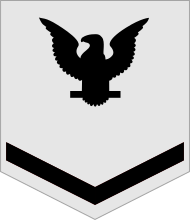
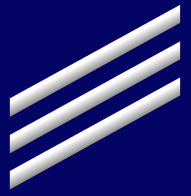
Junior Sailors (E-2 and E-3) wear diagonal stripes on the left sleeve of their dress uniform. The color of the stripe historically indicated the "group rate" community: white for general, red for aviation/engineering on dress blues, blue for dress whites, green for construction (Seabees). Stripes are diagonal — different from the chevrons used by the other branches.
Navy and Coast Guard officers wear gold sleeve stripes on their service dress blue jacket. The width and number of stripes encode rank: a single 1/2" stripe for Ensign (O-1), four 1/2" stripes for Captain (O-6), one 2" stripe for flag officers. Stripes were borrowed from Royal Navy convention in the 19th century.
US Army
Chevrons up. Rockers under. Stars and wreaths and diamonds at the top. The Army rank system has been refined since 1775; the modern E-1-to-O-10 structure dates to the post-WWII reorganization of the Armed Forces.
| Grade | Rank | Abbr | Insignia | Description | Worn |
|---|---|---|---|---|---|
| E-1 | Private | PVT | No insignia | No insignia. Blank collar / blank rank tab. | Nothing on the OCP rank tab; blank epaulet on dress uniform. |
| E-2 | Private Second Class | PV2 | One chevron, point up. | Subdued chevron centered on OCP velcro rank tab. Dress: gold chevron on green. | |
| E-3 | Private First Class | PFC | One chevron over one rocker. | OCP center-chest tab. Dress: gold chevron + rocker. | |
| E-4 | Specialist | SPC | Eagle inside a shield ("the SPC bird"). Not a chevron at all. | Distinct shield-and-eagle device worn the same place as chevrons. The "SPC patch" is the only Army enlisted rank that is not a chevron. | |
| E-4 | Corporal | CPL | Two chevrons. Same pay grade as SPC but NCO status. | OCP / dress. Same E-4 pay but earns "Sergeant" courtesy and NCO authority. | |
| E-5 | Sergeant | SGT | Three chevrons. | OCP rank tab. The first "buck sergeant" rank — the foundational NCO grade. | |
| E-6 | Staff Sergeant | SSG | Three chevrons over one rocker. | OCP / dress. Squad leader / section sergeant grade. | |
| E-7 | Sergeant First Class | SFC | Three chevrons over two rockers. | OCP / dress. Platoon Sergeant rank. | |
| E-8 | Master Sergeant | MSG | Three chevrons over three rockers (no star). | OCP / dress. Staff NCO — typically in staff sections, not direct troop leader. | |
| E-8 | First Sergeant | 1SG | Three chevrons + three rockers with a diamond (lozenge) in the middle. | Same OCP placement as MSG. The diamond marks command-team responsibility for a company. | |
| E-9 | Sergeant Major | SGM | Three chevrons + three rockers with a star in the middle. | OCP / dress. Staff E-9; star in the center of the device. | |
| E-9 | Command Sergeant Major | CSM | Three chevrons + three rockers with a star inside a wreath. | OCP / dress. The wreath denotes formation Command Sergeant Major — the senior NCO of a battalion, brigade, or higher. | |
| E-9 | Sergeant Major of the Army | SMA | Three chevrons + three rockers + the US coat of arms between two stars. | Only one Soldier wears this at a time. The senior enlisted advisor to the Army Chief of Staff. | |
| W-1 | Warrant Officer 1 | WO1 | Silver bar with one black square. | Collar and shoulder. Appointed by warrant of the Secretary of the Army. | |
| W-2 | Chief Warrant Officer 2 | CW2 | Silver bar with two black squares. | Collar / shoulder. The first commissioned warrant grade. | |
| W-3 | Chief Warrant Officer 3 | CW3 | Silver bar with three black squares. | Collar / shoulder. | |
| W-4 | Chief Warrant Officer 4 | CW4 | Silver bar with four black squares. | Collar / shoulder. | |
| W-5 | Chief Warrant Officer 5 | CW5 | Silver bar with one continuous black stripe down the length. | Collar / shoulder. The Army-wide warrant institution rank. | |
| O-1 | Second Lieutenant | 2LT | One gold bar. | Collar (right side), shoulder loops on dress greens, embroidered on patrol cap. | |
| O-2 | First Lieutenant | 1LT | One silver bar. | Same positions as 2LT. Silver outranks gold. | |
| O-3 | Captain | CPT | Two silver bars ("railroad tracks"). | Collar, shoulder, patrol cap. Most company commanders are O-3s. | |
| O-4 | Major | MAJ | One gold oak leaf. | Field grade. Typically battalion staff or executive officer. | |
| O-5 | Lieutenant Colonel | LTC | One silver oak leaf. | Battalion command grade. | |
| O-6 | Colonel | COL | Silver eagle ("full bird"). | Brigade command grade. Wings spread, head turned to the eagle's own right. | |
| O-7 | Brigadier General | BG | One silver star. | Collar / shoulder / cap. First flag officer rank. | |
| O-8 | Major General | MG | Two silver stars. | Division commander grade. | |
| O-9 | Lieutenant General | LTG | Three silver stars. | Corps commander grade. | |
| O-10 | General | GEN | Four silver stars. | Army Chief of Staff, combatant commanders. Fewer than 12 active at any time. |
US Marine Corps
Marine chevrons carry crossed rifles from E-4 (Corporal) all the way to E-9 — a daily declaration that every Marine is a rifleman, regardless of MOS. Officer insignia mirrors Army convention; enlisted insignia is uniquely Marine.
| Grade | Rank | Abbr | Insignia | Description | Worn |
|---|---|---|---|---|---|
| E-1 | Private | Pvt | No insignia | No insignia. Blank collar. | No rank device on cammies or service uniform. |
| E-2 | Private First Class | PFC | One chevron. | Collar (cammies) / shoulder (dress). | |
| E-3 | Lance Corporal | LCpl | One chevron with crossed rifles below. | The first appearance of the iconic crossed rifles. "Lance" comes from "lance-corporal," a medieval substitute for an absent corporal. | |
| E-4 | Corporal | Cpl | Two chevrons with crossed rifles. | First NCO grade in the Marines. The chevron field carries rifles from here up to E-9. | |
| E-5 | Sergeant | Sgt | Three chevrons with crossed rifles. | Squad leader grade. | |
| E-6 | Staff Sergeant | SSgt | Three chevrons over one rocker, with crossed rifles. | Staff NCO. Section leader grade. | |
| E-7 | Gunnery Sergeant | GySgt | Three chevrons over two rockers, with crossed rifles. | The legendary "Gunny." Platoon Sergeant or company gunny grade. | |
| E-8 | Master Sergeant | MSgt | Three chevrons over three rockers, with crossed rifles. | Technical track Staff NCO. | |
| E-8 | First Sergeant | 1stSgt | Three chevrons over three rockers with a diamond in the middle (no rifles in the standard device — the diamond replaces them). | Command track Staff NCO. Senior enlisted in a company. | |
| E-9 | Master Gunnery Sergeant | MGySgt | Three chevrons + three rockers with a bursting bomb in the middle. | "Master Guns." Technical track senior enlisted. | |
| E-9 | Sergeant Major | SgtMaj | Three chevrons + three rockers with a star in the middle. | Command track senior enlisted. Battalion / regiment / division SgtMaj. | |
| E-9 | Sergeant Major of the Marine Corps | SgtMajMC | SgtMaj device with an Eagle, Globe, and Anchor element added. | Only one Marine wears this at a time. Senior enlisted advisor to the Commandant. | |
| W-1 | Warrant Officer 1 | WO | Silver bar with two red enamel squares. | Collar / shoulder. | |
| W-2 | Chief Warrant Officer 2 | CWO2 | Silver bar with three red enamel squares. | Collar / shoulder. | |
| W-3 | Chief Warrant Officer 3 | CWO3 | Silver bar — Marine warrant insignia uses red squares progressively. Pattern differs slightly from Army. | Collar / shoulder. | |
| W-4 | Chief Warrant Officer 4 | CWO4 | Silver bar with three red enamel squares aligned differently from CWO2. | Collar / shoulder. | |
| W-5 | Chief Warrant Officer 5 | CWO5 | Silver bar with a red stripe down the length. | Marine institutional warrant grade. | |
| O-1 | Second Lieutenant | 2ndLt | One gold bar. | Collar / shoulder loops. | |
| O-2 | First Lieutenant | 1stLt | One silver bar. | Same locations. Silver outranks gold. | |
| O-3 | Captain | Capt | Two silver bars. | Company commander grade. | |
| O-4 | Major | Maj | One gold oak leaf. | Field grade. Battalion staff. | |
| O-5 | Lieutenant Colonel | LtCol | One silver oak leaf. | Battalion command grade. | |
| O-6 | Colonel | Col | Silver eagle. | Regiment / MEU command grade. | |
| O-7 | Brigadier General | BGen | One silver star. | First Marine flag officer rank. | |
| O-8 | Major General | MajGen | Two silver stars. | Division command grade. | |
| O-9 | Lieutenant General | LtGen | Three silver stars. | Marine Expeditionary Force command grade. | |
| O-10 | General | Gen | Four silver stars. | Commandant of the Marine Corps, Assistant Commandant, combatant commanders. |
US Coast Guard
The Coast Guard mirrors Navy conventions (sleeve stripes, fouled anchors, eagles, stars) but substitutes the CG shield where the Navy uses the eagle, and adds the CG shield above officer sleeve stripes. The CG is the only branch whose senior leadership routinely operates under the Department of Homeland Security rather than the DoD.
| Grade | Rank | Abbr | Insignia | Description | Worn |
|---|---|---|---|---|---|
| E-1 | Seaman Recruit | SR | No sleeve stripes. | Blank sleeve. | |
| E-2 | Seaman Apprentice | SA | Two diagonal stripes on the left sleeve. | Left sleeve. Stripe color denotes apprenticeship (Seaman white, Fireman red, Airman green). | |
| E-3 | Seaman | SN | Three diagonal stripes on the left sleeve. | Left sleeve. Apprenticeship designators identical concept to Navy. | |
| E-4 | Petty Officer Third Class | PO3 | Eagle and chevron with Coast Guard shield specialty mark. | Left sleeve. The CG shield replaces the Navy eagle field on the specialty device. | |
| E-5 | Petty Officer Second Class | PO2 | Eagle over two chevrons with CG specialty mark. | Left sleeve. | |
| E-6 | Petty Officer First Class | PO1 | Eagle over three chevrons with CG specialty mark. | Left sleeve. | |
| E-7 | Chief Petty Officer | CPO | Fouled anchor with "USCG" superimposed. | Collar device on Tropical Blue / ODU uniform. | |
| E-8 | Senior Chief Petty Officer | SCPO | Fouled anchor with one silver star above. | Collar device. | |
| E-9 | Master Chief Petty Officer | MCPO | Fouled anchor with two silver stars above. | Collar device. | |
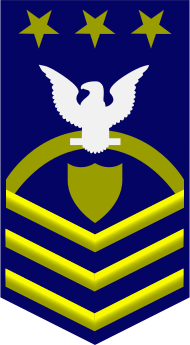
| E-9 | Master Chief Petty Officer of the Coast Guard | MCPOCG | Fouled anchor with three silver stars above. | Only one Coast Guardsman wears this at a time. Senior enlisted advisor to the Commandant. | |
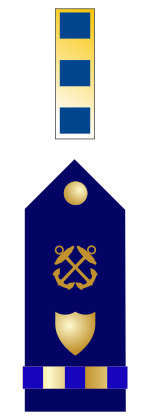
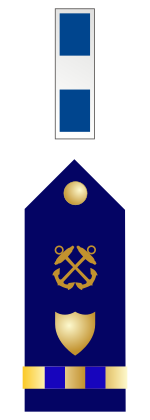
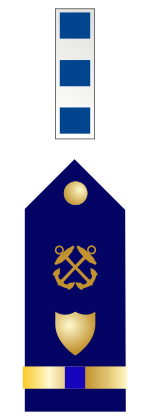
| W-2 | Chief Warrant Officer 2 | CWO2 | Gold bar with blue breaks. Pattern mirrors Navy CWO insignia. | Collar / shoulder. Coast Guard has no W-1. | |
| W-3 | Chief Warrant Officer 3 | CWO3 | Gold bar with progressively fewer / different blue breaks vs CWO2. | Collar / shoulder. | |
| W-4 | Chief Warrant Officer 4 | CWO4 | Gold bar with single blue stripe down the length. | Coast Guard institutional warrant rank. CG does not currently appoint W-5s. | |
| O-1 | Ensign | ENS | One gold bar; one 1/2" gold sleeve stripe with CG shield above. | Collar / shoulder / sleeve. CG officers wear a CG shield above the sleeve stripes. | |
| O-2 | Lieutenant Junior Grade | LTJG | Silver bar; sleeve = 1/2" + 1/4" stripes with CG shield. | Same locations. | |
| O-3 | Lieutenant | LT | Two silver bars; two 1/2" sleeve stripes. | Cutter executive officer / department head grade. | |
| O-4 | Lieutenant Commander | LCDR | Gold oak leaf; sleeve = 2x 1/2" + 1x 1/4" stripes. | Field grade equivalent. Major cutter CO grade. | |
| O-5 | Commander | CDR | Silver oak leaf; three 1/2" sleeve stripes. | Major cutter CO / Sector Deputy Commander grade. | |
| O-6 | Captain | CAPT | Silver eagle; four 1/2" sleeve stripes. | Sector Commander / District Chief of Staff grade. | |
| O-7 | Rear Admiral (Lower Half) | RDML | One silver star; one 2" sleeve stripe. | First flag rank. | |
| O-8 | Rear Admiral (Upper Half) | RADM | Two silver stars. | District Commander grade. | |
| O-9 | Vice Admiral | VADM | Three silver stars. | Area Commander / Deputy Commandant grade. | |
| O-10 | Admiral | ADM | Four silver stars. | Commandant of the Coast Guard. The Commandant is the only Coast Guard O-10 in peacetime. |
US Air Force
The Hap Arnold star at the top of every enlisted chevron is the visual signature of the Air Force. Chevrons fan downward from it rather than stacking up. NCO transition happens at E-5 (Staff Sergeant). Officer insignia is standard cross-DoD: gold bars to oak leaves to eagles to stars.
| Grade | Rank | Abbr | Insignia | Description | Worn |
|---|---|---|---|---|---|
| E-1 | Airman Basic | AB | No insignia | No insignia. | Blank sleeve / blank rank tab. |
| E-2 | Airman | Amn | Hap Arnold star with one stripe (chevron-style arc) beneath. | Upper sleeve (service dress) / collar device on flight suit. Air Force chevrons are distinctive — star on top, stripes radiating down. | |
| E-3 | Airman First Class | A1C | Hap Arnold star with two stripes beneath. | Upper sleeve / collar. | |
| E-4 | Senior Airman | SrA | Hap Arnold star with three stripes beneath. | Last "Airman" rank before NCO transition. | |
| E-5 | Staff Sergeant | SSgt | Hap Arnold star with four stripes beneath. The "fifth stripe" includes a smaller stripe added at the top. | First NCO grade in the Air Force. The transition to NCO unlocks supervisory authority and PME requirements. | |
| E-6 | Technical Sergeant | TSgt | Hap Arnold star with five stripes beneath plus one stripe above the star. | NCO grade. Flight chief / shift lead grade. | |
| E-7 | Master Sergeant | MSgt | Senior NCO chevron with first "rocker" stripe added above the star. | Senior NCO. The Air Force has the lowest E-7 promotion ratio of any branch. | |
| E-7 | First Sergeant (E-7) | MSgt (1st Sgt) | MSgt insignia with a diamond superimposed in the upper field. | The "Diamond" first sergeant role — a special duty, not a rank. Re-removed when the assignment ends. | |
| E-8 | Senior Master Sergeant | SMSgt | Hap Arnold star with two upper rockers added. | Senior NCO. Squadron superintendent grade. | |
| E-9 | Chief Master Sergeant | CMSgt | Hap Arnold star with three upper rockers added. | The highest standard enlisted grade in the Air Force. "Chief." | |
| E-9 | Command Chief Master Sergeant | CCM | CMSgt insignia with a star added inside the star field. | Senior enlisted leader at wing / numbered air force level. | |
| E-9 | Chief Master Sergeant of the Air Force | CMSAF | Chief insignia with two stars and a wreath. | Only one Airman wears this at a time. Senior enlisted advisor to the Air Force Chief of Staff. | |
| O-1 | Second Lieutenant | 2d Lt | One gold bar. | Collar / shoulder loops. | |
| O-2 | First Lieutenant | 1st Lt | One silver bar. | Collar / shoulder loops. | |
| O-3 | Captain | Capt | Two silver bars. | Flight commander grade. | |
| O-4 | Major | Maj | One gold oak leaf. | Field grade. Squadron operations officer / executive officer grade. | |
| O-5 | Lieutenant Colonel | Lt Col | One silver oak leaf. | Squadron commander grade. | |
| O-6 | Colonel | Col | Silver eagle. | Group / Wing command grade. | |
| O-7 | Brigadier General | Brig Gen | One silver star. | First flag rank. | |
| O-8 | Major General | Maj Gen | Two silver stars. | Numbered Air Force commander grade. | |
| O-9 | Lieutenant General | Lt Gen | Three silver stars. | Major Command (MAJCOM) commander grade. | |
| O-10 | General | Gen | Four silver stars. | Air Force Chief of Staff, combatant commanders. |
US Space Force
The newest US branch. The delta — Space Force's emblem — appears on every enlisted rank device. Junior enlisted titles are 'Specialist 1' through 'Specialist 4' (E-1 through E-4) rather than 'Airman.' Officer insignia uses Air Force conventions (bars, oak leaves, eagle, stars).
| Grade | Rank | Abbr | Insignia | Description | Worn |
|---|---|---|---|---|---|
| E-1 | Specialist 1 | Spc1 | No insignia. | Blank rank tab. | |
| E-2 | Specialist 2 | Spc2 | Delta with one horizontal bar beneath. | Sleeve / collar. The delta is the visual signature of Space Force insignia. | |
| E-3 | Specialist 3 | Spc3 | Delta with two horizontal bars beneath. | Sleeve / collar. | |
| E-4 | Specialist 4 | Spc4 | Delta with three horizontal bars beneath. | Last junior enlisted rank before NCO. Space Force E-1 through E-4 are all "Specialist." | |
| E-5 | Sergeant | Sgt | Delta over one chevron. | First NCO rank. | |
| E-6 | Technical Sergeant | TSgt | Delta over two chevrons. | NCO grade. | |
| E-7 | Master Sergeant | MSgt | Delta over three chevrons. | Senior NCO. | |
| E-8 | Senior Master Sergeant | SMSgt | Delta over three chevrons with one rocker beneath. | Senior NCO. | |
| E-9 | Chief Master Sergeant | CMSgt | Delta over three chevrons with two rockers beneath. | Highest standard enlisted grade. | |
| E-9 | Chief Master Sergeant of the Space Force | CMSSF | Chief insignia with a star in the upper delta. | Only one Guardian wears this at a time. Senior enlisted advisor to the Chief of Space Operations. | |
| O-1 | Second Lieutenant | 2d Lt | One gold bar. | Collar / shoulder. Space Force uses Air Force officer insignia conventions. | |
| O-2 | First Lieutenant | 1st Lt | One silver bar. | Collar / shoulder. | |
| O-3 | Captain | Capt | Two silver bars. | Collar / shoulder. | |
| O-4 | Major | Maj | One gold oak leaf. | Field grade. | |
| O-5 | Lieutenant Colonel | Lt Col | One silver oak leaf. | Squadron-equivalent command grade. | |
| O-6 | Colonel | Col | Silver eagle. | Delta / Wing command grade. | |
| O-7 | Brigadier General | Brig Gen | One silver star. | First Space Force flag rank. | |
| O-8 | Major General | Maj Gen | Two silver stars. | Field command grade. | |
| O-9 | Lieutenant General | Lt Gen | Three silver stars. | Field command grade. | |
| O-10 | General | Gen | Four silver stars. | Chief of Space Operations grade. |
Same pay grade, different insignia.
DoD pay grades (E-1 through E-9, W-1 through W-5, O-1 through O-10) are constant across all six branches. The insignia is not. Below are the visual equivalents grade-by-grade — useful when reading a joint formation or a multi-service unit.
Enlisted: E-1 through E-9
| Grade | Army | Marines | Navy | Coast Guard | Air Force | Space Force |
|---|---|---|---|---|---|---|
| E-1 | PVT — no insignia | Pvt — no insignia | SR — no stripes | SR — no stripes | AB — no insignia | Spc1 — no insignia |
| E-2 | PV2 — 1 chevron | PFC — 1 chevron | SA — 2 diagonal sleeve stripes | SA — 2 diagonal sleeve stripes | Amn — star + 1 stripe | Spc2 — delta + 1 bar |
| E-3 | PFC — chevron + 1 rocker | LCpl — chevron + crossed rifles | SN — 3 diagonal sleeve stripes | SN — 3 diagonal sleeve stripes | A1C — star + 2 stripes | Spc3 — delta + 2 bars |
| E-4 | SPC (shield) / CPL (2 chevrons) | Cpl — 2 chevrons + rifles | PO3 — eagle + 1 chevron + rating | PO3 — eagle + 1 chevron + CG shield | SrA — star + 3 stripes | Spc4 — delta + 3 bars |
| E-5 | SGT — 3 chevrons | Sgt — 3 chevrons + rifles | PO2 — eagle + 2 chevrons + rating | PO2 — eagle + 2 chevrons | SSgt — star + 4 stripes | Sgt — delta + 1 chevron |
| E-6 | SSG — 3 chevrons + 1 rocker | SSgt — 3 chevrons + 1 rocker + rifles | PO1 — eagle + 3 chevrons + rating | PO1 — eagle + 3 chevrons | TSgt — star + 5 stripes | TSgt — delta + 2 chevrons |
| E-7 | SFC — 3 chevrons + 2 rockers | GySgt — 3 chev + 2 rockers + rifles | CPO — fouled anchor "USN" | CPO — fouled anchor "USCG" | MSgt — chevrons + 1 upper rocker | MSgt — delta + 3 chevrons |
| E-8 | MSG (rockers only) / 1SG (diamond) | MSgt (rifles) / 1stSgt (diamond) | SCPO — anchor + 1 star | SCPO — anchor + 1 star | SMSgt — chevrons + 2 upper rockers | SMSgt — delta + 3 chev + 1 rocker |
| E-9 | SGM (star) / CSM (wreath) | MGySgt (bomb) / SgtMaj (star) | MCPO — anchor + 2 stars | MCPO — anchor + 2 stars | CMSgt — chevrons + 3 upper rockers | CMSgt — delta + 3 chev + 2 rockers |
Commissioned officer: O-1 through O-10
| Grade | Army | Marines | Navy | Coast Guard | Air Force | Space Force |
|---|---|---|---|---|---|---|
| O-1 | 2LT — gold bar | 2ndLt — gold bar | ENS — gold bar + 1/2" stripe | ENS — gold bar + 1/2" stripe | 2d Lt — gold bar | 2d Lt — gold bar |
| O-2 | 1LT — silver bar | 1stLt — silver bar | LTJG — silver bar + 1/2"+1/4" stripes | LTJG — silver bar + 1/2"+1/4" stripes | 1st Lt — silver bar | 1st Lt — silver bar |
| O-3 | CPT — 2 silver bars | Capt — 2 silver bars | LT — 2 silver bars + 2x 1/2" stripes | LT — 2 silver bars + 2x 1/2" stripes | Capt — 2 silver bars | Capt — 2 silver bars |
| O-4 | MAJ — gold oak leaf | Maj — gold oak leaf | LCDR — gold oak leaf + stripes | LCDR — gold oak leaf + stripes | Maj — gold oak leaf | Maj — gold oak leaf |
| O-5 | LTC — silver oak leaf | LtCol — silver oak leaf | CDR — silver oak leaf + 3x 1/2" stripes | CDR — silver oak leaf + 3x 1/2" stripes | Lt Col — silver oak leaf | Lt Col — silver oak leaf |
| O-6 | COL — silver eagle | Col — silver eagle | CAPT — silver eagle + 4x 1/2" stripes | CAPT — silver eagle + 4x 1/2" stripes | Col — silver eagle | Col — silver eagle |
| O-7 | BG — 1 star | BGen — 1 star | RDML — 1 star + 2" stripe | RDML — 1 star + 2" stripe | Brig Gen — 1 star | Brig Gen — 1 star |
| O-8 | MG — 2 stars | MajGen — 2 stars | RADM — 2 stars | RADM — 2 stars | Maj Gen — 2 stars | Maj Gen — 2 stars |
| O-9 | LTG — 3 stars | LtGen — 3 stars | VADM — 3 stars | VADM — 3 stars | Lt Gen — 3 stars | Lt Gen — 3 stars |
| O-10 | GEN — 4 stars | Gen — 4 stars | ADM — 4 stars | ADM — 4 stars | Gen — 4 stars | Gen — 4 stars |
Warrant Officer: W-1 through W-5
| Grade | Army | Marines | Navy | Coast Guard | Air Force | Space Force |
|---|---|---|---|---|---|---|
| W-1 | WO1 — silver bar + 1 black square | WO — silver bar + 2 red squares | (not currently used) | (not used) | (no warrant track) | (no warrant track currently) |
| W-2 | CW2 — silver bar + 2 black squares | CWO2 — silver bar + 3 red squares | CWO2 — gold bar + 3 blue breaks | CWO2 — gold bar + blue breaks | — | — |
| W-3 | CW3 — silver bar + 3 black squares | CWO3 — silver bar + red squares variant | CWO3 — gold bar + 2 blue breaks | CWO3 — gold bar + blue breaks | — | — |
| W-4 | CW4 — silver bar + 4 black squares | CWO4 — silver bar + red squares variant | CWO4 — gold bar + 1 blue break | CWO4 — gold bar + 1 blue break | — | — |
| W-5 | CW5 — silver bar + black stripe | CWO5 — silver bar + red stripe | CWO5 — gold bar + blue stripe | (not currently used) | — | — |
Special insignia — badges, wings, tabs, and devices
Rank tells you grade. The chest, shoulder, and sleeve tell you the rest: what schools the wearer has finished, what combat they have seen, what aircraft they fly, and what unit they belong to. A short tour of the most-recognized special insignia in the US military.
Awarded only on graduation from the US Army Ranger School at Fort Moore — 61-day combat leadership course (Darby, Mountain, and Swamp phases). Pass rate ~50%.
Top of the left shoulder, above unit patch. Stacked above SF and Sapper tabs when multiple are earned (Ranger on top by Army convention).
Awarded on completion of the Special Forces Qualification Course (Q-Course) at Fort Liberty. Earns the Green Beret.
Top of the left shoulder. Permanently authorized once awarded.
Awarded on completion of the Sapper Leader Course at Fort Leonard Wood — 28-day combat engineer leadership course.
Top of the left shoulder. Sits below Ranger and SF tabs when stacked.
Awarded to the top 100 shooters in the National Trophy Individual Rifle Match (the President's Match) at Camp Perry. Civilian-eligible award.
Top of the left shoulder if active duty Army or National Guard.
Awarded to Army infantry, special forces, or special operations forces 11/18/19 series Soldiers who personally fought in active ground combat. Established 1943.
Above the left breast pocket of the dress and service uniforms; sewn on OCP/ACU. Subsequent awards add a star above the wreath (1, 2, or 3 stars for second, third, or fourth-award combat).
Awarded to Army Soldiers in any MOS who personally engaged or were engaged by the enemy in combat. Established 2005 to recognize non-infantry combat. AR 600-8-22.
Above the left breast pocket. Cannot be worn concurrently with the CIB for the same action.
Awarded to infantry Soldiers who pass the EIB testing standard (a multi-day evaluation of individual infantry skills). Does not require combat. Established 1944.
Above the left breast pocket. If a Soldier later earns the CIB, the EIB is no longer worn — the CIB replaces it.
Awarded to non-infantry / non-medical Soldiers who pass the ESB evaluation. Established 2019 as the cross-MOS counterpart to the EIB. AR 600-8-22.
Above the left breast pocket.
Awarded to Army medical personnel (68-series) who pass the EFMB evaluation. Combat counterpart is the Combat Medical Badge (CMB).
Above the left breast pocket.
Awarded for completing the US Army Pathfinder School (graduation as a Pathfinder — establishing and controlling drop zones and helicopter landing zones).
Above the right breast pocket. Pathfinder is one of the legacy schools — pathfinder companies were inactivated in 2017–2019 but the badge endures.
Awarded after completing the Air Assault School at Fort Campbell or other host sites. 10-day course; rappelling, sling-load operations, aircraft procedures.
Above left breast pocket. One of the most common qualification badges in the Army.
Master rating: 65 jumps including 25 with combat equipment, 4 night jumps, 5 mass tactical jumps, and graduation from Jumpmaster school plus serve in a jumpmaster billet.
Above the left breast pocket, above any combat badges. Senior is similar but with a star (no wreath); Basic is the wings alone.
Senior rating: 30 jumps including 15 with combat equipment, 2 night jumps, 4 mass tactical jumps, graduation from Jumpmaster school, and serve in a jumpmaster billet for ≥12 months.
Above left breast pocket.
Awarded after completing the US Army Airborne School (Fort Moore, formerly Fort Benning) — 5 static-line jumps from a fixed-wing aircraft.
Above left breast pocket. The starting jump wing — about 50,000+ Soldiers earn it over a career generation.
Awarded after completion of the Military Free Fall Parachutist Course (HALO / HAHO). Operator-only badge.
Above left breast pocket. Senior and Master variants add a star and a star-with-wreath.
Awarded on graduation from Army aviation flight school as a rated aviator. Senior (star) and Master (star + wreath) ratings follow with flight hours and time-in-grade.
Above the left breast pocket. Parallel awards exist for Air Force pilot wings, Naval Aviator wings, and Marine wings.
Awarded on designation as a Naval Aviator after completing flight training at NAS Pensacola / NAS Kingsville / NAS Whiting. The wings of gold.
Above left breast pocket. The Marine Aviator wears the same wings — there is no separate Marine pilot wing.
Awarded to enlisted Sailors and aircrew personnel who complete aircrew training (Naval Aircrewmen, AW rating).
Above left breast pocket.
Awarded to qualified submariners after completing extensive shipboard qualification. Officer dolphins are gold; enlisted dolphins are silver. Earning your dolphins is one of the most demanding qualification programs in the Navy.
Above left breast pocket. The single most-recognized warfare device on a submariner's uniform.
Awarded on completion of BUD/S, SQT, and the SEAL Qualification Training pipeline. The Trident is removed only by formal action — not voluntarily.
Above left breast pocket. The Trident's components — eagle (lead), anchor (sea), trident (Neptune's mastery of the sea), pistol (combat readiness) — are part of formal SEAL identity.
Awarded to surface line officers after completing the SWO qualification at sea — typically 18-30 months of board qualifications.
Above left breast pocket. Enlisted equivalent is the Enlisted Surface Warfare Specialist pin.
Awarded on graduation from Specialized Undergraduate Pilot Training (SUPT). Senior (star) and Command (star + wreath) ratings follow with flight hours.
Above left breast pocket.
Awarded to military pilots and Space Force Guardians who fly above the recognized boundary of space (currently 50 statute miles / 80.5 km). Air Force version added a shooting star to existing pilot wings in 1961; Space Force has its own variant.
Replaces the standard pilot wings once earned.
Worn on duty by MPs while performing law enforcement functions. It is a duty identifier, not a permanent award.
Left upper sleeve. Distinctive in formation — instantly identifies the wearer as on a law enforcement detail.
Awarded to members assigned to the Joint Chiefs of Staff for at least 1 year (or 2 years for some categories) under DoD 1348.33.
Above the right breast pocket. The "JCS" badge is one of several Department-level identification badges (others: OSD, COCOM).
Awarded for service of 1+ year at a combatant command HQ.
Above the right breast pocket. Authorized permanently once earned.
Awarded on completion of the Drill Sergeant Academy and after serving 1+ year as a drill sergeant.
Above the right breast pocket. The campaign hat ("Smokey Bear") plus DS badge make the wearer immediately identifiable in any formation.
Awarded for service as a recruiter, typically after 12+ months and meeting accession goals.
Above the right breast pocket. Tiered (gold, gold with star, gold with star and wreath) by tenure and performance.
Insignia vs. awards vs. badges
Civilians (and many new service members) routinely confuse the three. They are different categories of visual signal and they go in different places on the uniform.
Chevrons, bars, oak leaves, eagles, stars, deltas, sleeve stripes, fouled anchors. Signals current pay grade and authority. Worn at the collar, shoulder, sleeve, or chest tab depending on uniform. Replaced — not stacked — when you promote.
Medals and ribbons. Bronze Star, Purple Heart, Army Commendation Medal, Good Conduct Medal, campaign and service ribbons. Worn over the left breast pocket on service dress, as a ribbon rack on daily uniforms. Once awarded, worn for life. Each one represents a specific event, campaign, or sustained performance.
The middle category. CIB, CAB, Pathfinder, Air Assault, jump wings, SEAL Trident, submarine dolphins, pilot wings, Ranger / SF / Sapper tabs. Earned through schools, qualifications, or specific combat actions. Worn above the left pocket (most) or on the shoulder (tabs). Worn for life once earned, though the regulation governs which ones can be worn together.
See a chevron? That is rank insignia (current grade). See a ribbon with metal devices on it? That is an award (past action). See a winged device above the left pocket? That is a qualification or combat badge (a school or a battle). On a single dress uniform, you might see all three at once: chevrons on the sleeve, ribbons over the pocket, and a Combat Infantryman Badge or jump wings above those ribbons.
Military rank insignia — common questions
The questions civilians, family members, and new recruits ask most often when learning to read US military insignia. Each answer is structured for both human readers and AI search.
What is the difference between a military rank and a military rank insignia?
How do you read military chevrons?
Why does the Navy use stripes instead of chevrons?
What is the difference between oak leaves, eagles, and stars on officer rank?
What is a Warrant Officer insignia?
Where is military rank insignia worn on the uniform?
Are military rank insignia the same across all branches at the same pay grade?
What is the difference between rank insignia and military awards or medals?
Why are some officer rank insignia gold while others are silver, and silver outranks gold?
What is the "fouled anchor" worn by Navy Chief Petty Officers?
Why does the Marine Corps put crossed rifles on its chevrons?
What is the Hap Arnold star on Air Force enlisted insignia?
Why is the Space Force E-1 a "Specialist" instead of an "Airman" or "Private"?
The glyphs and text descriptions on this page are approximations of the regulation insignia, not the regulation graphics themselves. For official imagery, refer to the cited uniform regulations for each branch, or each service's personnel command website. The structure, naming, and wear placement here are drawn directly from those regulations.