The Nuclear Shelf
Everything about the modern military — the alliance system, the missile fields, the reason great powers fight through proxies — exists in the shadow of a weapon most people stopped thinking about when the Wall came down. The weapon didn't go anywhere. This shelf is the full accounting: how the bomb was built, the deterrence theology built around it, the terrifying record of accidents and close calls the public mostly never heard about, and the minute-by-minute reconstructions of what a launch would actually mean. Required reading for anyone in the enterprise, and sobering for everyone else.
Buy links go to Bookshop.org (which supports independent bookstores) and Amazon. Some are affiliate links — if you buy, we earn a small commission at no extra cost to you. As an Amazon Associate we earn from qualifying purchases. It never affects which books are on this list or how we describe them. How this works.

Jacobsen interviewed the people who built and ran the actual system — STRATCOM commanders, missileers, weapons engineers, continuity-of-government planners — then wrote a minute-by-minute account of a single launch spiraling into the end of everything. The clock is the point: from first detection, the President has minutes to make a decision no human being should have to make on that timeline, with that information. Some specialists quibble with her scenario choices. Fine. The procedures, the timelines, and the machinery are real, and if you work anywhere near this enterprise, this is the book your family will ask you about.
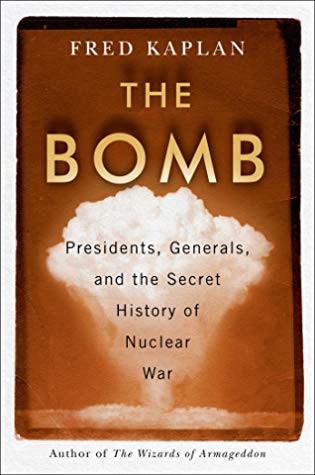
Kaplan got into the declassified record of how every administration from Truman forward actually planned to fight a nuclear war — not the deterrence theory in the journals, but the SIOP briefings that made new presidents go pale. The recurring pattern is the book's real subject: each president discovers the war plan is an all-or-nothing monstrosity, demands flexible options, and the machinery absorbs the demand and grinds on. Read it after The Wizards of Armageddon and you get Kaplan's full forty-year arc: first the theorists, then what the government actually did with their theories. Dry in stretches, and worth every page.

Perry ran the Pentagon. His argument, delivered with co-author Collina in plain civilian English: sole presidential launch authority — one human, minutes of decision time, no required second opinion — is a Cold War artifact that no longer makes anyone safer, and silo-based ICBMs on hair-trigger alert are the piece of the triad most likely to start the war they exist to deter. You don't have to buy every recommendation. But when the former Secretary of Defense says the system he helped run frightens him, the professional move is to read the argument before dismissing it. Short, direct, written to be argued with.
The 1960 book that made Herman Kahn the most notorious defense intellectual in America: six hundred pages coolly analyzing how a thermonuclear war might be fought, survived, and won, complete with tables distinguishing outcomes by tens of millions of dead. Critics called it obscene; Kahn's reply was that refusing to think about the unthinkable doesn't make it less likely, just less prepared-for. He was one of the models for Dr. Strangelove, and reading the source is stranger than the satire. Included on this shelf not as endorsement but as evidence: this is what the strategy conversation actually sounded like at its most unflinching.
A hawkish, tightly argued case that nuclear superiority still matters, which is deeply unfashionable in arms-control circles, which is exactly why it's on the list. Read it to steelman a position you may not hold. Skip it if you want comfort.
Bracken's argument: the Cold War's tidy two-player standoff is dead, and the new game has more players, worse math, and none of the old guardrails. More than a decade on it reads as uncomfortably prescient. Worth it for the strategic vertigo alone.
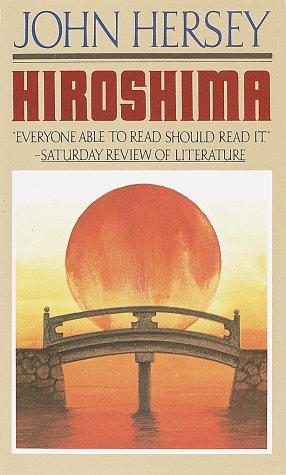
In 1946 The New Yorker cleared an entire issue for one article: Hersey following six survivors through the morning of August 6, 1945, and the year after. No editorializing, no strategy talk, no debate about whether the bomb was justified. Just what happened to a clerk, a doctor, a pastor, a widow, a surgeon, and a priest when the sky ignited. Everything else on this shelf is about the machine — the physics, the planning, the policy. This is the eighty-page reminder of what the machine is for. Read it first. It takes an evening and it recalibrates everything that comes after.
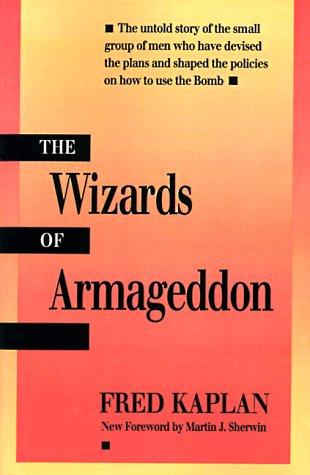
The history of the RAND intellectuals who invented nuclear strategy — counterforce, second strike, escalation ladders — mostly with slide rules, game theory, and a striking shortage of anyone who had seen a war up close. Kaplan takes them seriously as thinkers while showing precisely where the thinking detached from reality: elegant models of controlled nuclear exchange built by men who had never commanded anything and would never be under the fallout pattern. Forty years on, it remains the standard account of how war-gaming a theoretical apocalypse became a respectable career. If you want to understand where the vocabulary of deterrence comes from, it comes from here.
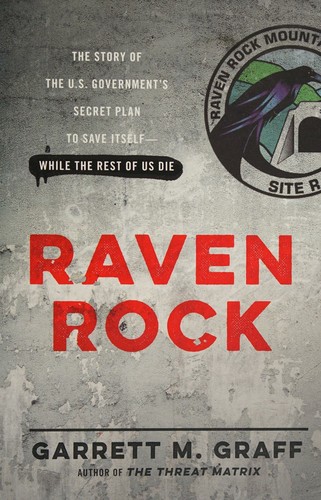
The history of continuity-of-government: the bunkers, the evacuation plans, the designated survivors, the helicopters that would come for some people and not for you. Graff assembled decades of declassified documents into the fullest public account of how the United States planned to keep a government functioning through nuclear war — and the honest, repeatedly rediscovered conclusion that most of the plans would save the presidency, not the public. It's a book about infrastructure that reads like a thriller, and the quiet lesson for anyone in uniform is worth sitting with: you were always part of the plan. Your family wasn't.
The third act of Rhodes's nuclear history, after The Making of the Atomic Bomb and Dark Sun: the arms race itself, and the two men who nearly ended it. The spine of the book is Reagan and Gorbachev at Reykjavik in 1986, closer to abolishing nuclear weapons outright than any leaders before or since, and the machinery of advisors and interests that pulled them back. Rhodes is openly angrier here than in the earlier volumes — he's watched the whole arc by now — and the anger is earned. Essential for understanding how arsenals grow past any strategic logic and why they resist shrinking.
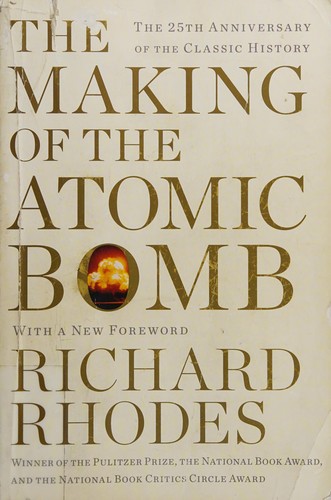
The Pulitzer-winning masterwork on how physics, ambition, and total war combined to build the thing that defined everything after it. It is long, it is worth every page, and it is the single best explanation of the weapon that made the whole Cold War necessary.
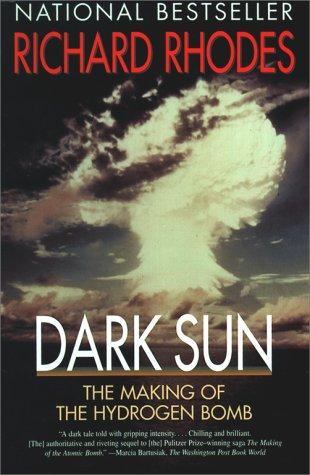
The sequel: the hydrogen bomb, the arms race it kicked off, and the spies who handed the Soviets a shortcut. Rhodes shows how the leap from fission to fusion turned a terrible weapon into a civilization-ending one — and how fast both sides sprinted to build it.
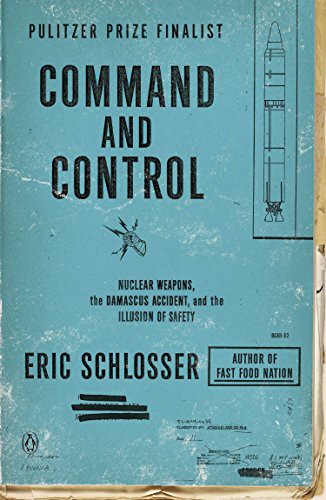
A minute-by-minute account of a 1980 Titan II accident in Arkansas, wrapped around the terrifying larger story of how close we came, repeatedly, to blowing ourselves up by accident. You will never assume the nukes were being handled competently again.
The Pulitzer-winning story of the arms race's final act, including the Soviet doomsday machine built to fire back automatically if Moscow was already dead. Proof that the scariest part of the Cold War was how much of it ran on autopilot and paranoia.
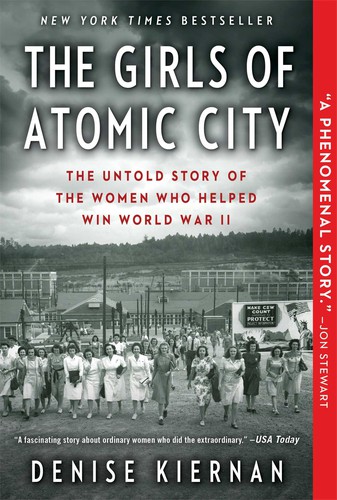
Thousands of young women moved to a secret Tennessee city to do war work they weren't allowed to understand — enriching the uranium for Hiroshima without being told what they were building. Kiernan reconstructs it from the women themselves. A study in how much the war ran on people kept deliberately in the dark.
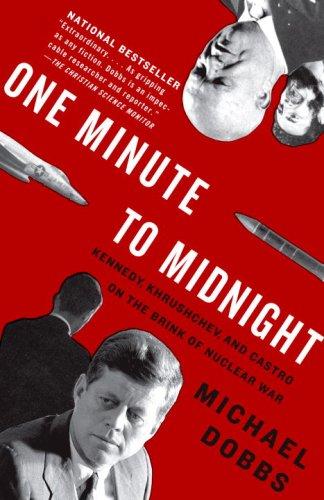
The Cuban Missile Crisis hour by hour, with the frantic details the tidy textbook version leaves out — the lost U-2, the submarine that nearly went nuclear, the field commanders improvising. The closest the species ever came to the edge, told like the thriller it actually was.
Before the Pentagon Papers, Ellsberg was a RAND analyst working on nuclear war plans, and this is his confession. What he saw in the early 1960s: launch authority quietly delegated far below the President, war plans with no option smaller than civilization-ending, and an official casualty estimate for the full plan in the hundreds of millions — briefed without anyone in the room flinching. He held these papers for decades intending to leak them alongside the Vietnam documents. The bureaucratic machinery he describes has been reformed since; how much, and how confidently we know that, is exactly the question the book leaves you holding.
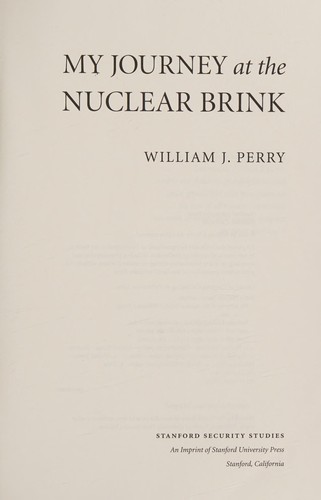
Perry's whole career runs through the nuclear enterprise: analyzing Soviet missile photography during the Cuban crisis, building the stealth and precision-strike revolution as an undersecretary, then running the Pentagon in the 1990s and personally overseeing the dismantling of thousands of warheads. This memoir is his accounting. The through-line is a man who spent sixty years inside the system concluding, with the receipts to back it, that we survived the Cold War on a mix of good management and luck — and that the luck is not a renewable resource. Quieter and more personal than The Button; read this one for the evidence behind that one's argument.
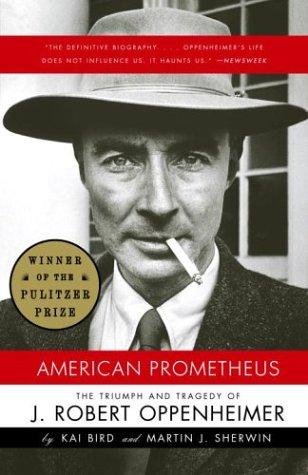
Twenty-five years of research, a Pulitzer Prize, and the source material for the Oppenheimer film — but the book is bigger than the movie had room to be. Bird and Sherwin give you the full arc: the brilliant, fragile physicist who ran Los Alamos, delivered the weapon, watched it used, and then spent the rest of his life arguing the government should be honest about what it had built — right up until that government pulled his clearance in a rigged hearing. It is a biography of one man and also of the moment American science got married to American security, for better and mostly for worse.
The 1959 novel that made nuclear war local. One small Florida town survives the exchange that erases most of urban America, and the book simply follows what happens next: no cash economy, no medicine, no salt, no law past the range of a shotgun. Frank had worked around government and journalism long enough to write the collapse with bureaucratic plausibility instead of pulp drama, which is why it holds up. Generations of readers hit this in high school and had their first honest thought about what the missiles actually mean. It's dated in its social furniture, sure — it's still the most readable entry point on this shelf.
The Northern Hemisphere is already dead. Australia has months before the fallout arrives on the trade winds, and everyone knows the date. Shute's 1957 novel follows an American submarine crew and the Australians around them as they decide how to spend the time — planting gardens that won't be harvested, entering car races, falling in love on a deadline. No mutants, no raiders, no survival heroics: the horror is that everything stays polite and ordinary all the way to the end. It is the quietest book ever written about extinction, and the quiet is what stays with you.
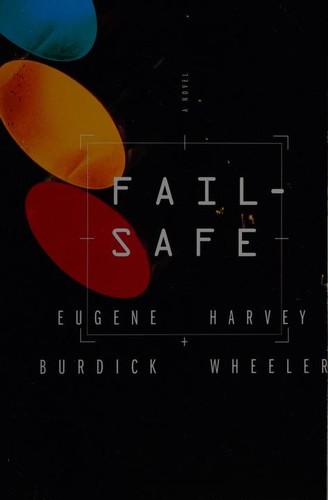
A technical fault sends a group of American bombers past their fail-safe point toward Moscow, and no one can call them back — the crews are trained to treat recall attempts as enemy deception. The rest of the novel is the White House, the Pentagon, and the Kremlin trying to stop a war that no one wants and the system is faithfully executing. Written in 1962 by the co-author of The Ugly American, filmed in 1964 with Henry Fonda as the President. Read it alongside Schlosser's Command and Control and notice how much of the fiction stopped being fiction.
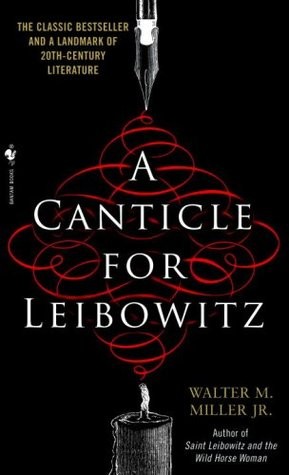
After the bombs, a Catholic monastic order spends centuries preserving scraps of scientific knowledge — a shopping list, a blueprint, a circuit diagram — copied and illuminated by monks who no longer understand a word of it. Miller flew combat missions in World War II, including the raid that destroyed the monastery at Monte Cassino, and this novel is what that experience became. Three linked stories across nearly two thousand years, tracing civilization's climb back toward the exact same cliff. It won the Hugo in 1961 and remains the most serious book ever written about whether we can learn. Miller's answer is not comforting.
A 'limited' nuclear exchange — thirty-six minutes, a handful of cities, EMP — and this 1984 novel is two writers touring the United States five years later, written as first-person reportage: interviews, government documents, ration schedules, the works. The premise is the sharp part. America wins, technically, and the book is about what winning a limited nuclear war actually buys: a broken economy, a triaged population, foreign aid workers managing American refugees. Against the total-apocalypse novels on this shelf, Warday attacks the more seductive lie — that there's a survivable, manageable version. The mock-documentary format has aged into the book's greatest strength.