The Sniper Shelf
Sniping is the most personal job in modern war — no suppressing fire, no crowd, just a decision you watch land through your own glass. Its literature is correspondingly intense. This shelf runs from the Hathcock legend and the WWII and Vietnam foundations through the GWOT generation's accounts, plus the histories of how armies learned, forgot, and relearned the craft. The good books are honest about both halves of the job: the discipline it takes, and what the watching costs.
Buy links go to Bookshop.org (which supports independent bookstores) and Amazon. Some are affiliate links — if you buy, we earn a small commission at no extra cost to you. As an Amazon Associate we earn from qualifying purchases. It never affects which books are on this list or how we describe them. How this works.
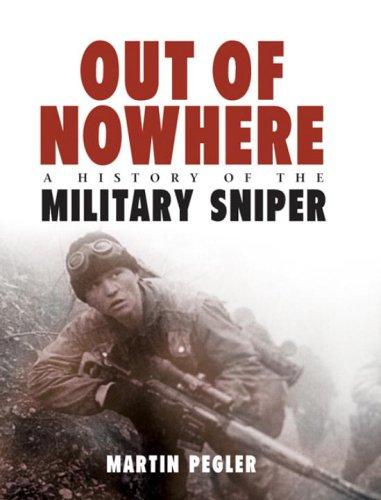
The one-volume history of the trade, from Napoleonic riflemen through the World Wars to the modern era, written by a firearms historian who knows the hardware cold and — rarer — knows what the hardware did to doctrine. Pegler is especially good on the pattern every army repeats: build a sniping capability in wartime, dismantle it in peacetime out of institutional distaste for the whole business, then scramble to rebuild it when the next war starts. That cycle, and the quiet contempt armies have always held for their best marksmen, explains more about this profession than any memoir. Read this first; it gives every other book on the shelf its coordinates.
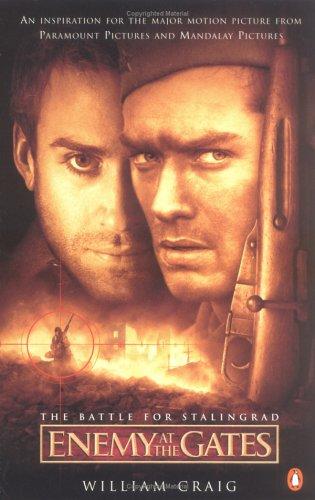
Craig's 1973 history of Stalingrad is the book the movie took its title from and then discarded — the sniper duel that Hollywood inflated into the whole story occupies a few pages here, inside five hundred that reconstruct the entire battle from interviews with hundreds of survivors on both sides. It belongs on this shelf because it shows the sniper's war in its true proportion: one lethal instrument inside a meat grinder that consumed armies, where Zaitsev's rifle mattered and also decided nothing by itself. If your picture of Stalingrad sniping comes from the film, this is the correction. The duel itself may be more legend than ledger; Craig reports what the sources claimed.
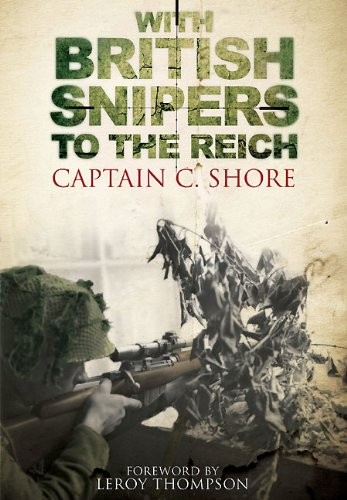
Shore was a British officer who fought through Northwest Europe in 1944–45 and wrote the definitive practitioner's account of Second World War sniping: weapons, training, tactics, and the temperament of the men who did it, assessed with a working professional's eye rather than a publicist's. He's refreshingly opinionated — entire rifles, scopes, and national training methods get graded, sometimes harshly — and honest about the gap between marksmanship on a range and killing from a hide. For decades this was the book serious snipers passed around when official doctrine had nothing to offer. It reads like what it is: the after-action review of an entire war's worth of precision shooting.

First-person accounts from American snipers across four decades — World War II, Korea, Vietnam, Beirut — collected and stitched into the book that introduced a generation of readers to the trade before the GWOT memoir boom existed. The format is the strength: a dozen voices instead of one means you see what's constant in the work (the waiting, the arithmetic, the aftermath) and what's just one man's temperament. It's a product of its early-nineties moment — the prose runs pulpy and the sourcing is oral history, with oral history's soft spots — but as a survey of who did this job and what it made of them, it still holds the room.

In 1915 the Germans owned no-man's-land, killing British soldiers daily with scoped rifles the British Army had no answer for. Hesketh-Prichard — big-game hunter, cricketer, exactly the sort of eccentric the British Empire kept in stock — talked his way to the front and built the answer: the First Army's sniping school, and with it the observation and counter-sniping doctrine that turned the exchange rate around. His 1920 account is the founding document of organized Allied sniping, and unexpectedly readable — dry wit, hard numbers, and a running argument with every staff officer who thought the whole business ungentlemanly. Where the profession's institutional history begins.
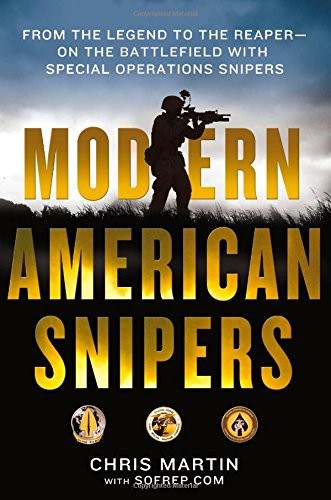
The survey volume for the GWOT generation: Martin traces how two decades of Iraq and Afghanistan transformed the sniper from a niche asset commanders barely trusted into the centerpiece of special operations warfare — running through SEAL, Ranger, Special Forces, and Delta shooters, the evolution of the schools, and the technology that stretched engagement ranges past what Hathcock's era thought possible. It's journalism built on interviews with the community, which means it inherits the community's self-image along with its facts; keep that filter on. As a map of who's who and how the trade professionalized after 9/11, though, nothing else covers the same ground in one book.
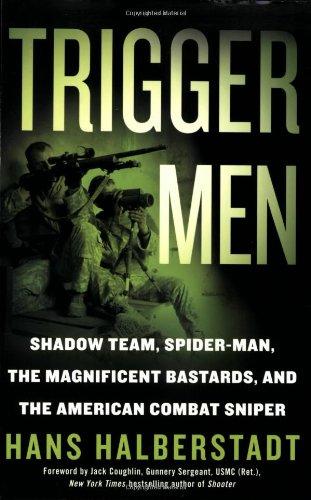
Halberstadt built this around extended interviews with Army snipers of the Iraq war — most memorably the Shadow Team shooters working Ramadi at the height of the insurgency — and had the discipline to let them talk. The result sits between oral history and tactical study: rules of engagement wrestled with in real time, the surreal etiquette of overwatch above a city street, and the shooters' own unsentimental accounting of what the work is. Because it's many voices instead of one book-deal-holder, the bravado averages out and the common ground shows through. A useful audit of the one-hero memoir, published while the war it documents was still running.

The sequel collection to One Shot One Kill, extending the same oral-history formula forward: American snipers from Vietnam through Somalia and into the early GWOT, each chapter one shooter's account in his own voice. It inherits the earlier book's virtues — range of voices, the pattern-recognition that comes from reading twenty versions of the same job — and its flaws, since single-source war stories get the benefit of the doubt throughout. Read it as testimony rather than verified history and it does honest work, particularly the later chapters, where the distance between Vietnam-era sniping and the modern profession becomes visible chapter by chapter. Completists' pick; start with the first volume.
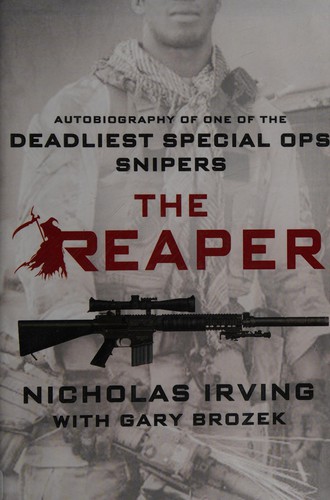
Irving was a 3rd Ranger Battalion sniper whose 2009 Helmand deployment — the book credits him with 33 kills in barely a hundred days — earned him the nickname the title wears. What separates this from the genre's chest-thumpers is the pacing: Irving writes the waiting, the math, and the exhaustion, not just the trigger pulls, and he's plain about the parts of the count that came down to luck and a good spotter. He's also candid that he initially failed his way toward the job before mastering it, which is more useful to a young shooter than any highlight reel. One deployment, told honestly, at the tempo the war actually ran.
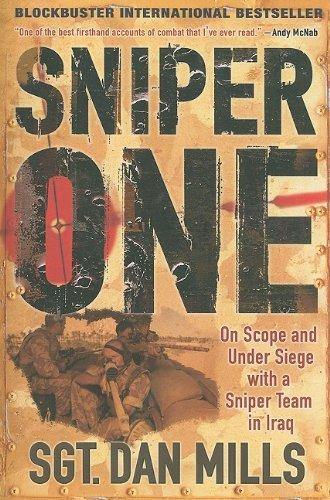
Mills led a sniper platoon of the Princess of Wales's Royal Regiment at Al Amarah, Iraq, in 2004 — which turned into a months-long siege of a compound called Cimic House, with his platoon on the rooftops for most of it. This is the best British soldier's memoir of the Iraq war and one of the best sniper books, period: profane, funny in the way squaddies are actually funny, and unflinching about what weeks of static fighting do to a platoon. Mills writes riflemen as people, not gun accessories. The sustained defensive fight it describes — thousands of rounds, day after day — is a chapter of that war most Americans never heard about.
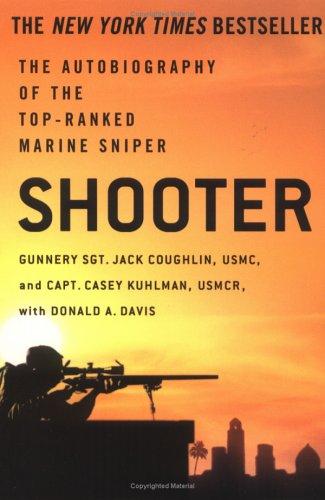
Coughlin was a Marine gunnery sergeant and scout sniper who rode the 2003 invasion of Iraq with an infantry battalion, and his memoir's real argument is doctrinal: snipers chained to slow-moving overwatch positions were the wrong tool for a war moving at convoy speed, and he spent the drive to Baghdad proving a mobile alternative. The kills are recounted with a matter-of-factness some readers find cold; it reads truer than the tortured-warrior boilerplate the genre usually reaches for. Where he's strongest is on the craft itself — wind, range, the shot you don't take. A professional's book about a profession, invasion-paced.

In November 2009, Harrison — a Household Cavalry sniper in Helmand — made the shot that held the world distance record for years: two machine-gunners at 2,475 meters, at the outer edge of what a .338 and physics will permit. The record is why you've heard of him. The book earns its place for what follows: Harrison writes about the aftermath with a candor the genre almost never allows — the PTSD, the drinking, the collapse, the way the record became a weight he dragged behind him. Half the books on this shelf mention the psychological bill in a final chapter. This one itemizes it. That's the honest version, and it costs him to tell it.
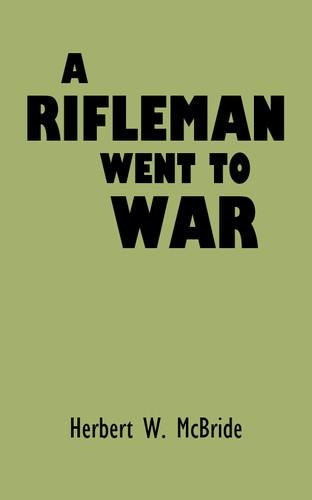
McBride was an American who couldn't wait for his own country to enter the First World War, so he joined the Canadians and spent 1915–17 in the trenches as a machine gunner and sniper. Published in 1935, this is the oldest first-person account on the shelf and still one of the most useful: McBride writes about observation, range estimation, and the discipline of the single aimed shot with a precision that training programs were still quoting half a century later. It's also unmistakably a book of its era — digressive, occasionally cranky, and blunt about killing in a way later generations learned to soften. The trade's founding memoir, unretouched.
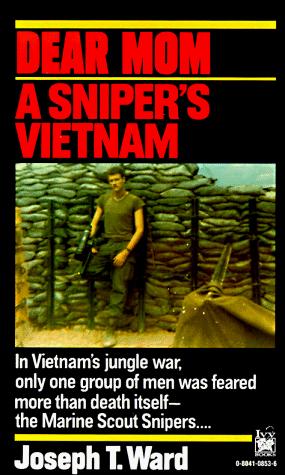
Ward was a Marine scout sniper in Vietnam, and he built his memoir around the letters he actually wrote home — which gives the book a structure no amount of craft could fake: the gap between what he was doing and what he could tell his mother he was doing. The letters stay gentle; the narrative between them does not. That distance — the space where a nineteen-year-old edits a war down to something a family can bear to read — is the book's real subject, and it says more about the psychological weight of the work than most books that address it head-on. Modest, specific, and quietly devastating.

Pavlichenko was a Soviet sniper credited with 309 kills at Odessa and Sevastopol before wounds ended her shooting war — after which the USSR sent her to America in 1942, where she toured with Eleanor Roosevelt and told a Chicago crowd they'd been hiding behind her back too long. This memoir, published in English translation decades after her death, carries the caveats Soviet accounts always carry: the tally was a propaganda asset and reads like one in places. What survives the wartime varnish is genuinely hers — the craft, the contempt for being treated as a curiosity, and the flat accounting of what the work took from her. An allied legend, error bars included.

Zaitsev's own account of Stalingrad — 242 credited kills in the rubble, the sniper school he ran out of a basement mid-battle, and the duel with a German master sniper that became the most famous story in the trade's history. Read it with both eyes open: the memoir passed through Soviet publication, the tally served the propaganda machine, and historians have never verified the duel that the film Enemy at the Gates built its plot on. What's real and valuable is the tactical thinking — Zaitsev's group-hunting methods and urban field-craft genuinely shaped Soviet doctrine. A primary source with an agenda, which describes half the primary sources worth reading.
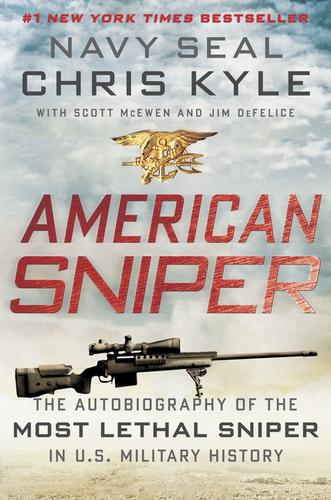
Chris Kyle was the most lethal sniper in American military history — 160 confirmed kills, four tours in Iraq, multiple Silver Stars and Bronze Stars. He wrote this memoir in the flat, professional tone of a man who is not interested in your feelings about what he did. The book does not resolve the moral questions it raises. It does not try to. What it does is document what it actually looks like to do this specific job, in this specific war, for this specific length of time, and what it does to a man's life. Read it alongside The Forever War and Sebastian Junger's Tribe for the full picture of what these wars produced.
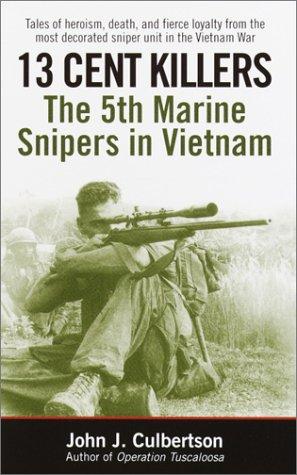
The title is the accounting: thirteen cents was the cost of the round, and the grim joke wrote itself into unit lore. Culbertson shot with the 5th Marines' snipers around An Hoa in 1967, and his account is the enlisted-Marine counterweight to the Hathcock legend — no famous duels, no white feather, just line snipers attached to rifle companies doing dangerous, unglamorous work in terrain that ate patrols. The prose is rough in the way self-told grunt memoirs are rough, and that's part of the record: this is what the job looked like to the Marines doing it without a biographer, a nickname, or a myth-making machine.
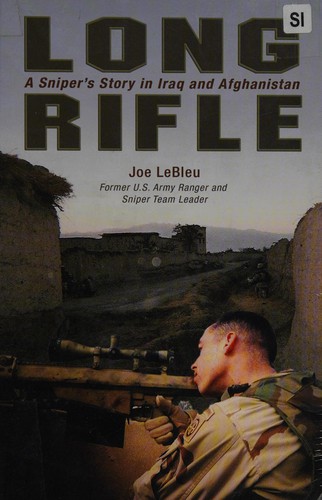
LeBleu was an 82nd Airborne veteran turned Army sniper in Fallujah in 2003–04, and his book is best where the war was worst: sustained overwatch during the fight for the city, including the eleven-hundred-meter shot on a bomber mid-emplacement that made his reputation. It's a grunt-level account with a grunt-level virtue — LeBleu is more interested in the teamwork of a sniper section than in building a lone-wolf brand, and his frustration with how conventional commanders misused their snipers echoes what Coughlin wrote from the Marine side. A rung below the shelf's classics as literature; solid as testimony from the war's ugliest city.
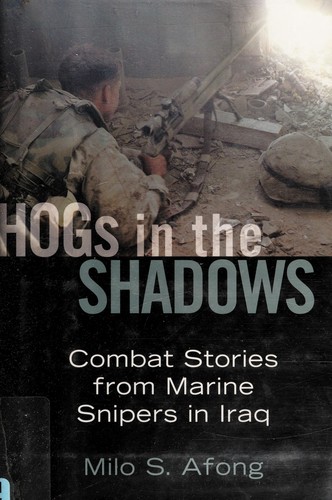
HOG — Hunter of Gunmen — is what a Marine scout sniper is called once he's earned the title, and Afong, one himself, collected accounts from Marine snipers across the early Iraq war: Nasiriyah, Fallujah, Ramadi, the whole grim tour map. The book's structure is its argument — a chorus of working snipers rather than one star, which shows you the trade as a community with standards, superstitions, and a shared vocabulary of loss. Afong writes as an insider vouching for his sources, with an insider's protectiveness; adjust accordingly. As a portrait of the scout sniper culture Hathcock's legend built, told by its working members, it earns the shelf.
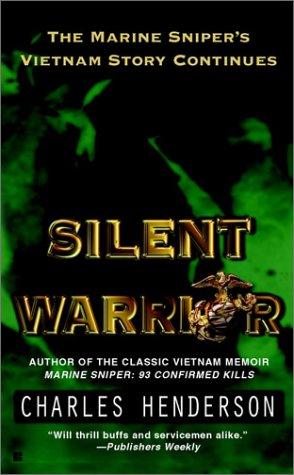
Henderson had more Carlos Hathcock material than one book could hold, and this is the rest of it — deeper into the Vietnam missions, the instructor years, and the man behind the white feather. Read Marine Sniper first; this is the second sitting with the same subject. The caution both books deserve: Hathcock's story passed through decades of Marine Corps oral tradition before it reached print, and some engagements read more polished than war ever is. What's beyond dispute is the man's discipline, his burns from pulling seven Marines off a burning AMTRAC, and his fingerprints on every scout sniper program since. The founding legend, second volume.
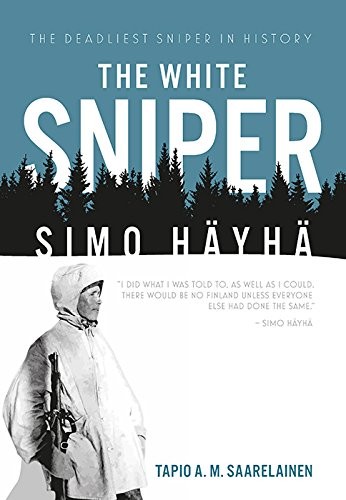
Simo Häyhä was a Finnish farmer who, in the hundred-odd days of the Winter War, ran up the highest credited sniper tally ever recorded — over five hundred — using iron sights, in temperatures that froze rifle actions, against the invading Soviet army. Saarelainen, a Finnish Army officer and marksmanship specialist, interviewed Häyhä repeatedly before his death, and the portrait that emerges is the genre's great counterargument: no swagger, no torment, just a quiet man who considered it his duty, did it with terrifying competence, took an explosive round through the jaw, and went back to farming. The numbers carry legend's usual error bars. The man, by every account, did not exaggerate.

The war memoirs on this shelf are mostly Allied; this is the view from the other side of the scope — Josef 'Sepp' Allerberger, a Wehrmacht sniper on the Eastern Front, credited with 257 kills in the retreat from the Soviet advance. It's an as-told-to account assembled by Wacker decades later, and it should be read that way: some episodes are unverifiable, and the graphic brutality it recounts has drawn scrutiny from historians. Its value is documentary, not heroic — an unromantic record of what sniping looked like inside a collapsing army in history's most pitiless theater. Included as evidence about the trade at its darkest, not as a war story to admire.
The story of Carlos Hathcock — 93 confirmed kills and a legend the Corps still teaches. Henderson's biography is where the Hathcock myth got written down. Straight-ahead war storytelling; take the hero polish with a grain of salt and enjoy the marksmanship.
The only novel on this shelf that non-fiction readers are ordered to make an exception for. Hunter's Bob Lee Swagger — Vietnam sniper, Arkansas recluse, patterned with open admiration on Carlos Hathcock — gets framed for an assassination and unravels the conspiracy with a rifle and a machinist's patience. What earns the slot is Hunter's obsessive respect for the craft: ballistics, handloading, wind calls, and the sniper's temperament are rendered accurately enough that actual shooters cite the book. The plot is airport-thriller machinery, executed better than the genre deserves. Filmed as Shooter, which kept the skeleton and lost the soul. Start here for Swagger; the sequels vary.
Robbins took the Zaitsev duel — the one history can't verify — and did the honest thing with it: wrote it as a novel. Stalingrad's rubble, the Soviet sniper school, the German master sent to kill its founder, all rendered with research thorough enough that the fiction frequently feels more grounded than the propaganda-inflected memoirs it draws on. The film Enemy at the Gates arrived a year later covering the same territory with prettier faces and less nerve. If you want the duel legend at its best, this is the version — it delivers everything the story promises precisely because it never claims to be true. Sometimes fiction is the more honest ledger.
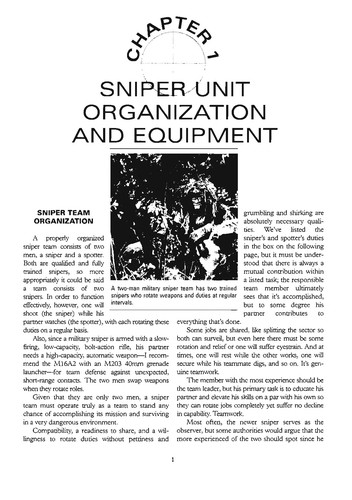
Not a memoir — a manual, and the most influential unofficial one the profession has. Plaster ran recon with MACV-SOG in Vietnam, then spent the following decades codifying the sniper's trade: marksmanship, ballistics, camouflage, stalking, judging wind, building hides, and the field-craft that separates a shooter from a sniper. Military and police programs have leaned on it for a generation, which is the only endorsement that matters for a training text. It's on this shelf because you can't honestly weigh the memoirs without understanding the discipline they describe — and because Plaster's dry, exacting completeness is itself a portrait of the mindset. The textbook behind every story here.