Military Fantasy
Most fantasy is about the chosen one. Military fantasy is about the poor bastards in the ranks who have to hold the line while the chosen one figures it out. This shelf collects the books that treat soldiering seriously even when the enemy is a dragon — the mercenary companies, the gunpowder armies, the siege that grinds on whether or not magic is real. The genre's best writers understand something the epic tradition forgets: armies are made of tired people with complaints, and that's true whether they carry a rifle or a pike.
Buy links go to Bookshop.org (which supports independent bookstores) and Amazon. Some are affiliate links — if you buy, we earn a small commission at no extra cost to you. As an Amazon Associate we earn from qualifying purchases. It never affects which books are on this list or how we describe them. How this works.
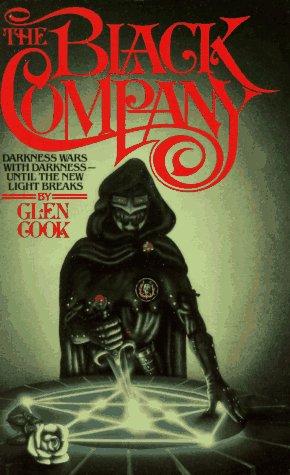
The book that invented military fantasy as we know it. Croaker is the physician and annalist of a mercenary company four centuries old, currently under contract to an empire run by something the songs call evil — and the Company takes the work, because that's what the Company does. Cook, a Navy veteran who wrote his early books on breaks at a GM assembly line, strips fantasy of its castles-and-destiny furniture and replaces it with troop movements, bad rations, and soldiers who gripe, gamble, and grieve like actual soldiers. Every grimdark author working today is standing in this book's footprint. Most of them know it.

Three days, one battle, one worthless hill with some standing stones on it. Abercrombie's best novel is the whole machinery of war compressed into a single engagement: generals fighting for reputation, colonels fighting for promotion, and infantry fighting because the man next to them is fighting. There's a sequence that follows a single skirmish by jumping from soldier to soldier as each one kills the last — a chain of perspectives, each alive for a page — that belongs in any anthology of war writing, genre or otherwise. Bleak, funny, and dead accurate about the distance between the dispatches and the ditch. The title is doing a lot of work, and all of it is sarcastic.

Orhan is a colonel of engineers — a bridge-builder, a scrounger, an expert in creative supply-chain paperwork — and through a cascade of disasters he ends up the senior officer defending the empire's capital against a siege it cannot survive. No chosen one, no magic sword: just field engineering, requisition fraud in a good cause, and improvised logistics against impossible odds, narrated by a man whose first language is sarcasm. Parker (a pen name of novelist Tom Holt) has spent a career writing about how things actually get built and broken, and this is the funniest, sharpest thing on this shelf. Every engineer and S4 will feel personally seen.
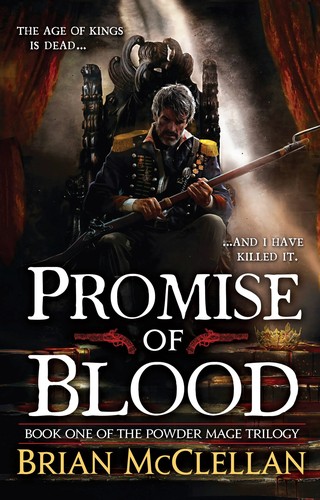
Field Marshal Tamas opens the book by overthrowing his own king — guillotines, purge lists, the works — and then has to hold the country together through the civil war, foreign invasion, and divine complications that follow. McClellan's powder mages snort gunpowder for magic, which sounds like a gimmick until you see how thoroughly he's thought through what musket-era armies do with wizards who can float bullets. The French Revolution is the obvious template, and the book keeps the revolution's real lesson: seizing power is the easy part. Brisk, violent, and refreshingly interested in the men doing staff work while the gods wake up.
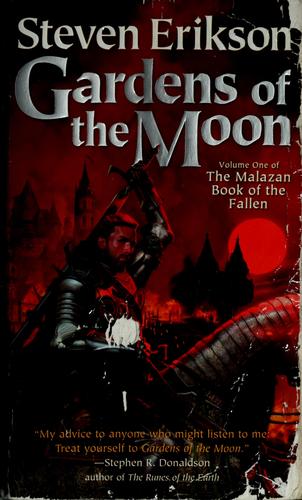
The Malazan Book of the Fallen drops you into the middle of an imperial campaign with no briefing packet and no sympathy — the siege of Pale is already underway, the Bridgeburners are already tired, and you'll spend a hundred pages finding your footing. Persevere. Erikson, an archaeologist and anthropologist by training, built the deepest world in modern fantasy, and his Malazan army is one of its great fictional militaries: sappers, squad mages, and infantry with the fatalism of troops who've been at war their whole adult lives. Ten fat volumes, more tragedy than triumph. This is the door in, and it does not open gently.
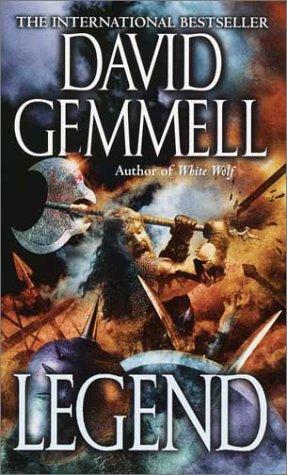
Dros Delnoch has six walls, a garrison of farmers, and one hope: Druss, a sixty-year-old axeman whose legend is bigger than his knees, come to die on a wall because that's a better end than the one waiting in bed. Gemmell famously wrote it while awaiting cancer test results, with the fortress standing in for the disease, and that urgency is soaked into every page — this is a book about courage as a decision you keep making after the situation is hopeless. The prose is meat and potatoes and the philosophy is a soldier's. Nobody has written a siege with more heart, before or since.

A colonial garrison at the edge of empire gets a new commander — the brilliant, unreadable Colonel Janus — and marches into a campaign that turns out to be about far more than restoring a client prince. Wexler writes musket-and-bayonet warfare with genuine care: column versus line, water discipline on desert marches, the way a green battalion becomes a real one only by surviving something. Winter Ihernglass, a ranker hiding her identity to serve, gives the book its spine and one of the genre's best ground-level views of small-unit leadership. The magic stays scarce and expensive, which keeps the soldiering honest. First of five, and the series delivers.
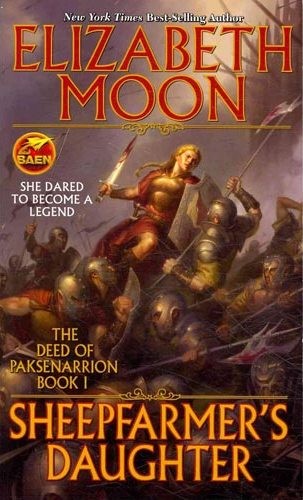
Paksenarrion walks off her father's farm and signs with a mercenary company, and Moon — a Marine Corps veteran — gives you the most honest basic training sequence in fantasy: the drill, the blisters, the mess duty, the slow transformation of a recruit into a soldier who can be trusted in a line. The paladin business the trilogy is famous for comes later; this first book is almost pure soldiering, closer to a military memoir than a quest. Moon understands that armies run on sergeants, routine, and shared misery, and she makes the unglamorous parts genuinely compelling. The quiet foundation half this genre is built on.
The Chain of Dogs is one of the great sustained sequences in fantasy: a general named Coltaine leading a battered army and thirty thousand refugees across a continent in revolt, fighting a rearguard action that goes on for months, every river crossing bought in blood. Erikson structures it like the military histories it echoes — Xenophon's march, every doomed fighting retreat you've ever read about — and the cumulative weight is devastating. You can start Malazan here instead of Gardens of the Moon; many do. It's the series' emotional high-water mark and one of the most honest things ever written about what soldiers owe civilians, and what it costs to pay it.
Captain Will Laurence of the Royal Navy captures a French prize carrying a dragon egg, and when it hatches and speaks to him, his naval career is over: he's now an aviator, transferred into the Aerial Corps — the Napoleonic Wars' scandalous, indispensable third service. Novik's masterstroke is treating dragons as a military logistics problem: crews, harnesses, formations, feeding requirements, and the social cost of serving in a branch polite society won't receive. Laurence's stiff Navy honor colliding with the Corps' informality is the engine, and Temeraire himself — curious, principled, increasingly political — is one of fantasy's great characters. Patrick O'Brian with a flight ceiling.
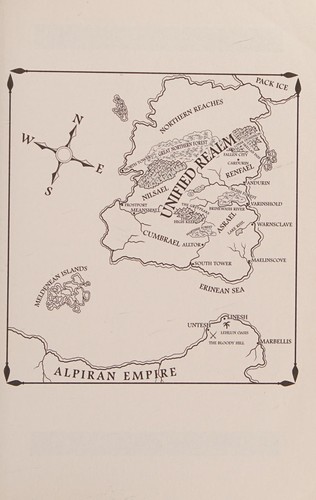
Vaelin Al Sorna is given to the Sixth Order at ten years old and raised into the Faith's blade — a childhood of training sequences that Ryan makes genuinely gripping, all drill and doctrine and brotherhood forged under instructors who bury their failures. The frame is a prisoner telling his own legend to a skeptical historian, which lets the book interrogate the difference between the war that happened and the war that gets written down. When the campaigning starts, Ryan handles sieges and desert marches with a professional's eye for logistics and morale. The sequels divide readers. This first book is close to flawless, and it stands alone.

Emily Marshwic is a gentlewoman of good family, and when the war has eaten her country's men, the draft notice comes for her. Tchaikovsky's standalone is Jane Austen marching into a musket war in a swamp — and that's not a joke about tone, it's the book's method: the same sharp social observation applied to drawing rooms and then to firing lines, letters home, and the arithmetic of a company that keeps shrinking. The swamp campaign is mud-and-powder warfare done with real texture, and Emily's transformation from civilian to veteran is handled with more honesty than most books manage across trilogies. One volume, complete. A quiet masterpiece.

Ten thousand Macht mercenaries — heavy infantry from a poor, hard country, the finest spearmen in the world — take a contract to fight in a foreign empire's civil war. Then their employer dies mid-campaign, and they're a marooned army deep in hostile territory with one option: march out, fighting the whole way. Kearney is retelling Xenophon's Anabasis with the serial numbers barely filed off, and it's a superb match of source to author — he writes phalanx warfare with brutal physicality, all shoving, heat, and the discipline that keeps a shield wall from becoming a massacre. Lean, fast, and criminally overlooked. If you know the history, the ending still lands.
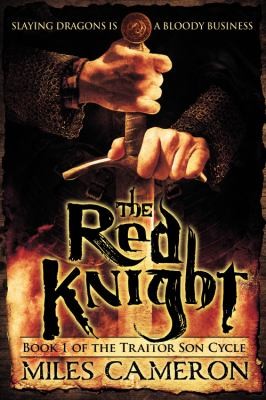
A mercenary company takes a contract to defend an abbey against creatures out of the Wild, and the job turns into a full siege against an enemy that thinks strategically. Miles Cameron is the fantasy pen name of historical novelist Christian Cameron — a Navy veteran and a serious armored reenactor — and it shows in every buckle: this is the most materially accurate depiction of medieval soldiering in fantasy, from how long it takes to arm a man to what a lance actually does to a body. The company itself, with its drills and its accounts and its quarrels, is the real protagonist. Dense with viewpoints, occasionally overstuffed, always convincing.
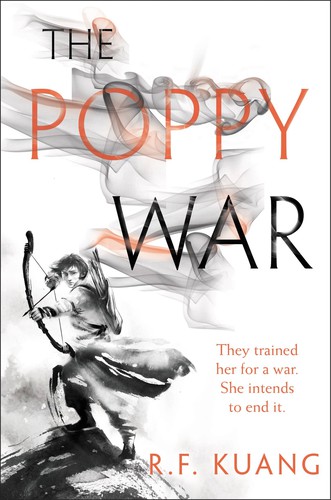
Rin tests out of her province into the empire's elite military academy, and the first half reads like a sharp-elbowed school story. Then the war starts, and the book becomes something else entirely. Kuang maps her fantasy conflict onto the Second Sino-Japanese War, and she does not look away from what that means — the atrocity chapters draw directly on the historical record of Nanjing, and they are meant to hurt. This is a book about how a soldier becomes capable of anything, told from inside the transformation, and it refuses you the comfort of a heroine who stays clean. Brilliant, harrowing, and not a recruiting poster for anything.
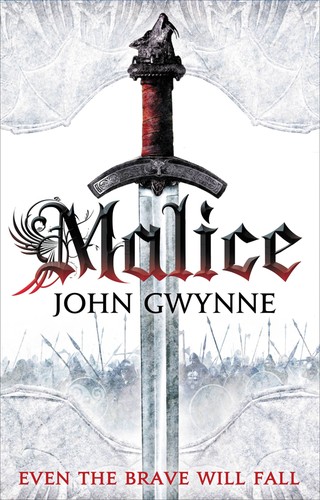
The Banished Lands are heading into a prophesied war between good and evil, and Gwynne's trick is that the prophecy is being read by people — ambitious kings, scheming counselors — who are very sure they know which side they're on. Corban's long apprenticeship from boy to warrior anchors the book, and Gwynne, a longtime Viking-era reenactor, writes the shield wall like a man who has stood in one: the crush, the terror, the way training is the only thing that holds when the lines meet. Old-fashioned in the best sense — oaths, loyalty, earned brotherhood — and battle scenes that hit like a boar spear. The Faithful and the Fallen builds to one of epic fantasy's most satisfying payoffs.

The Omehi have been at war for almost two centuries — a Xhosa-inspired people locked in an endless fight for a peninsula, their whole society organized as a war machine, caste-bound from birth to blade. Tau is a commoner with no gift and no prospects who decides, after the powerful casually destroy his life, to become the greatest swordsman alive through sheer volume of training — and Winter turns sword drill into the most propulsive montage in modern fantasy. Underneath the revenge engine is a sharp book about who a society spends in its wars and who profits from them. Relentless pacing. Gym-playlist energy with an actual brain.
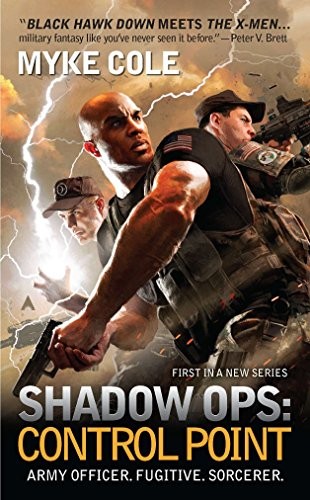
People have started manifesting magic, and the US military's answer is exactly what you'd expect: regulate it, conscript it, and stand up a Supernatural Operations Corps with its own MOS codes and its own black-site FOB in another dimension. Cole — whose own service ran through the Coast Guard and multiple deployments to Iraq — writes the military bureaucracy of magic with insider fluency, from PT formations to rules of engagement for sorcery. Oscar Britton, an Army officer who manifests a prohibited power and runs, is a deliberately frustrating protagonist: indecisive, compromised, human. The book's real question is what a uniform is worth when the institution wearing it stops deserving you. Brainy, kinetic, and argued from experience.
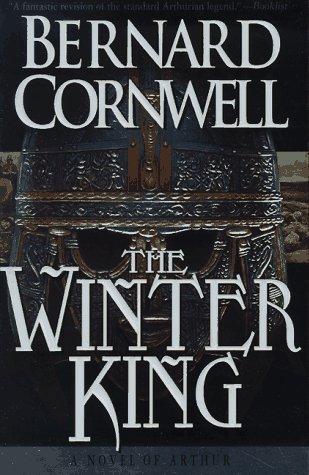
Arthur without the shine: a warlord in post-Roman Britain, holding a collapsing patchwork of petty kingdoms together against the Saxons with cavalry, oath-politics, and shield walls. Cornwell tells it through Derfel, a spearman who rose from the ranks — the sergeant's-eye view Cornwell perfected with Sharpe, transplanted to the Dark Ages — and the battle scenes are the author at full power: the smell and shove of the wall, the terror before the lines close, the way courage is mostly not shaming yourself in front of your file. The magic stays ambiguous, the politics stay filthy, and the trilogy this opens is the best Arthur ever written. Fight us.
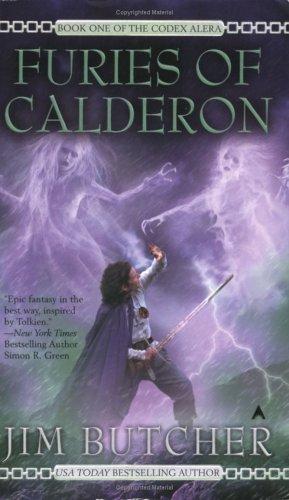
Butcher wrote this on a bet: that he could build a good story from two bad prompts — a lost Roman legion and Pokémon. He won. Alera is Rome two thousand years after a legion marched into another world, complete with legions, cursors, and a senate's worth of scheming, where every citizen bonds with elemental furies. The first book is a frontier invasion story — a valley of steadholders and a understrength garrison against a horde nobody believed was coming — and the series grows into full-scale legion warfare by the later volumes, some of the best mass-battle writing in fantasy. Popcorn with a surprisingly solid tactical core.
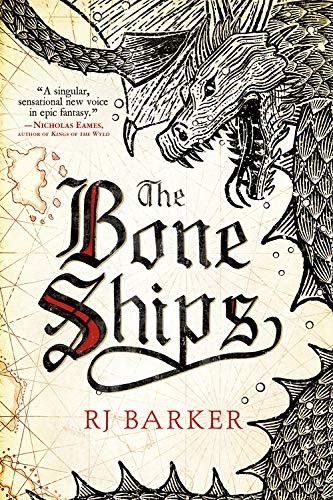
Two island nations have fought for generations in warships built from dragon bone, and the dragons are extinct — every hull is irreplaceable capital, every battle spends the past. Joron Twiner is a condemned man aboard a black ship crewed by the condemned, until Lucky Meas Gilbryn takes his hat and his command and starts making a crew out of human wreckage. Barker builds his naval world from the keel up — its ranks, its songs, its brutal traditions — and the rebuilding-a-crew arc is the best of its kind since O'Brian. Strange, salt-crusted, and genuinely moving by the end. Naval fantasy is rare; naval fantasy this good is rarer.
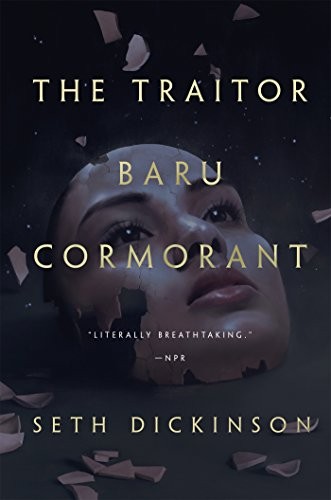
The Empire of Masks conquers Baru's island home without a single battle — trade agreements, schools, sanitation, and a generation later the old world is gone. So Baru decides to destroy the empire from inside, as an accountant. Most of this book's warfare is economic: currency manipulation, loan politics, and rebellion financed on margin, building to a campaign where Dickinson proves he can write cavalry and logistics too. It belongs on this shelf because it understands what most war fiction forgets — wars are won by treasuries, and the ledger is a weapon system. The ending is a knife you'll see coming and still walk into. Cold, brilliant, merciless.

The Range is the frontier between the Republic and the Deep Kings, held for eighty years by the deterrent of a magical superweapon nobody's sure still works — mutually assured destruction with the serial numbers filed off, garrisoned by conscripts, criminals, and lifers. Galharrow is a bounty hunter and washed-up officer working for a power he barely understands, dragging his crew through the Misery, a battlefield so cursed the geography stopped cooperating. McDonald writes veterans convincingly: the drinking, the black jokes, the loyalty that outlives hope. Grimdark, yes, but with a working heart and a plot that actually resolves. The trilogy sticks the landing, which in this subgenre counts as a miracle.
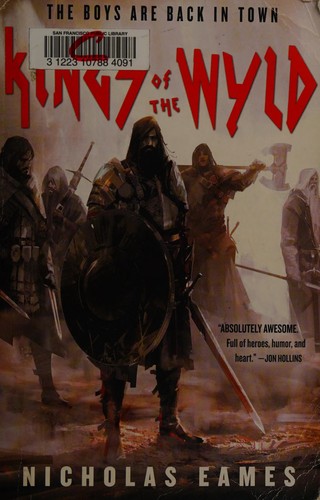
Mercenary bands in Eames' world are treated like rock bands — tours, promoters, arena crowds — and Saga was the greatest of them all, twenty years ago. Now Clay Cooper is fat, happy, and retired, and the frontman shows up on his porch because his daughter is trapped in a city under siege by a horde, and the old band needs to get back together and cross the deadliest wilderness on the map to reach her. It's the funniest book on this shelf and the most warm-hearted, but the reason it's here is what's underneath: aging bodies, dead friends, and the debt you owe the people you served with. The getting-the-band-back-together story, perfected.

A mercenary company marches across a desert to commit a decapitation strike on the world's holiest empire, and the new recruit — beautiful, useless at soldiering, magnetic in a way that should worry everyone — turns out to be something much worse than a runaway noble. Smith Spark writes in a fractured, incantatory prose style that readers either fall into or bounce off hard; try the first fifty pages before you commit. What earns the book its slot is the company itself, rendered with unglamorous accuracy — the marching, the water discipline, the way men follow charisma to their deaths knowing better. Grimdark at its most literary and least apologetic.