The Doc Shelf
Every platoon has one person whose war is different: Doc fights the casualty, not the enemy. This shelf is the literature of military medicine from the ground up — medic and corpsman memoirs, the surgeons at the forward tables, the flight medics racing the clock, and the histories of how battlefield medicine went from litter bearers to a system that saves people who would have died in any previous war. It's also, quietly, some of the best writing about moral weight in the whole military canon, because Doc keeps score in a way nobody else has to.
Buy links go to Bookshop.org (which supports independent bookstores) and Amazon. Some are affiliate links — if you buy, we earn a small commission at no extra cost to you. As an Amazon Associate we earn from qualifying purchases. It never affects which books are on this list or how we describe them. How this works.
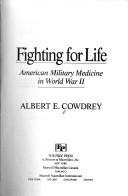
Cowdrey wrote official history for the Army, and this is his readable single-volume account of American military medicine in World War II — from induction physicals to field hospitals to the plasma and penicillin revolutions that meant a wounded soldier in 1944 had survival odds his father in 1918 could not have imagined. It is institutional history: systems, logistics, doctrine, with enough front-line texture to keep it moving. Not a memoir and doesn't pretend to be. If you want to know how the machine behind every medic and corpsman on this shelf got built, this is the book.
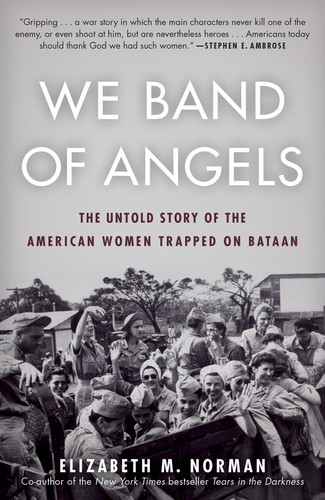
The nurses of Bataan and Corregidor: American military women who worked jungle hospitals through the siege, were captured when the Philippines fell, and spent three years as prisoners of the Japanese — every one of them surviving to liberation. Norman builds the account from interviews with the survivors, their letters, and their diaries, and it reads like what it is: the last full testimony of a group the military took decades to properly honor. Both Army and Navy nurses are here. If you thought you knew the Bataan story, this is the half of it most histories gave a paragraph.
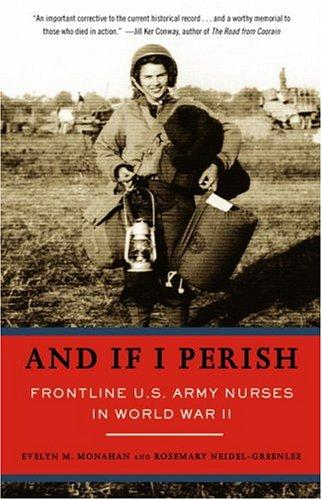
The WWII Army nurses, finally given a full accounting: North Africa, Sicily, Anzio — where nurses worked field hospitals under shellfire and some were killed at their posts — through to the liberation of the camps. Monahan and Neidel-Greenlee reconstruct it from interviews and records, and the result reads like the history the nurses themselves never got to demand. It is long and occasionally exhaustive, in the way of books written to settle a record. But the title was a line these women had reason to mean literally, and the book proves it name by name.
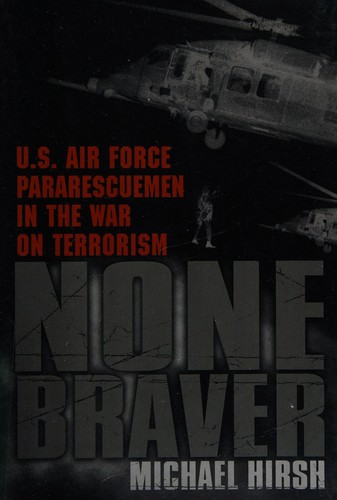
Pararescue is the special operations career field nobody makes movies about, because the job is jumping into the worst moment of someone else's mission to drag them out alive. Hirsh embedded with PJs in Afghanistan in the early GWOT years and wrote the field's definitive outside account: the training pipeline that washes out damn near everyone, the helicopter rides into fire that other units are actively fleeing, the motto — That Others May Live — that the rest of the military quotes and the PJs actually bill against. Pair it with Alone at Dawn for the combat controller side of AFSOC. The Air Force's quiet professionals, finally written down.
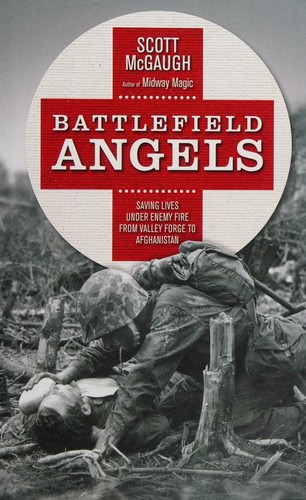
A single-volume history of the corpsman and the combat medic from the Revolution to Afghanistan, told through individual rescues rather than institutional charts. McGaugh's method is to pick a fight, put you next to the doc working it, and then explain what medicine knew at that moment — which makes the arc of the book the arc of battlefield survival rates themselves. It is popular history, briskly written, occasionally thin on analysis. But as an introduction to why so many corpsman and medic memorials exist, and what it took to earn them, it does the job without turning into a recruiting poster.
De Rond is a Cambridge ethnographer who embedded with the trauma team at Camp Bastion at the height of the Afghan war and wrote down what he saw without the usual protective varnish: the surgical virtuosity, the boredom between mass-casualty events, the gallows humor, and the quiet question of what it does to people to perform miracles on catastrophically wounded young men and then eat lunch. Some clinicians disliked this book for its bluntness; that is rather the point. Short, uncomfortable, and unlike anything else on this shelf — military medicine observed, not remembered.
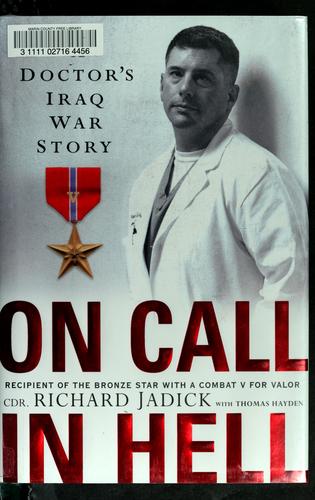
Jadick, a Navy physician, went into Fallujah with 1st Battalion, 8th Marines in November 2004 and made the decision the textbooks argued against: push the aid station into the city itself, so wounded Marines reached a doctor in minutes instead of a golden hour they didn't have. He was awarded the Bronze Star with V. Co-written with Thomas Hayden, the book is straightforward, unliterary, and completely convincing about what forward medicine costs the man providing it. The best account of battlefield medicine to come out of the Iraq War's hardest urban fight, and an argument — made in blood — about where the doc belongs.
The line-medic memoir. Evans carried the aid bag for an infantry platoon in Vietnam, and with co-writer Charles W. Sasser he put down what the job actually was: patrols, ambushes, and the seconds after someone screams for the medic — when everyone else gets to take cover and you don't. No strategic frame, no politics; the war at the range of a pressure dressing. It reads fast, sometimes pulp-fast, which is Sasser's style, but the core of it is unfakeable. If you want to understand why infantrymen call one man Doc for the rest of their lives, start here.

Glasser was an Army doctor at the evacuation hospital in Japan where Vietnam's worst casualties arrived, and in 1971 he published these accounts — part reportage, part reconstructed stories of the wounded men themselves — because the soldiers kept asking that somebody remember. It is one of the great books of the Vietnam War, full stop: spare, furious, and clinical in the way that makes the fury land harder. Fifty years on, nothing written about the medevac chain and what it carried has aged better. If this shelf puts one Vietnam-era book in your hands, it should be this one.
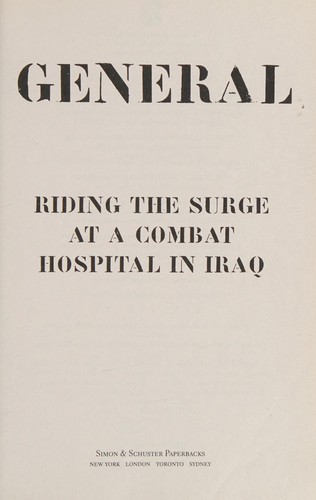
Hnida was a suburban family physician who talked his way into an Army commission after 9/11 — at an age when most doctors are planning retirement — and ended up doing a surge tour at a combat support hospital in Iraq, catching casualties fresh off the medevac. The tone will surprise you: it is funny, deliberately, in the way trauma teams are funny at 3 a.m., and then it stops being funny exactly when it should. What it captures better than any other Iraq medicine book is the CSH itself — career military and civilian doctors in uniform, black humor, unbearable days. If M*A*S*H rang true, this is its nonfiction descendant, two wars later.
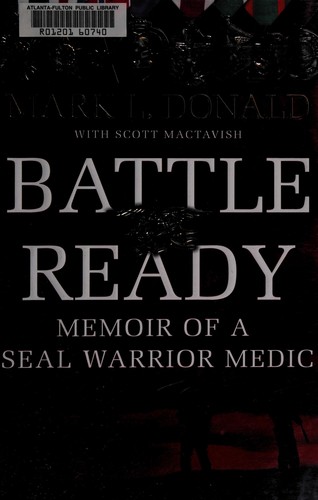
Donald did the job from every end of it: enlisted Navy corpsman, then SEAL, then medical officer — and he earned the Navy Cross for a 2003 firefight in Afghanistan where he treated casualties while returning fire over their bodies. The combat chapters are solid, but the second half is the part most operator memoirs skip: the PTSD, the survivor's guilt, and how long it took a man trained to treat trauma to admit he had it. That honesty, from someone with his credentials, is what earns the shelf space. A corpsman's book wearing a SEAL book's cover.
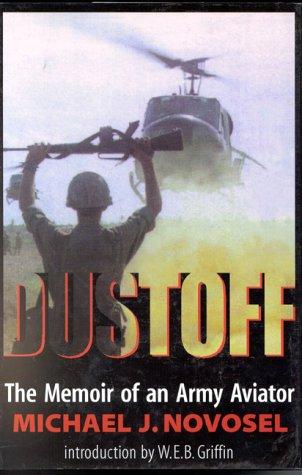
Novosel flew B-29s in World War II, then talked his way back into a cockpit in his forties to fly Dust Off medevac in Vietnam — where, over two tours, he evacuated more than 5,500 casualties. His Medal of Honor came from an October 1969 mission: fifteen separate extractions under fire, wounded himself, to bring out 29 soldiers. The memoir is modest almost to a fault; Novosel plainly considered the mission ordinary and the numbers just arithmetic. Read it anyway, and do the arithmetic yourself. His son flew Dust Off in Vietnam at the same time — and each ended up medevacing the other. That story is in here too.
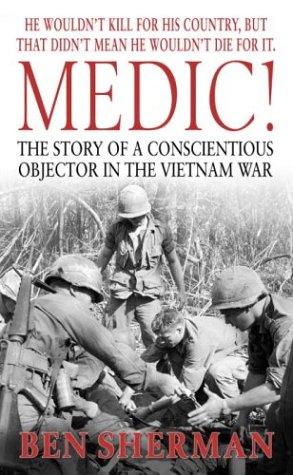
Sherman went to Vietnam as a conscientious objector serving as a medic — one of the soldiers who refused to kill but not to serve, a category the Army has never quite known what to do with. The memoir covers his training, his year treating the wounded, and the particular isolation of standing inside a war on those terms. It is a modest book, plainly written, and stronger for it. The medic's obligation — go to the wounded, whoever they are — has rarely been rendered more literally than by the men who did the job on principle. A Vietnam story you haven't already read twelve versions of.

Brady flew Dust Off — unarmed medevac helicopters — in Vietnam and earned the Medal of Honor for a single day in January 1968 when he used three different aircraft to pull dozens of wounded men out of fog and fire that other pilots had already declined. His memoir is part flying story, part institutional fight: the Army repeatedly tried to arm, re-task, or subordinate medevac, and Brady spent a career arguing the mission worked precisely because it flew unarmed and always came. Written with a conviction that sometimes shades into sermon. He earned the pulpit.
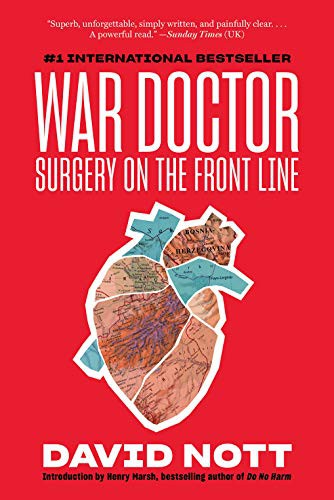
Nott is a Welsh vascular surgeon who spent more than two decades taking unpaid leave from London hospitals to operate in war zones — Sarajevo under siege, Aleppo under barrel bombs — often as the only surgeon of his kind left in the city. This is the civilian wing of war surgery: no medevac chain, no Role 3 behind you, improvising against injuries the textbooks say require equipment you don't have. It is graphic, self-critical, and honest about the adrenaline that kept pulling him back. Included here because every military doc on this shelf had a system behind them; Nott shows what the same work looks like without one.
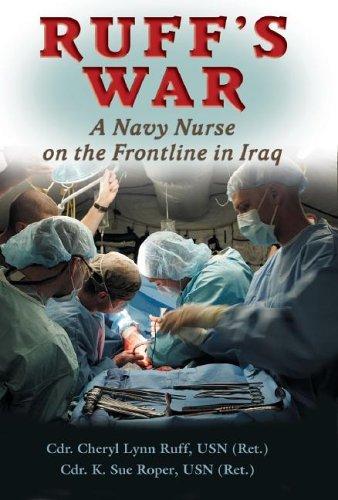
Ruff was a Navy nurse anesthetist who went ashore with a surgical company during the 2003 invasion of Iraq — tents, sand, and casualties arriving faster than the equipment could keep up. Hers was among the first published accounts of Navy medical women at the front edge of that war, and it is told without garnish: the cases, the fatigue, the friction of being a senior female officer in a system still improvising its answer to women at war. Co-written with K. Sue Roper. The prose is functional rather than literary. The record it preserves is the reason it's here.

Dauphin was the Canadian emergency physician who commanded the NATO Role 3 hospital at Kandahar Airfield in 2009 — the trauma center receiving the war's worst IED casualties from every coalition nation, and plenty of Afghans besides. His memoir runs case by case, in the particular voice of an ER doc who has decided to tell you the truth at the cost of his own composure. It is Canadian, which is mostly why American readers haven't heard of it, and that shouldn't matter: the blood ran through the same trauma bays. One of the frankest senior-physician accounts of the Afghan war in print.
Luz, a career Army Reserve nurse, deployed to a combat support hospital in Mosul after decades in uniform, and her memoir covers the whole span — mass-casualty days, the soldiers and Iraqi civilians in her wards, and the civilian nursing career on either side of the deployment. It is a warmer, more openly devotional book than most on this shelf, frank about faith and family in a way clinical memoirs usually are not. Not the most polished entry here, and it doesn't need to be: published accounts of Iraq from senior military nurses are scarce, and this one got written down.
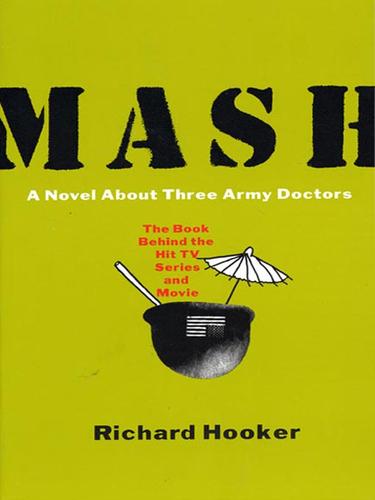
Hooker served as a surgeon with the Army in Korea and wrote this satirical novel about a Mobile Army Surgical Hospital in 1968 — the same year as Catch-22's Vietnam surge. The humor is specific to the medical corps: the absurdity of trying to save lives in a war hospital staffed by men who were drafted against their will and who respond to the institutional insanity around them with irreverence, alcohol, and competence. The novel predates and defines the television series and captures something the TV show softened: the specific black comedy of medicine practiced under artillery fire.

Not a book you read; a book that gets read at 2 a.m. under red light. Emergency War Surgery is the Defense Department's actual manual for combat casualty care — the distilled, revised-by-every-war doctrine for penetrating trauma, burns, blast injury, and triage when the casualties outnumber the tables. It is on this shelf for one reason: everything the memoirs describe as instinct is written down here as procedure. Civilian readers will find it clinical to the point of cold. That is the point. This is the institutional memory of every doc who ever worked a mass-casualty event, in tabbed form.