The What-If Shelf
Every staff ride ends with the same game: what if he'd held the ridge, what if the carriers had been in port, what if the invasion had gone in. Alternate history is that game played to book length, and the good stuff is rigorous — real orders of battle, real personalities, one changed variable and honest consequences. This shelf collects the counterfactuals worth a professional's time, from the classics of the genre to the modern wargame-in-a-novel. The test: the author has to know the real history cold before earning the right to bend it.
Buy links go to Bookshop.org (which supports independent bookstores) and Amazon. Some are affiliate links — if you buy, we earn a small commission at no extra cost to you. As an Amazon Associate we earn from qualifying purchases. It never affects which books are on this list or how we describe them. How this works.
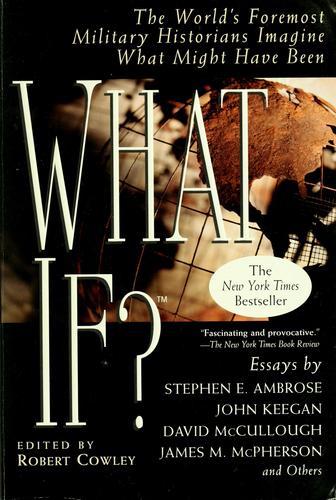
The founding editor of MHQ asked the heavyweights of military history — Keegan, McPherson, Ambrose, and company — to take counterfactuals seriously for once, and the result is the anthology that made 'what if' respectable in the seminar room. The essays walk battles and campaigns from Salamis to the twentieth century, asking where history actually hinged and where it only looks like it did. That second question is the book's real value: half these essays conclude the hinge was smaller, weirder, or earlier than you'd guess. The essential nonfiction companion to everything else on this shelf — the discipline behind the fiction.
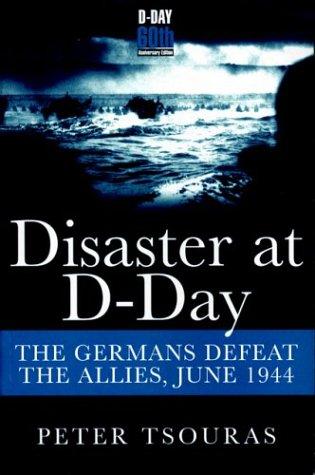
Tsouras writes the Normandy landings failing — and writes it as straight military history, complete with the sober tone of an official account. The method is the point: he changes small, plausible things (weather calls, panzer release timing, one commander's decision) and then lets the operational logic run wherever it runs, which turns out to be somewhere very dark for the Allies. Reading it is like a staff-college exercise in how thin the margin at Omaha actually was. Purists grumble about counterfactuals; planners recognize the genre instantly, because every OPLAN's branch-and-sequel annex is exactly this book with different letterhead.
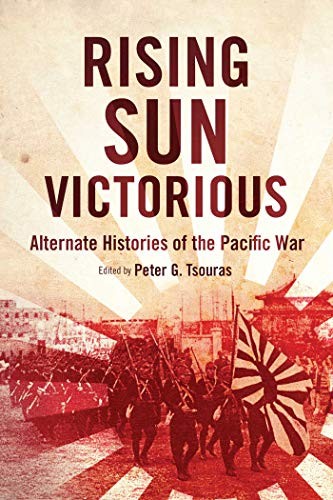
Tsouras assembles a crew of military historians and gives each one a hinge in the Pacific War to bend — Midway, Pearl Harbor's third wave, the Solomons — with the same rules as his D-Day book: plausible changes only, then follow the operational logic wherever it goes. The quality varies the way anthologies do, but the best essays double as sharp analysis of why the real campaign went the way it did; you learn the actual history by watching it counterfeited. Particularly good on logistics and oil, the unglamorous variables that decided the real war. For Pacific War readers who think they've read everything.
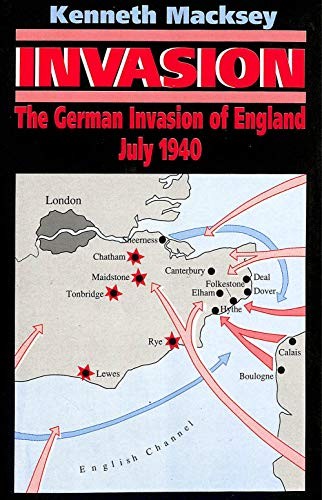
Macksey commanded tanks in the real war and wrote armored-warfare history for decades afterward, which is exactly the résumé you want for this: Operation Sea Lion actually launched, narrated as dry operational history from a world where it happened. Published in 1980, it's the professional's counterfactual — beach frontages, Royal Navy response times, the Luftwaffe's real loss rates — and Macksey is honest enough to make the fight desperate on both sides rather than handing either team the win cheap. The founding document of the invasion-of-Britain subgenre, and still the most technically credible entry in it. SS-GB is the sequel in spirit; this is the staff study.
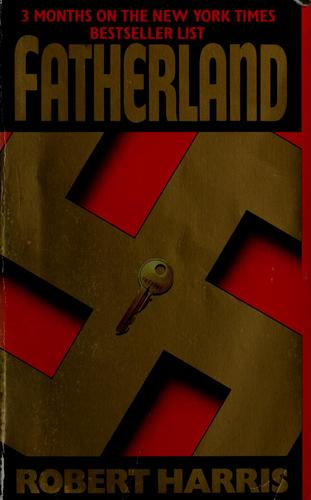
Berlin, 1964. Germany won, Hitler's seventy-fifth birthday is coming, and a homicide detective named Xavier March pulls a body out of a lake that leads him toward the one secret the Reich built its peace on. Harris, a British journalist before he was a novelist, does the thing that separates great alternate history from cosplay: he works out how a victorious Reich would launder its own memory, and then makes the discovery of the truth feel like a physical blow. The best-selling alternate history novel ever written, and it earned it. A detective story where the murderer is the state.
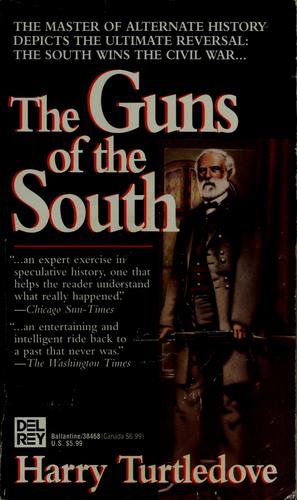
Time-traveling Afrikaner supremacists hand Robert E. Lee's army AK-47s, which sounds like a joke premise until you watch what Turtledove — a man with a PhD in history — does with it. The rifles win the war in a hundred pages; the remaining three hundred are about what the Confederacy actually was, as Lee himself is forced to confront the thing his benefactors want preserved. It's the rare counterfactual that uses its gimmick to argue about history rather than escape from it, and the Civil War detail is impeccable throughout. The genre's most famous novel, still one of its most serious.
The Axis won, America is partitioned between Japan and the Reich, and the most subversive object in the occupied world is a novel imagining the Allies had won — though not the way it actually happened. Dick's 1962 Hugo winner is less interested in wehrmacht-on-the-Potomac spectacle than in what occupation does to the inside of people's heads: the small collaborations, the antique-Americana trade, the I Ching consulted like a staff officer. It's a strange, interior, sometimes maddening book that ends by questioning its own reality. Every alternate history written since is downstream of it, and most of them are shallower.

Charles Lindbergh — aviator, celebrity, isolationist — beats Roosevelt in 1940, and America's slide into accommodation with Hitler is narrated by a Jewish kid in Newark watching his parents lose the country one radio broadcast at a time. Roth's genius move is scale: no war rooms, no resistance cells, just one family's kitchen as the national mood curdles around them. It's the most literary book on this shelf and the most frightening, because nothing in it requires villains — only ordinary people deciding the trouble doesn't apply to them. A masterclass in how democracies fail politely.
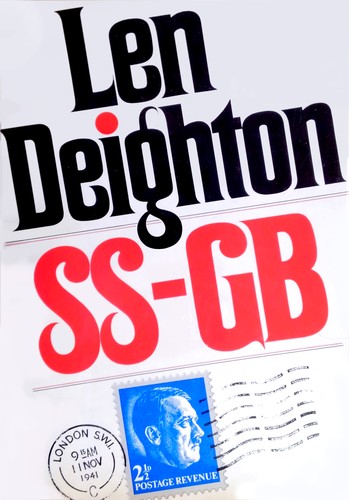
Britain lost in 1940, and Scotland Yard's best detective now files his reports to an SS Gruppenführer. Deighton — who also wrote serious operational history of the Battle of Britain — builds occupied London with a quartermaster's eye: the rationing, the informers, the exact texture of collaboration as a daily administrative fact rather than a melodrama. Douglas Archer just wants to solve a murder; the murder, naturally, refuses to stay small. Written in 1978, it remains the most convincing portrait of a Britain that surrendered, precisely because almost everyone in it is still trying to be decent within a system that has made decency a security risk.
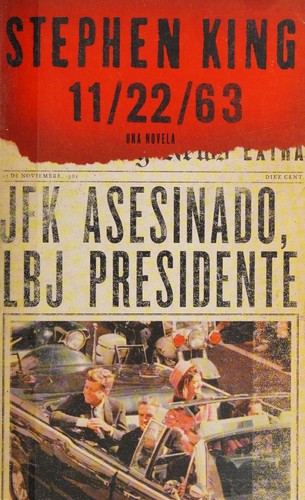
A Maine schoolteacher finds a doorway to 1958 and spends five years living toward one appointment in Dallas. Yes, it's King, and yes, it's a time-travel book — but it belongs on this shelf because it takes the central problem of counterfactual history more seriously than most of the genre: the past is not a switch you flip, it's a system that pushes back, and 'fix one thing' is a plan that has never once survived contact with history. The period detail is loving, the romance is genuinely affecting, and the ending has the honesty to count the cost. King's best book of his late career.

The Confederacy won in 1862, and twenty years later the two Americas go to war again — this time as bitter neighbors with professional armies, foreign alliances, and a grudge with compound interest. This is the gateway to Turtledove's enormous Southern Victory series, which eventually marches both countries through its own versions of the World Wars, but it stands alone as the best single volume: Lincoln as a wandering radical, Custer and Stonewall Jackson on opposing sides, and a continent learning that one civil war doesn't settle anything. Start here; continue into the series only if you have a free year.

Britain made peace after Dunkirk, and by 1952 it's a satellite state — press censored, Jews registered, Churchill an old man running the resistance from hiding. Sansom, best known for his Shardlake mysteries, brings a historian's patience to the collaborationist machinery: which real politicians would have signed, which papers would have cheered, how respectable the whole arrangement would have felt. The thriller plot — a civil servant, a secret worth killing for, a manhunt through London's great smog — is sturdy, but the atmosphere is the achievement. Fatherland shows the enemy victorious abroad; Dominion shows the quieter horror of a friend who quit.
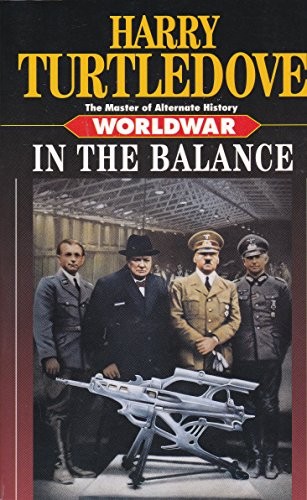
It's 1942, the world is fully occupied murdering itself, and an alien invasion fleet arrives expecting to conquer a medieval planet — their intelligence is eight hundred years stale. Suddenly the Wehrmacht, the Red Army, the Americans, and Imperial Japan have a common enemy and absolutely no ability to trust each other. The premise sounds like pulp; the execution is Turtledove using an outside threat to X-ray every combatant of the real war — who adapts, who collaborates, who cuts deals. First of a long series that eventually sprawls, but this opening volume is the tightest and the smartest. Pick the best, skip the rest.

The Pulitzer winner behind Andersonville wrote this slim counterfactual for Look magazine in 1960, and it became the little book that launched a thousand thicker ones. Gettysburg goes the other way, the Confederacy wins its independence, and Kantor sketches the next century of a divided North America in under a hundred pages — written, like Tsouras decades later, in the calm voice of a historian describing what simply happened. It's dated in places and gentler on the Confederacy than a modern writer would be, which is itself instructive. Read it as the genre's founding document: short, confident, and hugely influential.
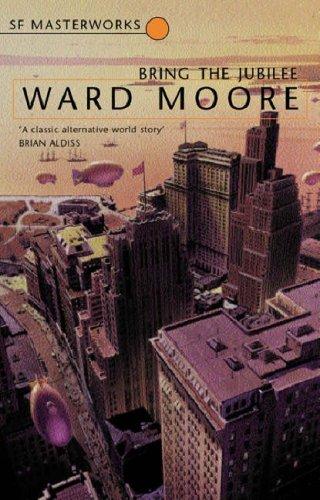
The 1953 classic that the whole Confederate-victory subgenre answers to. In Moore's world the South won at Gettysburg, and the defeated North has spent eighty years as an impoverished backwater — the losers' economy, the emigration, the resentment all worked out with a care that still feels modern. His narrator is a self-taught historian obsessed with the battle that broke his country, and the book's final movement, when he gets the chance to see it for himself, is one of the great endings in science fiction. Short, melancholy, and structurally perfect. The genre's cornerstone, and it still cuts.
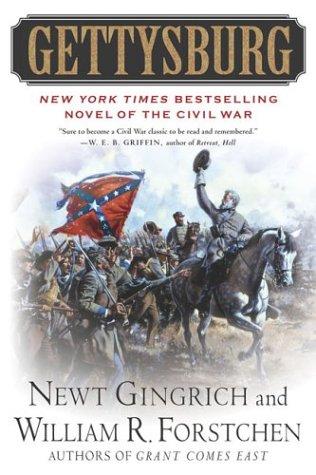
Whatever you think of the first author's day job, this trilogy-opener is serious counterfactual work — Forstchen is a professional historian, and it shows in every road net and ammunition return. The change is disciplined: Lee declines the frontal assaults of the real July 1863 and maneuvers instead, and the book war-games the consequences with genuine rigor rather than Confederate wish-fulfillment. The Army of the Potomac fights hard and smart; nobody gets a free victory. For readers who know the real battle well, watching the familiar units collide in unfamiliar places is the entire pleasure. The best pure military what-if of the Civil War shelf.
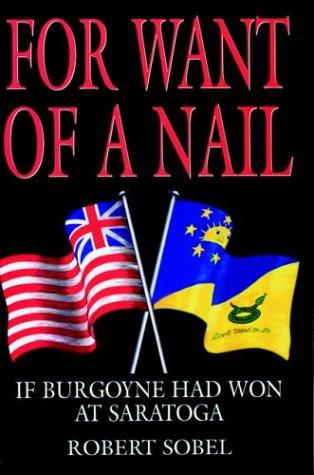
The strangest and most audacious book on this shelf: a business historian wrote an entire fake textbook — 1971-vintage academic prose, invented footnotes, a bibliography of sources that don't exist — covering two centuries of a North America where Burgoyne won at Saratoga and the Revolution failed. There is no plot and there are no characters, just the patient accumulation of counterfeit history: politics, economics, wars, all of it internally consistent and cross-referenced. It shouldn't work, and it's mesmerizing. A cult object among alternate-history writers, who regard it the way engineers regard a watch built entirely from scratch. Commit to the bit and it rewards you.
The Cuban Missile Crisis went hot, and ten years later a hollowed-out America — Washington gone, Manhattan a ruin, the country a diminished client of the British — is still lying to itself about how the war started. DuBois hangs the counterfactual on a newspaper reporter picking at a murder that connects to those thirteen days, and the mystery structure keeps the world-building honest: every revelation about 1962 lands as both plot and history. The Kennedy-era reckoning at the book's heart is genuinely uncomfortable. One of the most underrated novels in the genre — a Cold War ghost story where the ghost is the country.
Kaiser Wilhelm wants colonies, America won't sell, so Germany lands an army on Long Island to force the issue. Conroy's debut set the template for his long shelf of one-year-title counterfactuals: pick an invasion nobody wrote about, research the period armies honestly, and let a scratch American force learn modern war the hard way. The prose is plain and the romance subplots are obligatory, but the military logic is sound — the tiny 1901-vintage US Army really was in no shape for this, and watching the republic improvise is the fun. Meat-and-potatoes alternate history, served hot. Conroy fans argue about his best; most start here.
A country-house murder mystery, all drawing rooms and inheritance gossip — set in a Britain that made 'Peace with Honour' with Hitler in 1941 and is now, in 1949, sliding toward fascism one reasonable compromise at a time. Walton's trick is tonal: the cozy Agatha Christie machinery keeps humming while the reader slowly registers what kind of country the charming characters actually live in, and which of them are fine with it. The Scotland Yard inspector with a secret to protect is one of the genre's best-drawn characters. First of the Small Change trilogy, and the most quietly chilling book on this shelf.
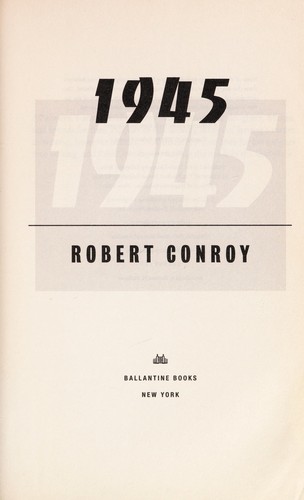
In real history, a faction of Japanese officers tried to seize the palace and stop the surrender broadcast in August 1945; it failed by hours. Conroy asks: what if it hadn't? The war grinds on, and America launches the invasion of the Home Islands that Operation Downfall planners actually drafted — with the casualty arithmetic that made the real decision-makers reach for the bomb. Conroy's workmanlike style suits the material; this is invasion-planning made flesh, beach by beach. Read it alongside the real Downfall literature and the counterfactual stops feeling like fiction and starts feeling like the briefing nobody wanted to deliver.
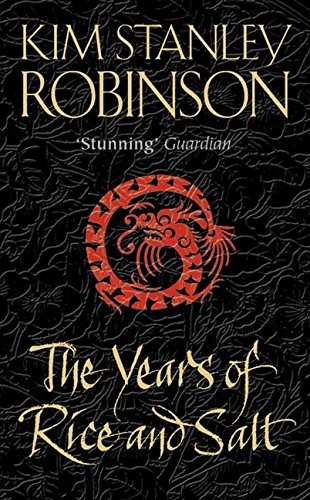
The biggest swing in the genre: the Black Death kills not a third of Europe but nearly all of it, and Robinson narrates the next seven hundred years of a world built by Islam, China, and India — including, eventually, its own version of a decades-long world war that makes the real one look brief. A cast of souls reincarnated across eras carries the story, which is either a beautiful structural device or a lot of Buddhism depending on your patience. It's slow, ambitious, and occasionally professorial, but no other book on this shelf thinks this hard about what civilization itself is contingent on. The maximalist's pick.