After the War
This is the serious shelf, and we treat it that way. The clinical foundations that changed how trauma is understood, the moral-injury work that explains the wound the diagnosis manuals missed, and the memoirs of people who came home and told the truth about the years it took. None of this is a substitute for care — if you're in it right now, the Veterans Crisis Line is 988, press 1. What these books do is make the invisible legible: to the person carrying it, and to the family trying to understand what came home in their soldier's seabag alongside the uniforms.
Buy links go to Bookshop.org (which supports independent bookstores) and Amazon. Some are affiliate links — if you buy, we earn a small commission at no extra cost to you. As an Amazon Associate we earn from qualifying purchases. It never affects which books are on this list or how we describe them. How this works.
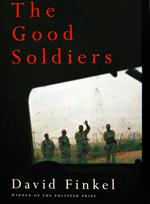
Finkel embedded with an infantry battalion during the Baghdad surge and came back with the definitive close-up of what those fifteen months actually cost. No politics, no big picture — just soldiers, IEDs, and a commander watching his optimism die by inches. It's the reason Thank You For Your Service had to exist.
Not a memoir. Not a novel. Something more honest than either. O'Brien served in Vietnam as an infantryman and spent twenty years figuring out how to tell the truth about it. The weight of the physical gear is the point of entry. What it opens into is the weight of everything else: guilt, memory, the stories we tell to survive. The most important American book about ground combat ever written by someone who was there.
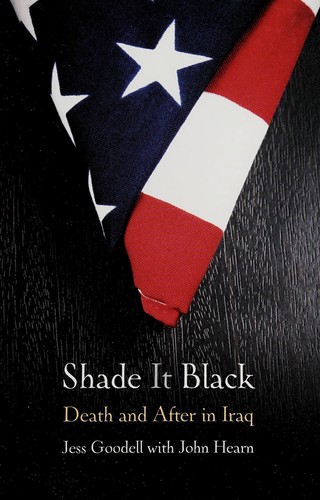
Goodell served in the Marine Corps' first officially recognized Mortuary Affairs unit in Iraq, processing the remains of fellow Marines at al Taqaddum in 2004. The title comes from the paperwork: where a body part was missing, you shaded the diagram black. This is one of the shortest books on this shelf and one of the heaviest — the war itself, and then the coming home from a job nobody thanks you for and nobody wants to hear about. There is no uplift arc forced onto it. It's essential precisely because almost no one else has written this war from where she stood.
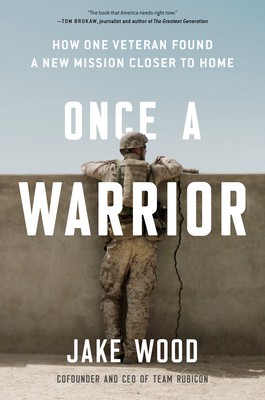
Wood was a Marine sniper with tours in Iraq and Afghanistan who came home and co-founded Team Rubicon, the disaster-response organization that puts veterans back on a mission with a team and a purpose. His sniper partner Clay Hunt — beside him in Haiti on Team Rubicon's first operation — died by suicide in 2011; the federal veterans' suicide-prevention law now carries Hunt's name, and that loss runs under every page. Half memoir, half argument: the void after service kills people, and the cure is work that matters done alongside people who get it. The most practical book on this shelf — proof that homecoming can be built, not just endured.
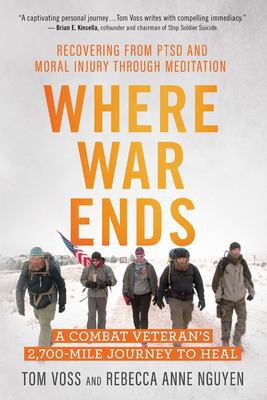
Voss came home from Iraq carrying moral injury before he had a word for it, and when talk therapy and medication didn't reach it, he walked — 2,700 miles from Milwaukee to Los Angeles, on foot, with another veteran. Co-written with Rebecca Anne Nguyen, the book follows the walk and then goes where most veteran memoirs won't: into meditation and breath work as the thing that finally moved the needle. Readers allergic to anything wellness-adjacent should know in advance that's where it lands. But it is honest about everything that didn't work first, and that honesty is the point.
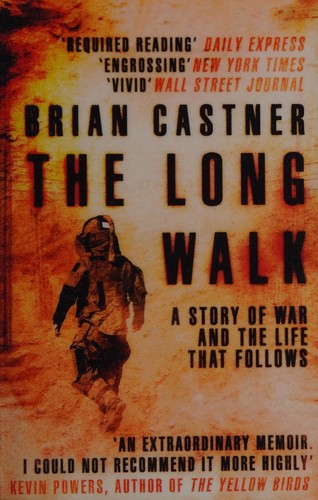
An EOD team leader comes home from disarming bombs in Iraq and can't turn off "the Crazy" — Castner's name for the hypervigilance that follows him around the grocery store. It's the war-and-after in one book: the job that demands perfect calm, and the nervous system that never forgives you for it. The best thing written on EOD and what it leaves behind.
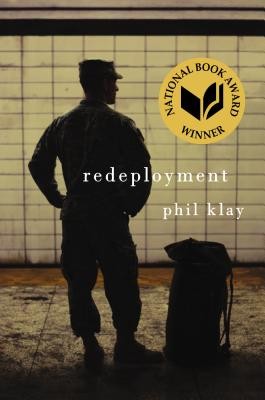
Klay served as a Marine officer in Iraq and published this collection of linked stories in 2014, winning the National Book Award. Each story inhabits a different character — a mortuary affairs Marine, a civil affairs officer, a reservist returning home, a veteran working in a dog shelter — and together they build the most complete portrait of what the Iraq and Afghanistan wars produced at the human level. Klay does not sentimentalize and does not condemn. He documents. The result is the finest American war fiction of the post-9/11 era, and the one that will be read alongside Hemingway and O'Brien in fifty years.
Powers served in the Army in Mosul in 2004 and wrote this novel about two soldiers, a year in Iraq, and what happens to one of them. The novel moves between the deployment and the aftermath, between the Euphrates and Virginia, tracking what Private Bartle carries home and what he cannot explain to anyone who was not there. Powers wrote the novel in verse paragraphs — the prose has the compression of poetry — and produced the most formally ambitious fiction of the Iraq war. The National Book Award finalist that belongs on every reading list that includes The Things They Carried.
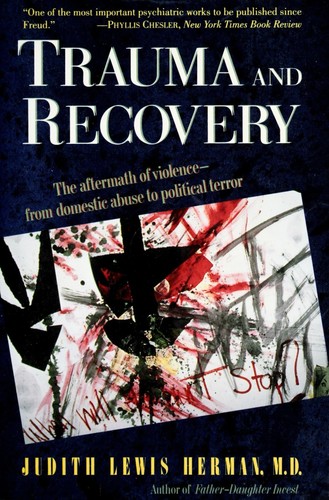
Herman is the Harvard psychiatrist who mapped the territory before most of the country would say the word trauma out loud. This 1992 book connected combat veterans, assault survivors, and political prisoners into a single clinical picture — and introduced the concept of complex PTSD the VA still argues about. It is not a veterans' book specifically, which is exactly why it belongs here: it shows that the machinery of what happened to you is the same machinery documented in every survivor population on earth. Dense in places, and worth every page. Read it alongside The Body Keeps the Score.
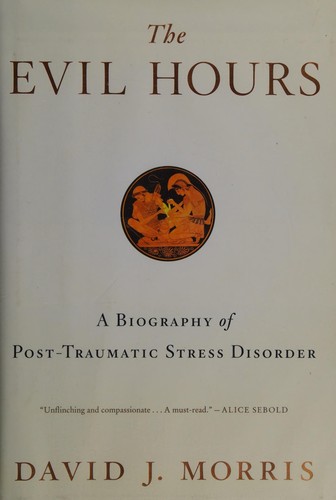
Morris was a Marine infantry officer before he was a war correspondent, and he survived an IED strike in Baghdad before he was diagnosed with PTSD. The Evil Hours is his biography of the diagnosis itself — where it came from, how the VA treats it, which therapies have evidence behind them and which are mostly waiting rooms. What makes it essential is the doubled perspective: a patient's memoir and a reporter's investigation running through the same book. If you want one modern volume that explains what PTSD actually is without flinching or preaching, this is it.

Wood won the Pulitzer Prize for his reporting on severely wounded veterans, and this book is his full accounting of moral injury — the wound he argues defines the post-9/11 generation the way shell shock defined 1918. Built on years of interviews with infantrymen, medics, drone crews, and chaplains, it separates moral injury from PTSD cleanly enough that the distinction finally sticks, and it is unsparing about how little the DoD and VA had built to address it. If Shay's books are the classical foundation, this is the field report from our wars. Start here if the word that fits is guilt, not fear.
Marlantes wrote Matterhorn. This is the nonfiction companion: his own account of what he did in Vietnam, what he was trained to do, and what nobody prepared him for — the moral and psychological weight of killing. He draws on Jungian psychology, mythology, and his own experience to argue that the military trains warriors to kill and then fails to prepare them for what killing does to a human soul, and that this failure produces the veteran crisis. More uncomfortable than most books on the subject. More honestly argued. The gap between what Marlantes describes and what the military currently does about it is still very large.
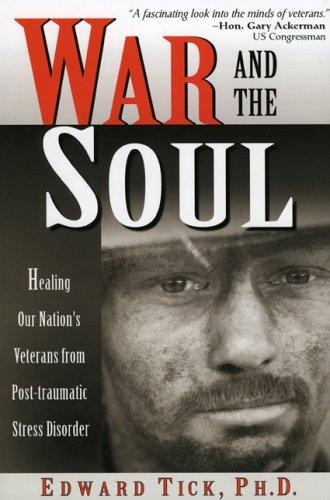
Tick is a psychotherapist who has spent decades sitting with Vietnam veterans the system failed, and his argument is blunt: PTSD is not just a disorder of fear circuitry, it is a wound to identity — to the soul, in his language — and treating it as a symptom checklist is why so much treatment fails. He draws on warrior traditions from other cultures that brought their fighters home with ritual and community instead of a DD-214 and a parking lot. Some of it will read as too mystical for some readers. The veterans he has worked with tend not to care what it's called.
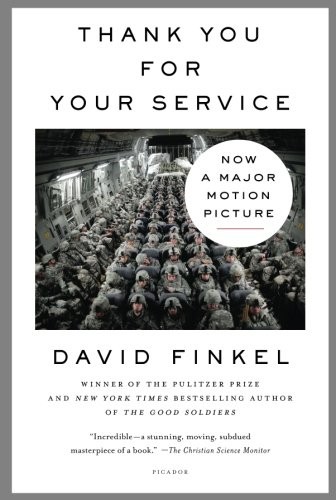
Finkel embedded with the 2-16 Infantry Battalion in Iraq and wrote The Good Soldiers. He then went back to find the men from that battalion years later — back in Kansas, trying to reintegrate — and wrote this account of what the war had done to them and what the country had and had not done about it. The title is the sentence most veterans hear most often and understand least. The book documents what is behind that sentence: the traumatic brain injuries, the marriages that didn't survive, the VA appointments that did not happen, and the specific, identifiable, treatable suffering that a sentence cannot address.
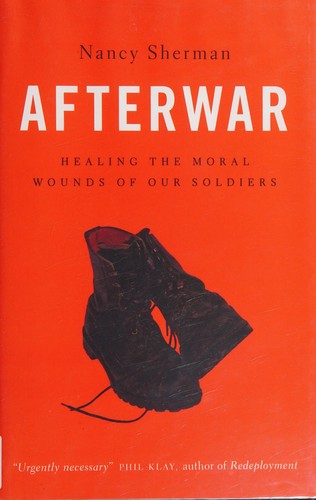
Sherman is a philosopher who held the inaugural Distinguished Chair in Ethics at the Naval Academy, and Afterwar is what a moral philosopher does when she takes veterans seriously as moral agents instead of case files. Built on interviews with post-9/11 veterans, it works through guilt, resentment, betrayal, and the awkward civilian thank-you-for-your-service exchange with more rigor than anything else on this shelf. The prose is academic in places — this is Oxford University Press, not an airport paperback. But her core claim lands: healing moral injury is not just a clinical job, it's a conversation civilians are obligated to join.
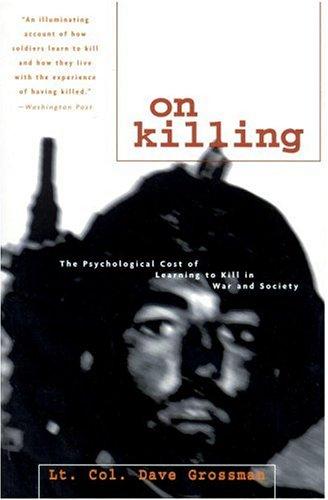
Grossman's analysis of the psychology of killing in combat — why humans have an innate resistance to killing other humans, how military training overcomes that resistance, and what the psychological consequences of killing are for the individuals who do it. Based on S.L.A. Marshall's WWII research and Grossman's own work as a West Point psychology professor. The book is controversial in its statistical foundations but has shaped every subsequent discussion of combat psychology, PTSD, and the ethical obligations of military training. Required context for anyone thinking seriously about what military training actually does to people.
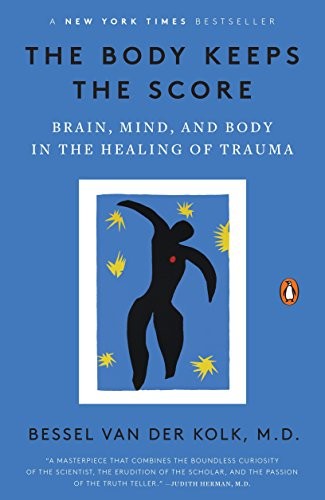
The definitive account of what trauma does to the brain and body — written by the psychiatrist who spent forty years treating veterans and trauma survivors and concluded that talk therapy alone cannot reach what combat does to a person. Van der Kolk's research on PTSD is the scientific foundation of every effective veteran treatment program operating today. Every leader who has ever told a soldier to "drive on" without understanding what they were driving through should read this. Required reading for chaplains, behavioral health officers, NCO leadership, and anyone who has ever been responsible for the mental health of people who have seen sustained combat.
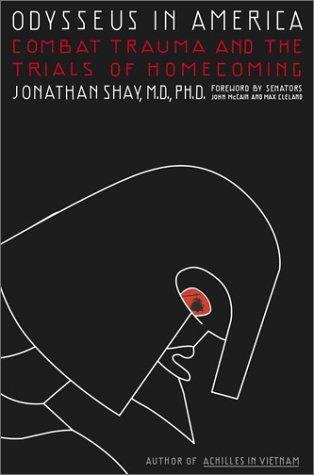
Shay, a VA psychiatrist, reads the Odyssey as the original reintegration story: Odysseus's ten-year journey home is a portrait of combat trauma and the difficulty of returning to civilian life that has not been improved upon in three thousand years. His parallel argument — that the Odyssey's episodes map onto the specific psychological challenges of veteran reintegration — is the most creative and most useful framework for thinking about what veterans need that has appeared in the clinical literature. Shay's earlier Achilles in Vietnam does the same for the Iliad.
Junger embedded with infantry in the Korengal Valley and came back asking a question nobody in Washington wanted to answer: why do veterans miss the war they hated? The answer involves belonging, purpose, and equality under fire — things that civilian society has become extraordinarily bad at providing. Short, dense, and deeply uncomfortable if you are honest with yourself.

One of the first books to put moral injury in front of a general audience — the damage done not by fear but by what you did, ordered, or witnessed that broke your own moral code. Brock and Lettini are theologians, not clinicians, and they build the book around four veterans telling their own stories at length. The academic framing runs thin in places, and readers wanting clinical tools should pair it with Shay. But if the thing that followed you home is guilt rather than fear — and no PTSD pamphlet has ever quite described you — this is the book that names it.
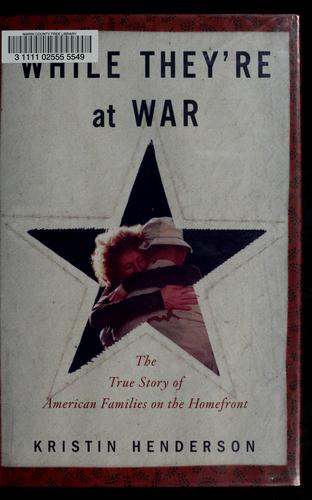
The homefront book. Henderson — a journalist married to a Navy chaplain — embedded with the families of Fort Bragg during the Iraq War deployments: spouses running households on rumor and half a phone call, the family readiness groups, the knock on the door everyone rehearses in their head. If you want to understand what deployment does to the people who never left, or you are the spouse who lived it and wants proof somebody wrote it down, this is the strongest reported account there is. It is specific to one era of one war, and it has aged into a document of exactly that.

An anthropologist's fieldwork from Walter Reed during the peak casualty years of Iraq and Afghanistan, living alongside grievously injured soldiers and their families through the grinding, undramatic middle of recovery. Wool's subject is the gap between how America talks about wounded warriors — heroism, sacrifice, purpose — and the actual texture of life in the ward, which is boredom, paperwork, pain management, and marriages under load. This is an academic book from an academic press, and it reads like one in stretches. It earns its slot because nothing else documents that gap with this much patience.
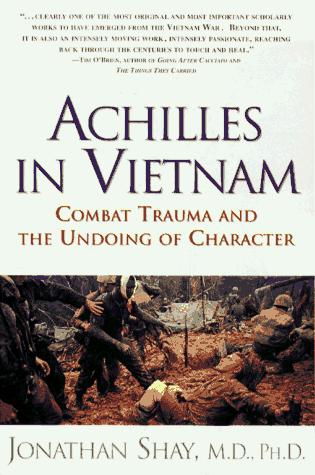
A VA psychiatrist maps combat trauma onto Homer and lands on what the manuals miss: moral injury isn't weakness, it's what happens when leadership betrays what's right in a high-stakes situation. If you've ever come home wrong and couldn't name why, this is the book. Pairs with Odysseus in America.
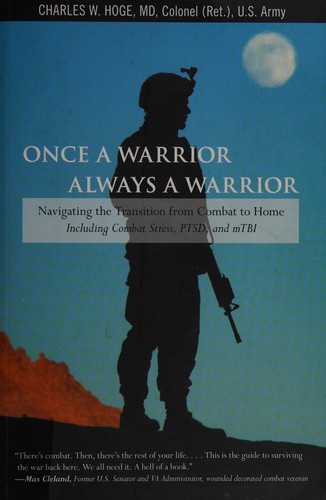
Hoge ran psychiatric research for the Army and wrote the field manual for coming home — combat stress, PTSD, and TBI explained by someone who studied them at scale, not a wellness influencer. He reframes the survival reflexes that kept you alive downrange as things to retrain, not to be ashamed of. The most credible book here for the hard part of getting out.