Above & Beyond
A Medal of Honor citation is a paragraph of the most compressed prose the government produces — and behind every one is a whole human story the paragraph can't hold. This shelf collects the books that tell those stories properly: the biographies of recipients, the firsthand accounts of the actions, and the honest examinations of what conspicuous gallantry actually looks like from inside the moment, which recipients themselves almost universally describe as doing the job in front of them. No chest-thumping. The real thing doesn't need it.
Buy links go to Bookshop.org (which supports independent bookstores) and Amazon. Some are affiliate links — if you buy, we earn a small commission at no extra cost to you. As an Amazon Associate we earn from qualifying purchases. It never affects which books are on this list or how we describe them. How this works.
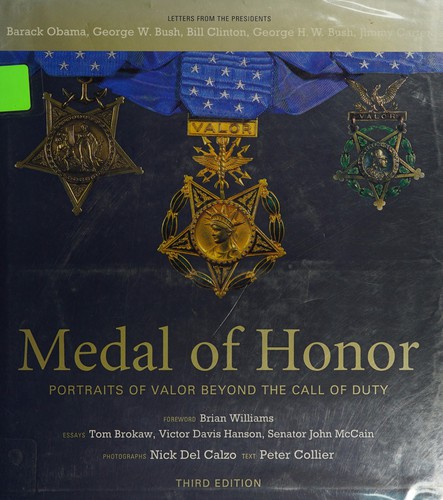
Produced in collaboration with the Congressional Medal of Honor Foundation: Del Calzo's formal portraits of living recipients, paired with Collier's profiles of what each of them did and what the years after looked like. The photographs carry as much weight as the text — ordinary faces, most of them older men you would walk past in a grocery store, each one attached to a citation you can barely read without stopping. What the collection quietly documents is the distance between the day that earned the medal and the decades of carrying it. This is the reference volume for the shelf; start here, then read the individual accounts.
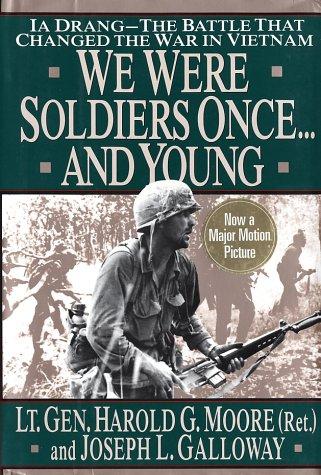
Ia Drang Valley, November 1965. The first major battle between U.S. Army and North Vietnamese Army forces. Moore commanded the battalion. Galloway was the reporter embedded with them. Both were there for the full three days. Both tell the truth, which is rare when officer and journalist collaborate. The helicopters that made the battle possible also made it impossible to disengage. That tension never resolved.
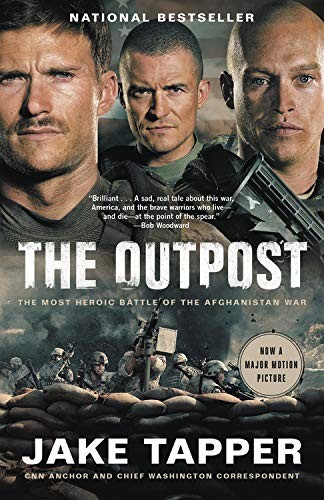
Combat Outpost Keating, Nuristan Province, Afghanistan, October 3, 2009. Fifty-three insurgents launched a coordinated assault on fifty-three Americans in a position that violated every principle of defensive positioning: in a valley, overlooked by three mountains, approachable on all sides. Eight Americans were killed. Two Medals of Honor were awarded for the same battle. Tapper spent years interviewing survivors and reconstructed not just what happened but the chain of decisions — tactical, operational, strategic — that put those men in that position. The best book about the Afghanistan war at the small-unit level. Also the most damning account of how force protection decisions are actually made.
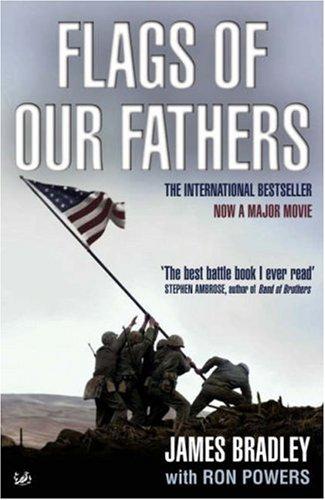
The story of the six men who raised the flag at Iwo Jima — told by the son of one of them. Bradley spent years interviewing survivors and reconstructing not just the battle but what happened to the men who became accidental symbols of American victory: the bond tours, the celebrity, the drinking, the silence about what they had actually seen. Iwo Jima produced more American casualties in six weeks than the entire Gulf War. The flag photograph became the most reproduced photograph of WWII. The distance between the image and the reality is what this book is about.
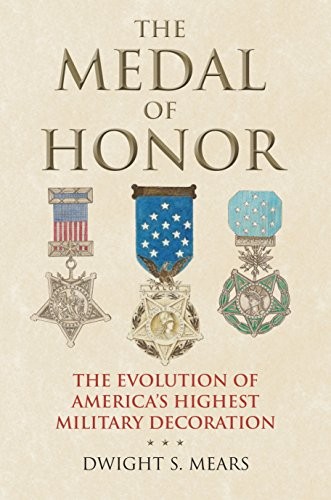
The scholarly history of the decoration itself: how a Civil War-era award with almost no standards evolved, decoration by decoration and statute by statute, into the most exacting honor the nation confers. Mears works through the messy parts most tributes skip — the purges of earlier awards, the shifting criteria, the racial disparities corrected only decades later, the political pressures that have always orbited the medal. This is a university-press book with footnotes, not a bedside read. It earns its place because understanding what the medal means requires knowing how the institution has struggled, sometimes badly, to keep it meaning anything at all.
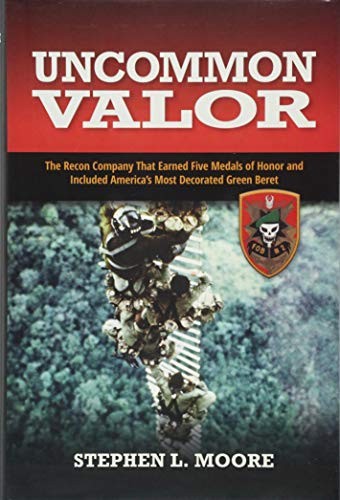
The recon men of MACV-SOG ran cross-border missions in Vietnam that officially did not exist, in teams small enough that every firefight was a numbers problem with one solution: fight out or die there. Moore documents the company whose soldiers earned five Medals of Honor — the highest concentration of the award in one small unit in the war — along with a staggering count of lesser valor decorations that, given the classification of the missions, took years to surface. Built from interviews and declassified records, it is both a unit history and a study of what happens when extraordinary action is the routine job description.

October 3, 2009: roughly fifty American soldiers at Combat Outpost Keating, a position everyone from platoon level up knew was indefensible, against an assault force several times their size. Romesha led the counterattack that retook the outpost and received the Medal of Honor for it. His account is precise about terrain, timelines, and who did what — and just as precise that eight men died defending ground the Army had already decided to abandon. Read it with Tapper's The Outpost, which documents how Keating came to exist at all. Together they are the fullest record we have of one battle: the failure and the valor, both true at once.
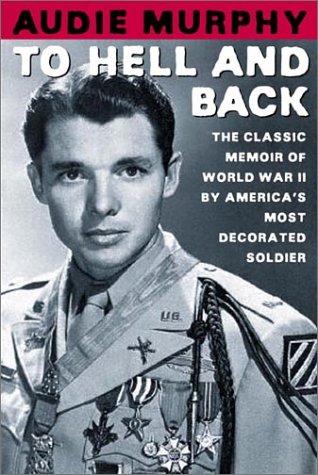
Murphy came out of the Second World War as the most decorated American soldier of the conflict, Medal of Honor included — a Texas sharecropper's son who was still a teenager for much of what this book describes. What strikes a modern reader is how little the memoir performs. He writes about the men around him more than himself, about exhaustion and loss more than glory, and his own most famous actions are rendered almost flatly. Hollywood later made the movie and cast Murphy as himself; the book is darker than the film was allowed to be. It remains the foundational American account of what extraordinary valor costs the person who displays it.
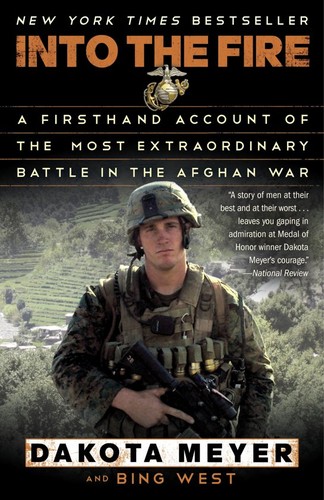
Ganjgal, Afghanistan, September 2009: an ambush, repeated radio calls for artillery support denied, and Meyer driving into the kill zone again and again to bring out the living and the dead. He received the Medal of Honor. This book, written with combat veteran and author Bing West, refuses to be a clean hero narrative — Meyer is blunt that he considers the day a failure because the men he went in for were already gone, and blunt about the support decisions that left them there. It is a valor story and an accountability document in the same binding, which is exactly what this shelf exists for.
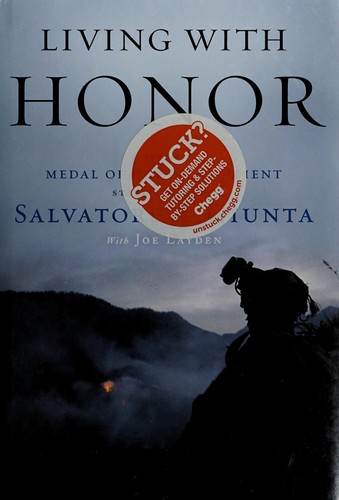
Giunta was the first living recipient of the Medal of Honor for actions since Vietnam — Korengal Valley, 2007, breaking up an ambush and stopping the enemy from carrying off a wounded American. The defining feature of this memoir is his flat refusal of the pedestal. He calls himself a mediocre soldier who did what anyone in the platoon would have done, and he means it, and the book is honest about how strange and heavy the medal made ordinary life afterward. As a document of what the award actually does to the person wearing it, there is nothing else quite like it.
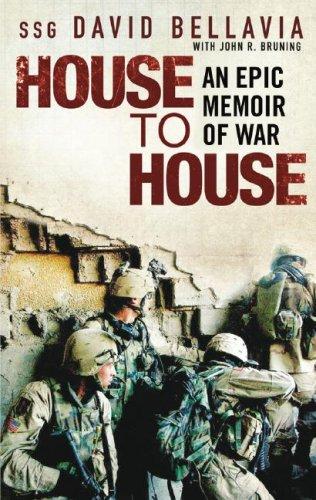
Fallujah, November 2004. Staff Sergeant Bellavia cleared a house full of insurgents by himself. Medal of Honor, 2019. This is the book written before anyone called him a hero — written with the flat, precise honesty of a man who is not sure what he did was heroism versus something else entirely. The most technically detailed account of close-quarters combat in print. Not for everyone. Necessary for many.
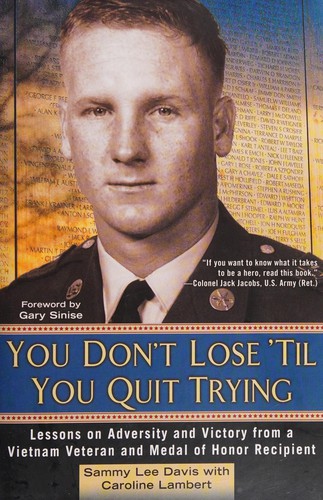
November 1967, a firebase on a canal in the Mekong Delta: Davis, a young artilleryman, wounded and unable to swim well, crossed the canal on an air mattress under fire to bring back wounded soldiers, then returned to serve his howitzer. He received the Medal of Honor — and if the ceremony footage looks familiar, it's because it was borrowed for Forrest Gump. The book's second half is the part too many valor memoirs skip: decades of pain, the long tail of Agent Orange, and what perseverance means when the war is over. Unpolished in places, and more valuable for it.
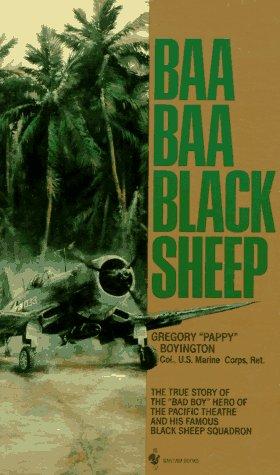
Boyington commanded VMF-214, the Black Sheep squadron, became one of the Marine Corps' top fighter aces, was shot down, and spent the rest of the war in Japanese captivity — his Medal of Honor was presented after he came home. His memoir is unlike anything else on this shelf: profane, self-lacerating, and honest about his alcoholism in an era when nobody put that in print. He does not present himself as a role model, and that is the point. The record shows that the medal goes to human beings, not statues, and Boyington documents the human being with no varnish at all.
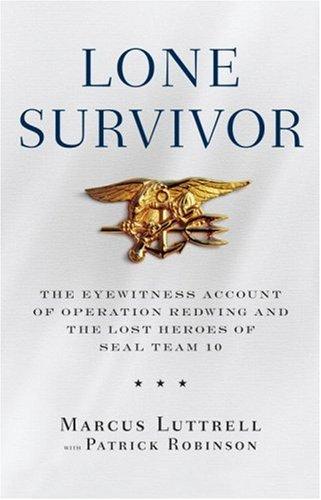
Operation Red Wings, Afghanistan, June 2005. Four SEALs on a reconnaissance mission were compromised by goatherds. They made a vote on what to do. They chose wrong, or right, depending on how you measure. Three SEALs died. Luttrell survived with the help of a Pashtun village that applied the Pashtunwali code at considerable risk to themselves. The book is raw, angry, and does not attempt objectivity. Read it for what it is.
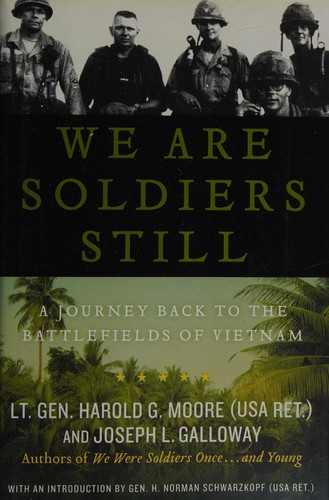
The sequel to We Were Soldiers Once... and Young, written four decades after Ia Drang: Moore and Galloway return to the battlefield and sit down with the North Vietnamese commanders who fought them there. It is a book about what the men who survive documented valor owe the dead, and what reconciliation with a former enemy actually looks like when both sides commanded the same ground. Quieter and more reflective than the first book, and it completes the account — the battle, then the fifty years of carrying it. Read the original first; read this one when you want to know how the story ends.
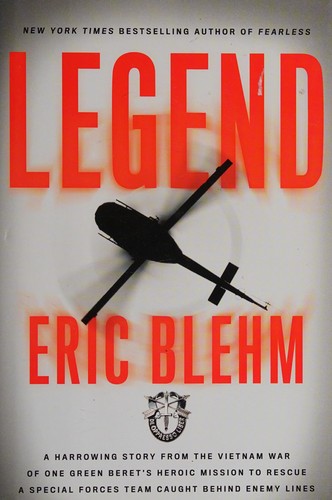
May 2, 1968: a Special Forces reconnaissance team is surrounded across the Cambodian border, and Roy Benavidez — hearing the radio traffic — jumps aboard a returning helicopter carrying a knife and a medic bag. Six hours later he had been wounded dozens of times and was responsible for the survival of the men who came out. Blehm reconstructs the mission from records and interviews, including the decades it took for the award to be upgraded to the Medal of Honor — the paperwork fight is part of the story, and it should embarrass the institution that required it. A rigorous account of one of the most extraordinary documented actions in American military history.
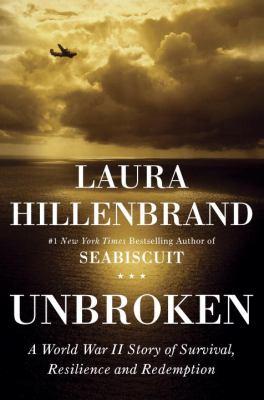
Louie Zamperini was an Olympic runner who became a B-24 bombardier, survived a plane crash over the Pacific, spent forty-seven days on a life raft, was captured by the Japanese, and endured Omori and Naoetsu POW camps under a guard who seemed to have selected him personally for destruction. He survived all of it. Hillenbrand researched and wrote his story with the same obsessive precision she brought to Seabiscuit. You do not need to care about WWII aviation to be destroyed by this book.
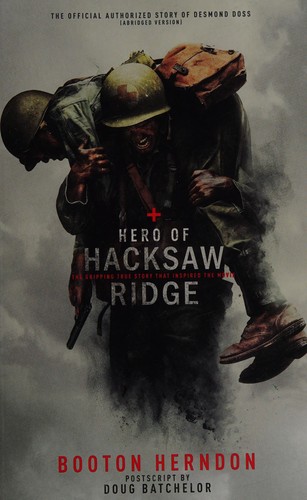
Desmond Doss refused to touch a weapon, was harassed and nearly court-martialed for it, and then, on the Maeda Escarpment at Okinawa, lowered wounded man after wounded man down the cliff face under fire — the first conscientious objector to receive the Medal of Honor. Herndon's account was built from interviews with Doss himself and the men who served with him, including some who had made his life miserable in training. The prose is plain and dated in places; the documentation is why it's here. Before the film, this was the record — and the record is more remarkable than the movie.
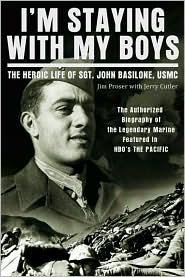
John Basilone held a section of the Guadalcanal line through a night of continuous assault in October 1942 and received the Medal of Honor for it. Sent home to sell war bonds — famous, safe, set for life — he requested a return to the Pacific, landed at Iwo Jima, and was killed on the first day. Proser tells it in an unusual first-person voice, writing as Basilone, which readers either accept or don't; the underlying record is solid either way. The title is the answer Basilone reportedly gave when asked why he'd go back, and it is the entire ethos of this shelf in four words.