The Napoleonic Wars
Napoleon rewrote the art of war, and the theorists who watched him — Clausewitz and Jomini — built the doctrine the profession still argues over. This shelf covers the campaigns, the marshals, and the histories of the era that turned war into a matter of nations and corps and maneuver. Read it to see where operational art was invented.
Buy links go to Bookshop.org (which supports independent bookstores) and Amazon. Some are affiliate links — if you buy, we earn a small commission at no extra cost to you. As an Amazon Associate we earn from qualifying purchases. It never affects which books are on this list or how we describe them. How this works.
The book everyone in uniform claims to have read and almost no one finishes. War is the continuation of policy by other means — the sentence that launched a thousand PowerPoint slides and at least as many wars entered without an exit strategy. Get past chapter three and you are ahead of 80% of O-6s. Get through Book Eight and you understand why it keeps going wrong.
The other guy who watched Napoleon and wrote it down. Where Clausewitz gave you philosophy, Jomini gave you principles, lines of operation, and diagrams — and for a century that's what armies actually taught. You can't argue about strategy without knowing what Jomini said, even if you end up siding with Clausewitz.
Keegan decided to write a military history that told the truth about what battle actually feels like for the men who fight it — not for the generals who direct it. Agincourt, Waterloo, the Somme: three battles, three centuries, one devastating argument that military history has consistently failed to describe what happens to a human body and a human mind under sustained combat. The chapter on the first day of the Somme — July 1, 1916, 57,470 British casualties — is the most important piece of military writing produced in the twentieth century. It should be assigned in every war college on earth and has not yet changed anything.
The 1,100-page brick every staff college secretly runs on. Chandler walks you through every campaign Napoleon fought, battle by battle, and shows you where the operational art you argue about in the schoolhouse was actually invented. Heavy enough to stop a musket ball, worth every page.
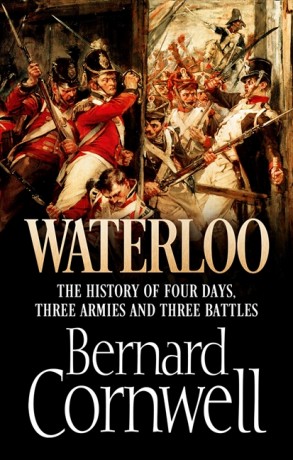
The Sharpe novelist writes narrative history the way he writes fiction — you can smell the powder smoke. Four days, three armies, told from the mud up. The best gateway into Waterloo before you tackle the doorstops.
Everybody studies how Napoleon won and lost his battles; almost nobody studies how the winners carved up the peace. Zamoyski takes you inside the Congress of Vienna, where the map of Europe got redrawn over dinners and affairs. The war doesn't end when the shooting stops — that's when the real knife-work starts.
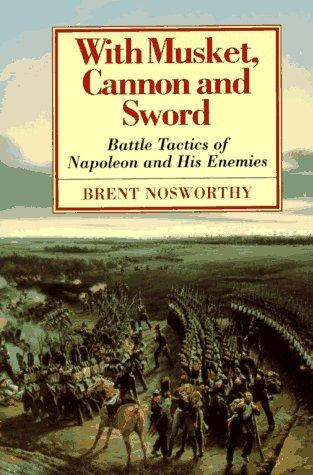
How the armies of this era actually fought — line versus column, the real range of a smoothbore, when cavalry mattered and when it didn't. Nosworthy cuts through two centuries of myth about Napoleonic tactics using the sources. Read it before you have an opinion about the column-versus-line debate.
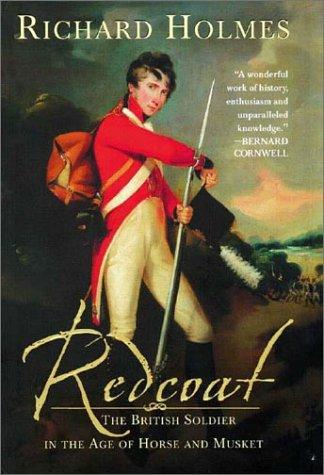
Holmes tells you what it was actually like to be a British soldier in the age of horse and musket — the food, the flogging, the women, the wounds. Social history from a man who commanded soldiers himself and never forgot they were people. The ranks come alive, not just the generals.
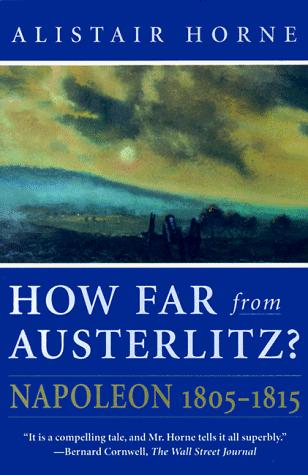
Horne traces the ten years from Napoleon's masterpiece at Austerlitz to the wreck at Waterloo, and sits with the question every commander should: how does a run of genius curdle into catastrophe? A meditation on the shelf life of military success. Nobody stays on top forever, and this is the autopsy.
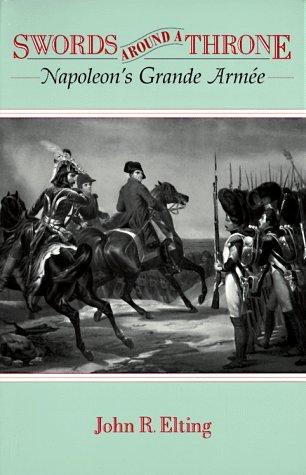
The single best book on the Grande Armée as an institution — how Napoleon recruited, fed, paid, promoted, and led the army that terrorized Europe. Elting was a soldier and it shows: this is a study of a military organization, not a parade of battles. If you care how armies actually work, start here.

The deep-dive on the 1813 campaign, when the coalition finally learned to stop losing to Napoleon and started grinding him down. Leggiere gives you operational history at full resolution — corps, marches, decisions. For readers who've done the survey books and want the graduate seminar.
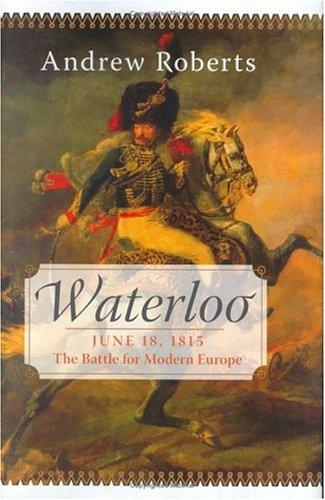
Roberts on Waterloo before he wrote the big biography — tight, sharp, and built on the sources. A short book that respects your time and still gets the battle right. The efficient briefing on the most-argued-about day in military history.
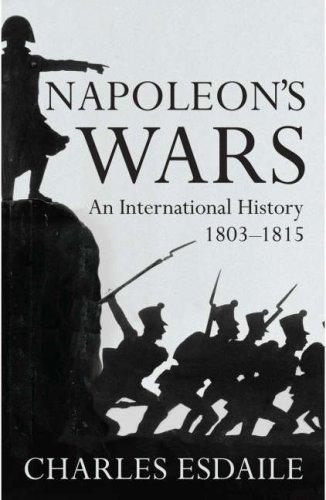
Esdaile argues the wars were Napoleon's wars — driven by his appetite, not forced on him by everybody else. A clear-eyed international history that treats the diplomacy and the other powers as more than scenery. The corrective for anyone who romanticizes the man.
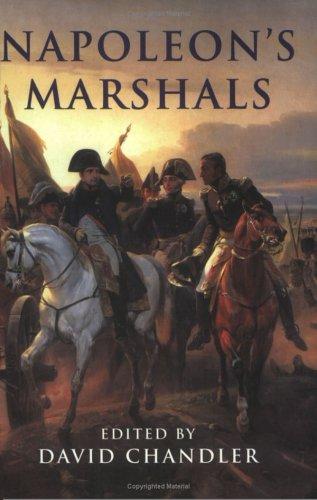
Twenty-six men made marshal, and they ranged from genius to disaster. Chandler edits a who's-who of the marshalate — Ney, Davout, Murat, the whole cast — with a hard eye on who could actually command and who just looked good on a horse. A masterclass in senior leadership, the good and the catastrophic.
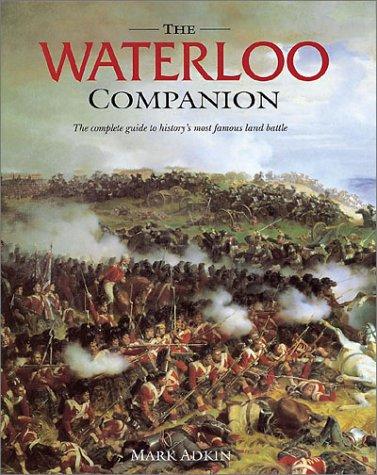
The reference you keep open while you read everything else about Waterloo — maps, orders of battle, weapons, uniforms, timelines, all of it. Adkin answers the questions the narratives skip. If you want to actually understand the ground and the forces, this is the field manual.
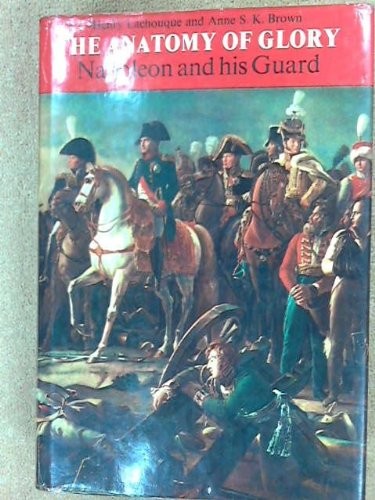
The definitive history of Napoleon's Imperial Guard — the elite he built, spoiled, and finally spent at Waterloo. Lachouque takes you inside the unit culture of the most famous formation of the age. A study of what an elite force costs the army that feeds it.
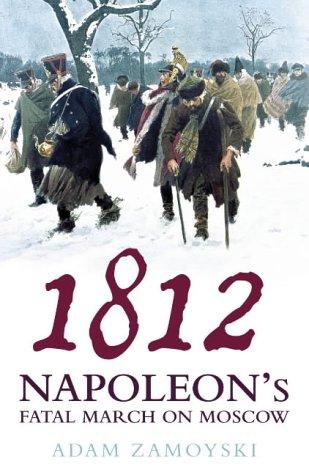
Half a million men marched into Russia; a broken remnant staggered out. Zamoyski tells the whole grim story — the hubris going in, the horror coming back — largely through the letters and diaries of the people who froze and starved. The definitive cautionary tale about winning your way into a disaster.
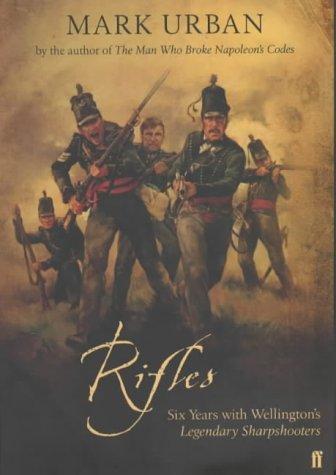
The true story behind the Sharpe novels — the 95th Rifles, Britain's first specialist sharpshooters, across six years of Peninsular war. Urban builds it from the riflemen's own journals, so you get the fight from the firing line, not headquarters. Small-unit history done right.
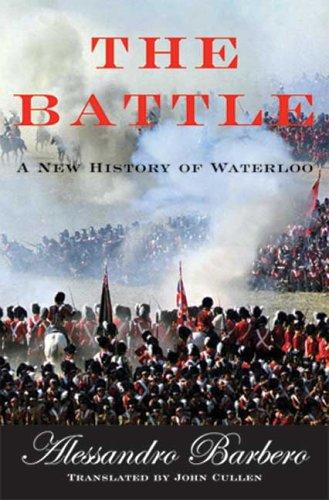
Barbero reconstructs Waterloo hour by hour, from the perspective of the men in the ranks who lived and died in it. No grand-strategy fog — just the terror and confusion of the day, rendered with an eye for the human detail. The best single-volume account of the battle from the ground.
A German conscript dragged into Napoleon's Russian campaign wrote down what he saw, and it's one of the rawest survival accounts in military literature. No strategy, no glory — just cold, hunger, and the animal will to make it home. Read it when the campaign histories start feeling too clean.
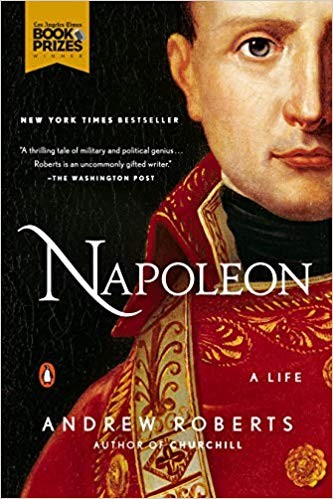
Roberts read 33,000 of Napoleon's letters so you don't have to, and the result is the modern one-volume life. He gives you the general and the administrator without the hero-worship or the cheap psychoanalysis. If you only read one Napoleon biography, this is it.
The definitive account of Wellington's fighting years, from India to Waterloo, by the biographer who got the access. Longford gives you the cold, competent professional who beat Napoleon's marshals one at a time in Spain. The soldiering half of a two-volume life — this is the half you want.

Muir's modern, exhaustively sourced life of Wellington through 1814 — the scholar's answer to Longford. He rebuilds the soldier's career decision by decision, sparing you the legend and giving you the man who did the work. The current gold standard on how Wellington won.
The first Aubrey-Maturin novel and the best historical fiction ever written about the age of sail — the seamanship is real, the friendship is real, and O'Brian never dumbs it down for you. Yes, it takes a chapter to find your sea legs in the jargon. Stick with it; twenty books later you'll wish there were more.
The novel that launched Richard Sharpe, the jumped-up ranker who fights his way up through Wellington's army. Cornwell gets the tactics, the weapons, and the class friction dead right while telling a cracking story. The most fun you'll have learning how this army actually fought.